
As Scandinavian Countries Slowly Converted to Christianity, Crusades Often Took on the Form of Viking Raids
A new book by historian Thomas Williams closes the gap between the two cultures and brings some otherwise unfamiliar medieval figures and events to life
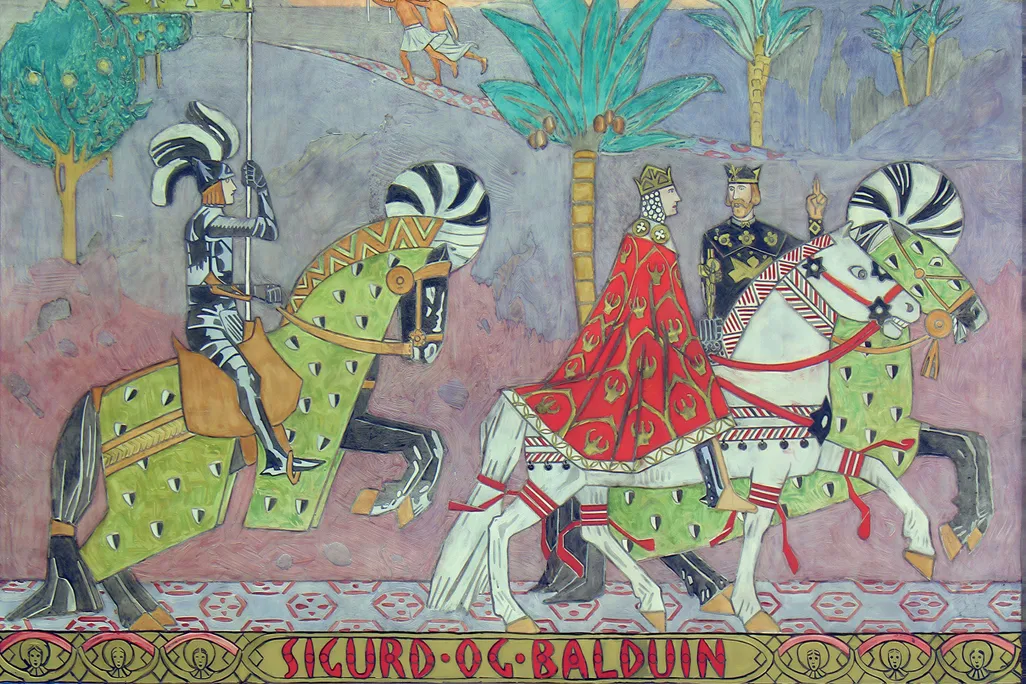
In 1107, after the First Crusade, Christians held Jerusalem, and Norway’s King Sigurd set sail to defend the city with 60 ships and around 5,000 men. In northern Spain, Sigurd ended up ransacking the fortress at Compostela, one of Western Europe’s holiest sites. He went on to sack Lisbon, storm Ibiza and Minorca, and then team up with King Baldwin of Jerusalem to conquer the port city of Sidon, in modern-day Lebanon. A grateful Baldwin gave Sigurd a fragment of wood from what he said was Jesus’s cross.
Sigurd was the first Christian king to lead a military campaign in defense of the Holy Land, but his expedition, sometimes known as the Norwegian Crusade, looked a lot like an old Viking raid. That unexpected collision of traditions is the subject of a new book, God’s Hammer: A History of the Viking Crusades, by historian Thomas Williams, a former curator at the British Museum. The book closes the gap many of us imagine between the culture of the Viking raider and that of the Christian crusader—and vividly explains how pagan warrior traditions entered the Christian age.
Constantine’s march on Rome in 312 set a template for what Williams calls “muscular Christianity in Europe.” Charlemagne’s forced conversion of the Saxons in northern Germany was followed by the slow, bloody Christianization of Scandinavia over three centuries.
Williams has a knack for bringing unfamiliar medieval figures to life. Take Vladimir of Kyiv, who replaced Jesus on coins with his personal emblem: “Christ was employed to serve Vladimir, not the other way around,” Williams writes. In God’s Hammer, the cross was a convenient way to pursue power.
The book’s turning point comes in 1147, toward the start of the Second Crusade, when Pope Eugenius III empowered Scandinavia’s now-Christian kings to pursue a crusade right at their doorstep, with the prospect of the same spiritual rewards promised to the crusaders in Jerusalem.
Two decades later, in 1168 or 1169, the Danes besieged and burned the temple at the Slavic fortress of Arkona, in modern Germany. The surrender terms required the Arkonans to free Christian prisoners, accept the faith, give pagan lands to the church and supply troops to the Danish army. In a symbolic move, the idol of a pagan deity was chopped into pieces and fed into the army’s cooking fires. This, Williams writes, was “as much a political and cultural act as a religious one.”
Did you know? Who were the Teutonic Knights?
-
The Teutonic Knights were a Catholic military-religious order founded during the Crusades, originally to care for sick pilgrims—and later to wage war and establish Christian rule in Northern Europe, particularly against the Balts and Finns.
-
Unlike the famously red-crossed Knights Templar, the Teutonic Knights garbed themselves in white mantles emblazoned with black crosses.
-
In 1525, their grand master, Albert of Brandenburg, converted to Lutheranism, relinquished his position and transformed the order's Prussian territory into a secular hereditary duchy.
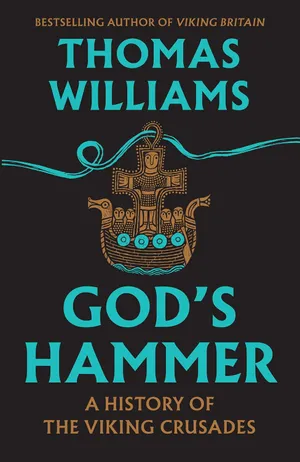
God’s Hammer: A History of the Viking Crusades
Thomas Williams tells the story of how the Vikings took up arms in the name of Christianity

Subscribe to Smithsonian magazine now for just $19.99
This article is a selection from the December 2026 issue of Smithsonian magazine

A Note to our Readers
Smithsonian magazine participates in affiliate link advertising programs. If you purchase an item through these links, we receive a commission.