
America at 250: The Revolutionary Spark
A Smithsonian magazine special report
One of the Quietest Leaders in the Civil Rights Movement, Ella Baker Led by Encouraging Everyone to Get Involved
Baker’s work was instrumental in the success of the NAACP and other organizations, but she did it in a way that didn’t put herself in the spotlight. That was by design
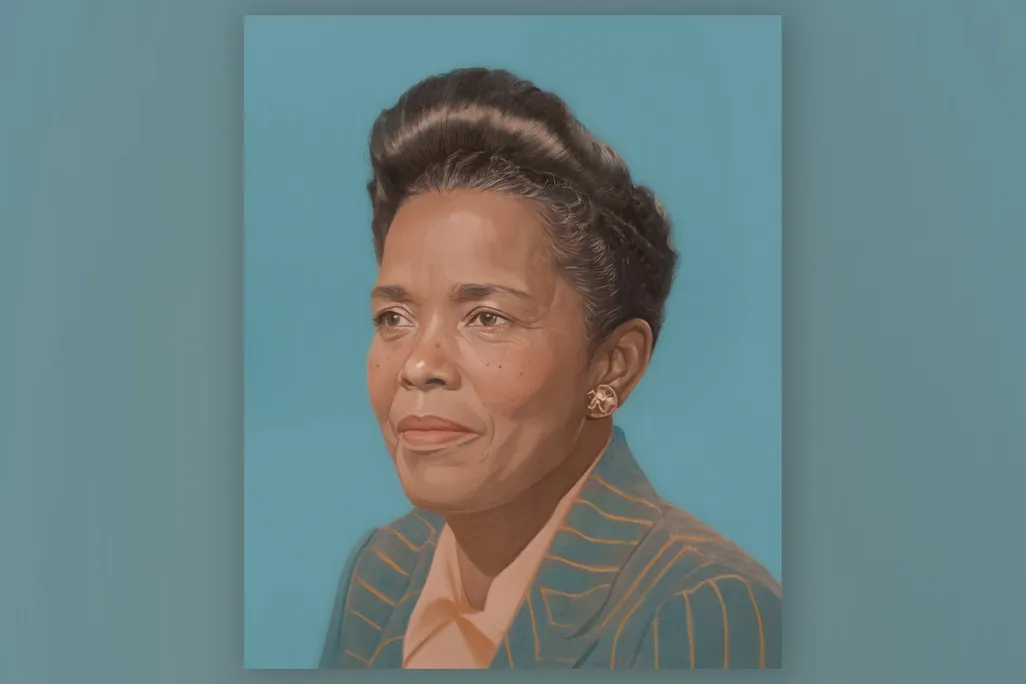
Ella Baker built in the background. Though her work as a grassroots organizer helped strengthen the National Association for the Advancement of Colored People (NAACP), birth the civil rights movement and spark the explosion of youth activism in 1960s America, she had no interest in being thrust into a pantheon of Great Black Leaders. “Strong people,” she once said, “don’t need strong leaders.”
Born in 1903 in Norfolk, Virginia, Baker grew up understanding that community came first. When she was a child, her family moved to her grandparents’ farm in North Carolina, where Baker picked vegetables to give to her neighbors. In her 20s, she ventured to New York at the peak of the Harlem Renaissance, working as a journalist and helping launch a Black co-op during the Great Depression. “The day of sharply defined individualism is rapidly giving place to that of mutual interdependence,” she said in a speech at the time.
In 1941, Baker became a field officer for the NAACP, spending nearly half of that year and the following one traveling the South and helping branches of the organization develop programs to address local discrimination and unemployment. Although the NAACP had a top-down power structure and often served middle-class interests, Baker encouraged local chapters to represent people from every walk of life. She had no problem venturing into bars and pool halls to recruit new members, and she insisted that defending the town drunk from unlawful arrest was as important as any other case the NAACP might take up. Her grassroots style led to clashes with the organization’s leadership, but it worked: She oversaw a membership drive that doubled the NAACP’s rolls to more than 400,000 people in 1944.
Baker’s biggest contributions were to come. When the Montgomery bus boycott began in 1955, it was exactly the sort of mass action she’d long envisioned. With her activist friends Bayard Rustin and Stanley Levison, she conceived a Southern counterpart to the NAACP, focused on direct action. Rustin persuaded Martin Luther King Jr., who had become the face of Montgomery’s boycott, to lead the new organization, dubbed the Southern Christian Leadership Conference (SCLC).
Baker served as the SCLC’s first full-time staff member, and eventually as its executive director, doing unglamorous but essential work. She found the SCLC its first office, near downtown Atlanta, and wrote many of its public statements, some under King’s name. She launched its first voter registration drives and helped disenfranchised Black Southerners file voting-discrimination complaints with the federal Commission on Civil Rights. Still, King and Baker butted heads: Baker was committed to a mass movement that would cultivate local leaders, empowering everyday people to do grassroots organizing. The SCLC, by contrast, focused on building King into a national hero who could lead the masses in protests and marches, creating political momentum but not necessarily expanding local organizing. The SCLC was also a boys’ club: Only one woman, a Montgomery bus boycott organizer named Erna Dungee, sat on the 33--member board, and Baker felt that the SCLC often ignored her because of her gender. “In a group of ministers who are accustomed to having women largely as supporters, there was no place for me,” she later said.
In April 1960, she organized an SCLC-sponsored retreat in Raleigh, North Carolina, for more than 125 student activists from around the country. The Greensboro lunch counter sit-ins had begun just a few months before, sparking a new wave of protests by young people willing to get confrontational. Baker wanted to channel that spontaneous youthful defiance into a coherent mass movement. While King and some of the older ministers argued that the students should form a youth arm of the SCLC, Baker encouraged them to launch their own organization. By the conference’s close, the Student Nonviolent Coordinating Committee (SNCC) was born.
The SNCC drove mass mobilization in the civil rights movement—sit-ins, voter registration drives, the Freedom Rides. Generational leaders such as John Lewis, Diane Nash, Julian Bond and Stokely Carmichael got their start in the SNCC, where Baker served as an adviser. “What was nice about Miss Baker is you never felt that she had a personal agenda,” SNCC worker Judy Richardson later said. “It was always about what is good for the organization, for Black people, for whatever the larger issue was.”
Baker advocated for racial justice until her death in New York in 1986, at 83. She rarely sought the spotlight, as she was too busy helping others find their purpose in the moment. “The group comes first in my mind,” she once said. Her commitment to grassroots organizing now feels prescient. She intuited that the will to change the world could not be decreed from on high. It had to be nurtured in the heart of every citizen.
“My basic sense of it,” she said, “has always been to get people to understand that in the long run, they themselves are the only protection they have against violence or injustice.”
Did you know? What's in a name?
-
In 1978, at Baker's 75th birthday party, one of her protégés, Bob Moses, nicknamed the Civil Rights icon “Fundi,” a Swahili word meaning “master craftsperson” and indicating the person in a community who learns a vital skill and then teaches it to the next generation.
-
The affectionate moniker was often used within movement circles, honoring Baker’s singularly selfless approach to civil rights.
Subscribe to Smithsonian magazine now for just $19.99
This article is a selection from the Summer 2026 issue of Smithsonian magazine