Subscribe to Smithsonian magazine and get a FREE tote.

Smart News / Smart News Science

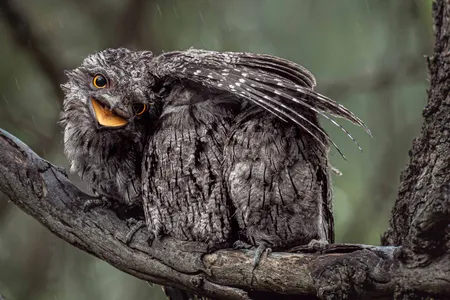
I’m Keeping Everyone Dry, bird behavior category winner: With its big, round eyes and cartoonish mouth, a fledgling tawny frogmouth stretches its wings and looks as though it is covering its siblings from the rain.

Experience the Wonder of Birds With These 11 Winning Photos From the Bird Photographer of the Year Contest

From a greater sage-grouse performing a mating display to a tawny frogmouth making a funny face, these photographs capture the breathtaking diversity of the world’s avian species
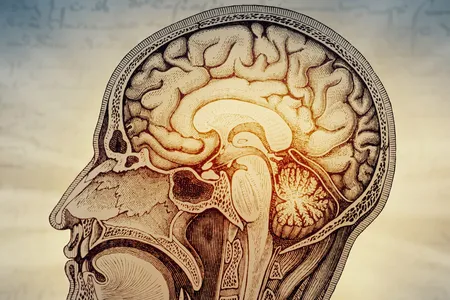
Using their new knowledge, the researchers became the first to successfully coax human stem cells into becoming hindbrain motor nerve cells.

Scientists Say the Human Brain Might Be Made of Two Distinct Nervous Systems That Got Squished Together

Two separate types of progenitor cells give rise to the front and back of the organ, according to a new study. The findings can help researchers study human diseases that affect the hindbrain, since its nerve cells have previously been difficult—if not impossible—to make in the lab
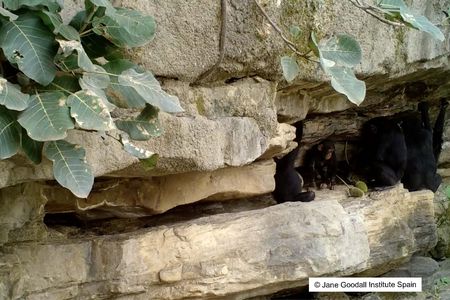
In one observation, a juvenile male appears to teach an infant named Fotti how to crack open a baobab fruit.

Cameras Capture Adult Chimpanzees Passing Tools—and Know-How—to Their Young, Teaching Important Skills to the Next Generation

Researchers recorded footage of wild chimps in Senegal showing youngsters how to use sticks to fish out ants and how to smash baobab fruit against rocks to open it, among other instances of instruction
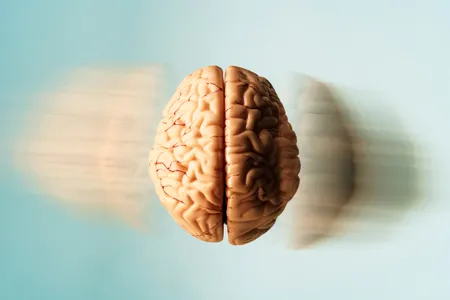
Researchers looked at changes in the volume of gray matter, which is made mostly of nerve cell bodies and located in the brain's wrinkly outer layer.

The Brain Shrinks as We Age and During Major Transitions. But Surprisingly, It Seems to Take a Break From Rewiring During Menopause

Puberty, pregnancy and menopause are the three major hormonal transitions for the female brain. Researchers already knew that during the first two, the organ fine-tunes itself in response to hormonal shifts, but they haven’t been sure about the third
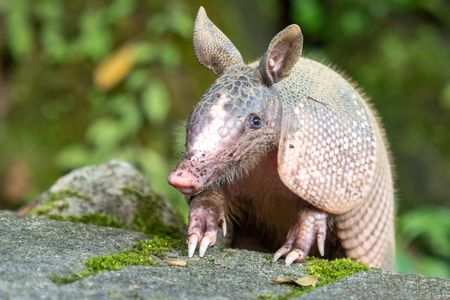
A nine-banded armadillo in Costa Rica. The Mexican long-nosed armadillo, which is the only armadillo species found in the United States, used to be considered the same species as the nine-banded armadillo.

An Armadillo Found in Ohio Is the Latest Surprise in the Armored Animals’ Expansion North. Where Are They Now, and What’s Driving Their Movement?

Typically spotted in the South and Southeast, the creatures have been reaching increasingly distant states like North Carolina, Virginia and Illinois as winters become milder
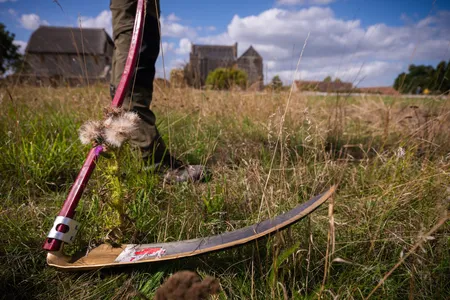
The scythe is a less invasive tool for cutting grass than a lawnmower.

A Cutting-Edge English Initiative Replaces Lawnmowers With Scythes to Restore Wildflowers and Save the Bees

English Heritage has recruited volunteers to mow meadows the old-fashioned way at some of its historic sites

Men ages 55 and older were disproportionately affected, the researchers found.

Alcohol-Related Cancer Deaths Have More Than Doubled in the United States Over the Past 30 Years, Study Suggests

While scientists say their findings don’t necessarily mean you need to cut alcohol from your life entirely, knowing the potential risks—especially if you’re already at an elevated risk of developing cancer—can help guide your decisions
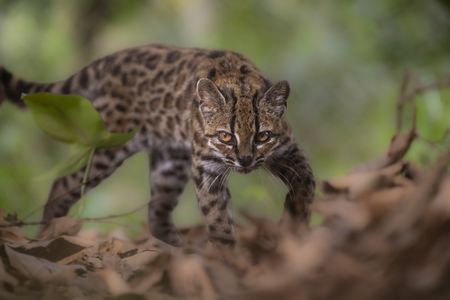
Paola Nogales-Ascarrunz, a biologist and National Geographic Explorer, first encountered the new species at the Senda Verde Wildlife Sanctuary in Bolivia.

Meet the Adorable and Tiny Tilcayo, the First Brand-New Cat Species Identified in More Than a Century

Discovered in a cloud forest in Bolivia, the diminutive felines are smaller than a house cat and covered in large, irregularly shaped rosettes
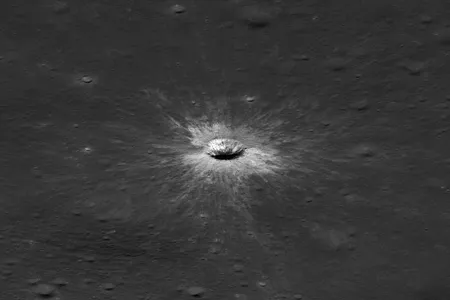
An image of the crater captured by NASA’s Lunar Reconnaissance Orbiter on March 3, 2026.

The Moon Just Got a Massive New Crater That’s Wider Than Two End-to-End Football Fields. It’s a ‘Once-in-a-Lifetime Observation’

The impact crater was formed in 2024 when an object the size of a multistory building crashed into our lunar companion. The resulting divot is about 728 feet wide and 141 feet deep

The 2,500-year-old temple, photographed in 2009

New Research

Centuries Ago, an Architect Characterized the Parthenon’s Curves as a Clever Optical Illusion. Now, a Mathematician Begs to Differ

In the first century B.C.E., Vitruvius wrote that the Acropolis’ largest temple was horizontally bowed so that it didn’t seem to sag, and that explanation persisted for millennia. New research suggests a different reason
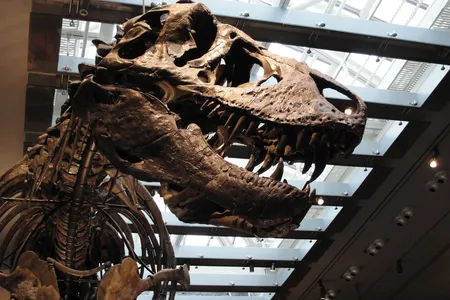
In the new study, researchers analyzed fossilized teeth, including two from Thomas the T. rex.

Tyrannosaurus Rex Was a Warm-Blooded Dinosaur, With a Body Temperature Similar to That of Humans, Study Suggests

A tooth analysis hints that the fearsome predator ran at a toasty 97 degrees Fahrenheit. Maintaining that internal temperature may have allowed it to inhabit a range stretching from modern-day Alaska to Mexico during the Cretaceous period
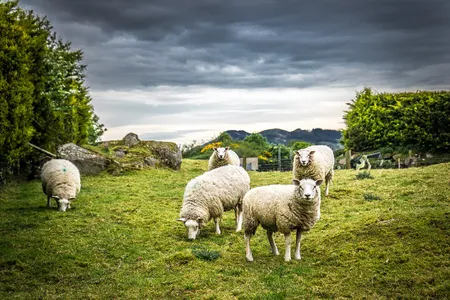
Scientists have traced the deadly sheep pox virus back 3,700 years.

The Ancient DNA of a Deadly Animal Virus Has Been Lurking in Medieval Manuscripts for Centuries, Researchers Find

A new analysis of teeth and parchment suggests that the devastating sheep pox virus has been infecting livestock for 3,700 years
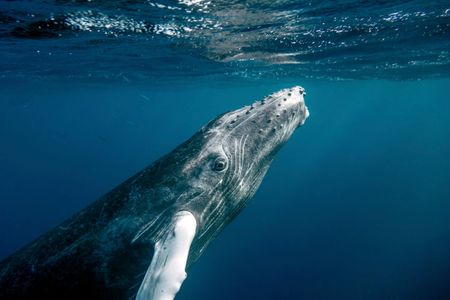
How humpback whales respond to death is one of the least understood aspects of their behavior, according to researchers.

A Humpback Whale Mom Stayed With Her Stillborn Calf, Repeatedly Touching It and Staring Into Its Eyes. Was She Grieving?

Observed last year off the coast of Queensland, Australia, this event marks the first documentation of a stillbirth in the species, providing a rare glimpse at how the highly social animals respond to death
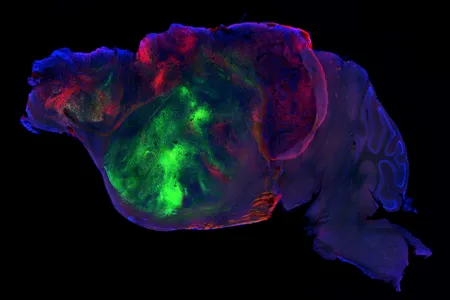
A side view of a "xenocortical" mouse brain, with the grafted human tissue seen in green and red.

Scientists Created Mice With Half-Human Brains. The Hybrid Animals Could Revolutionize Our Understanding of Neurological Disorders

Our brains and their associated diseases are notoriously hard to study. So researchers developed an animal model with a cortex—the brain’s outer layer—grown from human-derived cells
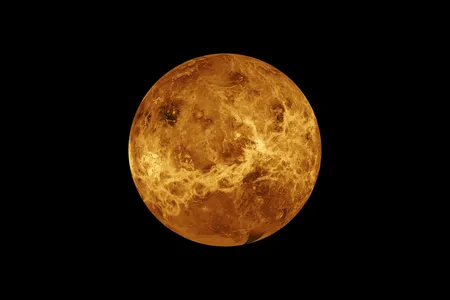
Venus is one of only two planets in our solar system that lack a moon. (Mercury is the other.)

Billions of Years Ago, Venus May Have Had a Moon—Which the Planet Promptly Gobbled Up, Study Suggests

Scientists have puzzled over why the planet dubbed “Earth’s twin” doesn’t have a moon. Computer simulations hint that if Venus ever did have one, it probably would’ve cannibalized its companion
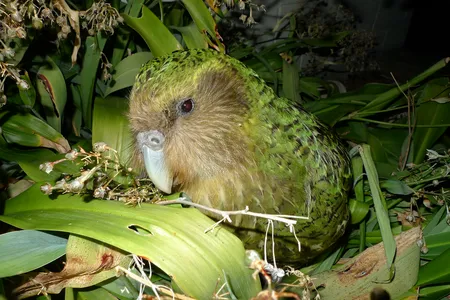
Kakapo are critically endangered, but they're starting to make a comeback.

New Zealand Welcomes a Record 90 Kakapo Chicks, Helping the World’s Chunkiest Parrot Species Rebound From the Brink of Extinction

Annual chick counts aren’t confirmed until the youngest hatchling reaches 150 days old, a benchmark for independence. The population now stands at 325 birds, up from the 51 individuals that remained in 1995
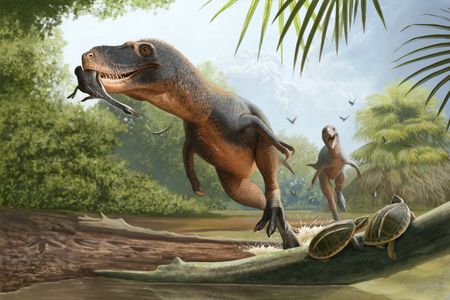
Scientists think a Nanotyrannus or a young Tyrannosaurus rex might have eaten the bird.

A 66-Million-Year-Old Feather Trapped in Dinosaur Poop Might Help Explain Why Some Birds Survived Mass Extinction

Discovered in Montana in 2016, the cherry-size coprolite contains feathers, bones and evidence of the bird’s last meal before the creature was eaten by a theropod
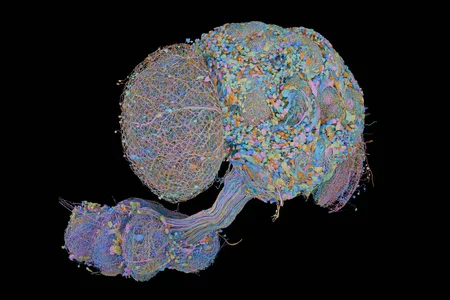
Wiring diagram of an adult male fruit fly's central nervous system

This New Brain Map Shows Every Nerve Cell in an Adult Male Fruit Fly’s Central Nervous System. Here’s Why That Matters

The recently released “connectome” joins a previously completed map of an adult female fruit fly’s brain. The digital 3D diagrams allow scientists to trace precise neural paths in the bugs’ brains, which can unlock secrets about the organ in humans
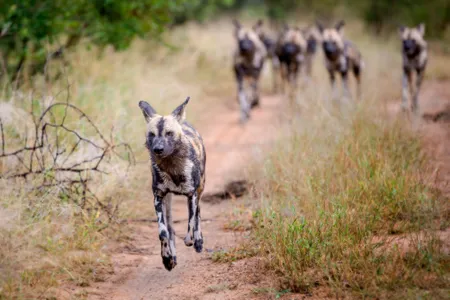
A pack of wild dogs in South Africa

Three Wild Dogs Made a Record-Breaking Trek Across Zambia, Traveling More Than 2,500 Miles in Search of Mates

The canines achieved the longest recorded movement by any African mammal. Their journey highlights the importance of having protected corridors for wildlife
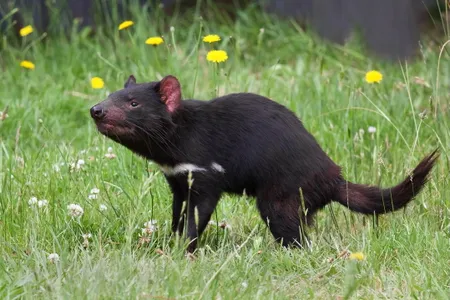
Tasmanian devils used to live across mainland Australia, but wild populations now inhabit only the island state of Tasmania.

Cool Finds

Tasmanian Devils Lived Alongside Humans in Northwestern Australia as Far Back as 45,000 Years Ago, Researchers Find

Fossils and marked bones unearthed in a Juukan Gorge cave suggest that the marsupial species not only once lived in the region but may have been a “garbage compactor on four legs” for its human population

Page 8 of 556