
Subscribe to Smithsonian magazine and get a FREE tote.

Smart News / Smart News Science

The sugar was detected near the center of our Milky Way galaxy, which shines brightly with stars in this artificially colored image.

In a First, Astronomers Find Sugar in the Space Between Stars, Providing New Clues About the Origins of Life on Earth

Sugars are crucial components of RNA and DNA, the basis of all known organisms alive today. In a new study, the sugar erythrulose was detected in a gas- and dust-filled cloud near the center of our Milky Way galaxy
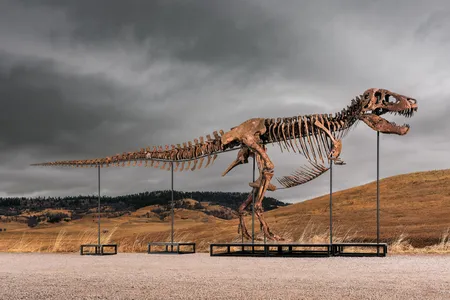
Sotheby's is auctioning one of the largest and most complete T. rex skeletons ever found.

This T. Rex Fossil Could Fetch the Largest Sum of Any Dinosaur Ever Auctioned. Scientists Worry They’ll Lose the Chance to Study It

Bids on “Gus” will start at $19 million, a steep price for public institutions. Specimens in private collections can be harder for researchers to examine, and they’re practically impossible to include in studies in top-tier scientific journals
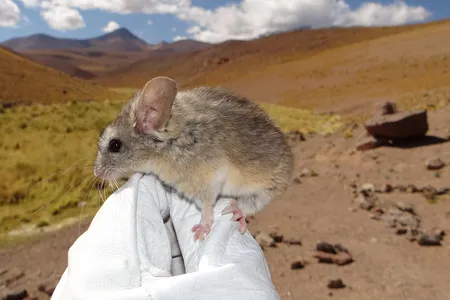
Andean leaf-eared mice can survive in extremely high-altitude environments with frigid temperatures and little oxygen.

Here’s How These Adorable Mice Can Live at an Extremely High Elevation Where No Other Mammal Is Known to Reside

The Andean leaf-eared mouse has adaptations that help it generate body heat efficiently in frigid, low-oxygen conditions at 22,000 feet above sea level, according to a new study

The Canopus, a pool at Hadrian's Villa in Tivoli, Italy

How Has Roman Concrete Lasted for Millennia? A 1,900-Year-Old Latrine Offers New Clues About the Material’s Impressive Durability

A chemical process called carbonation, which helps seal cracks, could help explain why many ancient Roman structures are still standing today. Researchers hope that the insights will lead to better modern-day building materials
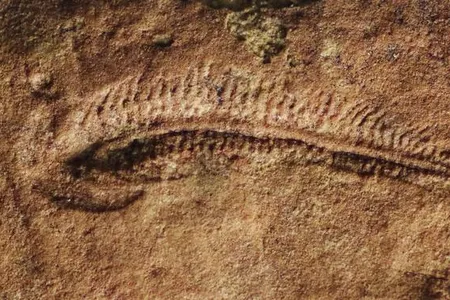
About two-thirds of the analyzed fossils were bent left, which means that the animals were curved right when they were alive.

Meet the Earliest Known ‘Right-Handed’ Animal, a Worm-Like Creature That Lived About 550 Million Years Ago

During the Ediacaran period, the critter wriggled around on the ocean floor of what’s now South Australia and preferred to turn right, a fossil analysis suggests
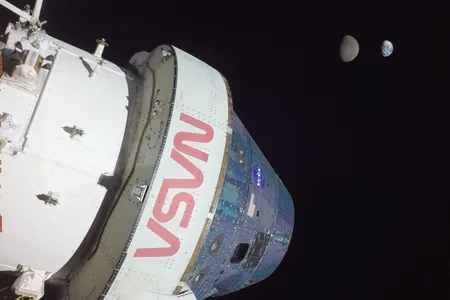
A view of the uncrewed Orion capsule in space during the 2022 Artemis 1 mission, with both the Earth and moon in the background. The Earth looks smaller because it is farther away.

Artemis 1’s Orion Spacecraft Withstood the Heat of Re-entry in a Critical Test for Humans’ Return to the Moon. Now, NASA Will Lend the Historic Capsule to the Smithsonian’s National Air and Space Museum

The exact timeline for the spacecraft’s display hasn’t been announced, but the artifact will fit into an upcoming exhibition on how humans have built a long-term presence in Earth orbit and laid the groundwork for farther space travel

Aging populations are a major driver of the predicted increase in cancer incidents.

Cancer Cases Are Expected to Nearly Double by 2050, Warns the WHO. Low-Income Countries Will Be Disproportionately Affected

In a new report, the World Health Organization predicts that new annual diagnoses will rise from about 20.6 million today to almost 35 million by 2050. The biggest increases will be in Africa and the Eastern Mediterranean region
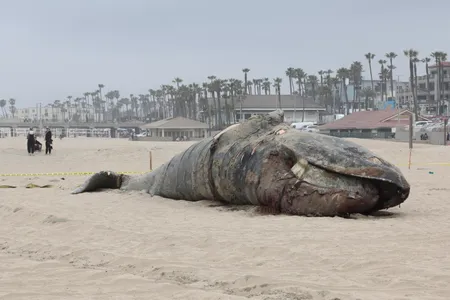
Gray whales, like this one that washed up dead in Los Angeles in April 2025, are grappling with malnutrition and ship strikes.

Nearly 150 Gray Whales Have Been Found Dead Along North America’s Pacific Shore This Year, Prompting Scientists to Sound the Alarm

The population of eastern gray whales, which migrate annually along the West Coast between the Arctic and Mexico, has been declining in recent years. Conservationists say 2026 could be one of the deadliest years on record for the marine mammals
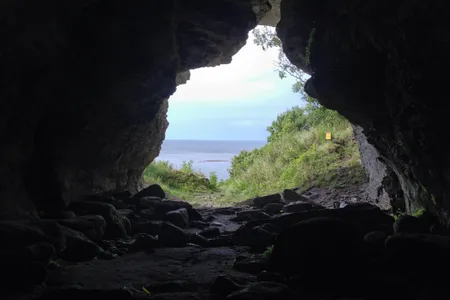
The bones were discovered in a cave on the Swedish island of Stora Karlso.

How Did Two Wolves End Up on This Remote Island Thousands of Years Ago? Researchers Think Humans Brought Them There, Then Cared for Them

The discovery suggests humans may have maintained relationships with wolves long after domesticated dogs came on the scene

Public health experts recommend vigorously washing all produce, among other measures.

Cases of a Parasitic Infection That Can Cause Diarrhea for Weeks Are Rapidly Rising in the U.S. Here’s What to Know

The illness is caused by the microscopic parasite Cyclospora cayetanensis, which spreads via food or water contaminated with feces, usually on farms. Health officials are still investigating the source of the multistate outbreak
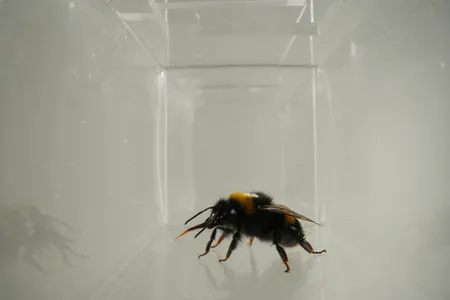
A bumblebee sticking out its tongue, potentially a sign that it liked a flavor

Bumblebees Seem to ‘Lick Their Lips’ After Sweet Treats and Shake Their Heads at Bad Tastes, Hinting at the Insects’ Inner Lives

Slow-motion videos suggest that the insects display distinct behaviors when they like or dislike a snack. The findings might offer a new way to study their emotion-like states
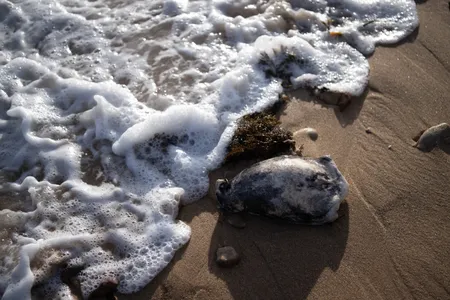
Dead and dying sea creatures have been washing ashore on beaches in South Australia over the past 15 months because of a toxic algal bloom.

The Culprit Behind South Australia’s Deadly Algal Bloom Might Be the Most Toxic Species Ever Tested, Scientists Say

Karenia cristata, a rare type of microscopic algae that produces toxins that harm nerve cells, can be lethal at very low concentrations
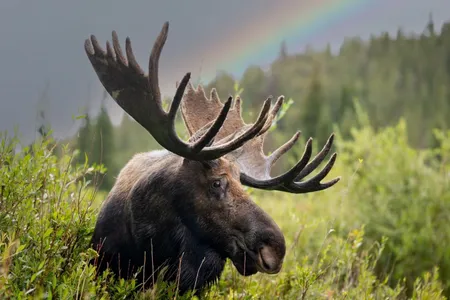
A moose called "Frank the Tank" in the Colorado mountains.

Are Moose Colorado Natives or Introduced Outsiders? New Research Suggests That the Animals Have Lived in the State for Centuries

Officials say moose weren’t established in the state until they were brought there in the late 1970s. But historical documentation and archaeological evidence indicate that they resided there long before that
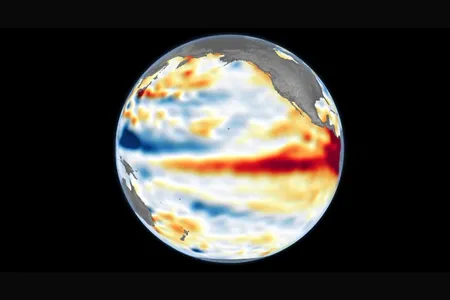
Earth is currently experiencing an occurrence of the El Niño climate pattern.

Could We Mitigate Super El Niños by Artificially Changing the Climate? A New Study Indicates Yes

Researchers used computer models to see what would have happened had scientists caused marine cloud brightening in the face of strong past El Niños
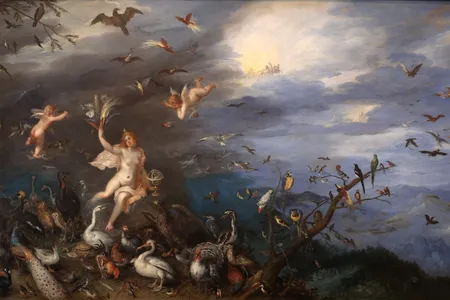
The 1611 oil painting Air

Scientists Just Learned That This Bat Eats Birds Midflight. A Renaissance Painter May Have Known About It Hundreds of Years Ago

Last fall, scientists reported the first known recordings of greater noctule bats hunting and feasting on songbirds during night flights. But a 17th-century artwork by Jan Brueghel the Elder seems to depict the species flying with feathered prey in its mouth
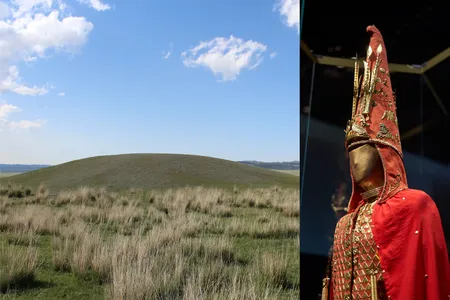
Left: a burial mound in Kazakhstan. Right: the Golden Man's head ornaments.

Kazakhstan’s Iron Age ‘Golden Man’ and Other Elite Scythians of Eurasia Inherited Their High Social Status, Ancient DNA Suggests

Researchers have long wondered whether upper-class members of the ancient nomadic warriors earned their social status through individual achievements or birthright
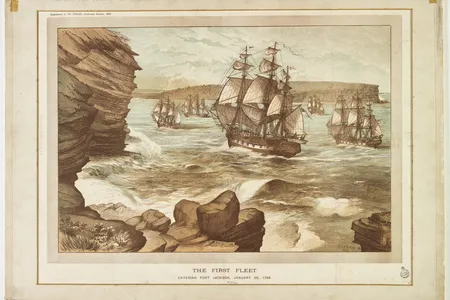
Artist E. Le Bihan created this depiction of the First Fleet entering Sydney Harbor.

Smallpox Scabs That British Doctors Used to Inoculate Patients May Have Introduced the Deadly Disease to Australia, New Research Suggests

Two new studies find that British colonists arriving via ship in the late 18th century likely introduced smallpox, which devastated Aboriginal communities far more than previously known
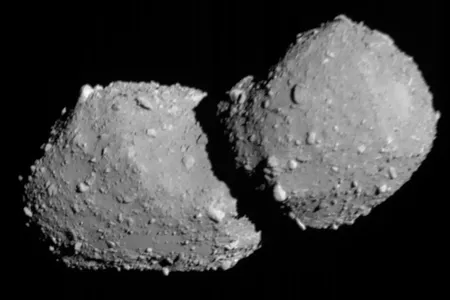
Asteroid Torifune as seen by Hayabusa2 from a little more than half a mile away

New Images Reveal That This Asteroid Is Actually Two Conjoined Space Rocks. They Form a Peanut-Shaped Object Called a ‘Contact Binary’

A flyby conducted by the Japanese spacecraft Hayabusa2 uncovered the asteroid’s strange shape. Data gathered by the probe will also help defend the planet against potentially threatening space rocks

Francesco I de' Medici, left, died suddenly in 1587. His brother Ferdinando I, right, succeeded him as grand duke of Tuscany.

Did This Duke Poison His Brother? A New DNA Analysis May Solve the Centuries-Old Medici Mystery

Researchers found evidence of malaria in Francesco I de’ Medici’s bones, leading them to argue “with scientific certainty” that it was disease, not arsenic, that led to his death in 1587
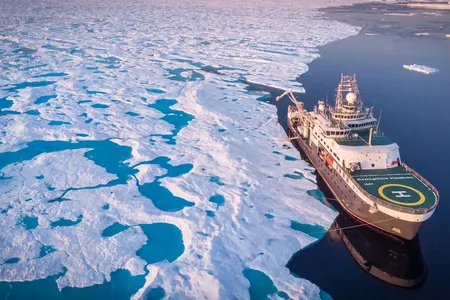
Scientists analyzed about 25 years' worth of data from the Fram Strait, a passageway where the Arctic and Atlantic oceans meet.

The Arctic Ocean May Have Passed a Crucial Tipping Point That Could Harm Food Webs and Worsen Climate Change

Sea ice loss seems to have triggered a decline in the nutrient nitrate, affecting the tiny organisms that form the foundations of marine food chains and absorb atmospheric carbon dioxide, according to a new study

Page 17 of 556