Subscribe to Smithsonian magazine and get a FREE tote.

Smart News

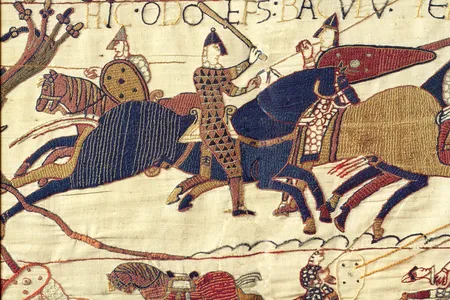
A scene from the Bayeux Tapestry depicting Bishop Odo rallying William's army during the Battle of Hastings in 1066

How Should the Bayeux Tapestry End? A New Competition Invites Children to Reimagine Its Missing Final Panel

Some historians think the 230-foot-long artwork is missing its final panel, which may have once depicted William the Conqueror’s coronation. As the tapestry goes on view in London, students will be drafting endings of their own

Narwhals live in the North Atlantic and Arctic Oceans.

Narwhals Sport Iconic Straight, Spiraled Tusks. Scientists Just Uncovered Some of the Eye-Catching Feature’s Structural Secrets

The Arctic whales are the only known animals with straight tusks, and ones that consistently twist to the left. New research reveals that the inner layer twists to the right and that the opposing spirals provide strength and help the tusks grow straight
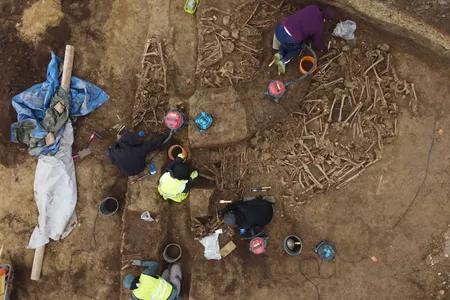
An aerial view of the mass grave, which was found beneath a soccer field in Vienna in October 2024

New Research

Construction in Austria Revealed a Roman-Era Mass Grave Beneath a Soccer Field. New Research Suggests That the Men’s Enemies Targeted Their ‘Sensitive Areas’

No written records mention a fight in this specific part of Vienna at the time of the men’s deaths. But the brutal nature of their injuries, particularly to the pelvis area, indicates that these individuals died on the battlefield
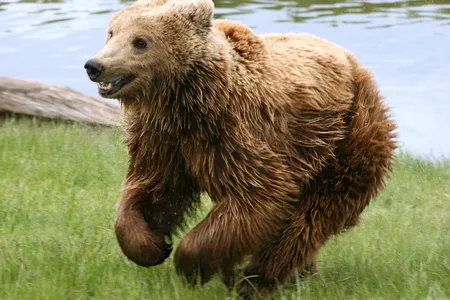
Scientists suspect the bones belonged to a brown bear or a polar bear.

Ireland’s ‘Kerry Cow’ Bones Are Actually Wild Boar and Bear, Shaking Up the Story of Farming’s Arrival on the Island

The bones were discovered on the Dingle Peninsula more than 30 years ago, but scientists recently decided to take another look at them, this time using modern techniques
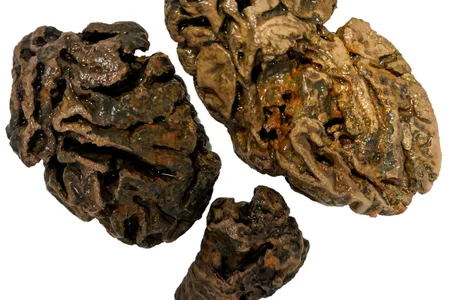
Scientists have discovered more than 4,400 ancient preserved human brains, some of which are 12,000 years old.

Archaeologists Have Found Thousands of Intact Ancient Human Brains. Scientists Say They’ve Figured Out Why the Organs Don’t Always Rot

Under the right conditions—wet and oxygen-deprived—the same chemical reactions that cause tissue to break down can instead have the opposite effect, according to a new study
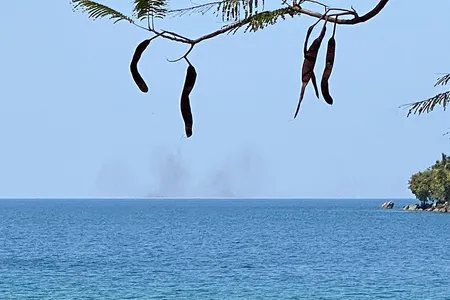
A swarm of Chaoborus edulis flies over Lake Malawi

Why Don’t Insects Live in the Ocean? Scientists Just Ruled Out One Possible Explanation Thanks to Deep-Diving Fly Larvae

Researchers thought that insects might not live there because their respiratory systems would implode from water pressure. But certain fly larvae in East Africa make daily trips toward the bottom of Lake Malawi with the help of strong air sacs that contain a stretchy protein
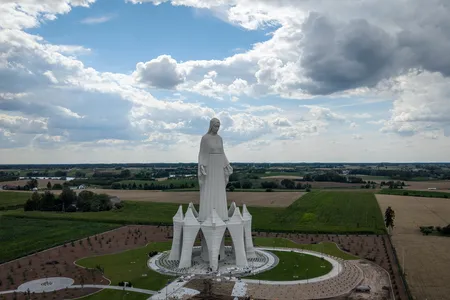
The statue is located in the village of Konotopie, in central Poland.

A Towering 182-Feet-Tall Statue in Rural Poland Is Now the Tallest Virgin Mary in All of Europe. Locals Hope It Will Become a Tourist Destination

The steel and concrete monument honoring the mother of Jesus is located in Konotopie, a rural village about 100 miles from Warsaw
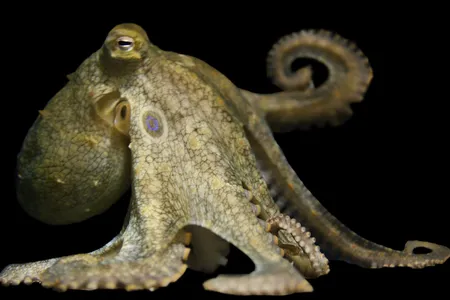
Researchers made the discovery while studying the California two-spot octopus.

Why Are Some Octopuses So Smart? The Answer Might Lie in a Never-Before-Seen Mutation That Helps Them Accurately Build Proteins

Scientists discovered a strange feature in certain octopuses’ ribosomal RNA, molecules that create a 3D scaffold for cellular protein factories. It was found only in shallow-water creatures that have expanded nervous systems and can do complex behaviors

Brazil experienced its first urban outbreak of yellow fever in decades from late 2016 through 2018. During that time, people flocked to health centers to get a vaccine, which can provide lifelong protection.

Brazil’s First Urban Yellow Fever Outbreak in Nearly a Century May Have Been Fueled by a Surprising Culprit

Extremely wet conditions are known to help spread mosquito-borne diseases like yellow fever. But based on computer simulations, researchers suspect that a severe drought may have contributed to the South American country’s recent deadly epidemic
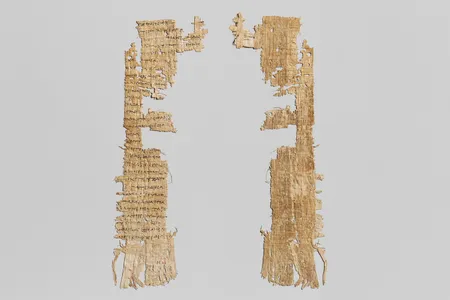
An early papyrus fragment from Homer's Odyssey, dated to roughly 285 to 250 B.C.E., is now on display in New York City.

You Can Now See One of the Oldest Surviving Copies of ‘The Odyssey’ at the Metropolitan Museum of Art

The papyrus fragment contains three lines that don’t appear in standard modern-day translations of Homer’s epic poem
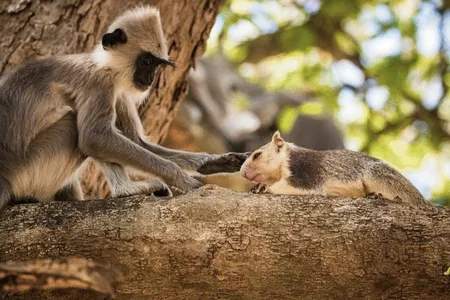
A tufted gray langur strokes a grizzled giant squirrel in Yala National Park, Sri Lanka.

Do Monkeys Keep Pets? Study Finds Widespread Primate Interactions With Other Animal Species, From Mice to Deer

This social behavior might reveal the evolutionary roots of traits that underlie pet-keeping in humans, scientists say, from caregiving to tolerance and curiosity. But it’s not the same as a person keeping a cat or a dog

Participating in a sleep study, or a polysomnography, can help doctors diagnose a patient with narcolepsy.

This Newly Approved Narcolepsy Drug Is the First to Target the Sleep Disorder’s Root Cause Rather Than Its Symptoms

The Food and Drug Administration just greenlit a medication called Orzeyful for the treatment of narcolepsy type 1 in adults. The condition is caused by the loss of brain cells that produce orexin, a chemical important for regulating the sleep-wake cycle
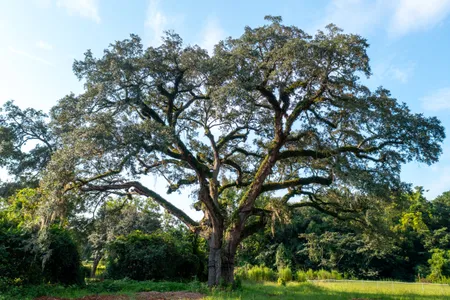
The Eutaw Springs witness tree is estimated to be 300 years old.

Inside the Fight to Save a 300-Year-Old Tree That Survived a Revolutionary War Battle

Arborists are working to preserve the 45-foot-tall live oak in South Carolina’s Eutaw Springs Battlefield Park. The historic tree suffered damage during a lightning strike 50 years ago
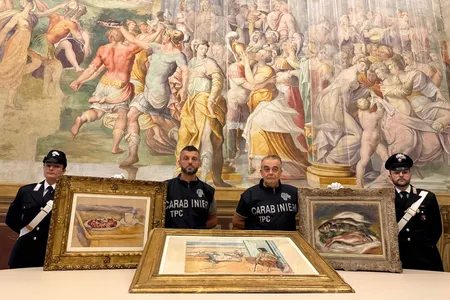
Italian officials pose with the three recovered artworks: Paul Cézanne’s Still Life With Cherries, Pierre-Auguste Renoir’s Les Poissons and Henri Matisse’s Odalisque on the Terrace.

Stolen Masterpieces Worth $10 Million Discovered in a Cardboard Box, Months After Thieves Snuck Into a Museum and Whisked Them Away Into the Night

The artworks by Cézanne, Renoir and Matisse disappeared in a three-minute heist earlier this year. Now, police have arrested five suspects in connection with the burglary in northern Italy
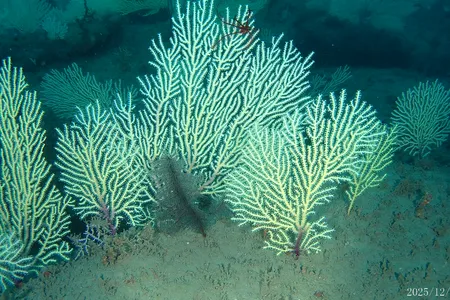
An image of the reef

These Coral Reefs Off West Africa Were Long Presumed Dead. Scientists Just Found Them Alive and Teeming With Life

Fish surveys in the 1960s detected what experts thought was a dead coral reef barrier off the country of Benin. Decades later, researchers set off in small fishing boats to investigate it using sonar mapping, underwater drone surveys and stationary video recorders

Past studies have suggested that what’s good for the heart may also help protect the brain. But researchers hoped to frame that connection in a different way—not just as reduced risk, but as time gained without dementia.

Avoiding These Three Vascular Health Risk Factors in Midlife Can Help You Delay Dementia for About 13 Years, Study Suggests

High blood pressure, diabetes and smoking are three major modifiable risk factors of dementia. New research tracked more than 12,000 participants to quantify how many years of healthy cognitive function you can gain by evading some or all of them during middle age
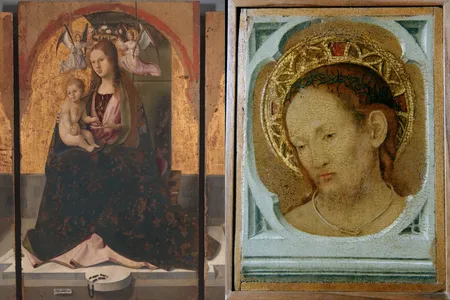
Thieves stole three panels (one of which is pictured at left) from Antonello da Messina’s Polyptych of San Gregorio. They also took a small devotional painting (seen at right).

As Sicilians Flocked to a Religious Festival, Thieves Broke Into a Nearby Museum and Stole Four Renaissance Paintings

The missing works include three panels from a 15th-century altarpiece by Antonello da Messina, as well as a two-sided devotional painting by the artist
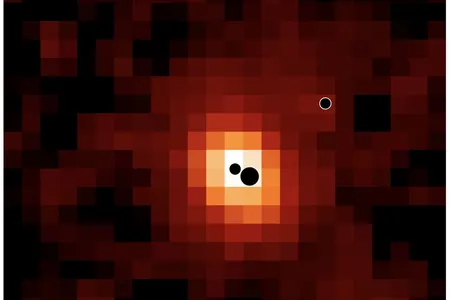
A map of the galaxy J0148-4214 with dots showing the locations of the three supermassive black holes.

In a First, Astronomers May Have Spotted a Galaxy in the Early Universe With Three Behemoth Black Holes

The galaxy’s light took about 12.5 billion years to reach the James Webb Space Telescope, meaning the instrument saw the black holes a little more than one billion years after the Big Bang. Two of the black holes seemed on track to merge, illustrating how the objects grow
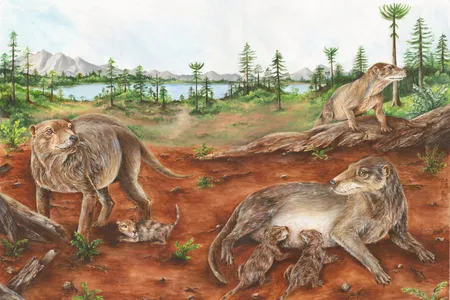
An illustration of Chiniquodon theotonicus, including a pregnant female and a nursing female

When Did Animals Start Giving Birth to Live Young? This 236-Million-Year-Old Fossil Might Rewrite Mammals’ Evolutionary History

A bone feature found in a mammal ancestor hints that the creature was relatively large as a newborn, more in line with the size of a creature birthed live than hatched from an egg. Still, it provides only indirect evidence
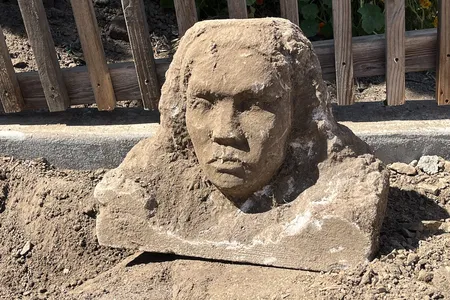
The sculpture weighs an estimated 150 pounds.

Cool Finds

This Couple Found a Mysterious 150-Pound Sculpture Buried in Their Backyard. Now, They’re Trying to Figure Out Who Made It

After discovering a large limestone bust on their San Francisco property in May, Greg Gatwood and Judy Gittelsohn have spent the past few months trying to unravel its backstory

Page 23 of 1155