

How could changes in an ocean phenomenon in Panama affect your Omega-3 supplements?
Panama’s exports of fish oil, a raw material in omega-3 supplements, fell by 88% within months, after STRI scientists reported the first recorded failure of the country seasonal upwelling.
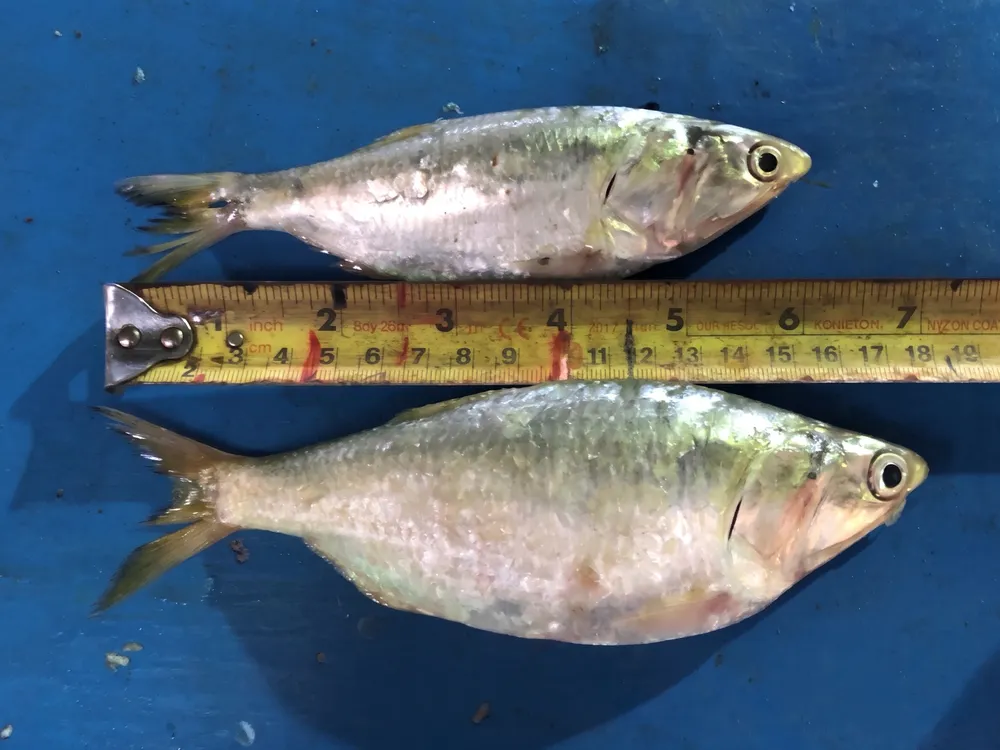
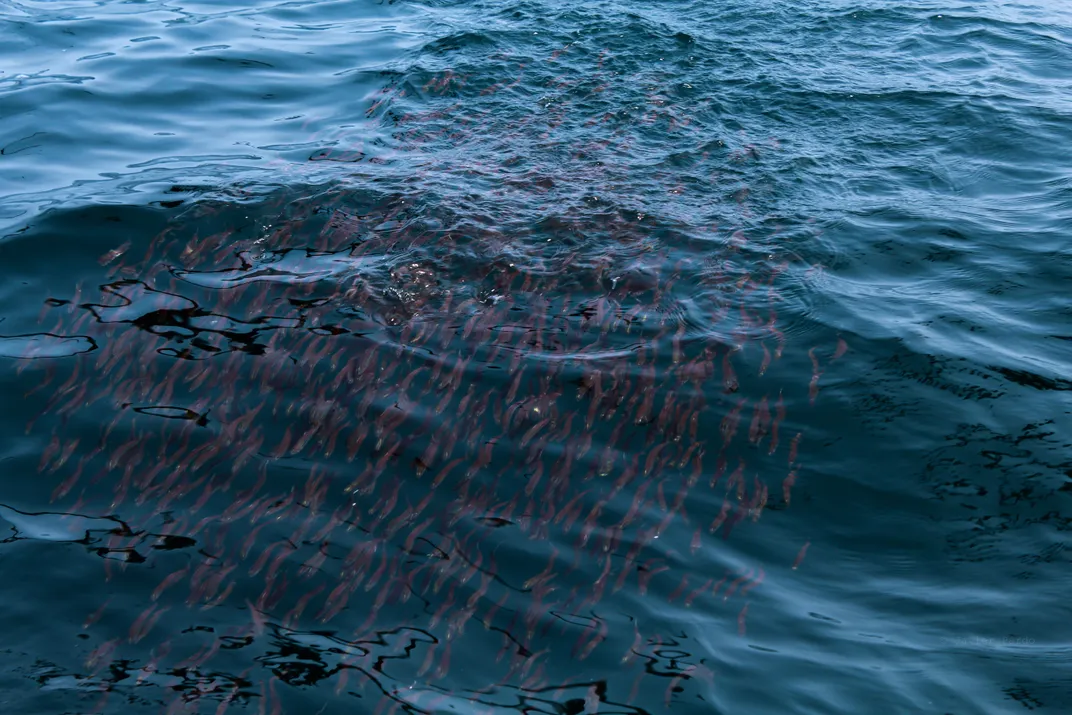
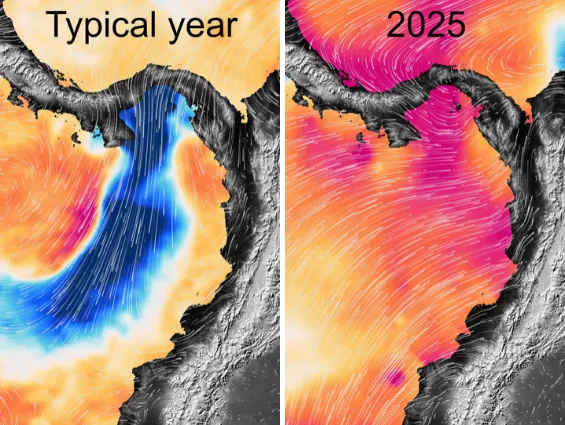
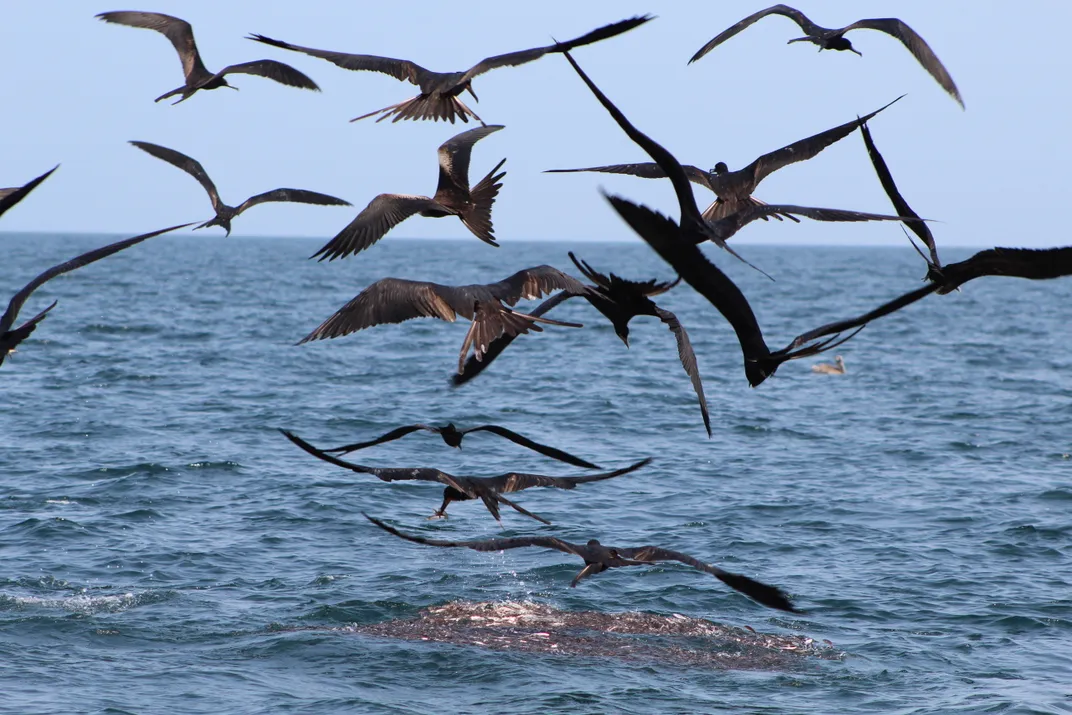
Every dry season, strong northerly winds blow across the Isthmus of Panama and push surface water away from the Pacific coast. Then, cold, nutrient-rich water rises from the deep to replace it. This upwelling feeds the plankton that sustain Panama's industrial catch of Pacific anchoveta (Cetengraulis mysticetus), a small, oily fish rendered into fishmeal and omega-3-rich fish oil for local consumption and export.
Without the upwelled nutrients, plankton production across the Gulf of Panama in February 2025 fell by almost two-thirds, the lowest in 32 years of records. Anchoveta landings then dropped to 11% of the average, the lowest since the fishery became fully exploited in 1966.
"Last year we predicted the failure would ripple up the food chain. What surprised us was the speed," said postdoctoral fellow at STRI and co-first author of the study Andrew Sellers. "Within a single season the fish were scarce, they were lean, and Panama's fish oil exports had all but disappeared."
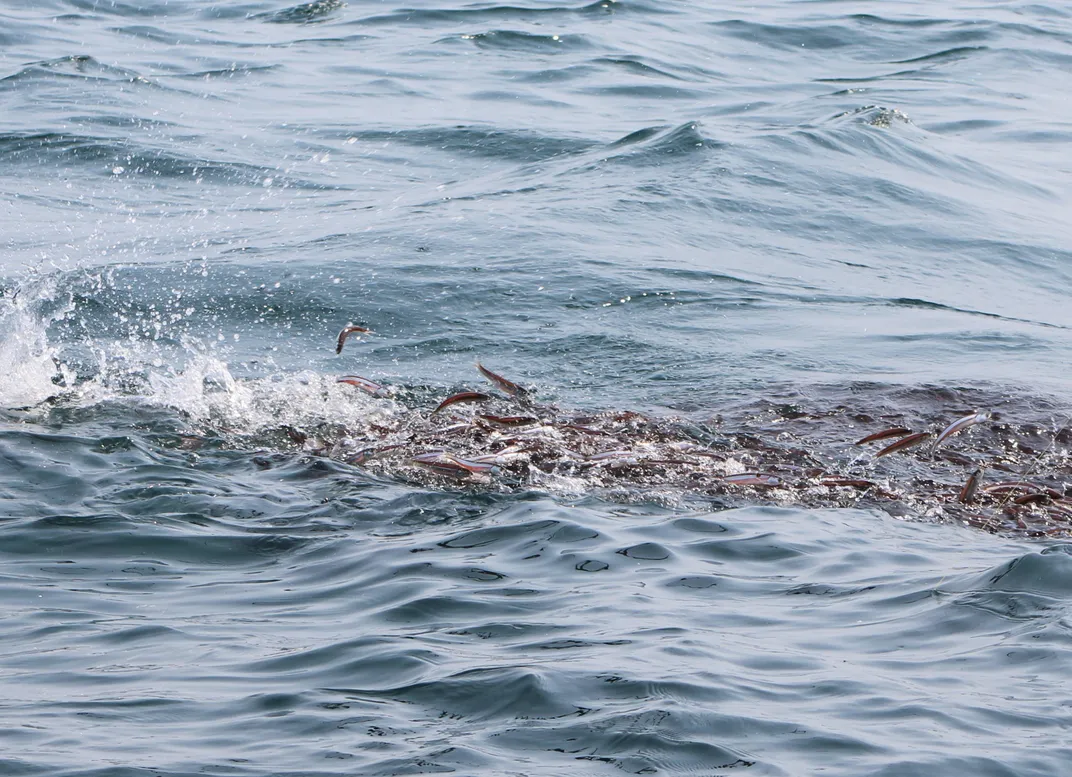
"There were almost no young anchoveta," said STRI postdoctoral fellow and co-first author of the study Carolina Chong-Montenegro. "The generation that should have filled the nets in 2025 was never recruited."
Perú and Chile are among the main producers of fish oil. However, Panama’s fish oil exports increased in 2024, since Peru's anchoveta fishery collapsed during the 2023 El Niño. But in 2025, the few anchoveta that were caught contained about half their usual fat. With fewer fish and leaner fish, there was less oil. Panama's fish oil exports fell by 88% in 2025. Most of that oil goes to northern Europe for omega-3 refining and salmon feed. Meal and oil made up 5–7% of Panama’s goods exports in years without copper exports.
After upwelling failed in 2025, Andrew Sellers built strong relationships with Promarina S.A., the company that processes the Gulf's anchoveta, giving the team access to its spreadsheets and logbooks and landing records dating back to 2016. The team combined these with government landƒing records back to 1956 and ocean measurements, allowing them to track the effects of the upwelling failure from altered marine nutrient regimes to losses in national revenue.
"Nobody will be surprised that when the upwelling failed, the fish failed and then the exports failed," said STRI Staff scientist and senior author Aaron O'Dea. "What I think is nice about this study is that we were able to document, in a reproducible way, every step in between. It is therefore more than a “just-so story,” thanks to Andrew’s diligence and affability. Companies guard this kind of information closely, and he earned Promarina's trust."
"When the anchoveta vanished, Promarina wanted to understand what had happened as much as we did," said Sellers. "They kindly opened their logbooks and lab results going back a decade. We are extremely grateful."
While the upwelling failure collapsed industrial fishing, the effect on Panama’s complex artisanal fisheries, and the fishing communities that depend on them, is less clear. Under the leadership of co-author and STRI staff scientist, Anastasia Quintana, a team of early career students is conducting interviews in fishing communities to understand how the upwelling collapse affected the livelihoods of artisanal fishers.
The upwelling returned in 2026, and the fishing company reported a recovery in anchoveta landings. But a very strong El Niño is now underway and is currently pushing warm water towards the Pacific coast of Central America. The researchers expect that in 2027 the winds may blow as normal but bring up warm, nutrient-poor water instead of the cold, rich water the food web depends on.
Reference: Sellers, A. J., Chong-Montenegro, C., Carter, A. L., Cornejo, A. J., Hinojosa, N. A., Pardo Díaz, J., Quintana, A., Solís, R., Spalding, A. K. and O'Dea, A. 2026. Failure of a tropical upwelling rapidly collapsed Panama's anchoveta fishery and its exports. Proceedings of the National Academy of Sciences 123, e2633722123. https://doi.org/10.1073/pnas.2633722123
About the Smithsonian Tropical Research Institute
Headquartered in Panama City, Panama, STRI is a unit of the Smithsonian Institution. Our mission is to understand tropical biodiversity and its importance to human welfare, to train students to conduct research in the tropics and to promote conservation by increasing public awareness of the beauty and importance of tropical ecosystems. Watch our video, and visit our website, Facebook and Instagram for updates.
