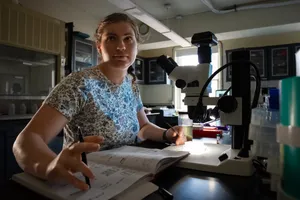
Meet the Next Generation of Blue Carbon Scientists Joining Forces Across Borders to Protect Coastal Ecosystems Around the World
A new international collaboration between postdocs at the Smithsonian Environmental Research Center, The Nature Conservancy, and the University of Cambridge develops long-term plans to study global blue carbon ecosystems.
There is no exact line between the land and water where a wetland starts and ends. In much the same way, wetlands cannot be separated from the ecosystems and communities around them. Whether it is a mangrove forest protecting coastal communities from storm surge, a salt marsh storing carbon from the atmosphere, or a seagrass meadow supporting fisheries and biodiversity, wetlands provide vast benefits that extend far beyond their boundaries. This makes wetlands a critical focus for research. Understanding how wetlands interact with surrounding ecosystems and how they change over time can help guide solutions to major global challenges such as the warming climate, food insecurity, and mass extinction.
Protecting and restoring wetlands requires more than scientific knowledge alone. It also depends on strong partnerships that can adapt, innovate, and respond to future challenges. Many such initiatives - spanning national governments, local communities, conservation NGOs, and academic researchers - already exist to advance work on blue carbon systems (a collective term applied to mangroves, marshes, and seagrasses, given their importance in capturing carbon dioxide from the atmosphere). Yet ensuring the continued growth and success of this blue carbon work also requires developing a new generation of scientists and conservation leaders.
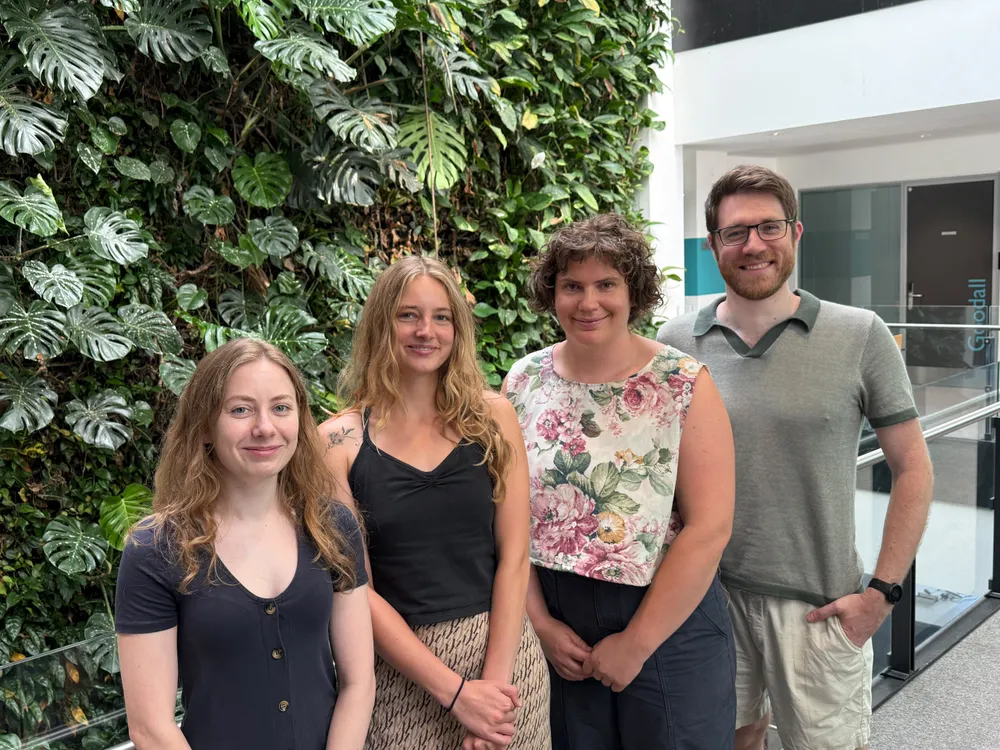
An example of investment in future collaboration is currently taking shape through a partnership among four early career researchers across the University of Cambridge, The Nature Conservancy, and the Smithsonian Institution: Dr. Emma Deeks, Dr. Catherine Waite, Dr. Ryan O’Connell, and myself. As postdoctoral researchers, we are scientists who have recently finished a Ph.D. and are now working on establishing our long-term research careers and professional networks. This cross-institutional collaboration, intentionally coordinated by our mentors and enabled by a donation to the Smithsonian Institution and The Nature Conservancy, maximizes a pivotal stage in our careers. Currently, each of our institutions have blue carbon programs that are actively collaborating with nations and regions across the globe. In joining these collaborations now, the four of us can provide our expertise to ongoing research and conservation efforts while simultaneously developing new approaches and building partnerships that we will maintain throughout our careers.
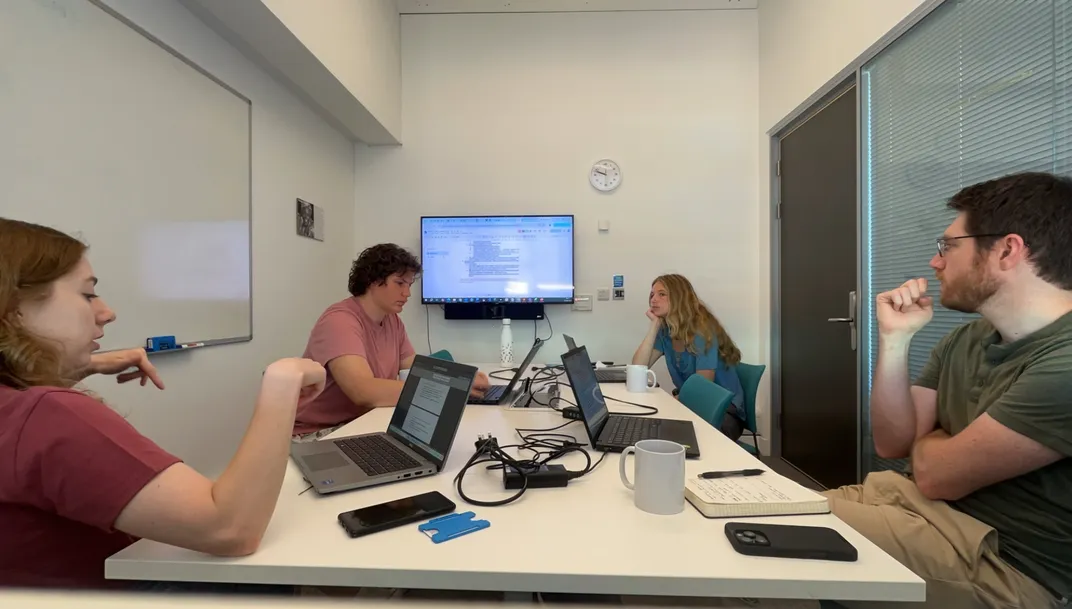
After several months of convening remotely and brainstorming project ideas, in August 2026, the four of us met in person for the first time to outline our priorities for blue carbon research and discuss how we can team up and cooperatively plan our next career steps. Together we bridge four distinct perspectives within Earth Science: biology, geography, ecology & evolution, and engineering. Working side-by-side allowed us to discover overlapping goals that would not have emerged over video calls alone—from comparing scientific terminology across fields to exploring advanced methods like molecular chemical tracing and artificial intelligence driven foundation models for satellite-based ecosystem mapping.
“Conserving coastal ecosystems requires interdisciplinary skillsets and collaboration across sectors, which is what we hope to achieve through this collaboration.” Says Dr. Emma Deeks “Bringing together our distinct perspectives to address pressing ecological questions will ensure our outcomes are truly comprehensive and impactful.”
Therefore, establishing our blue carbon postdoc team and connecting us in person enabled the lateral exchange of knowledge and methods necessary between us and our mentors to outline the following three priorities:
-
Tracking Connectivity: Utilizing multiple analytical methods to map how carbon moves in and out of blue carbon ecosystems.
-
Scaling Accuracy: Navigating the gap between hands-on field measurements and global blue carbon mapping products.
-
Forecasting Change: Leveraging spatial and temporal data to predict how climate change and urbanization will impact the future of blue carbon ecosystems.
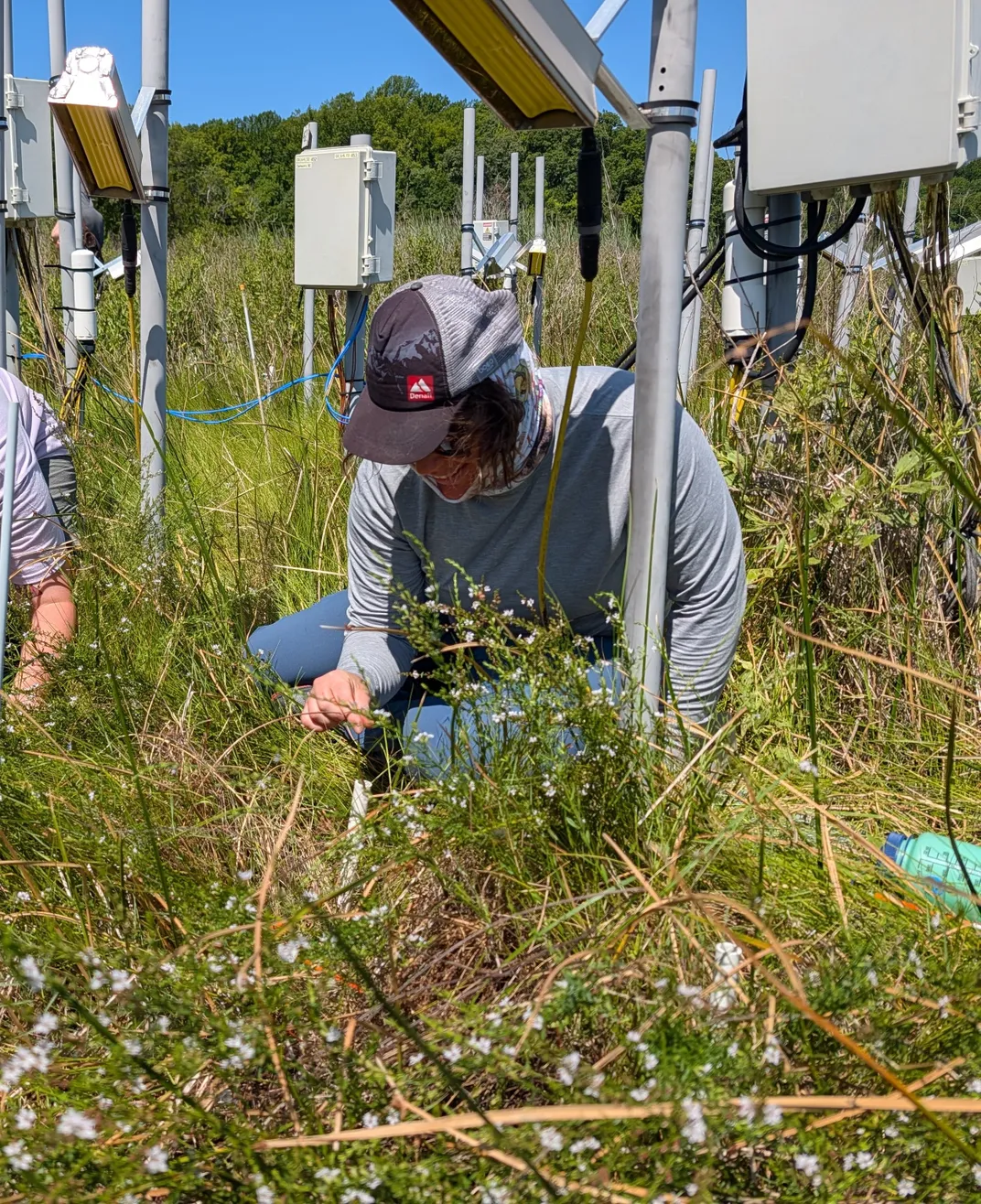
Navigating leadership, international logistics, and institutional career tracks across NGOs and universities is a fundamental component in our training as early-career postdoctoral researchers. Our collective team of mentors and peers across institutions provides a wide network of support as we take the lead on the next phase of our work. Together, we have planned a project that synthesizes and combines approaches in each of our fields and includes coordinating an upcoming field campaign to assess carbon flows across a mangrove watershed in Central America. By pairing sediment and plant samples collected on the ground with satellite observations overhead, this work will help train new models that capture ecological connectivity in coastal wetlands around the world.
"Successful conservation and restoration efforts require balancing many priorities, from a strong scientific foundation to co-development with local communities to reliable project management and clear communication.” says Dr. Ryan O’Connell. “This ambitious collaboration provides us with the rare opportunity to advance all of those skills at once."
The challenges facing blue carbon ecosystems are global, but so are the opportunities to address them. By investing in collaboration, mentorship, and the next generation of scientists today, we are helping build the knowledge, partnerships, and capacity needed to protect these critical ecosystems for years to come.
Looking ahead, our team will share preliminary insights and engage international partners at major scientific gatherings, including the upcoming American Geophysical Union (AGU) meeting in San Francisco, California, the British Ecological Society (BES) meeting in Birmingham, UK, and the International Congress for Conservation Biology in Puebla, Mexico.
If you have any inquiries about the work or if you are interested in exploring potential collaborations, please feel free to reach out to: [email protected].