

How Do Native Americans Spend Thanksgiving Day?
A scholar from the Smithsonian’s National Museum of the American Indian shares an Indigenous perspective on the holiday, and members of the Native community tell us how they commemorate the day
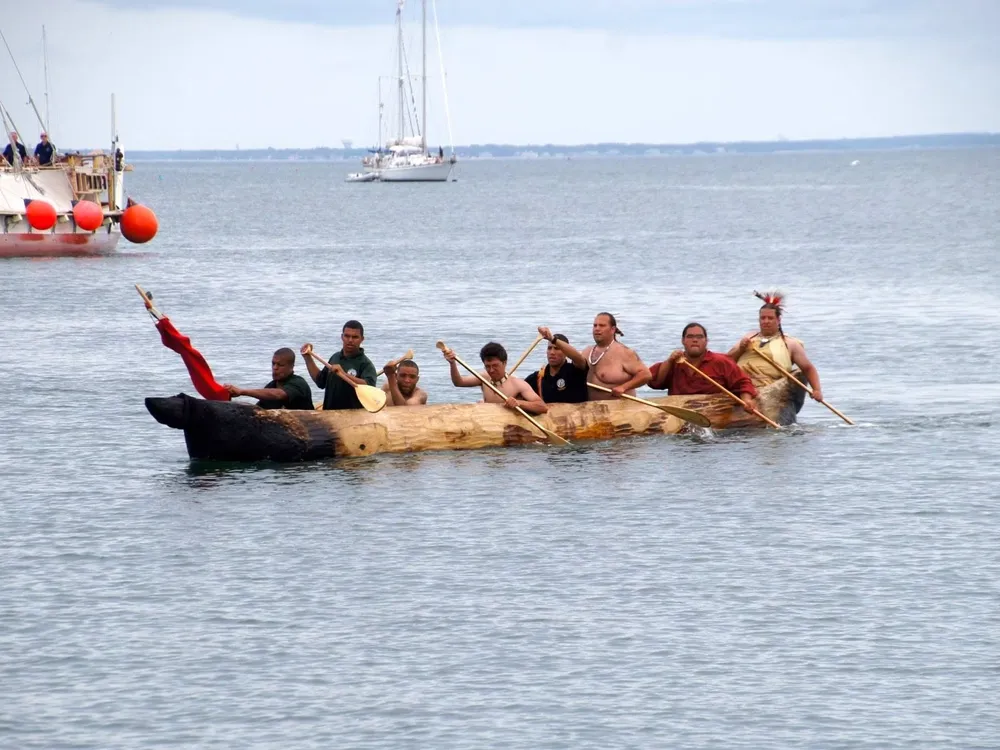
When I think back about my earliest memories of elementary school, I remember being asked to bring a brown paper sack to class so that it could be decorated and worn as part of the Indian costume used to celebrate Thanksgiving. I was also instructed to make a less-than-authentic headband with Indian designs and feathers to complete this outfit. Looking back, I now know this was wrong.
The Thanksgiving Indian costume that all the other children and I made in my elementary classroom trivialized and degraded the descendants of the proud Wampanoags, whose ancestors attended the first Thanksgiving popularized in American culture. The costumes we wore bore no resemblance to Wampanoag clothing of that time. Among the Wampanoag, and other American Indians, the wearing of feathers has significance. The feathers we wore were simply mockery, an educator’s interpretation of what an American Indian is supposed to look like.
“I was in fifth grade in Tennessee when a teacher asked me how I knew the Thanksgiving story we were learning was wrong. I said, “Because I’m Wampanoag.” I got paddled for speaking up that day. Now I’m a father, and when my children ask me about Thanksgiving, I want them to hear the part I was punished for trying to tell.” - Sookunon Keon Nushkeesuquot, Mashpee Wampanoag
The Thanksgiving myth has done so much damage and harm to the cultural self-esteem of generations of Indian people, including myself, by perpetuating negative and harmful images to both young Indian and non-Indian minds. There are so many things wrong with the happy celebration that takes place in elementary schools and its association to American Indian culture; compromised integrity, stereotyping, and cultural misappropriation are three examples.
When children are young, they are often exposed to antiquated images of American Indians through cartoons, books, and movies. But Thanksgiving re-enactments may be their most active personal encounter with Indigenous America, however poorly imagined, and many American children associate Thanksgiving actions and images with Indian culture for the rest of their lives. These cultural misunderstandings and stereotypical images perpetuate historical inaccuracy.
Tolerance of mockery by teachers is a great concern to Native parents. Much harm has been done to generations of Indian people by perpetuating negative and harmful images in young minds. Presenting Thanksgiving to children as primarily a happy time trivializes our shared history and teaches half-truth. And while I agree that elementary-school children who celebrate the first Thanksgiving in their classrooms are too young to hear the truth, educators need to share Thanksgiving facts in all American schools sometime before high school graduation.
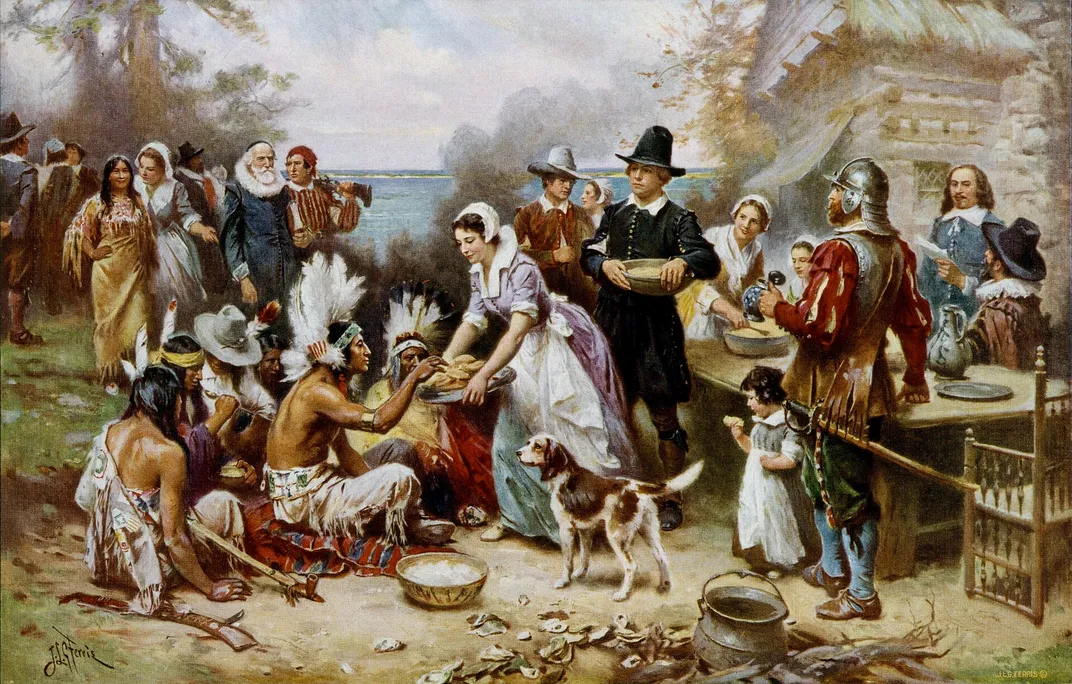
Let’s begin with Squanto (aka Tisquantum), a Patuxent, one of more than 50 tribes who formed the Wampanoag Confederacy. Around 1614, when he was perhaps 30, Squanto was kidnapped along with others of his people and taken across the Atlantic Ocean to Malaga, Spain, where they were sold into slavery. Monks in Spain bought Squanto, shared their faith with him, and made it possible for him to find his way to England in 1615. In England he worked for shipbuilder John Slany and became proficient in English. In 1619 Squanto returned to his homeland by joining an exploring expedition along the New England coast. When he arrived at the village where he was raised, all his family and the rest of his tribe had been exterminated by a devastating plague.
What about the Pilgrims? Separatists who fled from England to Holland seeking to escape religious persecution by English authorities, and who later booked passage to North America, are now called “Pilgrims,” though Americans did not widely use the term until the 1870s. In November 1620, the Mayflower dropped anchor in present-day Provincetown Harbor. After exploring the coast for a few weeks, the Pilgrims landed and began building a permanent settlement on the ruins of Squanto’s Patuxet village, now renamed New Plymouth. Within the first year, half of the 102 Pilgrims who set out from Europe on the Mayflower had perished. In desperation, the Pilgrims initially survived by eating corn from abandoned fields, raiding villages for stored food and seed, and robbing graves at Corn Hill.
Squanto was introduced to the Pilgrims in the spring of 1621, became friends with them, and taught them how to hunt and fish in order to survive in New England. He taught the Pilgrims how to plant corn by using fish as fertilizer and how to plant gourds around the corn so that the vines could climb the corn stalks. Due to his knowledge of English, the Pilgrims made Squanto an interpreter and emissary between the English and Wampanoag Confederacy.

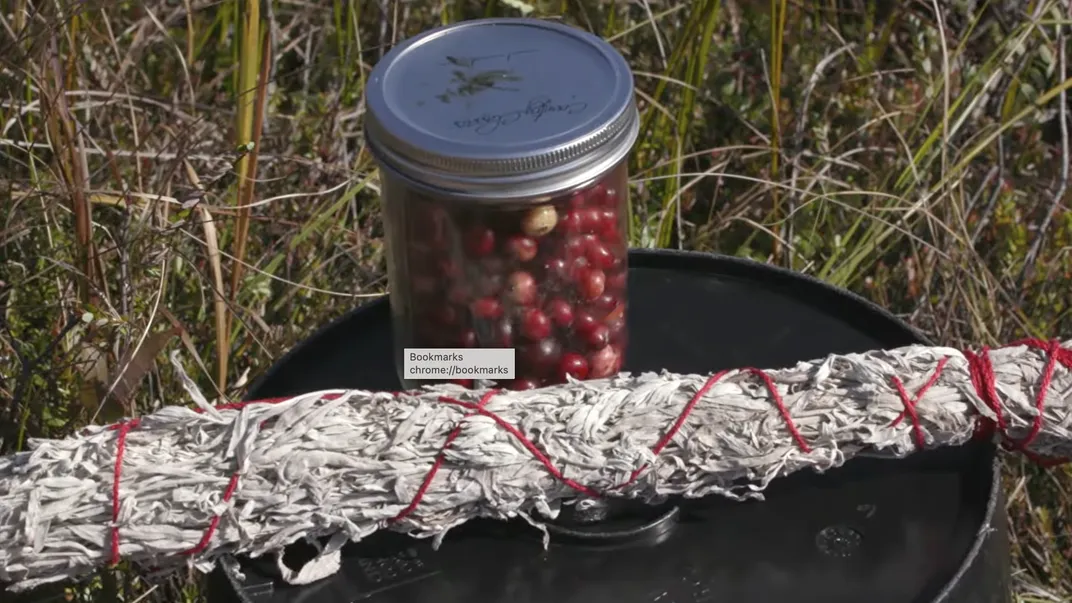
What really happened at the first Thanksgiving in 1621? The Pilgrims did not introduce the concept of thanksgiving; the New England tribes already had autumn harvest feasts of thanksgiving. To the original people of this continent, each day is a day of thanksgiving to the Creator. In the fall of 1621, William Bradford, the governor of the Plymouth Colony, decided to have a Plymouth harvest feast of thanksgiving and invited Massasoit, the Grand Sachem of the Wampanoag Federation, to join the Pilgrims. Massasoit came with approximately 90 warriors and brought food to add to the feast, including venison, lobster, fish, wild fowl, clams, oysters, eel, corn, squash and maple syrup. Massasoit and the ninety warriors stayed in Plymouth for three days. These original Thanksgiving foods are far different from the meals prepared in modern Thanksgiving celebrations.
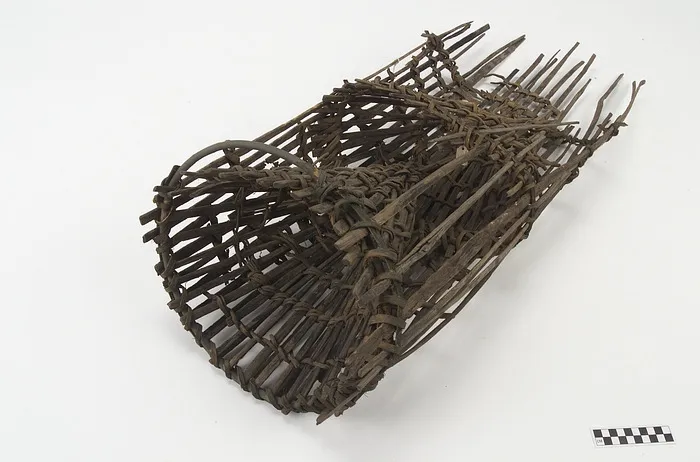
Squanto died in 1622, but Massasoit outlived the era of relative peace in colonial New England. On May 26, 1637, near the present-day Mystic River in Connecticut, while their warriors were away, an estimated 400 to 700 Pequot women, children, and old men were massacred and burned by combined forces of the Plymouth, Massachusetts Bay, and Saybrook (Connecticut) colonies and Narragansett and Mohegan allies. Colonial authorities found justification to kill most of the Pequot men and enslave the captured women and their children. Pequot slaves were sent to Bermuda and the West Indies. In 1975 the official number of Pequot people living in Connecticut was 21. Similar declines in Native populations took place throughout New England as an estimated three hundred thousand Indians died by violence, and even more were displaced, in New England over the next few decades.
This history raises the question, why should Native people celebrate Thanksgiving? Many Natives, particularly in the New England area, remember this attempted genocide as a factual part of their history and are reminded each year during the modern Thanksgiving. The United American Indians of New England meet each year at Plymouth Rock on Cole’s Hill for a Day of Mourning. They gather at the feet of a statue of Grand Sachem Massasoit of the Wampanoag to remember and reflect in the hope that America will never forget.
I turned to the internet to find out what Native people are doing on Thanksgiving. Like other Americans, their answers are extremely diverse. Here are a few of the responses I have received:
Summer from New Mexico - I got together recently with a bunch of women here that all dance at powwows, and we are all doing a food handout where we hand out food, clothes, etc. to the homeless right before Thanksgiving. We’re trying to make food that hits home like blue corn spam burritos, things that are kind of equivalent to what was cooked during Thanksgiving, or food from home for some of the Natives on the streets. Not just for Natives; it’s for everyone, but there are a lot of Native Americans living in the streets here in Albuquerque and we just want to be there for them all. That’s how we’re spending some of our Thanksgiving.
Bobbi from Alaska – I am Jicarilla Apache/Laguna Pueblo residing in the Interior Alaska, my fifth year here & thankful for the land, the people & rich cultures. Moose Chili (Chimayo red chili, various colored home-grown potatoes, onion, garlic, carrots and celery), oven bread from New Mexico, roasted young turkey and sides, wild rice hot dish with Copper River salmon. Long prayer to commemorate our strong, Native communities who first shared a meal with very poor and fear-driven people. Grateful we are alive and able to serve in premier leadership roles. Being Native is hard work. We pray, sing and dance for the entire universe. Our work is a daily reminder to be humble and to help people & be accountable for our time on Mother Earth.
Shonday in Oklahoma - In my Mvskoke culture, sharing food has long been an expression of hospitality, generosity, respect, and community. When someone invites us to share a meal, they are often offering more than food—they are offering friendship, conversation, and a place at their table. Accepting that invitation when we can honor their hospitality. As Thanksgiving approaches, let's remember that sometimes the greatest gift isn't what's on the table, but the time we spend together around it."
Shane from Wisconsin - I will be spending it over a turkey meal with my family from Chippewa of the Thames by way of Detroit in my childhood home in Wisconsin. Even with my Ho-Chunk family, we have always gathered for the day over a meal celebrating with each other. Although the truth behind the day was known, we chose to make the best of it to be thankful.
George from Wyoming - I am thankful to our warriors, chiefs, veterans, family members and ancestors who fought and protected our songs, dances and ceremonies. I will remember them and keep them in my prayers as I dance over this Thanksgiving holiday at Cabazon, Indio Celebration, California.
Silver from Delaware - My sibling and I will be spending the day with found family. We do look upon the day with contemplation….not only because of the pain of the past, but with gratitude for the present and hope for the future. For us, being Native is having hope. To show we are still here despite the odds.
Rene' from Virginia - I’m foraging for wild mushrooms. Found lion's mane a couple of weeks ago. Chicken of the woods mushrooms may be out too. If I had some sunchokes, I’d make a mushroom medley. Sunchokes are the oldest Indigenous food in this country. I have pawpaw fruit in the freezer from the last harvest. I’ll use that to make a pawpaw avocado mousse. Pawpaw is the oldest and largest Indigenous fruit in what is now called the United States. I thought of making soup and serving the soup in pumpkins I hulled out. But I did that last week.
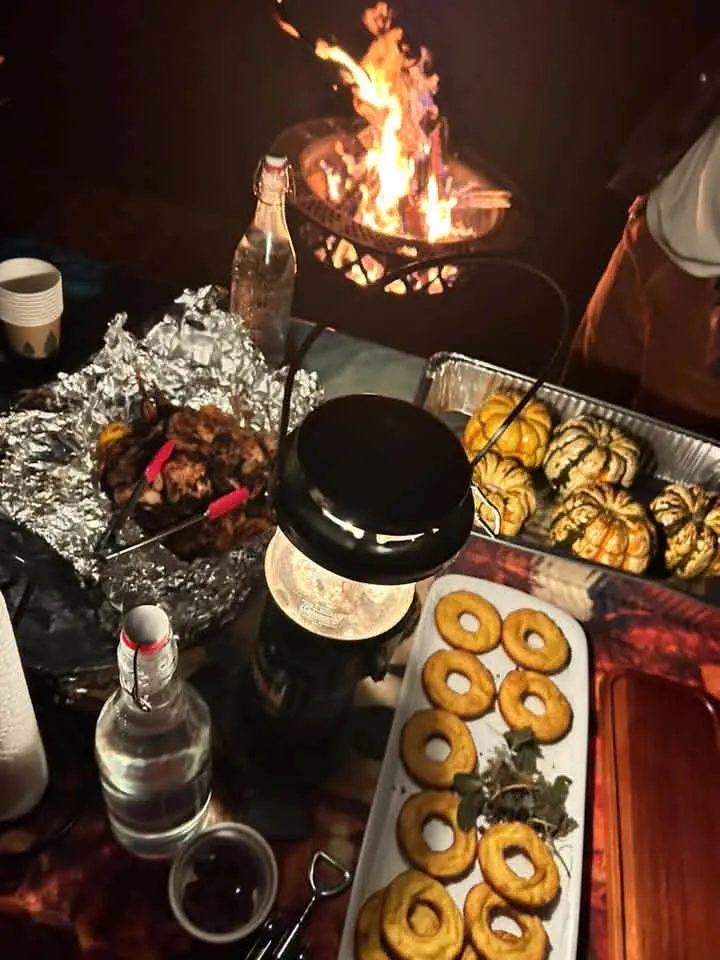
Michael from Virginia - I'm in Falls Church but will be in Stafford, Virginia, with a Seminole family I've known here in the D.C. area for 45-ish years. There's family by birth and family you've chosen.
Ara in California - Since my mom passed last year, my dad and I are visiting with our tribal friends and family at the Prairie Band Potawatomi Casino and getting a nice dinner. We no longer cook since she died. We will also watch some football with friends at the casino as well. Over the weekend, we will go to the Salvation Army and do what my tribal mother did quietly for so many years: pull a name off the tree of a child who wants a bike. She would buy that child a bike and we will do the same in her honor because when she was a young child growing up on the rez, the Salvation Army bought her a bike and it was one of her most cherished possessions alongside her German Shepherd dog, Candy. We will then go to see the lights at Lake Shawnee because the money goes to help families with children and adults that have developmental disabilities. My mom loved lights, and as a former mental health nurse she loved that it supported families in need. We will likely throw in some frybread and some grape dumplings, her favorite.
Denise from Kansas - My eldest son will smoke off and cleanse all of us and each person will individually say what they are grateful for that day. Sometimes it’s as simple as a good night’s sleep or a day off or a baby’s first step or passing their algebra test. All ages participate. A prayer is said and then we eat.
Susan from New Hampshire - I am Penobscot and Mi'kmaq. Recently, I have become more in touch with my heritage and the teachings of our elders. We will have three generations together this year! I am hoping to educate my granddaughter about our traditions, such as a spirit plate, and guide her through being thankful for our elders who keep our traditions alive. I am hoping to have pictures of those who are no longer with us at the table. I want to bring a smudge kit. I think that is something my granddaughter needs to understand we don't only have to use just at pow wows to be able to enter the circle but can be used whenever we need cleansing and centering. I will bring tobacco to offer for those we've lost in the last year. This year will be a wonderful family gathering, something we haven't had in a while.
Adrian from Iowa - Before you dig into the main course, you must first offer a spirit plate near your fire before everyone is served. Only after it is done can everyone partake of the bounty.
Christina from Washington State – In Quinault, people exchange pies with friends. Every Indigenous slice counts.
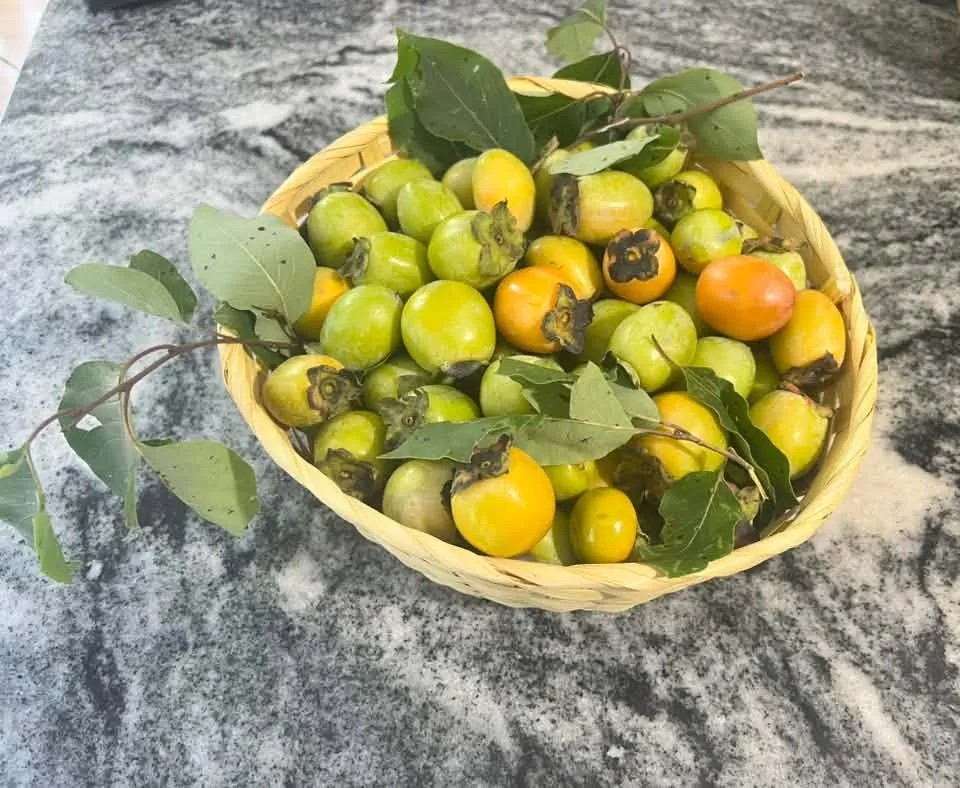
Angelia in Maryland - I harvested some wild persimmons this year that I dried out. I’ll probably use them to flavor my turkey to add a unique sweetness and taste.
Gerald from North Dakota - Working the Thanksgiving Day.
Kelli from New York - Every day we wake up is Thanksgiving, I will eat turkey though and pray for this bird whose life was taken to feed us.
Patricia from Massachusetts - I will give thanks that I wake up every day and that I am healthy. I will remember friends who live in The Spirit World. I will wear my orange shirt that says, "Every Child Matters. " I will thank Phyllis Webstad for the movement and meaning behind Orange Shirt Day each September 30th.
Tracey from Texas - I will spend Thanksgiving with my very own “tribe”. Husband, adult children, grandchildren, my sister and close family friends. I was raised that there is always room at the table for any and all. I think I will have 16 or 17 people present. I can’t wait to see them all!
Carrie from Arizona - Hau. Pilamayaye. I will rise, greet the day and do my daily prayer, since Thanksgiving (every day) means I share my gratitude list with the Universe and all that is Holy. Mindful to ask for continued love, safety, health and direction for all. Then continue the blessed day humbly. Welcome family to my family home. Do everything I’m supposed to do in the day. Then close my eyes peacefully while thinking of the day with a smile on my face.
From the Author: Do I celebrate Thanksgiving? No, I don’t celebrate. But I do take advantage of the holiday and get together with family and friends to share a large meal without once thinking of the Thanksgiving in 1621. I think it is the same in many Native households. It is ironic that Thanksgiving takes place during American Indian and Alaskan Native Heritage Month. An even greater irony is that more Americans today identify the day after Thanksgiving as Black Friday than as National Native American Heritage Day.
This article was originally published in 2011 and has been updated regularly to add new perspectives.