Good Harvest: Revitalizing Indigenous Foodways (Part 1)
Learn about dynamic Native people working in different aspects of Indigenous Food Sovereignty, starting with James Beard Award-winning Chef Sherry Pocknett.
Every year on Thanksgiving weekend, Native American Lifelines, an urban Native health and community center in Baltimore, holds a community feast potluck. Whenever I’m home for the holiday, I drive up to Baltimore with my family and a couple of hot dishes in tow. Southeastern tribes like Piscataway, Lumbee, Eastern Band of Cherokee, and Virginia tribes like mine make up the majority of the Indigenous community in Baltimore, and tribal nations from across the country are represented too. We share foods that would be on any Thanksgiving table – turkey, cranberry sauce, sweet potatoes, cornbread – all Native foods. And then more traditional staples like Three Sisters soup, venison stew, duck breast. Last year there was even a bear rump gifted from up North by a Seneca friend of the community, which was roasted with berries and herbs.
Though Native perspectives on the Thanksgiving story are largely absent, there’s an essential and undeniable truth within it: the Indigenous peoples of the Americas fed the colonists, and by doing so, fed the world.
More than half of the fruits, vegetables, and grains the world consumes today were first cultivated in the Americas through Indigenous agricultural ingenuity. Native peoples transformed wild plants into what are now global agricultural staples through thousands of years of selective breeding, ecological engineering, and soil management. A thin-kerneled grass became over 250 varieties of corn and was grown everywhere from Chile to the Caribbean to Canada. The Inca used the microclimates in the steep Andes mountains to turn bitter toxic tubers into more than 3,000 varieties of potato. And the Aztec and Mayans turned a bitter, tiny berry into the tomato. In the North American woodlands, tribal nations created multi-layered food gardens within the forest landscape, while Mesoamerican peoples had floating farms built into lake beds and swamps that could yield up to seven harvests a year.
Traditional Native food systems were not only efficient and bountiful, they were sustainable. Native peoples maintained healthy interdependent relationships with the environment. The quantity and kinds of foods available depended on keeping the symbiotic relationship intact. Native peoples developed foodways around the principles of stewardship and reciprocity.
Unfortunately, these systems were disrupted by colonization. Forced removals, land dispossession, targeted destruction of staple crops and animal life, and assimilation efforts separated Native people from their traditional means of agriculture, hunting, and fishing. The imposition of government-issued rations created dependency on processed foods causing a marked rise in health concerns like diabetes, heart disease, and even depressive disorders. Industrial farming, pollution, and climate change have only worsened the situation.
Enter the Indigenous Food Sovereignty Movement. Indigenous food sovereignty (IFS) is defined as the inherent right and ability of Indigenous peoples to define, control, and regenerate their own food, agriculture, and land systems. IFS is deeply rooted in kinship, language, ceremony, and sacred responsibilities to the land, water, and non-human relatives. It centers on the restoration, revitalization, and expansion of traditional foodways.
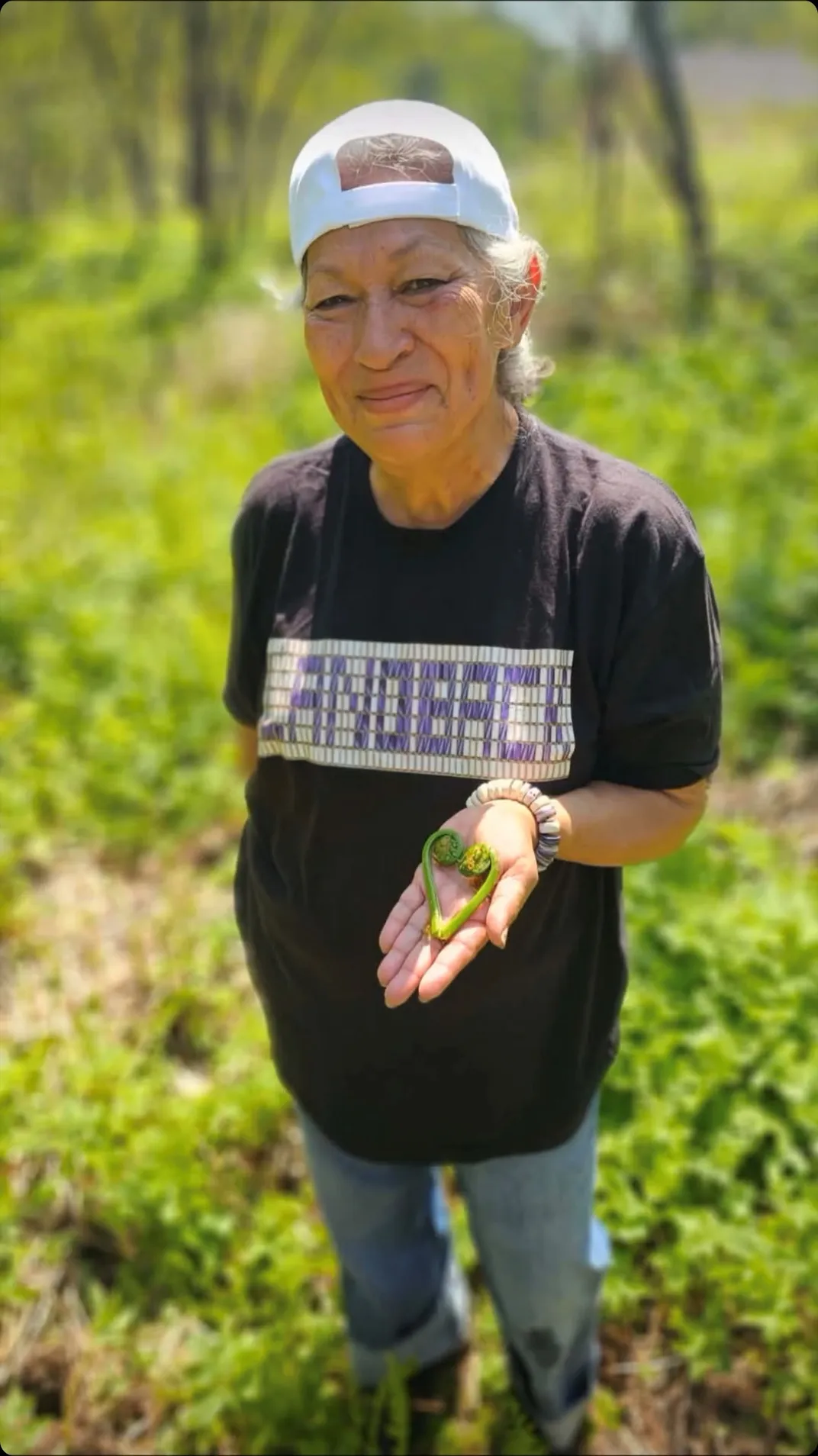
Meet Chef Sherry Pocknett
Sherry Pocknett (Mashpee Wampanoag) made history as the first Indigenous woman to win a James Beard Award, also known as the Oscars of the food world. She won Best Chef of the Northeast region in 2023 for her restaurant Sly Fox Den Too, which opened in 2021 and was located in Charlestown, RI. Prior to that, she spent many years as food and beverage director at the Mashantucket Pequot Museum and Research Center in Connecticut while running her own catering business. Last year, she was a featured judge on Gordon Ramsey’s show Hell’s Kitchen. Her first cookbook Flavors of the 13 Moons will be published next fall.
Sherry grew up on her Mashpee Wampanoag homelands in the 1960s, on what is now Cape Cod, Massachusetts. The Wampanoag Nation was first contact with the Mayflower Pilgrims and are the subject of the Thanksgiving story. The bounty of their traditional foodways is the reason the colonists survived. Those same sustaining systems were taught to Sherry by her family. As referenced in the title of her cookbook, they lived by the seasons. In the Wampanoag language, each month – the 13 moons – is named for what is harvested during that time. “May is a Striped Bass Moon,” Pocknett said. “Then of course June is Strawberry Moon, and then for me, July is Crabbing Moon because that's when we go crabbing [also Blueberry Moon]. Then August is Green Corn. September is Harvest Moon and Cranberry Moon, and then right now [November] we're in Scallop Moon because it’s scallop season.”
During Strawberry and Blueberry Moons, Pocknett’s mother and relatives would take the children berry picking. “We went as packs. It would be my mother and her six kids, and her cousin and her nine kids, or maybe my other aunt and their 11 kids.” They made it a contest to see who could pick the most berries. What they gathered would be preserved and eaten throughout the year.
When European settlers got to North America, they weren’t used to seeing such vast woodlands. In their way of life, they cleared forests to make room for planting, so they thought of American forests as wild, unkempt places. What they didn’t understand is that Native people practiced various forms of agroforestry, multilayered permaculture within the forest landscape. Controlled burns, intentionally set small fires, kept the undergrowth in check and provided nutrients for the soil. When Sherry and her family gathered in the Cape Cod woods, they were in a centuries-old forest garden.
“People don't understand how important it is to give thanks, and people do need to learn. Even if you're singing a song, saying a prayer, you know, laying tobacco, cedar, or sage, or burning it, and praying into it, and just giving thanks. Even singing to the water. They need the songs.”—Chef Sherry Pocknett (Mashpee Wampanoag)
Sherry’s father was Vernon Pocknett, Mashpee’s Chief Sly Fox, her restaurant’s namesake. He would take the family fishing for herring, eels, and striped bass, and harvesting quahogs and scallops. As Sherry and her siblings got older, he wanted to make sure they were taking in the traditions they were taught. “My father would drive the boat across this place called Punkhorn Point, and bring us to Washburn Island, and give us a lesson on how to take care of ourselves.” After the lesson, he would leave the children there to use the skills they had learned, at first overnight, and then for days at a time.
Like many Indigenous people, Sherry had to move out of her community to find work. At 18 she moved to Connecticut, to the city, but she took her traditional knowledge with her. She got a plot of land in the community garden across from her apartment. There she used the Three Sisters planting method she learned from her grandmother as a child, a technique practiced all over the Americas. Corn, the first sister, is planted in late spring. When it reaches a certain height, climbing beans, the second sister, is introduced. The beans climb around the corn stalk, while replenishing nitrogen in the soil which the corn needs to grow. And then the third sister, a heavy squash like pumpkin, is grown between the corn stalks, working as living mulch to hold moisture in the soil and block weeds. “Sunflower is the fourth sister,” she told me. As in her grandmother’s garden, she planted sunflowers which provided shade for the other sisters on harsh summer days and pollen for the bees.
All of her deeply rooted culinary knowledge can be tasted in her food. The first time I had Sherry’s cooking was at the Shinnecock Powwow, many years ago. I was in college at NYU and made the trek to the Shinnecock reservation on Long Island. Coming from Chesapeake and Tidewater people, I grew up eating a lot of seafood. But most powwows served Indian tacos (frybread with chili meat and fixings) and festival foods like hot dogs and burgers. When I saw the Sly Fox Den stand’s menu with smoked bluefish, mussels, and scallops, my eyes widened. There was venison stew, fried potatoes with peppers and onions, Wampanoag style fried frog legs, roasted butternut squash, Three Sisters rice, green salad with cranberry vinaigrette, fresh strawberry lemonade and sassafras tea, and blueberry slump (dumplings) for dessert – the choices were overwhelming. Over the years, at powwows and gatherings all over the Northeast, I would brave the long lines for her stand. It’s always worth the wait because her food is heaven on earth.
These days, Sherry is back on her Wampanoag homelands. She spoke to me about the grief she feels seeing how much those lands have changed. The waterways are polluted, and the eel grass, which is foundational to the marine ecosystem there, is gone. The woods where she and her siblings once gathered baskets upon baskets full of blueberries have been overtaken by invasive species like autumn olives. But still, the earth gives, and her community strives to live off the land and care for it. And now she takes her ten grandchildren out to learn the lessons she was taught. She makes sure they remember the most important one, thanksgiving.
“People don't understand how important it is to give thanks, and people do need to learn. Even if you're singing a song, saying a prayer, you know, laying tobacco, cedar, or sage, or burning it, and praying into it, and just giving thanks. Even singing to the water. They need the songs.”
What Has to be on Chef Sherry's Table ?
“My favorite is seafood stew. With littleneck clams and mussels, lots of onions, lots of pepper, a little spice, haddock, salmon, and lobster, and crab claws. In a big bowl, add firecracker shrimp on top and a squeeze of lime. And I have it with butternut squash frybread on the side.”
You can watch Chef Sherry prepare her fabulous seafood stew on the museum’s YouTube channel: Cooking with Chef Sherry Pocknett
Stay tuned for part 2 of our Good Harvest series, to meet another Indigenous person revitalizing traditional foodways!