Article Tools
Photo Gallery
The Smithsonian Life List
28 Places to See Before You Die
28 Places to See Before You Die—the Taj Mahal, Grand Canyon and More
Smithsonian Magazine Staff
We've traveled the globe and compiled a "life list" of places to visit before taking the ultimate trip to the great beyond
Most Popular
- Viewed
- Emailed
- The Ultimate Spy Plane
- Photo Contest Grand Prize Winner - In the early morning, fishermen clean their nets by Erhai Lake
- Catching a Wave, Powering an Electrical Grid?
- Photo Contest Finalist - A mountain dwarfs a passenger boat in the Three Gorges area of the Yangzi River
- Photo Contest Finalist - Ganga Arati
- Photo Contest Finalist - After a hard night's work at sea, a fisherman collects the rope that ties the nets
- Photo Contest Travel Winner - Dining in Gion
- Photo Contest Finalist - Erik in the World’s Greatest Store
- Frank Baum, the Man Behind the Curtain
- Photo Contest Finalist - Michel Frazier plays in the fields next to her trailer
- There Oughta Be a Law
- Frank Baum, the Man Behind the Curtain
- Photo Contest Grand Prize Winner - In the early morning, fishermen clean their nets by Erhai Lake
- Catching a Wave, Powering an Electrical Grid?
- Terra Cotta Soldiers on the March
- High Hopes for a New Kind of Gene
- Up in Arms Over a Co-Ed Plebe Summer
- The Ultimate Spy Plane
- Photo Contest Finalist - Walk on Water
- Photo Contest Finalist - Jujing Village
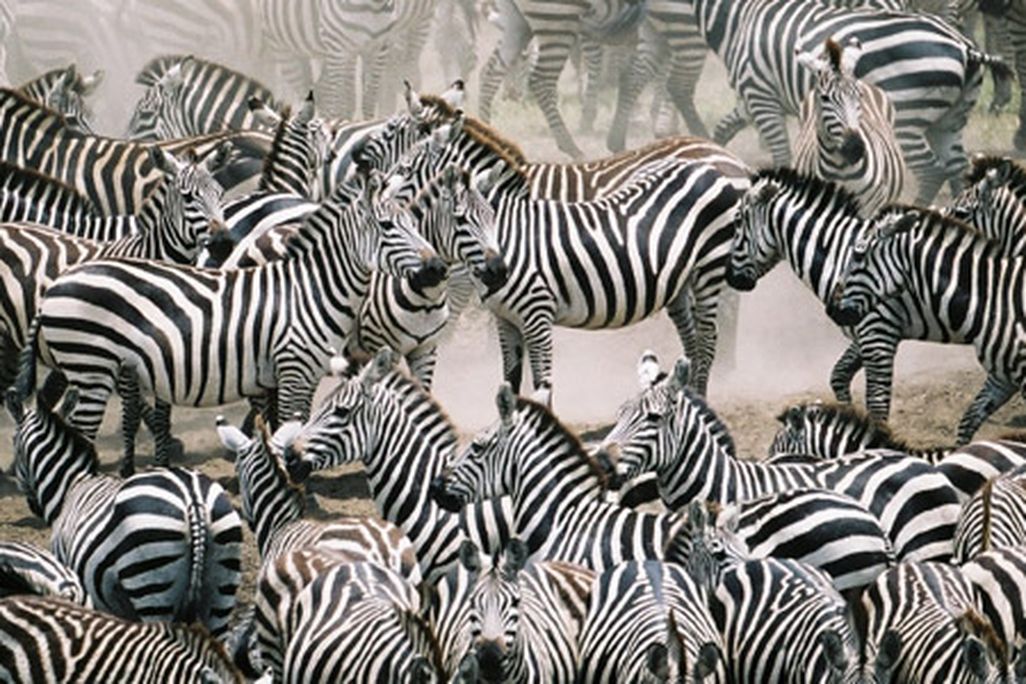
Each year, the primal drama of survival plays out on an epic scale on the plains of the Serengeti. An estimated one-and-a-half million wildebeests, along with hundreds of thousands of zebras and gazelles, make a 300-mile circuitous journey across the vast grasslands that stretch across northern Tanzania, then west toward Lake Victoria, east to the Ngorongoro highlands and north into Kenya. Lions, cheetahs and hyenas tenaciously pursue their prey, while hordes of crocodiles hunker down in the Mara River, eager to pick off wildebeests struggling across swift currents.
The Serengeti ("land of endless space" in Masai) is the only place in Africa where migrations of this magnitude occur. The wildebeests follow the trajectory of the seasonal rains that nourish the fresh grass on which they graze.
Aside from the long rains that drench visitors in April and May, the Serengeti is a year-round destination—'although what you see can vary depending upon when and where you go. Predators tend to congregate during the calving season in the southern plains of the Serengeti National Park from January to March, when the young wildebeests are at their most vulnerable. To see the Mara River crossings in Kenya, the best time to visit is September and October.
The mass migration is what defines the Serengeti, say photographers Jonathan and Angela Scott, who visited the site for nearly 25 years for their book Mara-Serengeti: A Photographer's Paradise. "It patterns the lives of other animals. The wildebeests are the architects of the plains."
Each year, the primal drama of survival plays out on an epic scale on the plains of the Serengeti. An estimated one-and-a-half million wildebeests, along with hundreds of thousands of zebras and gazelles, make a 300-mile circuitous journey across the vast grasslands that stretch across northern Tanzania, then west toward Lake Victoria, east to the Ngorongoro highlands and north into Kenya. Lions, cheetahs and hyenas tenaciously pursue their prey, while hordes of crocodiles hunker down in the Mara River, eager to pick off wildebeests struggling across swift currents.
The Serengeti ("land of endless space" in Masai) is the only place in Africa where migrations of this magnitude occur. The wildebeests follow the trajectory of the seasonal rains that nourish the fresh grass on which they graze.
Aside from the long rains that drench visitors in April and May, the Serengeti is a year-round destination—'although what you see can vary depending upon when and where you go. Predators tend to congregate during the calving season in the southern plains of the Serengeti National Park from January to March, when the young wildebeests are at their most vulnerable. To see the Mara River crossings in Kenya, the best time to visit is September and October.
The mass migration is what defines the Serengeti, say photographers Jonathan and Angela Scott, who visited the site for nearly 25 years for their book Mara-Serengeti: A Photographer's Paradise. "It patterns the lives of other animals. The wildebeests are the architects of the plains."

I would like to visit the Serengeti, a special trip for my father, to have an opportunity to see the great migration crossing the Mara river. I would like a regular update on the migration and the most opportunistic time to visit. From which end the viewing is most spetacular,Serengeti or Mara? On the return migration in Oct/Nov, can we approach the river Mara from Serengeti? I know even a lifetime is not enough for the Serengeti for it's vastness and diversity that it offers. Hope to hear from you. Regards, Anju.
Posted by Anju Bhatt on July 31,2008 | 11:17PM