• Smithsonian
    Institution
  • Travel
    With Us
  • Smithsonian
    Store
  • Smithsonian
    Channel
  • goSmithsonian
    Visitors Guide
  • Air & Space
    magazine

Smithsonian.com

  • Subscribe
  • History & Archaeology
  • Science
  • Ideas & Innovations
  • Arts & Culture
  • Travel & Food
  • At the Smithsonian
  • Photos
  • Videos
  • Games
  • Shop
  • Food
  • U.S. & Canada
  • Europe
  • Central & South America
  • Asia Pacific
  • Africa & the Middle East
  • Best of Lists
  • Evotourism
  • Photos
  • Travel with Smithsonian
  • Travel

Cold Comfort

Intrepid travelers pay cold hard cash to chill out in the world's coolest hotel

| | | Reddit | Digg | Stumble | Email |
  • By Rudy Chelminski
  • Smithsonian magazine, December 2001, Subscribe
View More Photos »
Hire this man entrepreneur Yngve Bergqvist turned a stretch of riverside tundra into one of Sweden’s premier tourist destinations by convincing 8600 people to pay up to $280 each to sleep in a large icebox.
Hire this man: entrepreneur Yngve Bergqvist turned a stretch of riverside tundra into one of Sweden’s premier tourist destinations by convincing 8,600 people to pay up to $280 each to sleep in a large icebox. (Michael Freeman)

Photo Gallery (1/6)

Hire this man: entrepreneur Yngve Bergqvist turned a stretch of riverside tundra into one of Sweden’s premier tourist destinations by convincing 8,600 people to pay up to $280 each to sleep in a large icebox.

Explore more photos from the story


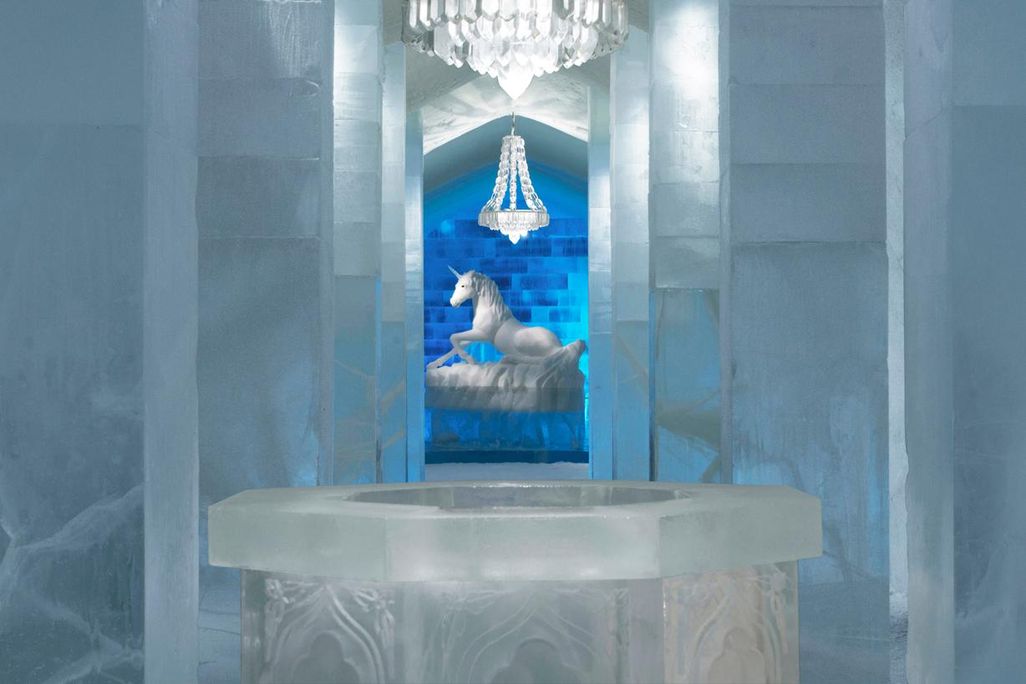
To prepare for his first night at Sweden's Icehotel, our writer Rudy Chelminski bundled up in a massive snowsuit and huge double boots. Unlikely as it seems, the hotel's name suggests exactly what it is: a hotel made of ice. Unheated. One hundred and twenty-five miles north of the Arctic Circle. It's got more than 60 rooms and suites, a bar, reception area and chapel made entirely out of ice.

Mark Armstrong, a 28-year-old Englishman with a degree in architecture from Oxford, showed Chelminski around. Armstrong is one of only a handful of experts in the understandably limited field of meltable architecture. Earlier ice palaces, built of rectangular ice blocks and soaring impressively high, were designed to be contemplated from outside. In contrast, the Icehotel is all insides: low-slung, snug and fully enclosed. Everywhere are load-bearing arches with no straight walls in sight. Buried in the walls are cleverly concealed 10-watt halogen lamps, which make the hotel glow with a cool indirect luminescence. More than 20 international artists have decorated rooms with fanciful ice sculptures.

Icehotel is the brainchild of a Swede named Yngve Bergqvist, who built a big igloo as an offbeat venue for an art exhibition. The Icehotel took off from there and now measures some 6,456 square feet and entertains more than 8,000 visitors annually. International recognition came when a vodka maker realized the value of the imagery of a bottle of iced vodka on a bar of ice. Every year, the Icehotel hosts several major fashion shoots. And, every spring, the hotel melts and must be built again.


To prepare for his first night at Sweden's Icehotel, our writer Rudy Chelminski bundled up in a massive snowsuit and huge double boots. Unlikely as it seems, the hotel's name suggests exactly what it is: a hotel made of ice. Unheated. One hundred and twenty-five miles north of the Arctic Circle. It's got more than 60 rooms and suites, a bar, reception area and chapel made entirely out of ice.

Mark Armstrong, a 28-year-old Englishman with a degree in architecture from Oxford, showed Chelminski around. Armstrong is one of only a handful of experts in the understandably limited field of meltable architecture. Earlier ice palaces, built of rectangular ice blocks and soaring impressively high, were designed to be contemplated from outside. In contrast, the Icehotel is all insides: low-slung, snug and fully enclosed. Everywhere are load-bearing arches with no straight walls in sight. Buried in the walls are cleverly concealed 10-watt halogen lamps, which make the hotel glow with a cool indirect luminescence. More than 20 international artists have decorated rooms with fanciful ice sculptures.

Icehotel is the brainchild of a Swede named Yngve Bergqvist, who built a big igloo as an offbeat venue for an art exhibition. The Icehotel took off from there and now measures some 6,456 square feet and entertains more than 8,000 visitors annually. International recognition came when a vodka maker realized the value of the imagery of a bottle of iced vodka on a bar of ice. Every year, the Icehotel hosts several major fashion shoots. And, every spring, the hotel melts and must be built again.

    Subscribe now for more of Smithsonian's coverage on history, science and nature.


| | | Reddit | Digg | Stumble | Email |
 

Add New Comment


Name: (required)

Email: (required)

Comment:

Comments are moderated, and will not appear until Smithsonian.com has approved them. Smithsonian reserves the right not to post any comments that are unlawful, threatening, offensive, defamatory, invasive of a person's privacy, inappropriate, confidential or proprietary, political messages, product endorsements, or other content that might otherwise violate any laws or policies.

Comments (1)

Dear Sir/madam,

My name is Eleni Chatziioannou a student of MSc Environmental Design and Engineering in UCL and due to a Thermal Comfort in Ice hotels project, I would kindly ask you to give me some information or advise me about appropriate sources on this topic, as you have some connection with this topic.
My field of interest is described below:

First of all as I have understood the temperatures within the hotel are very low, so how can visitors stand these conditions? What values of humidity are met in the hotel? Are the provided sleeping bags appropriate to offer thermal comfort and for how long? The visitors remain in these conditions for a while, what about the employees and how do they face the cold?

I am looking forward to your consideration, bearing in mind that your contribution will be of utmost importance for the progress of my project.

Thank you in anticipation.

Yours faithfully,

Eleni Chatziioannou
Architect

Posted by eleni chatziioannou on December 23,2009 | 03:45 PM


View full archiveRecent Issues


  • Jun 2013


  • May 2013


  • Apr 2013

Newsletter

Sign up for regular email updates from Smithsonian magazine, including free newsletters, special offers and current news updates.

Subscribe Now

About Us

Smithsonian.com expands on Smithsonian magazine's in-depth coverage of history, science, nature, the arts, travel, world culture and technology. Join us regularly as we take a dynamic and interactive approach to exploring modern and historic perspectives on the arts, sciences, nature, world culture and travel, including videos, blogs and a reader forum.

Explore our Brands

  • goSmithsonian.com
  • Smithsonian Air & Space Museum
  • Smithsonian Student Travel
  • Smithsonian Catalogue
  • Smithsonian Journeys
  • Smithsonian Channel
  • About Smithsonian
  • Contact Us
  • Advertising
  • Subscribe
  • RSS
  • Topics
  • Member Services
  • Copyright
  • Site Map
  • Privacy Policy
  • Ad Choices

Smithsonian Institution