• Smithsonian
    Institution
  • Travel
    With Us
  • Smithsonian
    Store
  • Smithsonian
    Channel
  • goSmithsonian
    Visitors Guide
  • Air & Space
    magazine

Smithsonian.com

  • Subscribe
  • History & Archaeology
  • Science
  • Ideas & Innovations
  • Arts & Culture
  • Travel & Food
  • At the Smithsonian
  • Photos
  • Videos
  • Games
  • Shop
  • Rick Steves

Getting Around Venice by Vaporetto

Forget the gondola, the quickest and most convenient way to see Venice is via the public-transit vaporetti

| | | Reddit | Digg | Stumble | Email |
  • By Rick Steves
  • Smithsonian.com, September 01, 2009, Subscribe
 
Venice Italy vaporetto
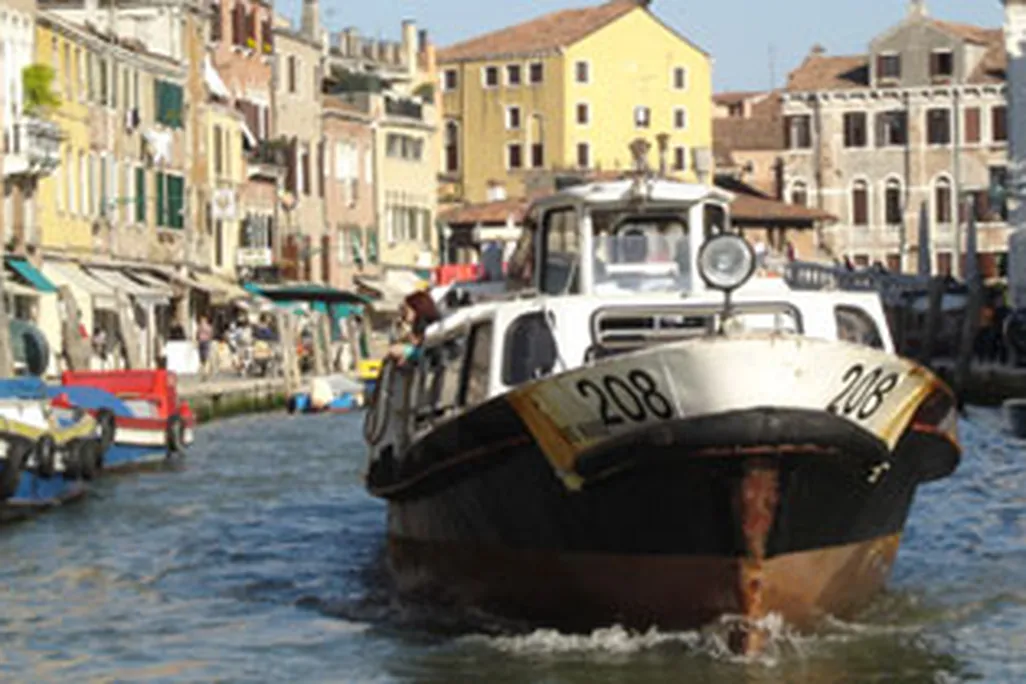
While gondolas are romantic, to get around Venice quickly and cheaply, you’ll need to take motorized bus-boats called vaporetti. (Courtesy of Rick Steves' Europe Through the Back Door)

Photo Gallery (1/0)

Rialto Bridge Grand Canal Venice Italy

Rick Steves' Europe: Venice, Italy


Video Gallery

Venice: Serene, Decadent and Still Kicking - Rick Steves’ Europe

Related Links

  • Rick Steves' Venice, Avalon Travel, 2010
  • Rick Steves' Italy, Avalon Travel, 2010
  • Podcast: Travel with Rick Steves

More from Smithsonian.com

  • Rick Steves' Europe: Venice, Italy
  • Seeing Venice Via Gondola
  • Crawling Through Venice’s Cicchetti Pubs
  • St. Mark’s Square Walking Tour

The Venice public-transit system is a fleet of motorized bus-boats called vaporetti. They work like city buses except that they never get a flat, the stops are docks, and if you get off between stops, you might drown.

For most travelers, only two vaporetti lines matter: Line #1 and line #2. These lines go up and down the Grand Canal, between the “mouth of the fish” at one end and San Marco at the other. Line #1 is the slow boat, taking 45 minutes and making every stop along the way. Line #2 is the fast boat that zips down the Grand Canal in 25 minutes, stopping only at Tronchetto (parking lot), Piazzale Roma (bus station), Ferrovia (train station), San Marcuola, Rialto Bridge, San Tomà (Frari Church), Accademia Bridge, and San Marco (west end of St. Mark’s Square).

Catching a vaporetto is very much like a catching a city bus. Helpful charts at the docks show a map of the lines and stops. At one end of the Grand Canal are Tronchetto, Piazzale Roma (Ple. Roma), and Ferrovia. At the other end is San Marco. The sign on the dock lists the line number that stops there and which direction the boat is headed, for example: “#2—Direction San Marco.” Nearby is the sign for line #2 going in the other direction, for example: “#2—Direction Tronchetto.”

It’s simple, but there are a few quirks. Some #2 boats go only as far as Rialto (solo Rialto)—check with the conductor before boarding. Some stops have just one dock for boats going in both directions, so make sure the boat you get on is pointing in the direction you want to go. Larger stops might have two separate docks side by side (one for each direction), while some smaller stops have docks across the canal from each other (one for each direction). Electronic reader boards on busy docks display which boats are coming next, and when.

Lines #1 and #2 run every 10 minutes in summer. Off-season, there’s less service, so plan ahead if you’re trying to get from St. Mark’s Square to catch an early train. If there’s any doubt, ask a ticket-seller or conductor, or pick up the most current ACTV timetable (free at ticket booths, in English and Italian, tel. 041-2424, www.hellovenezia.com or www.actv.itm).

Tickets: Standard single tickets are €6.50 each. (A few shorter runs are only €2, such as the route from San Marco to La Salute or from San Zaccaria-Jolanda to San Giorgio Maggiore.) Tickets are good for 60 minutes in one direction; you can hop on and off at stops during that time. Technically, you’re not allowed a round-trip (though in practice, a round-trip is allowed if you can complete it within a 60-minute span). Too much luggage can cost you a second ticket.

Transportation Passes: You can buy a pass for unlimited use of vaporetti and ACTV buses: €16/12 hours, €18/24 hours, €23/36 hours, €28/48 hours, €33/72 hours, €50/7-day pass). Because single tickets cost a hefty €6.50 a pop, these passes can pay for themselves in a hurry. Think through your Venice itinerary before you step up to the ticket booth to pay for your first vaporetto trip. It makes sense to get a pass if you’ll be taking four rides or more (e.g., to your hotel, on a Grand Canal joyride, into the lagoon and back, to the train station). And it’s fun to be able to hop on and off spontaneously, and avoid long ticket lines. On the other hand, many tourists just walk and rarely use a boat. If you’re planning on taking 10 vaporetto trips or more, you’ll save money by getting a CartaVenezia ID card (€40 for foreigners not residing or working in Venice, valid for 3 years). With the card, you pay €1.10 per trip, or €10 for a carnet of 10 tickets (buy discounted tickets at any ticket booth, tickets still need to be stamped like regular tickets). You’ll also be able to ride the locals-only vaporetto #3. Buy cards at the HelloVenezia office at the Tronchetto stop (especially handy for those arriving by car; avoid busy Mondays and mornings). Bring along your passport and a passport-size photo (you can get photos for €3 in a booth at the train station), fill out the form, and pay €40.

Buying and Validating Tickets and Passes: You can buy vaporetto tickets or passes at ticket booths at main stops (such as Ferrovia, Rialto, Accademia, and San Marco-Vallaresso); from a conductor on board (do it immediately, before you sit down, or you risk a €44 fine); or at a tourist information office (for no extra fee). Plan your travel so you’ll have tickets or a pass handy when you need them—not all stops have ticket booths.

Passes must be validated before the first use. Tickets generally come already stamped, but if for whatever reason, your ticket lacks a stamp, stick it into the time-stamping yellow machine before boarding. The pass system (called iMob) is electronic—just touch your card to the electronic reader on the dock to validate it.

Vaporetto Tips: For fun, take a Grand Canal cruise. Avoid the tourist rush hour, when boats can be packed: Morning rush hour (8:00–10:00) is headed in the direction of St. Mark’s Square, as tourists and local commuters arrive. Afternoon rush hour (about 17:00) is when they’re headed in the other direction for the train station.

For more details, please see Rick Steves’ Venice.

Rick Steves (www.ricksteves.com) writes European travel guidebooks and hosts travel shows on public television and public radio. E-mail him at rick@ricksteves.com, or write to him c/o P.O. Box 2009, Edmonds, WA 98020.

© 2010 Rick Steves


The Venice public-transit system is a fleet of motorized bus-boats called vaporetti. They work like city buses except that they never get a flat, the stops are docks, and if you get off between stops, you might drown.

For most travelers, only two vaporetti lines matter: Line #1 and line #2. These lines go up and down the Grand Canal, between the “mouth of the fish” at one end and San Marco at the other. Line #1 is the slow boat, taking 45 minutes and making every stop along the way. Line #2 is the fast boat that zips down the Grand Canal in 25 minutes, stopping only at Tronchetto (parking lot), Piazzale Roma (bus station), Ferrovia (train station), San Marcuola, Rialto Bridge, San Tomà (Frari Church), Accademia Bridge, and San Marco (west end of St. Mark’s Square).

Catching a vaporetto is very much like a catching a city bus. Helpful charts at the docks show a map of the lines and stops. At one end of the Grand Canal are Tronchetto, Piazzale Roma (Ple. Roma), and Ferrovia. At the other end is San Marco. The sign on the dock lists the line number that stops there and which direction the boat is headed, for example: “#2—Direction San Marco.” Nearby is the sign for line #2 going in the other direction, for example: “#2—Direction Tronchetto.”

It’s simple, but there are a few quirks. Some #2 boats go only as far as Rialto (solo Rialto)—check with the conductor before boarding. Some stops have just one dock for boats going in both directions, so make sure the boat you get on is pointing in the direction you want to go. Larger stops might have two separate docks side by side (one for each direction), while some smaller stops have docks across the canal from each other (one for each direction). Electronic reader boards on busy docks display which boats are coming next, and when.

Lines #1 and #2 run every 10 minutes in summer. Off-season, there’s less service, so plan ahead if you’re trying to get from St. Mark’s Square to catch an early train. If there’s any doubt, ask a ticket-seller or conductor, or pick up the most current ACTV timetable (free at ticket booths, in English and Italian, tel. 041-2424, www.hellovenezia.com or www.actv.itm).

Tickets: Standard single tickets are €6.50 each. (A few shorter runs are only €2, such as the route from San Marco to La Salute or from San Zaccaria-Jolanda to San Giorgio Maggiore.) Tickets are good for 60 minutes in one direction; you can hop on and off at stops during that time. Technically, you’re not allowed a round-trip (though in practice, a round-trip is allowed if you can complete it within a 60-minute span). Too much luggage can cost you a second ticket.

Transportation Passes: You can buy a pass for unlimited use of vaporetti and ACTV buses: €16/12 hours, €18/24 hours, €23/36 hours, €28/48 hours, €33/72 hours, €50/7-day pass). Because single tickets cost a hefty €6.50 a pop, these passes can pay for themselves in a hurry. Think through your Venice itinerary before you step up to the ticket booth to pay for your first vaporetto trip. It makes sense to get a pass if you’ll be taking four rides or more (e.g., to your hotel, on a Grand Canal joyride, into the lagoon and back, to the train station). And it’s fun to be able to hop on and off spontaneously, and avoid long ticket lines. On the other hand, many tourists just walk and rarely use a boat. If you’re planning on taking 10 vaporetto trips or more, you’ll save money by getting a CartaVenezia ID card (€40 for foreigners not residing or working in Venice, valid for 3 years). With the card, you pay €1.10 per trip, or €10 for a carnet of 10 tickets (buy discounted tickets at any ticket booth, tickets still need to be stamped like regular tickets). You’ll also be able to ride the locals-only vaporetto #3. Buy cards at the HelloVenezia office at the Tronchetto stop (especially handy for those arriving by car; avoid busy Mondays and mornings). Bring along your passport and a passport-size photo (you can get photos for €3 in a booth at the train station), fill out the form, and pay €40.

Buying and Validating Tickets and Passes: You can buy vaporetto tickets or passes at ticket booths at main stops (such as Ferrovia, Rialto, Accademia, and San Marco-Vallaresso); from a conductor on board (do it immediately, before you sit down, or you risk a €44 fine); or at a tourist information office (for no extra fee). Plan your travel so you’ll have tickets or a pass handy when you need them—not all stops have ticket booths.

Passes must be validated before the first use. Tickets generally come already stamped, but if for whatever reason, your ticket lacks a stamp, stick it into the time-stamping yellow machine before boarding. The pass system (called iMob) is electronic—just touch your card to the electronic reader on the dock to validate it.

Vaporetto Tips: For fun, take a Grand Canal cruise. Avoid the tourist rush hour, when boats can be packed: Morning rush hour (8:00–10:00) is headed in the direction of St. Mark’s Square, as tourists and local commuters arrive. Afternoon rush hour (about 17:00) is when they’re headed in the other direction for the train station.

For more details, please see Rick Steves’ Venice.

Rick Steves (www.ricksteves.com) writes European travel guidebooks and hosts travel shows on public television and public radio. E-mail him at rick@ricksteves.com, or write to him c/o P.O. Box 2009, Edmonds, WA 98020.

© 2010 Rick Steves

    Subscribe now for more of Smithsonian's coverage on history, science and nature.


Related topics: Tourism Italy


| | | Reddit | Digg | Stumble | Email |
 

Add New Comment


Name: (required)

Email: (required)

Comment:

Comments are moderated, and will not appear until Smithsonian.com has approved them. Smithsonian reserves the right not to post any comments that are unlawful, threatening, offensive, defamatory, invasive of a person's privacy, inappropriate, confidential or proprietary, political messages, product endorsements, or other content that might otherwise violate any laws or policies.

Comments (2)

Vaporetto tickets - 24,48 or 72 hours are definitely worth getting especially as some include the road bus from airport. Advice is only to buy when in Venice as Venice Connected website is difficult to use and very inflexible if you need to change anything.

Posted by Josephine Loughran on July 12,2012 | 05:00 AM

I was told last year that there is a special Vaporetto cart you can buy during the film festival. You can only buy it on line and it is only good during la Mostra del Cinema... I would like to the name of that pass and where you can buy it on line. thank you.

Posted by Laurent-Armand lachance on August 6,2010 | 10:26 PM


Advertisement


Most Popular

  • Viewed
  • Emailed
  • Commented
  1. The 20 Best Small Towns in America
  2. For 40 Years, This Russian Family Was Cut Off From All Human Contact, Unaware of WWII
  3. Jack Andraka, the Teen Prodigy of Pancreatic Cancer
  4. When Did Humans Come to the Americas?
  5. Seven Famous People Who Missed the Titanic
  6. The Scariest Monsters of the Deep Sea
  7. The Battle Over Richard III’s Bones…And His Reputation
  8. Top Ten Demonstrations of Love
  9. Bodybuilders Through the Ages
  10. The Ten Most Disturbing Scientific Discoveries
  1. For 40 Years, This Russian Family Was Cut Off From All Human Contact, Unaware of WWII
  2. Jack Andraka, the Teen Prodigy of Pancreatic Cancer
  3. Creole Gumbo Recipe From Mrs. Elie
  4. What Became of the Taíno?
  5. The Psychology Behind Superhero Origin Stories
  6. Who's Laughing Now?
  7. Native Intelligence
  8. Vieques on the Verge
  1. Should the Constitution Be Scrapped?
  2. Most of What You Think You Know About Grammar is Wrong
  3. Abandoned Ship: the Mary Celeste
  4. The Evolution of Charles Darwin
  5. The Making of Mount Rushmore
  6. To Be...Or Not: The Greatest Shakespeare Forgery
  7. The Beer Archaeologist
  8. The Swamp Fox
  9. The 20 Best Small Towns in America
  10. How to Save a Dying Language

View All Most Popular »

Advertisement

Follow Us

Smithsonian Magazine
@SmithsonianMag
Follow Smithsonian Magazine on Twitter

Sign up for regular email updates from Smithsonian.com, including daily newsletters and special offers.

In The Magazine

February 2013

  • The First Americans
  • See for Yourself
  • The Dragon King
  • America’s Dinosaur Playground
  • Darwin In The House

View Table of Contents »


First Name
Last Name
Address 1
Address 2
City
State   Zip
Email


Travel with Smithsonian


Smithsonian Store

Framed Lincoln Tribute

This Framed Lincoln Tribute includes his photograph, an excerpt from his Gettysburg Address, two Lincoln postage stamps and four Lincoln pennies... $40


View full archiveRecent Issues


  • Feb 2013


  • Jan 2013


  • Dec 2012

Newsletter

Sign up for regular email updates from Smithsonian magazine, including free newsletters, special offers and current news updates.

Subscribe Now

About Us

Smithsonian.com expands on Smithsonian magazine's in-depth coverage of history, science, nature, the arts, travel, world culture and technology. Join us regularly as we take a dynamic and interactive approach to exploring modern and historic perspectives on the arts, sciences, nature, world culture and travel, including videos, blogs and a reader forum.

Explore our Brands

  • goSmithsonian.com
  • Smithsonian Air & Space Museum
  • Smithsonian Student Travel
  • Smithsonian Catalogue
  • Smithsonian Journeys
  • Smithsonian Channel
  • About Smithsonian
  • Contact Us
  • Advertising
  • Subscribe
  • RSS
  • Topics
  • Member Services
  • Copyright
  • Site Map
  • Privacy Policy
  • Ad Choices

Smithsonian Institution