Article Tools
Photo Gallery
The Smithsonian Life List
28 Places to See Before You Die
28 Places to See Before You Die—the Taj Mahal, Grand Canyon and More
Smithsonian Magazine Staff
We've traveled the globe and compiled a "life list" of places to visit before taking the ultimate trip to the great beyond
Venice's Uncertainty
Eric Jaffe
A new floodgate system should protect the city from high tidesunless climate change interferes
Most Popular
- Viewed
- Emailed
- The Ultimate Spy Plane
- Photo Contest Grand Prize Winner - In the early morning, fishermen clean their nets by Erhai Lake
- Catching a Wave, Powering an Electrical Grid?
- Photo Contest Finalist - A mountain dwarfs a passenger boat in the Three Gorges area of the Yangzi River
- Photo Contest Finalist - Ganga Arati
- Photo Contest Finalist - After a hard night's work at sea, a fisherman collects the rope that ties the nets
- Photo Contest Travel Winner - Dining in Gion
- Frank Baum, the Man Behind the Curtain
- Photo Contest Finalist - Erik in the World’s Greatest Store
- Photo Contest Finalist - Michel Frazier plays in the fields next to her trailer
- There Oughta Be a Law
- Frank Baum, the Man Behind the Curtain
- Photo Contest Grand Prize Winner - In the early morning, fishermen clean their nets by Erhai Lake
- Catching a Wave, Powering an Electrical Grid?
- High Hopes for a New Kind of Gene
- Terra Cotta Soldiers on the March
- Up in Arms Over a Co-Ed Plebe Summer
- The Ultimate Spy Plane
- Photo Contest Finalist - Jujing Village
- Photo Contest Finalist - Walk on Water
A jewel of a city audaciously built on 118 tiny islands and a network of waterways, Venice is an imperiled treasure that stubbornly endures. Due to the plodding geological shifts of the continents, the city is sinking at a rate of two and a half inches per decade. A watery demise for Venice by the end of the century may be inevitable.
Many people are determined to save it. From a multibillion-dollar plan to install mobile floodgates to strengthening erosion barriers, the rescue mission has become an international effort.
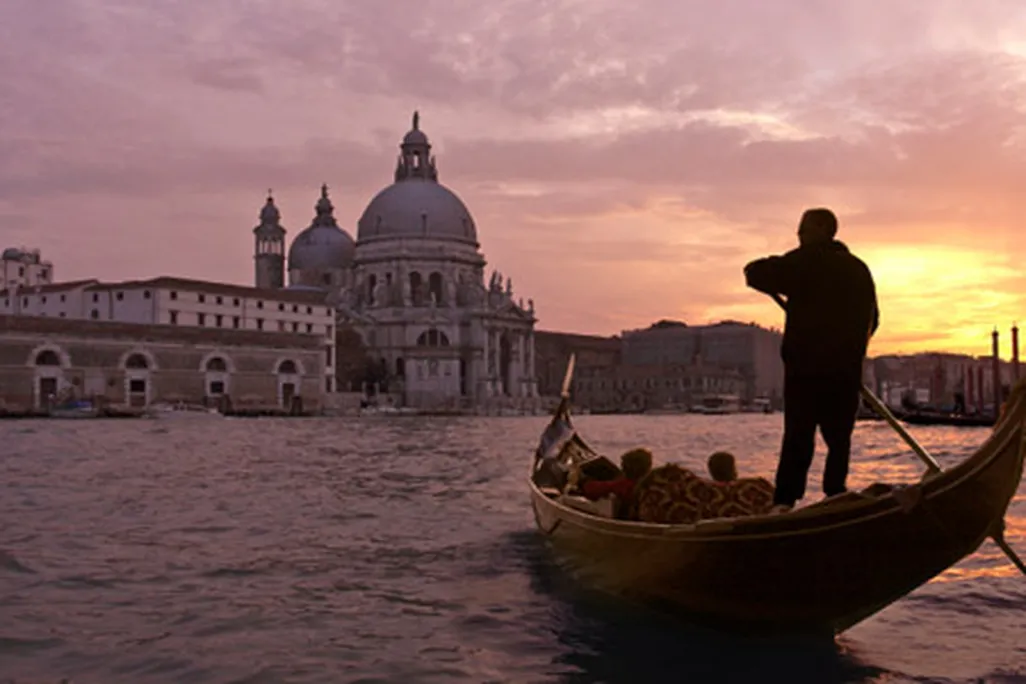
But it's hard to imagine impending doom when you first encounter this enchanting Italian city. With its maze of narrow streets, hundreds of bridges and dozens of canals linking its magnificent architecture and art, even a wrong turn can be thrilling. The deluxe way to see Venice is to cruise the canals in a pricey cushioned gondola poled by a boatman. "It is a wondrous experience, even though some people sniff at it as a tourist clichŽ," says Eric Denker, a senior lecturer at the National Gallery of Art who has visited Venice at least 50 times. "Gazing from water level, the city reveals vistas, waterfront facades, fenestration and bridge decorations you can find from no other angle." And, he says, the sleek gondolas can detour off the Grand Canal into smaller, less-traveled waterways.
Still, the Grand Canal, the city's main thoroughfare, is not to be missed. In 1495, the ambassador to French king Charles VIII called it "the most beautiful street in the world." And, fortunately, not much has changed since then.
A jewel of a city audaciously built on 118 tiny islands and a network of waterways, Venice is an imperiled treasure that stubbornly endures. Due to the plodding geological shifts of the continents, the city is sinking at a rate of two and a half inches per decade. A watery demise for Venice by the end of the century may be inevitable.
Many people are determined to save it. From a multibillion-dollar plan to install mobile floodgates to strengthening erosion barriers, the rescue mission has become an international effort.
But it's hard to imagine impending doom when you first encounter this enchanting Italian city. With its maze of narrow streets, hundreds of bridges and dozens of canals linking its magnificent architecture and art, even a wrong turn can be thrilling. The deluxe way to see Venice is to cruise the canals in a pricey cushioned gondola poled by a boatman. "It is a wondrous experience, even though some people sniff at it as a tourist clichŽ," says Eric Denker, a senior lecturer at the National Gallery of Art who has visited Venice at least 50 times. "Gazing from water level, the city reveals vistas, waterfront facades, fenestration and bridge decorations you can find from no other angle." And, he says, the sleek gondolas can detour off the Grand Canal into smaller, less-traveled waterways.
Still, the Grand Canal, the city's main thoroughfare, is not to be missed. In 1495, the ambassador to French king Charles VIII called it "the most beautiful street in the world." And, fortunately, not much has changed since then.

Not much has changed since 1495?! Are you out of your mind or depicting a semiromantic dream that occurs to none else but you? The entire political system of the city, the economical situation of its people, the fassades of the once splendid palazzi have all seen various changes over the centuries. Surely the cities image is of a complete different nature in these days and hardly reaches its original Renaissance magnificence. Today´s Venice seems to be no more than a neglected piece of jewelry worn by some underprivileged maid. No, it is not the same and I dearly wish for this city to find back to its roots as a decadently planned place of the ultra rich.
Posted by Claude on December 26,2007 | 12:09PM
I disagree with the previous comment. I have travelled all over the US, Europe, and part of Asia. Venice is the most magical city, by far. I have heard many complaints from tourists that visited at peak times, but a friend and I went just after Carnival and felt we had the city all to ourselves! I only wish I could have stayed longer. Top of my list of places to go back to.
Posted by Barbara on January 8,2008 | 07:10PM
I too have been privileged to travel the US and Europe and agree with Barbara that it is indeed a magical city. Flying into the city over the canals is like a dream looking down on the beautiful old buildings and the gondolas floating on the canals. It is truly a city not to be missed! We were there in early March and had the city was ours.
Posted by Maryann Gray on January 24,2008 | 11:03AM