• Smithsonian
    Institution
  • Smithsonian
    Journeys
  • Smithsonian
    Store
  • Smithsonian
    Channel
  • goSmithsonian
    Visitors Guide
  • Air & Space
    magazine

Smithsonian.com

  • Subscribe
  • History & Archaeology
  • People & Places
  • Science & Nature
  • Arts & Culture
  • Travel
  • Photos
  • Videos
  • Games & Puzzles
  • Blogs
  • Shop
  • Life Lists

Join the Migration in the Serengeti

Hordes of wildlife travel 300 miles across the “land of endless space” in the largest migration on Earth
  • By Lyn Garrity
  • Smithsonian magazine, January 2008, Subscribe
View Full Image »
Serengeti Serengeti

Marshall Bruce, iStockphoto

 
Tweet

Article Tools

 
  • Comments (4)
  • Font
  • Email
  • RSS
  • Print
  • Related Topics

    Travel

    Africa

    Serengeti

    Photo Gallery

    The Smithsonian Life List

    28 Places to See Before You Die

    More from Smithsonian.com
    • Nothing Can Stop the Zebra
    • 28 Places to See Before You Die—the Taj Mahal, Grand Canyon and More
    • For Wildebeests, Danger Ahead
    • The Smithsonian Life List: 43 Places to See Before You Die

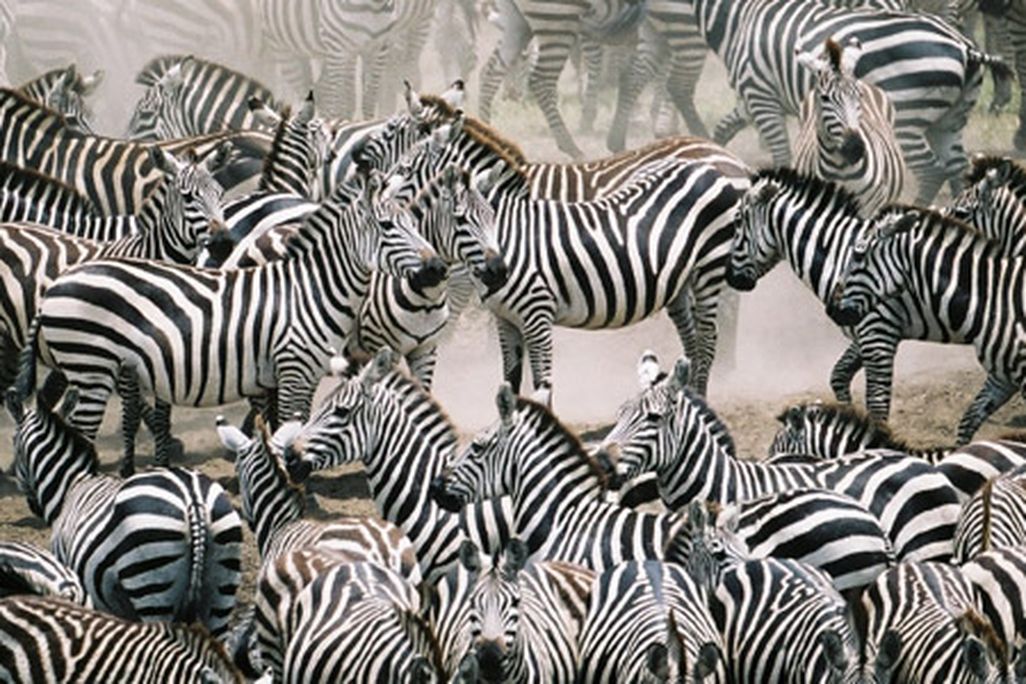
    Each year, the primal drama of survival plays out on an epic scale on the plains of the Serengeti. An estimated one-and-a-half million wildebeests, along with hundreds of thousands of zebras and gazelles, make a 300-mile circuitous journey across the vast grasslands that stretch across northern Tanzania, then west toward Lake Victoria, east to the Ngorongoro highlands and north into Kenya. Lions, cheetahs and hyenas tenaciously pursue their prey, while hordes of crocodiles hunker down in the Mara River, eager to pick off wildebeests struggling across swift currents.

    The Serengeti ("land of endless space" in Masai) is the only place in Africa where migrations of this magnitude occur. The wildebeests follow the trajectory of the seasonal rains that nourish the fresh grass on which they graze.

    Aside from the long rains that drench visitors in April and May, the Serengeti is a year-round destination—'although what you see can vary depending upon when and where you go. Predators tend to congregate during the calving season in the southern plains of the Serengeti National Park from January to March, when the young wildebeests are at their most vulnerable. To see the Mara River crossings in Kenya, the best time to visit is September and October.

    The mass migration is what defines the Serengeti, say photographers Jonathan and Angela Scott, who visited the site for nearly 25 years for their book Mara-Serengeti: A Photographer's Paradise. "It patterns the lives of other animals. The wildebeests are the architects of the plains."


    Each year, the primal drama of survival plays out on an epic scale on the plains of the Serengeti. An estimated one-and-a-half million wildebeests, along with hundreds of thousands of zebras and gazelles, make a 300-mile circuitous journey across the vast grasslands that stretch across northern Tanzania, then west toward Lake Victoria, east to the Ngorongoro highlands and north into Kenya. Lions, cheetahs and hyenas tenaciously pursue their prey, while hordes of crocodiles hunker down in the Mara River, eager to pick off wildebeests struggling across swift currents.

    The Serengeti ("land of endless space" in Masai) is the only place in Africa where migrations of this magnitude occur. The wildebeests follow the trajectory of the seasonal rains that nourish the fresh grass on which they graze.

    Aside from the long rains that drench visitors in April and May, the Serengeti is a year-round destination—'although what you see can vary depending upon when and where you go. Predators tend to congregate during the calving season in the southern plains of the Serengeti National Park from January to March, when the young wildebeests are at their most vulnerable. To see the Mara River crossings in Kenya, the best time to visit is September and October.

    The mass migration is what defines the Serengeti, say photographers Jonathan and Angela Scott, who visited the site for nearly 25 years for their book Mara-Serengeti: A Photographer's Paradise. "It patterns the lives of other animals. The wildebeests are the architects of the plains."

        Subscribe now for more of Smithsonian's coverage on history, science and nature.


    Related topics: Travel Africa Serengeti


    Tweet Digg


    Comments (4)

    i love this website it is so cool. i am looking up the zebra migrarion. For my zebras project that we are doing at school. have a good day!

    Posted by kathryn tice on May 15,2012 | 08:54 AM

    If I wanted to experience the Migration in the Central & Southern Serengeti when would you suggest that I go? Jan

    Posted by Jan on July 13,2010 | 07:10 PM

    I've been there. It was fantastic! One of the most memorable experiences!

    Posted by Poom Yenbumrung on July 22,2009 | 03:43 AM

    I would like to visit the Serengeti, a special trip for my father, to have an opportunity to see the great migration crossing the Mara river. I would like a regular update on the migration and the most opportunistic time to visit. From which end the viewing is most spetacular,Serengeti or Mara? On the return migration in Oct/Nov, can we approach the river Mara from Serengeti? I know even a lifetime is not enough for the Serengeti for it's vastness and diversity that it offers. Hope to hear from you. Regards, Anju.

    Posted by Anju Bhatt on July 31,2008 | 02:17 AM

    Post a Comment


    Name: (required)

    Email: (required)

    Comment:

    Comments are moderated, and will not appear until Smithsonian.com has approved them. Smithsonian reserves the right not to post any comments that are unlawful, threatening, offensive, defamatory, invasive of a person's privacy, inappropriate, confidential or proprietary, political messages, product endorsements, or other content that might otherwise violate any laws or policies.


    Advertisement


    Popular Videos

    • Newest
    • Most Viewed

    Oasis of the Seas: The Biggest Cruise Ship in the World

    (1:59)

    Where Do Fingerprints Come From?

    (2:30)

    SpaceX Launches the First Commercial Rocket Into Space

    (1:55)

    The Funeral Parade for the Last Veteran of the War of 1812

    (2:41)

    View All Newest Videos »

    The History of English in 10 Minutes

    (11:34)

    What Did the Rebel Yell Sound Like?

    (4:22)

    The Lost Map of the Hindenburg

    (02:57)

    Five Common Historical Misconceptions Explained

    (03:58)

    View All Videos »

    Most Popular

    • Viewed
    • Emailed
    • Commented
    • Topics
    1. The 20 Best Small Towns in America
    2. How the Chicken Conquered the World
    3. Chickens Dressed Like Napoleon, Einstein and Other Historical Figures
    4. The 10 Things You Didn’t Know About the War of 1812
    5. Why Are Finland's Schools Successful?
    6. 28 Places to See Before You Die—the Taj Mahal, Grand Canyon and More
    7. Seven Famous People Who Missed the Titanic
    8. The Ten Most Disturbing Scientific Discoveries
    9. Julia Child's Recipe for a Thoroughly Modern Marriage
    10. Women Spies of the Civil War
    1. How the Chicken Conquered the World
    2. Julia Child's Recipe for a Thoroughly Modern Marriage
    3. Why Are Finland's Schools Successful?
    4. A Tasting Tour of Salts Around the World
    5. A Walk Across England
    6. Paul Theroux’s Quest to Define Hawaii
    7. The Science of Sarcasm? Yeah, Right
    8. The 20 Best Small Towns in America
    9. How the Potato Changed the World
    10. Gobekli Tepe: The World’s First Temple?
    1. Photo of the Day: A lenticular cloud formation over the Eastern Sierra Nevada.
    2. Space Race II
    3. How the Chicken Conquered the World
    4. Mexico - History and Heritage
    5. Editors' Pick: In the hills of Tuscany
    6. Photo of the Day: A trailer in the Mojave Desert: All that is missing are the pink flamingos.
    7. When Continental Drift Was Considered Pseudoscience
    8. Trinidad and Tobago - History and Heritage
    9. Keeping the Smithsonian Sustainable
    10. Osage Oranges Take a Bough
    1. 20th Century

    View All Most Popular »

    Advertisement

    Follow Us

    Smithsonian Magazine
    @SmithsonianMag
    Follow Smithsonian Magazine on Twitter

    Sign up for regular email updates from Smithsonian.com, including daily newsletters and special offers.


    In The Magazine

    June 2012

    • How the Chicken Conquered the World
    • The Chicken and the Egg
    • The Perfect Egg
    • The Unified Theory of Gumbo
    • Mrs. Elie's Creole Gumbo

    View Table of Contents »


    First Name
    Last Name
    Address 1
    Address 2
    City
    State   Zip
    Email


    Smithsonian Store

    Cowrie Shell Bib Necklace

    Item No. 45472

    Smithsonian Journeys

    Private Departures: Africa

    Enjoy a NEW customized vacation designed according to your specifications. Travel to South Africa in style.


    View full archiveRecent Issues


    • Jun 2012


    • May 2012


    • Apr 2012

    Newsletter

    Sign up for regular email updates from Smithsonian magazine, including free newsletters, special offers and current news updates.

    Subscribe Now

    About Us

    Smithsonian.com expands on Smithsonian magazine's in-depth coverage of history, science, nature, the arts, travel, world culture and technology. Join us regularly as we take a dynamic and interactive approach to exploring modern and historic perspectives on the arts, sciences, nature, world culture and travel, including videos, blogs and a reader forum.

    Explore our Brands

    • goSmithsonian.com
    • Smithsonian Air & Space Museum
    • Smithsonian Student Travel
    • Smithsonian Catalogue
    • Smithsonian Journeys
    • Smithsonian Channel
    • About Smithsonian
    • Contact Us
    • Advertising
    • Subscribe
    • RSS
    • Topics
    • Member Services
    • Copyright
    • Site Map
    • Privacy Policy
    • Ad Choices

    Smithsonian Institution