• Smithsonian
    Institution
  • Travel
    With Us
  • Smithsonian
    Store
  • Smithsonian
    Channel
  • goSmithsonian
    Visitors Guide
  • Air & Space
    magazine

Smithsonian.com

  • Subscribe
  • History & Archaeology
  • Science
  • Ideas & Innovations
  • Arts & Culture
  • Travel & Food
  • At the Smithsonian
  • Photos
  • Videos
  • Games
  • Shop
  • Life Lists

The Louvre’s Priceless Masterpieces

Mona Lisa and Venus de Milo are just two of the works housed within the walls of this fortress-turned-royal palace-turned-museum
| | | Reddit | Digg | Stumble | Email |
  • By Alison McLean
  • Smithsonian magazine, January 2008, Subscribe
View More Photos »
The Louvre
The Louvre (Sylvie Fourgeot, iStockphoto)

Photo Gallery (1/4)

Assembly of Two Generations at Louvre Museum

Explore more photos from the story

  • Explore the Louvre with Smithsonian »

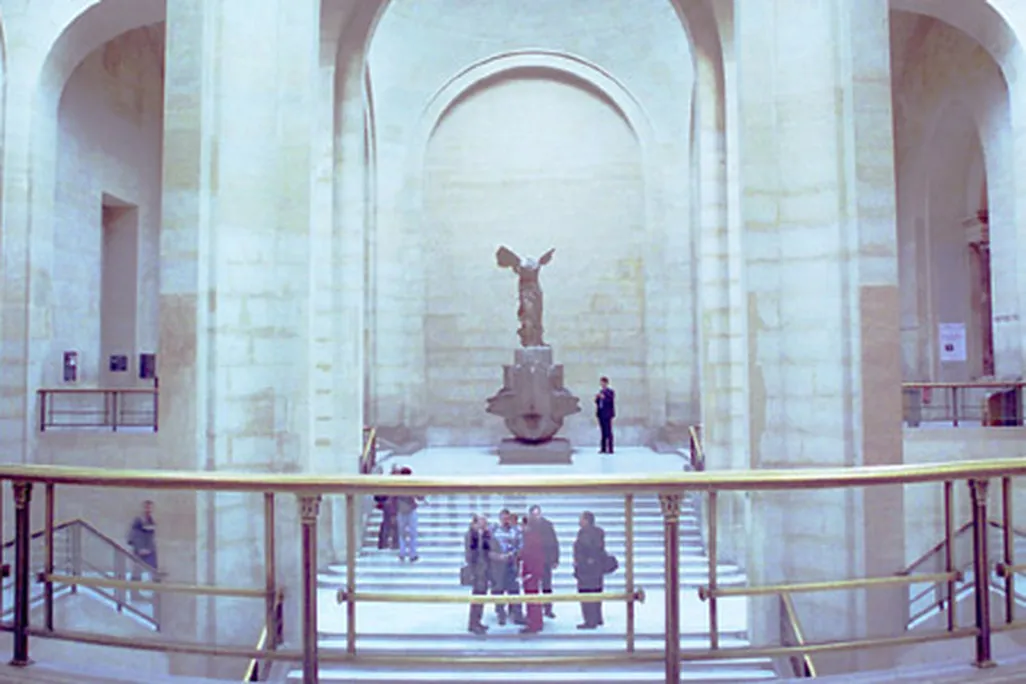
The Mona Lisa. The Venus de Milo. The Winged Victory of Samothrace. The collection in the Louvre Museum in Paris is an Art History 101 checklist. And yes, you must see the works in person. No photograph or Web site has the same impact as standing dwarfed before the myriad intricacies of Renaissance painter Paolo Veronese's 22-foot-tall Wedding Feast at Cana. But a pick-and-choose tour of famous masterpieces ignores the full scope of the collection. Begun by King François I in 1546, the 35,000 pieces are a narrative of artistic vision from antiquity through the mid-19th century.

The Louvre is the granddaddy of public art museums. In 1793 the medieval fortress-turned-royal palace was opened to all the people by order of the French Revolutionary government. Fostered later by Napoleon, who understood the propaganda value of a collection of world masterpieces, it was also a center for the education of artists. "The Louvre was the inspiration for other art museums," says Andrew McClellan, author of Inventing the Louvre and a professor of art history and museum studies at Tufts University. "It is the quintessential example of the museum idea: that you can go into one place and confront the surviving products of distant cultures and the finest things that have ever been made."

So how to take it all in? "The only way to do it is to go back repeatedly," counsels McClellan, who estimates he's visited about 75 times. In the words of Paul Cézanne, "Keep good company—that is, go to the Louvre."


The Mona Lisa. The Venus de Milo. The Winged Victory of Samothrace. The collection in the Louvre Museum in Paris is an Art History 101 checklist. And yes, you must see the works in person. No photograph or Web site has the same impact as standing dwarfed before the myriad intricacies of Renaissance painter Paolo Veronese's 22-foot-tall Wedding Feast at Cana. But a pick-and-choose tour of famous masterpieces ignores the full scope of the collection. Begun by King François I in 1546, the 35,000 pieces are a narrative of artistic vision from antiquity through the mid-19th century.

The Louvre is the granddaddy of public art museums. In 1793 the medieval fortress-turned-royal palace was opened to all the people by order of the French Revolutionary government. Fostered later by Napoleon, who understood the propaganda value of a collection of world masterpieces, it was also a center for the education of artists. "The Louvre was the inspiration for other art museums," says Andrew McClellan, author of Inventing the Louvre and a professor of art history and museum studies at Tufts University. "It is the quintessential example of the museum idea: that you can go into one place and confront the surviving products of distant cultures and the finest things that have ever been made."

So how to take it all in? "The only way to do it is to go back repeatedly," counsels McClellan, who estimates he's visited about 75 times. In the words of Paul Cézanne, "Keep good company—that is, go to the Louvre."

    Subscribe now for more of Smithsonian's coverage on history, science and nature.

← Previous
The Tranquil Zen Garden of Kyoto
Smithsonian Life List:
43 Places to
See Before You Die
Next →
Venice
Venice's Timeless Splendor

Related topics: Travel Paris The Louvre


| | | Reddit | Digg | Stumble | Email |
 

Add New Comment


Name: (required)

Email: (required)

Comment:

Comments are moderated, and will not appear until Smithsonian.com has approved them. Smithsonian reserves the right not to post any comments that are unlawful, threatening, offensive, defamatory, invasive of a person's privacy, inappropriate, confidential or proprietary, political messages, product endorsements, or other content that might otherwise violate any laws or policies.

Comments (7)

Stole the masterpieces and then claim and display them as your own, yeah that's basically what the Louvre is.

Posted by Andre J. Widjaja on August 22,2012 | 12:14 PM

To whom it may concern, I purchased a oil painting at a estate sale, the painting is signed by Henri Fantin-Latour. I wanted to know if this is his signature, and if this is his painting. I did some reseach, the painting I have is nothing like Fantin's later work. I was wondering if my painting is of his later work at the Louvre when he was copying some of the great masters. I will send a photo if it will help. I am a Smithsonian customer. Thank you so much for your help in this matter.

Posted by Doreen Craddock on January 25,2012 | 11:00 AM

I love Paris and Louvre Museum is amazingi but i would like to see one day "Aphrodite of Milos" and "Nike of Samothrace" (photo) back in Greece where they belong.

Posted by petros on August 6,2011 | 02:47 PM

My husband and I toured the Louvre while we were on our 1st wedding anniversary in November '03. It only rained once in the week we were there. We spent almost all day at tje Louvre and still didn't get to see everything. I enjoyed every minute and would love to go back.

Posted by Charla on August 4,2011 | 10:18 AM

My husband (90) and I toured the Louvre during a European riverboat cruise in May. Pushed in his wheel chair by a lovely college girl (whose services were requisitioned by her mother, our guide,) he was ushered through the ropes restraining a large crowd to view the Mona Lisa from the perfect vantage point, directly in front and quite near! We were awed by the Wedding at Cana , and fascinated with the tour of the underground areas being restored for viewing. As we prepared to leave we were delighted to observe a beautiful oriental bride who was having wedding photos made inside the massive decorative gates. It was a highlight of our trip, nearly as memorable as our visit to the Normandy beaches, the true goal of my husband who wanted to see the place where so many of his generation died while he was serving his country in the south Pacific. It was truly a day to remember!

Posted by Jane Wendling on January 26,2011 | 09:43 AM

I toured the louvre in i990 for about 2 1/2 to 3 hrs. It was extremely interesting and I throughly enjoyed every minute spent there. Beverly

Posted by Beverly Smith on September 25,2009 | 04:40 PM

The last time we were at the Louvre (Dec. 2006) with our kids we took an overview tour of the most famous paintings and sculptures. It was an hour and a half and I highly recommend it if you don't have a lot of time or have kids who give you "the look" when you tell them you're going to a museum!

Posted by Donna on July 15,2008 | 12:25 AM


Advertisement


Louvre

Most Popular

  • Viewed
  • Emailed
  • Commented
  1. The 20 Best Small Towns in America
  2. For 40 Years, This Russian Family Was Cut Off From All Human Contact, Unaware of WWII
  3. Jack Andraka, the Teen Prodigy of Pancreatic Cancer
  4. When Did Humans Come to the Americas?
  5. Seven Famous People Who Missed the Titanic
  6. The Scariest Monsters of the Deep Sea
  7. The Battle Over Richard III’s Bones…And His Reputation
  8. Top Ten Demonstrations of Love
  9. Bodybuilders Through the Ages
  10. Why Are Finland's Schools Successful?
  1. For 40 Years, This Russian Family Was Cut Off From All Human Contact, Unaware of WWII
  2. Jack Andraka, the Teen Prodigy of Pancreatic Cancer
  3. The Psychology Behind Superhero Origin Stories
  4. Native Intelligence
  5. Creole Gumbo Recipe From Mrs. Elie
  6. A Brief History of the Salem Witch Trials
  7. What Became of the Taíno?
  8. Who's Laughing Now?
  9. Vieques on the Verge
  1. Abandoned Ship: the Mary Celeste
  2. Most of What You Think You Know About Grammar is Wrong
  3. Should the Constitution Be Scrapped?
  4. The Evolution of Charles Darwin
  5. To Be...Or Not: The Greatest Shakespeare Forgery
  6. The Beer Archaeologist
  7. The 20 Best Small Towns in America
  8. The Making of Mount Rushmore
  9. The Spotted Owl's New Nemesis
  10. The Dark Side of Thomas Jefferson

View All Most Popular »

Advertisement

Follow Us

Smithsonian Magazine
@SmithsonianMag
Follow Smithsonian Magazine on Twitter

Sign up for regular email updates from Smithsonian.com, including daily newsletters and special offers.

In The Magazine

February 2013

  • The First Americans
  • See for Yourself
  • The Dragon King
  • America’s Dinosaur Playground
  • Darwin In The House

View Table of Contents »


First Name
Last Name
Address 1
Address 2
City
State   Zip
Email


Smithsonian Store

Master the Art of French Cooking

Mastering the Art of French Cooking Box Set, Item No. 10398


View full archiveRecent Issues


  • Feb 2013


  • Jan 2013


  • Dec 2012

Newsletter

Sign up for regular email updates from Smithsonian magazine, including free newsletters, special offers and current news updates.

Subscribe Now

About Us

Smithsonian.com expands on Smithsonian magazine's in-depth coverage of history, science, nature, the arts, travel, world culture and technology. Join us regularly as we take a dynamic and interactive approach to exploring modern and historic perspectives on the arts, sciences, nature, world culture and travel, including videos, blogs and a reader forum.

Explore our Brands

  • goSmithsonian.com
  • Smithsonian Air & Space Museum
  • Smithsonian Student Travel
  • Smithsonian Catalogue
  • Smithsonian Journeys
  • Smithsonian Channel
  • About Smithsonian
  • Contact Us
  • Advertising
  • Subscribe
  • RSS
  • Topics
  • Member Services
  • Copyright
  • Site Map
  • Privacy Policy
  • Ad Choices

Smithsonian Institution