The Grandeur of Angkor Wat
The 12th century temple is the worlds largest religious structure and a jewel of Khmer architectural style
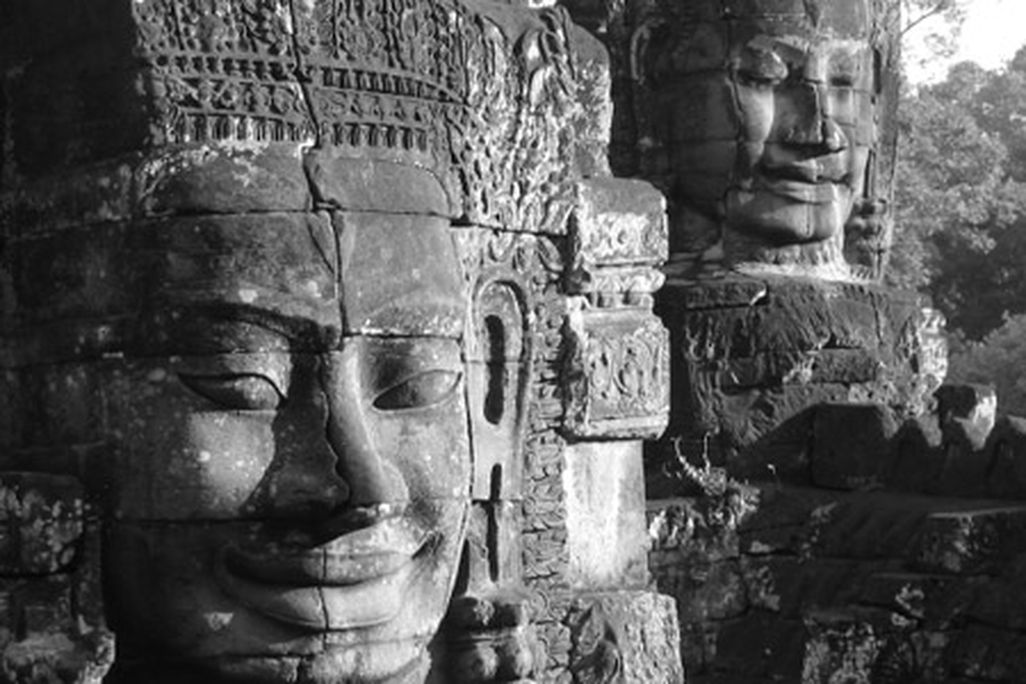
- By Bruce Hathaway
- Smithsonian magazine, January 2008, Subscribe
Photographer Michael Freeman has seen it all. He's been to the Valley of the Kings in Egypt and remote temples in Sudan's Nubian desert. Yet nothing has moved him in the same way as Angkor Wat (see above) in Cambodia, where "scale, artistry and location are all superlative."
Angkor Wat is actually just one of more than a dozen magnificent temples in the vast metropolis of Angkor, the capital of the Khmer Empire from the 9th to the 15th centuries. Within Angkor Wat, carved bas-reliefs illustrate scenes from the Ramayana and the Mahabharata—epic poems that are also sacred Hindu texts. "Just think that the single temple of Angkor Wat has the same tonnage of rock as the Pyramid of Cheops," marvels Freeman, "yet much of it is carved." Small wonder then that at least two million tourists visited Angkor in 2007—and that number is expected to increase by more than 15 percent a year. The best way to avoid the crowds is to go off-season (May-October), when you can stand quietly among ruins embedded in the surrounding rain forest.
Subscribe now for more of Smithsonian's coverage on history, science and nature.
← Previous![]() Lose Yourself in the White Sands |
Smithsonian Life List: 43 Places to See Before You Die |
Next →![]() The Architectural Wonders of Bagan |


Comments (5)
My new Primary Care physician at the Washington, DC Veterans Administration Hospital is from Cambodia. She is a lovely and caring lady. It just happened that I caught the program on the Smithsonian Channel about the Angkor Wat. Thanks to a Catholic priest friend from India, I am familiar with the Mahabharata. I have a copy of the epic and it is heavy and it is a complex story. I had no idea before that there are thousands of relief carvings from this and other works within the walls of the Wat. I will always admire the work that must have gone into raising such a monument from the swampy jungles.
Posted by Lola McGourty, RN retired on February 13,2013 | 05:47 PM
I had the great good fortune to visit Angkor during the Vietnamese war. There were absolutely no Western visitors. Aside from one or two locals wandering the area my buddy and I were on our own. One of the most magical moments was walking through the ruins under a bright full moon. We spent several days there drinking in the beauty and solitude. A once in a lifetime experience that unfortunately can no longer be enjoyed due to todays tourism boom.
Posted by Richard Wilford on January 17,2013 | 11:48 PM
My wife and I visited Angkor Wat and its nearby temples recently and I have to agree with other comments here: this is one of the once-in-a-lifetime trips that everyone should take. It's massive and you won't run out of templs to visit. There are many different types, including ones over-run with trees, and you can also spend time in the town of Siem Reap to relax and shop.
Posted by Sivaram Velauthapillai on January 13,2013 | 12:06 AM
this is the best ever place i have ever visited. The architecture is simply stunning with then no technology or machine, just imagine they just used humans and brains. Ankorian empire is the greatest. I have felt the vibration of it when i stepped into Angkor Wat temple. Wow.. i have no more words to describe it. What an experience, wish i could go again.
Posted by Nathan853 on October 3,2011 | 02:17 PM
I visited Ankor Wat (near the city of Seam Reap.) To be honest, what also touched me were the rural countryside and villages that one drove past (including seeing people "mud" for fish with their hands deep in a small pond of muck.) Ankor is immense and there are several sections of it. Give yourself a couple days. If you're there for the sunset, position yourself earlier (the higher the ground, the better.)
Posted by Howard K. Hodges on December 24,2009 | 11:27 PM
I recently returned from a trip that included Ankor Wat. It was the highlight of my vacation to Southeast Asia. One can only imagine the spendor of those Temples when then were built. The carved bas-reliefs depicting events, told in epic poems, pass right before your eyes. It is a magical place, where you see visitors and monks alike enjoying the serenity of the ruins.
Posted by joan filderman on March 12,2008 | 07:42 PM