• Smithsonian
    Institution
  • Smithsonian
    Journeys
  • Smithsonian
    Store
  • Smithsonian
    Channel
  • goSmithsonian
    Visitors Guide
  • Air & Space
    magazine

Smithsonian.com

  • Subscribe
  • Home
  • History & Archaeology
  • People & Places
  • Science & Nature
  • Arts & Culture
  • Travel
  • Photos
  • Videos
  • Games & Puzzles
  • Blogs
  • EcoCenter: Energy

Converting Energy Waste into Electricity and Heat

Energy recycling wiz Tom Casten explains how to capture power that goes up in smoke
  • By Bruce Hathaway
  • Smithsonian.com, February 27, 2009, Subscribe
View More Photos »
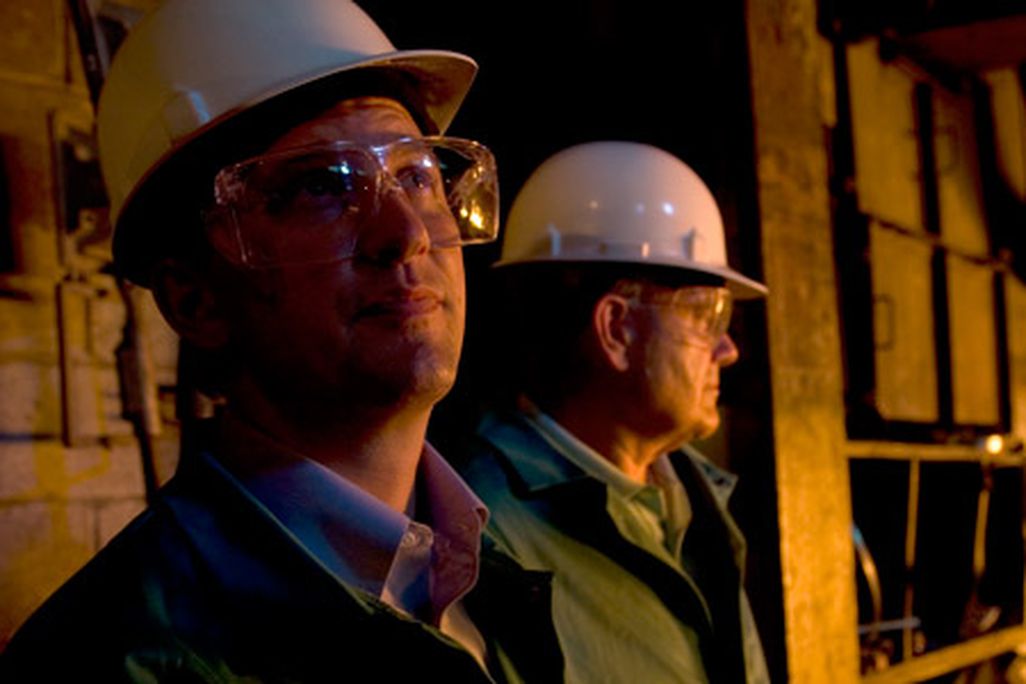
The Castens inside the furnace room at West Virginia Alloy. Tom Casten (right) is chairman and his son Sean is president and CEO of a company called Recycled Energy Development (RED) that is installing a heat-recovery system at West Virginia Alloys.

© Laura Antrim Caskey 2008

 
Tweet

Article Tools

 
  • Comments (3)
  • Font
  • Email
  • RSS
  • Print
  • Related Topics

    Technology Innovation

    Sustainability

    Manufacturing

    Photo Gallery

    West Virginia Alloy Plant in Alloy, West Virginia.

    Converting Energy Waste into Electricity and Heat

    Explore more photos from the story

    More from Smithsonian.com
    • EcoCenter: Energy

    Co-generation, sometimes called combined heat and power (CHP), is a way to capture the intense heat escaping from smokestacks and turn it into electricity or put it to other good use, such as heating homes. Nearly 70 percent of U.S. greenhouse gas emissions come from generating electricity and heat (another 20 percent comes from cars), and the estimates of CHP's potential are dramatic. Capturing wasted smokestack energy in the United States could replace nearly 30 percent of power currently generated by burning fossil fuels, cut carbon dioxide emissions by 20 percent, and annually save $150 billion to $250 billion, according to a number of studies. In December, Oak Ridge National Laboratory estimated that if CHP generated 20 percent of our nation's power capacity by 2030—Germany, Japan and China have already reached or exceeded that goal, and Denmark generates 50 percent of its power by CHP—the technology would eliminate 848 million tons of carbon dioxide emissions. That's like removing 154 million cars from the road. Achieving that level of CHP in the United States, according to the Oak Ridge report, would involve $234 billion in new investments and would create a million new highly-skilled, technical jobs. CHP is now also available on a smaller scale for home heating, cooling and power generation; it's called microCHP.

    Smithsonian's Bruce Hathaway recently spoke with CHP expert Tom Casten, chairman of a Chicago company called Recycled Energy Development (RED). Casten has spent three decades promoting the recycling of otherwise wasted industrial energy. He has testified before Congress numerous times and is the author of Turning Off the Heat: Why America Must Double Energy Efficiency to Save Money and Reduce Global Warming. Running a profitable CHP company is important to Casten, who has an MBA from Columbia. But his background as an Eagle Scout also explains his passion for reducing global warming: he abides by the slogan, "leave the campground cleaner than we found it."

    You've written that some factories "belch heat as promiscuously as a raging bonfire," and that when you see steam coming out of smokestacks and going to waste, it drives you crazy. Why does that sight upset you so much?
    I became convinced in about 1974 or 1975 that global warming caused by carbon dioxide emissions is going to be the biggest issue that we've ever faced as human beings and that we have to burn less fossil fuel and learn to reduce C02 emissions profitably. The question is how to reconcile our huge need for energy with the need for a healthy planet and a healthy economy. I've spent most of my career profitably capturing and using the industrial energy that we're wasting.

    You've written that CHP isn't new, that Thomas Edison did it with the world's first power plant in 1882. He built his plant in downtown Manhattan and sent the heat leftover from power generation to heat the buildings next door. Why isn't CHP widely used in our current electricity generating system?
    The first thing to understand is that our energy system is highly inefficient. We're not doing the best we can with the technology that's available. Why? Well, for starters, our electric grid is mainly run by protected monopolies, and they're not rewarded for efficiency. Inefficient central power generation is protected by a glacier of artificial barriers. That regulatory glacier is slowly melting, but not as fast as the real glaciers.

    The average power plant today is only 33 percent efficient, so essentially you're taking three units of energy and getting one unit of electricity. And it's been that way since Eisenhower was president. The rest of the energy is mostly excess heat, and we're just throwing that away. We simply cannot curb global warming without doubling power generation efficiency. That efficiency is the elephant in the room.

    How does your company capture heat that's usually wasted by power plants?
    We build power plants on-site for manufacturers, for universities, for any institution that's using a lot of energy. We generate electricity, and instead of throwing the byproduct thermal energy away, we use it either to heat nearby buildings—replacing fossil-fuel boilers—or for industrial processes or to create more electricity. This approach is called cogeneration, because that's what it is: it's doing two jobs with one fire. Producing energy that way doubles efficiency and halves C02 in comparison to what the utilities are doing now. The least effective project we've ever done is about 70 percent efficient, which is twice the efficiency of the electric power grid. The best of our projects exceed 90 percent efficiency. But the projects must be local in order to recycle the waste energy; heat doesn't travel very well.

    Can you explain how CHP captures and uses heat from industrial smokestacks?
    We call it waste heat recovery. We use hot exhaust that would have been vented up the smokestacks. We use that heat to boil water and produce steam, which turns a dynamo to generate electricity. One place where one of my previous companies worked is a steel plant on the shores of Lake Michigan. We took their waste heat and turned it into 220 megawatts of absolutely clean power. That's huge; it's the amount of solar power being fed into electrical grids all over the world. That steel plant is now saving about $100 million a year—a big factor in keeping it competitive in the world steel market. The EPA has recognized the plant for cutting its greenhouse gases by 1.1 million tons a year. That's what makes CHP so exciting—it's a win-win opportunity. It's pro-economy and pro-environment, and it turns the old false dichotomy between cheap power and clean power on its head.

    How did you get into energy conservation in the first place?
    I grew up in Colorado in a very nature-oriented family. We had a little routine where we'd cross a bridge to go fishing and we'd walk three, four miles down a river. Our dad wouldn't let us come back unless we were carrying some trash that somebody else had left. He'd fulminate about what kind of idiots would carry pop bottles down there and leave them in such a beautiful place. My mother also emphasized service—to whom much is given, much is required. The underlying message from both parents was that we ought to leave the campground cleaner than we found it. And in our shrinking world, our campground is now the planet and global warming threatens it.


    Co-generation, sometimes called combined heat and power (CHP), is a way to capture the intense heat escaping from smokestacks and turn it into electricity or put it to other good use, such as heating homes. Nearly 70 percent of U.S. greenhouse gas emissions come from generating electricity and heat (another 20 percent comes from cars), and the estimates of CHP's potential are dramatic. Capturing wasted smokestack energy in the United States could replace nearly 30 percent of power currently generated by burning fossil fuels, cut carbon dioxide emissions by 20 percent, and annually save $150 billion to $250 billion, according to a number of studies. In December, Oak Ridge National Laboratory estimated that if CHP generated 20 percent of our nation's power capacity by 2030—Germany, Japan and China have already reached or exceeded that goal, and Denmark generates 50 percent of its power by CHP—the technology would eliminate 848 million tons of carbon dioxide emissions. That's like removing 154 million cars from the road. Achieving that level of CHP in the United States, according to the Oak Ridge report, would involve $234 billion in new investments and would create a million new highly-skilled, technical jobs. CHP is now also available on a smaller scale for home heating, cooling and power generation; it's called microCHP.

    Smithsonian's Bruce Hathaway recently spoke with CHP expert Tom Casten, chairman of a Chicago company called Recycled Energy Development (RED). Casten has spent three decades promoting the recycling of otherwise wasted industrial energy. He has testified before Congress numerous times and is the author of Turning Off the Heat: Why America Must Double Energy Efficiency to Save Money and Reduce Global Warming. Running a profitable CHP company is important to Casten, who has an MBA from Columbia. But his background as an Eagle Scout also explains his passion for reducing global warming: he abides by the slogan, "leave the campground cleaner than we found it."

    You've written that some factories "belch heat as promiscuously as a raging bonfire," and that when you see steam coming out of smokestacks and going to waste, it drives you crazy. Why does that sight upset you so much?
    I became convinced in about 1974 or 1975 that global warming caused by carbon dioxide emissions is going to be the biggest issue that we've ever faced as human beings and that we have to burn less fossil fuel and learn to reduce C02 emissions profitably. The question is how to reconcile our huge need for energy with the need for a healthy planet and a healthy economy. I've spent most of my career profitably capturing and using the industrial energy that we're wasting.

    You've written that CHP isn't new, that Thomas Edison did it with the world's first power plant in 1882. He built his plant in downtown Manhattan and sent the heat leftover from power generation to heat the buildings next door. Why isn't CHP widely used in our current electricity generating system?
    The first thing to understand is that our energy system is highly inefficient. We're not doing the best we can with the technology that's available. Why? Well, for starters, our electric grid is mainly run by protected monopolies, and they're not rewarded for efficiency. Inefficient central power generation is protected by a glacier of artificial barriers. That regulatory glacier is slowly melting, but not as fast as the real glaciers.

    The average power plant today is only 33 percent efficient, so essentially you're taking three units of energy and getting one unit of electricity. And it's been that way since Eisenhower was president. The rest of the energy is mostly excess heat, and we're just throwing that away. We simply cannot curb global warming without doubling power generation efficiency. That efficiency is the elephant in the room.

    How does your company capture heat that's usually wasted by power plants?
    We build power plants on-site for manufacturers, for universities, for any institution that's using a lot of energy. We generate electricity, and instead of throwing the byproduct thermal energy away, we use it either to heat nearby buildings—replacing fossil-fuel boilers—or for industrial processes or to create more electricity. This approach is called cogeneration, because that's what it is: it's doing two jobs with one fire. Producing energy that way doubles efficiency and halves C02 in comparison to what the utilities are doing now. The least effective project we've ever done is about 70 percent efficient, which is twice the efficiency of the electric power grid. The best of our projects exceed 90 percent efficiency. But the projects must be local in order to recycle the waste energy; heat doesn't travel very well.

    Can you explain how CHP captures and uses heat from industrial smokestacks?
    We call it waste heat recovery. We use hot exhaust that would have been vented up the smokestacks. We use that heat to boil water and produce steam, which turns a dynamo to generate electricity. One place where one of my previous companies worked is a steel plant on the shores of Lake Michigan. We took their waste heat and turned it into 220 megawatts of absolutely clean power. That's huge; it's the amount of solar power being fed into electrical grids all over the world. That steel plant is now saving about $100 million a year—a big factor in keeping it competitive in the world steel market. The EPA has recognized the plant for cutting its greenhouse gases by 1.1 million tons a year. That's what makes CHP so exciting—it's a win-win opportunity. It's pro-economy and pro-environment, and it turns the old false dichotomy between cheap power and clean power on its head.

    How did you get into energy conservation in the first place?
    I grew up in Colorado in a very nature-oriented family. We had a little routine where we'd cross a bridge to go fishing and we'd walk three, four miles down a river. Our dad wouldn't let us come back unless we were carrying some trash that somebody else had left. He'd fulminate about what kind of idiots would carry pop bottles down there and leave them in such a beautiful place. My mother also emphasized service—to whom much is given, much is required. The underlying message from both parents was that we ought to leave the campground cleaner than we found it. And in our shrinking world, our campground is now the planet and global warming threatens it.

        Subscribe now for more of Smithsonian's coverage on history, science and nature.


    Related topics: Technology Innovation Sustainability Manufacturing


    Tweet Digg
     
    Comments (3)

    Excellant Please send me catalogs price lists V R Bembalkar-Energetic Environment India

    Posted by Bembalkar Vijay on January 11,2010 | 12:32 PM

    Great piece. Congrats, Bruce!

    Posted by miggs on March 9,2009 | 02:27 PM

    Great, hopeful story. Wonderful pictures.

    Posted by priscilla Carroll on March 7,2009 | 07:35 AM

    Post a Comment


    Name: (required)

    Email: (required)

    Comment:

    Comments are moderated, and will not appear until Smithsonian.com has approved them. Smithsonian reserves the right not to post any comments that are unlawful, threatening, offensive, defamatory, invasive of a person's privacy, inappropriate, confidential or proprietary, political messages, product endorsements, or other content that might otherwise violate any laws or policies.


    Advertisement


    Popular Videos

    • Newest
    • Most Viewed

    Behind the Scenes of the Smithsonian App

    (01:28)

    Behind the Scenes at the World Orchid Convention

    (3:15)

    Playing the Unplayable Records

    (3:39)

    Introducing Ask Smithsonian

    (1:15)

    View All Newest Videos »

    Behind the Scenes at the World Orchid Convention

    (3:15)

    Playing the Unplayable Records

    (3:39)

    A Brief History of Chocolate

    A Brief History of Chocolate

    (01:22)

    Mammoth vs. Mastodon

    View All Videos »

    Most Popular

    • Viewed
    • Emailed
    • Commented
    • Topics
    1. What You See When You Turn a Fish Inside Out
    2. Women Spies of the Civil War
    3. Annie Leibovitz's American Pilgrimage
    4. Revisiting The Rise and Fall of the Third Reich
    5. A Brief History of the Salem Witch Trials
    6. 28 Places to See Before You Die—the Taj Mahal, Grand Canyon and More
    7. Why Are Finland's Schools Successful?
    8. Who Was Cleopatra?
    9. When Did Girls Start Wearing Pink?
    10. The Orchid Olympics
    1. Why Are Finland's Schools Successful?
    2. Revisiting The Rise and Fall of the Third Reich
    3. When Did Girls Start Wearing Pink?
    4. How Our Brains Make Memories
    5. The Oldest Modernist Paintings
    6. Madame Curie's Passion
    7. Going Mad for Charles Dickens
    8. The Fall of Zahi Hawass
    9. The Science of Sarcasm? Yeah, Right
    10. Dickens' Secret Affair
    1. Women Spies of the Civil War
    2. North Dakota - Landmarks and Points of Interest
    3. The Vikings: A Memorable Visit to America
    4. The Tail of the Whale
    5. A Brief History of the Salem Witch Trials
    6. Who Was Cleopatra?
    7. Henrietta Lacks’ ‘Immortal’ Cells
    8. John M. Barry on Roger Williams and the Indians
    9. Spies Who Spilled Atomic Bomb Secrets
    10. Annie Leibovitz's American Pilgrimage
    1. American Civil War

    View All Most Popular »

    Advertisement

    Follow Us

    Smithsonian Magazine
    @SmithsonianMag
    Follow Smithsonian Magazine on Twitter

    Sign up for regular email updates from Smithsonian.com, including daily newsletters and special offers.


    In The Magazine

    February 2012

    • Gold Fever
    • Mystique of the Mother Road
    • The Orchid Olympics
    • Mad for Dickens
    • Dickens' Secret Affair

    View Table of Contents »


    First Name
    Last Name
    Address 1
    Address 2
    City
    State   Zip
    Email

    Smithsonian Store

    Jefferson Bible
    Smithsonian Edition

    Get your own copy of this recently conserved treasure.

    Smithsonian Journeys

    Private Jet Tours

    Explore some of the most treasured and legendary places on Earth, aboard our private aircrafts.


    View full archiveRecent Issues


    • Feb 2012


    • Jan 2012


    • Dec 2011

    Newsletter

    Sign up for regular email updates from Smithsonian magazine, including free newsletters, special offers and current news updates.

    Subscribe Now

    About Us

    Smithsonian.com expands on Smithsonian magazine's in-depth coverage of history, science, nature, the arts, travel, world culture and technology. Join us regularly as we take a dynamic and interactive approach to exploring modern and historic perspectives on the arts, sciences, nature, world culture and travel, including videos, blogs and a reader forum.

    Explore our Brands

    • goSmithsonian.com
    • Smithsonian Air & Space Museum
    • Smithsonian Student Travel
    • Smithsonian Catalogue
    • Smithsonian Journeys
    • Smithsonian Channel
    • Site Map
    • Privacy Policy
    • Copyright
    • Member Services
    • About Smithsonian
    • Contact Us
    • Advertising
    • Subscribe
    • RSS
    • Topics

    Smithsonian Institution

    Produced by Clickability