
What’s Next in Space?
Probes and landers sent into the final frontier will bring us closer to answering cosmic mysteries
/https://tf-cmsv2-smithsonianmag-media.s3.amazonaws.com/accounts/headshot/mark-strauss-240.jpg)
“I am convinced we will find past or present life in the solar system or on a planet surrounding another star in the next 40 years,” says Edward Weiler, an astrophysicist and associate administrator of the Science Mission Directorate at NASA headquarters in Washington, D.C.
Weiler’s prediction is based partly on recent discoveries of creatures living in extreme environments previously considered uninhabitable, such as 600 feet beneath the ice in Antarctica, where a shrimp-like critter has been found. “As long as we have water, energy and organic material,” Weiler says, “the potential for life is everywhere.” He hopes the imminent discovery of extraterrestrial life will finally put to rest the idea that Earth is unique: “It is the last crumb on the plate of human arrogance.”
Though sending humans into space might stir the greatest public attention, there are no solid plans for doing so in the near or even distant future. But space-based science will boom. Here’s a celestial mystery tour of future probes and observatories due to be launched by NASA, the European Space Agency (ESA) and the Japanese Aerospace Exploration Agency (JAXA):
Inner Planets
NASA’s MErcury Surface, Space ENvironment, GEochemistry and Ranging (MESSENGER) probe, launched in 2004, will become the first spacecraft to orbit the planet closest to the Sun on March 18, 2011. Three years later, a joint ESA-JAXA mission will send the BepiColombo spacecraft to Mercury, where it will map the planet and investigate its magnetosphere. Scientists hope to learn whether ice exists in permanently shadowed craters near the poles.
NASA’s robotic Mars Science Laboratory (launch: 2011) is a rover that will analyze soil and rock samples, looking for organic materials. One key question is whether Mars ever was—or is currently—capable of supporting microbial life. Later in the decade, the joint NASA-ESA ExoMars Trace Gas Orbiter (launch: 2016) will study the Martian atmosphere, paying special attention to methane gas, first detected in 2003. Because one source of methane is biological activity, it’s conceivable that life might currently exist on Mars.
Closer to home, NASA’s Gravity Recovery and Interior Laboratory (GRAIL) mission (launch date: 2011) will send twin spacecraft in tandem orbits around the Moon; the satellites will work together to make highly sensitive gravitational field measurements. This data will allow scientists to map the lunar interior, from crust to core.
Outer Planets
A joint NASA-ESA Europa Jupiter System Mission (possible launch: 2020) will send two robotic orbiters to conduct a three-year study of Jupiter and its moons: Europa (beneath its icy surface an ocean might contain enough oxygen to support life), Ganymede (it’s the only moon that has an internally generated magnetic field), Io (the solar system’s most volcanically active body) and Callisto (its heavily cratered icy crustmight hide an ocean deep in its interior).
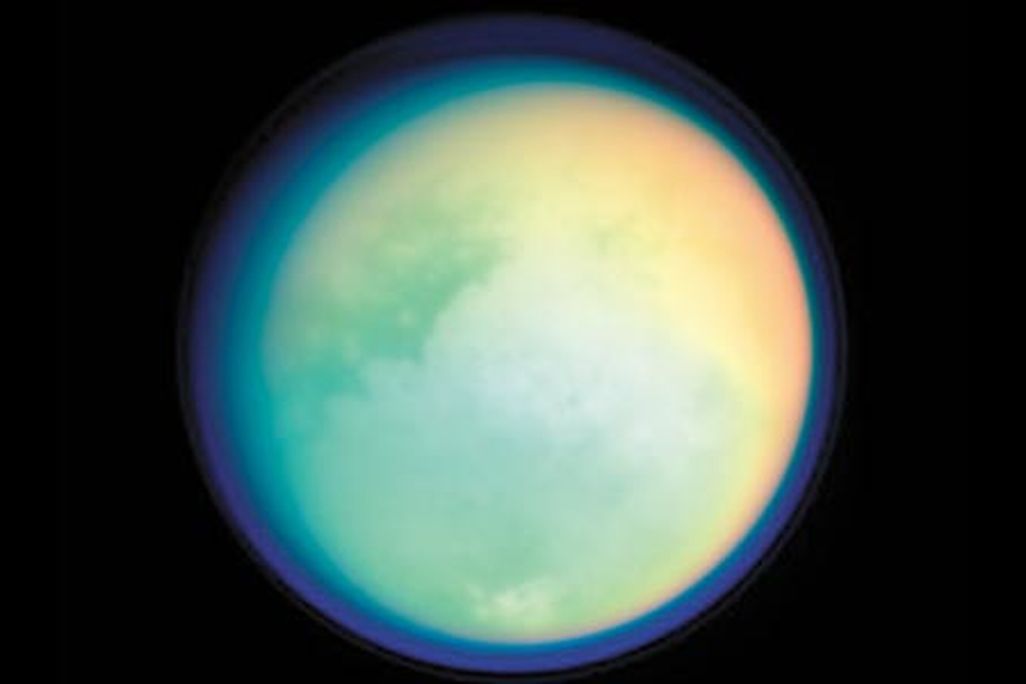
NASA is studying a mission, for launch in the 2020s, that would visit the only moon known to have an extensive atmosphere—Titan, a satellite of Saturn. The concept consists of a balloon that would hover in Titan’s nitrogen-rich clouds, a lander that would splash down in one of its methane seas and an orbiter that would relay data, in addition to making atmospheric measurements.
Meanwhile, the earlier NASA-ESA Cassini-Huygens mission—launched in 1997 to explore Saturn and its moons—might be extended to 2017, enabling scientists to collect data on weather changes as the ringed planet enters its summer solstice.
Launched in 2004, ESA’s Rosetta probe will rendezvous with comet 67/P Churyumov-Gerasimenko in 2014. A lander will study the surface, and an orbiter will follow the comet another two years.
The Cosmos
NASA’s NuSTAR (launch date: 2012) will rely on high-energy X-rays to study the cosmos. Among its missions will be gazing at supernovas, or exploded stars, for clues explaining how and why they self-destruct.
Designed to penetrate dust clouds, NASA’s CALISTO orbiting observatory (launch: 2015) will search interstellar space for traces of organic molecules, the building blocks of life.
The James Webb Space Telescope (launch: 2014) will collect infrared radiation with a mirror 21 feet in diameter. The goal is to study signals generated when stars and galaxies formed in the aftermath of the Big Bang 12 billion to 14 billion years ago. NASA’s Weiler says the telescope “will have the ability to look back at the birth of matter itself.”
Mark Strauss is a senior editor.
/https://tf-cmsv2-smithsonianmag-media.s3.amazonaws.com/filer/Mercury-Planetary-Orbiter-2.jpg)
/https://tf-cmsv2-smithsonianmag-media.s3.amazonaws.com/filer/moon-Titan-NASA-520.jpg)
/https://tf-cmsv2-smithsonianmag-media.s3.amazonaws.com/filer/Mars-Science-Laboratory-3.jpg)
/https://tf-cmsv2-smithsonianmag-media.s3.amazonaws.com/filer/ExoMars-Trace-Gas-Orbiter-4.jpg)
/https://tf-cmsv2-smithsonianmag-media.s3.amazonaws.com/filer/the-GRAIL-mission-Moon-interior-5.jpg)
/https://tf-cmsv2-smithsonianmag-media.s3.amazonaws.com/filer/Europa-Jupiter-System-Mission-6.jpg)
/https://tf-cmsv2-smithsonianmag-media.s3.amazonaws.com/filer/Rosetta-probe-comets-surface-7.jpg)
/https://tf-cmsv2-smithsonianmag-media.s3.amazonaws.com/filer/NuSTAR-observatory-exploded-stars-8.jpg)
/https://tf-cmsv2-smithsonianmag-media.s3.amazonaws.com/filer/CALISTO-telescope-9.jpg)
/https://tf-cmsv2-smithsonianmag-media.s3.amazonaws.com/accounts/headshot/mark-strauss-240.jpg)