• Smithsonian
    Institution
  • Smithsonian
    Journeys
  • Smithsonian
    Store
  • Smithsonian
    Channel
  • goSmithsonian
    Visitors Guide
  • Air & Space
    magazine

Smithsonian.com

  • Subscribe
  • Home
  • History & Archaeology
  • People & Places
  • Science & Nature
  • Arts & Culture
  • Travel
  • Photos
  • Videos
  • Games & Puzzles
  • Blogs
  • 40th Anniversary

Art's Bold New Direction

The director of the Smithsonian's Hirshhorn Museum predicts how art will engage us as never before
  • By Richard Koshalek
  • Smithsonian magazine, August 2010, Subscribe
View More Photos »
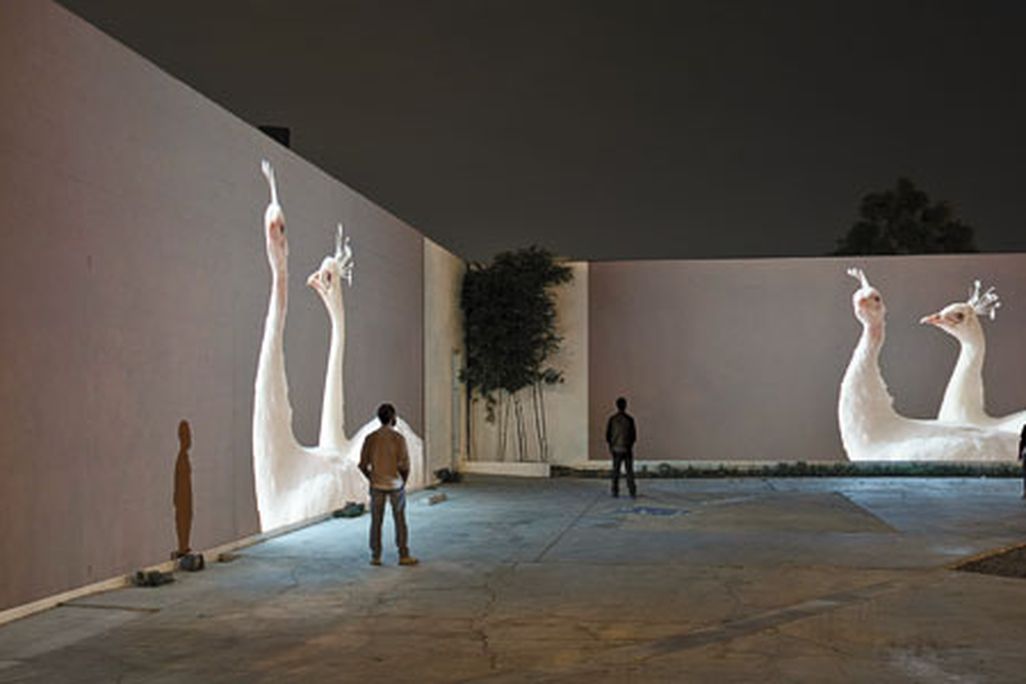
Doug Aitken Artists will move beyond the "four walls of established institutions," says Richard Koshalek, director of the Smithsonian's Hirshhorn Museum.

Brian Forrest

 
Tweet

Article Tools

 
  • Comments (4)
  • Font
  • Email
  • RSS
  • Print
  • Related Topics

    Visual Arts

    Artists

    Thought Innovation

    Photo Gallery

    Richard Koshalek

    Art's Bold New Direction

    Explore more photos from the story


    Video Gallery

    The Director of the Smithsonian’s Hirshhorn Museum predicts what the museum’s collections will hold in the 40 years

    Q & A: Richard Koshalek

    The Director of the Smithsonian’s Hirshhorn Museum predicts what the museum’s collections will hold in the next 40 years


    More from Smithsonian.com
    • Smithsonian magazine's 40th Anniversary
    • Exploring the Video Art of Fiona Tan

    What will happen in the art world by 2050? I predict that all the smashed plates on Julian Schnabel’s paintings will fall off on exactly the same day.

    Seriously, though, by 2050, I believe that artists will be exploring and affecting all aspects of our daily environment in the most original ways possible. We’re already seeing that artists today are moving beyond the four walls of established institutions (such as museums) and are directly engaging and inspiring a range of new audiences. Through new technologies especially, these audiences will grow, as will artists’ presence and influence.

    At the Hirshhorn, we’re organizing two major initiatives for 2012 that reflect this changing dynamic between artists and society. The first is an exhibition, “Animated World,” that will dramatically show how the medium of animation has exceeded the wildest dreams of its original film-based creators and is permeating the entire visual landscape around the world. From cellphone screens to urban spaces, animation is increasingly present in our everyday lives and will proliferate in astonishingly inventive ways. Our other project is a major conference called “Open Source,” which will explore the effects of new technologies on art, art-making and culture.

    We’ll also be working with Doug Aitken, a multimedia artist who has a wide view of the world. He’s interested in art, architecture, science and the global environmental situation. He’s dealing with new media, video and new technology.

    Yet despite the focus on new media, we will never abandon our passionate commitment to painting and sculpture. There are always artists advancing these mediums. There is always something new in painting and sculpture. It’s just not going to be as straightforward as it has been. In a world changing at warp speed, we will see greater complexity in the types of work produced.

    Most excitingly, there will be an increasingly rich dialogue between the artist and the audience. Art is going to reach so many more people and will not be perceived as something “exotic” or marginalized—but rather as a normal mode of existence along with other pursuits. If there’s one thing I believe, it’s that the primary responsibility of museums is to teach us to live life with greater imagination. The best way to do this is to bring the public into contact with artists in settings that museums are uniquely able to provide.

    Art is constantly evolving. Jackson Pollock’s seeming spontaneity yet formalism in abstraction changed art forever. Robert Rauschenberg moved us from Abstract Expressionism to Pop and then into new hybrid forms. Because of such breakthroughs and because of new technologies, there is going to be an ever-greater openness in art and art-making. Andy Warhol showed this most dramatically. He explored every medium of his day. He co-founded Interview magazine, he produced remarkable films, he explored new applications of traditional mediums such as silk-screening, and, of course, he completely transformed our perceptions of commercial imagery.

    In the future, the art world will be even more liberated to make use of all the media around us—because artists have this passionate curiosity and ceaseless desire for new ideas.

    By 2050, you’re going to see a new leadership equation emerge based on what happens in the art world. Traditionally, decisions have been made by political and corporate leadership. In the future, creative individuals—artists, architects and designers—are going to be making major decisions having to do with how we shape our society, and especially in the world’s urban environments, since by 2050 the majority of people will be living in cities.

    Ultimately, entirely new types of artists will also emerge from all of this. Artists are, at heart, opportunity-seekers who transform the world around us. They give me tremendous optimism. I believe the future is unknowable, but it is not unthinkable.


    What will happen in the art world by 2050? I predict that all the smashed plates on Julian Schnabel’s paintings will fall off on exactly the same day.

    Seriously, though, by 2050, I believe that artists will be exploring and affecting all aspects of our daily environment in the most original ways possible. We’re already seeing that artists today are moving beyond the four walls of established institutions (such as museums) and are directly engaging and inspiring a range of new audiences. Through new technologies especially, these audiences will grow, as will artists’ presence and influence.

    At the Hirshhorn, we’re organizing two major initiatives for 2012 that reflect this changing dynamic between artists and society. The first is an exhibition, “Animated World,” that will dramatically show how the medium of animation has exceeded the wildest dreams of its original film-based creators and is permeating the entire visual landscape around the world. From cellphone screens to urban spaces, animation is increasingly present in our everyday lives and will proliferate in astonishingly inventive ways. Our other project is a major conference called “Open Source,” which will explore the effects of new technologies on art, art-making and culture.

    We’ll also be working with Doug Aitken, a multimedia artist who has a wide view of the world. He’s interested in art, architecture, science and the global environmental situation. He’s dealing with new media, video and new technology.

    Yet despite the focus on new media, we will never abandon our passionate commitment to painting and sculpture. There are always artists advancing these mediums. There is always something new in painting and sculpture. It’s just not going to be as straightforward as it has been. In a world changing at warp speed, we will see greater complexity in the types of work produced.

    Most excitingly, there will be an increasingly rich dialogue between the artist and the audience. Art is going to reach so many more people and will not be perceived as something “exotic” or marginalized—but rather as a normal mode of existence along with other pursuits. If there’s one thing I believe, it’s that the primary responsibility of museums is to teach us to live life with greater imagination. The best way to do this is to bring the public into contact with artists in settings that museums are uniquely able to provide.

    Art is constantly evolving. Jackson Pollock’s seeming spontaneity yet formalism in abstraction changed art forever. Robert Rauschenberg moved us from Abstract Expressionism to Pop and then into new hybrid forms. Because of such breakthroughs and because of new technologies, there is going to be an ever-greater openness in art and art-making. Andy Warhol showed this most dramatically. He explored every medium of his day. He co-founded Interview magazine, he produced remarkable films, he explored new applications of traditional mediums such as silk-screening, and, of course, he completely transformed our perceptions of commercial imagery.

    In the future, the art world will be even more liberated to make use of all the media around us—because artists have this passionate curiosity and ceaseless desire for new ideas.

    By 2050, you’re going to see a new leadership equation emerge based on what happens in the art world. Traditionally, decisions have been made by political and corporate leadership. In the future, creative individuals—artists, architects and designers—are going to be making major decisions having to do with how we shape our society, and especially in the world’s urban environments, since by 2050 the majority of people will be living in cities.

    Ultimately, entirely new types of artists will also emerge from all of this. Artists are, at heart, opportunity-seekers who transform the world around us. They give me tremendous optimism. I believe the future is unknowable, but it is not unthinkable.

        Subscribe now for more of Smithsonian's coverage on history, science and nature.


    Related topics: Visual Arts Artists Thought Innovation


    Tweet Digg
     
    Comments (4)

    Yes!
    I specialize in Art from Science!

    Posted by Dr. Krishna kumari Challa on November 17,2010 | 01:18 AM

    "Animated World" organizers may wish to learn more about a program of CalArts in teaching animation skills to public school students as young as middle schoolers in Los Angeles. Contact Ms. Avila at the Cimmunity Arts Partnership (CAP) of CalArts in Valencia, CA.

    Posted by Ron Bitzer on July 12,2010 | 05:22 PM

    I believe artists are already shaping policy decisions, guiding community leaders and influencing how we move beyond the fear of the shift in economics - the contributions are not fully recognized nor are cultural creatives being utilized to our full capacity - let us work diligently to be sure it doesn't take 40 years for the creative genius of artists to be recognized as essential builders of sustainable solutions, conflict resolution and collaborative community development!
    thank you for this recognition!

    Posted by Annie Loyd on July 8,2010 | 10:39 AM

    I am a highschool Art teacher in Anne Arundel County in Maryland. I will be teaching advanced level art history as well as advanced studio classes. I have just found my opening discussion for the year. This is a wonderful way to help students relate art to in their furture and the past. Inspiring them to know there is no limit to what can be, is one of my primary messages. Thank you for this inspiration!

    Posted by Kathleen on July 5,2010 | 11:50 AM

    Post a Comment


    Name: (required)

    Email: (required)

    Comment:

    Comments are moderated, and will not appear until Smithsonian.com has approved them. Smithsonian reserves the right not to post any comments that are unlawful, threatening, offensive, defamatory, invasive of a person's privacy, inappropriate, confidential or proprietary, political messages, product endorsements, or other content that might otherwise violate any laws or policies.


    Advertisement


    Popular Videos

    • Newest
    • Most Viewed

    Behind the Scenes at the World Orchid Convention

    (3:15)

    Playing the Unplayable Records

    (3:39)

    Introducing Ask Smithsonian

    (1:15)

    Conserving the Jefferson Bible

    (03:50)

    View All Newest Videos »

    Behind the Scenes at the World Orchid Convention

    (3:15)

    Playing the Unplayable Records

    (3:39)

    A Brief History of Chocolate

    A Brief History of Chocolate

    (01:22)

    Mammoth vs. Mastodon

    View All Videos »

    Most Popular

    • Viewed
    • Emailed
    • Commented
    • Topics
    1. In John They Trust
    2. Why Are Finland's Schools Successful?
    3. A Brief History of the Salem Witch Trials
    4. Going Mad for Charles Dickens
    5. Tattoos
    6. Who Was Cleopatra?
    7. 28 Places to See Before You Die—the Taj Mahal, Grand Canyon and More
    8. The Orchid Olympics
    9. Henrietta Lacks’ ‘Immortal’ Cells
    10. Gobekli Tepe: The World’s First Temple?
    1. The Devastating Costs of the Amazon Gold Rush
    2. Why Are Finland's Schools Successful?
    3. The Orchid Olympics
    4. Going Mad for Charles Dickens
    5. The Ten Most Disturbing Scientific Discoveries
    6. Eric Klinenberg on Going Solo
    7. The Mystique of Route 66
    8. Henrietta Lacks’ ‘Immortal’ Cells
    9. Listening to Bacteria
    10. Diving for the Secrets of the Battle of the Atlantic
    1. Who Was Cleopatra?
    2. 1968 Democratic Convention
    3. Meet Sesame Street's Global Cast of Characters
    4. A Spectacular Collection of Native American Quilts
    5. Who Wrote the Dead Sea Scrolls?
    6. Fairhope, Alabama's Southern Comfort
    7. How Charles Dickens Saw London
    8. Children of the Vietnam War
    9. Founding Fathers, Great Gardeners
    10. Six Sacred Sites of Hawaii

    View All Most Popular »

    Advertisement

    Follow Us

    Smithsonian Magazine
    @SmithsonianMag
    Follow Smithsonian Magazine on Twitter

    Sign up for regular email updates from Smithsonian.com, including daily newsletters and special offers.


    In The Magazine

    February 2012

    • Gold Fever
    • Mystique of the Mother Road
    • The Orchid Olympics
    • Mad for Dickens
    • Dickens' Secret Affair

    View Table of Contents »


    First Name
    Last Name
    Address 1
    Address 2
    City
    State   Zip
    Email

    Smithsonian Store

    Jefferson Bible
    Smithsonian Edition

    Get your own copy of this recently conserved treasure.

    Smithsonian Journeys

    Private Jet Tours

    Explore some of the most treasured and legendary places on Earth, aboard our private aircrafts.


    View full archiveRecent Issues


    • Feb 2012


    • Jan 2012


    • Dec 2011

    Newsletter

    Sign up for regular email updates from Smithsonian magazine, including free newsletters, special offers and current news updates.

    Subscribe Now

    About Us

    Smithsonian.com expands on Smithsonian magazine's in-depth coverage of history, science, nature, the arts, travel, world culture and technology. Join us regularly as we take a dynamic and interactive approach to exploring modern and historic perspectives on the arts, sciences, nature, world culture and travel, including videos, blogs and a reader forum.

    Explore our Brands

    • goSmithsonian.com
    • Smithsonian Air & Space Museum
    • Smithsonian Student Travel
    • Smithsonian Catalogue
    • Smithsonian Journeys
    • Smithsonian Channel
    • Site Map
    • Privacy Policy
    • Copyright
    • Member Services
    • About Smithsonian
    • Contact Us
    • Advertising
    • Subscribe
    • RSS
    • Topics

    Smithsonian Institution

    Produced by Clickability