• Smithsonian
    Institution
  • Travel
    With Us
  • Smithsonian
    Store
  • Smithsonian
    Channel
  • goSmithsonian
    Visitors Guide
  • Air & Space
    magazine

Smithsonian.com

  • Subscribe
  • History & Archaeology
  • Science
  • Ideas & Innovations
  • Arts & Culture
  • Travel & Food
  • At the Smithsonian
  • Photos
  • Videos
  • Games
  • Shop
  • 40th Anniversary

A Youth Renaissance for Native Americans

Filmmaker Chris Eyre says Native pride will embolden the next generation of first Americans
| | | Reddit | Digg | Stumble | Email |
  • By Chris Eyre
  • Photographs by Emily Schiffer
  • Smithsonian magazine, July-August 2010, Subscribe
View More Photos »
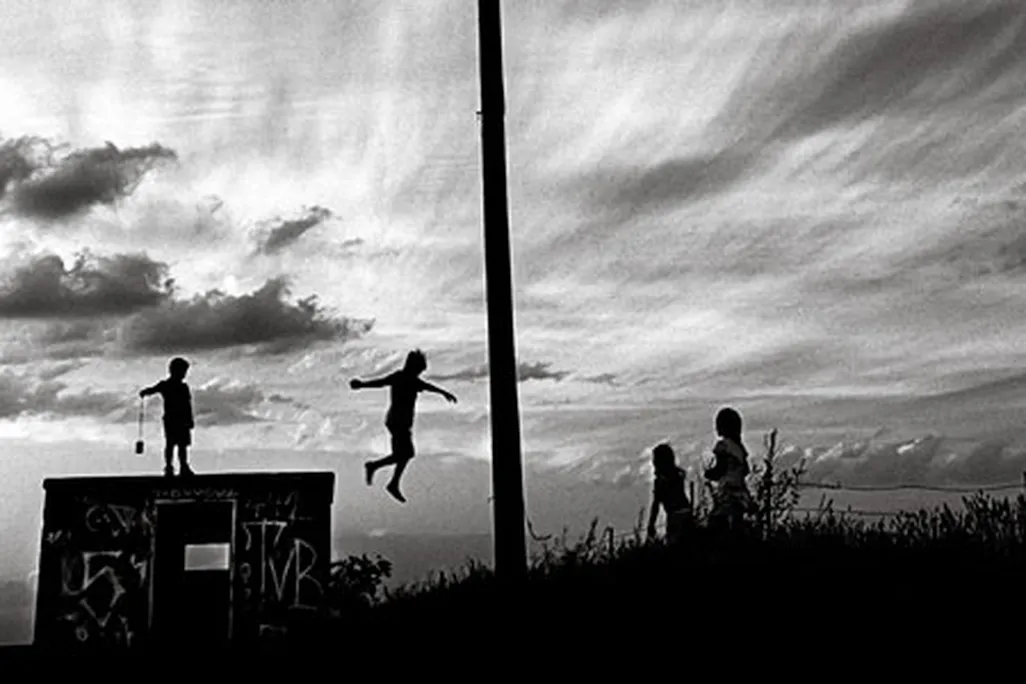
Free Fall Emily Schiffer
Reservations "are strongholds of community," says Chris Eyre. (Emily Schiffer)

Photo Gallery (1/4)

Chris Eyre

Explore more photos from the story

Related Books

Smoke Signals

by Sherman Alexie (Writer), Chris Eyre (Director)
Miramax Films,1998

More from Smithsonian.com

  • Smithsonian magazine's 40th Anniversary
  • Celebrating American Indian Heritage

“Ooooh, look at that!” Shahela exclaims.

My daughter and I watch in fascination as an enormous grayish-purple cloud sweeps over the golden-brown rolling hills of the plains, cascades through the expansive sky and merges with the yellow horizon.

At that moment, I’m awe-struck by the power of the season changing from winter to spring, and I realize the spectacle would not be as beautiful without the dark gray cloud on the horizon.

I’m always inspired by the rebirth of the seasons. After I was born to my biological mother, Rose, of the Southern Cheyenne and Arapaho tribes, I was reborn within days to my adopted parents, Barb and Earl, in a white middle-class home in Klamath Falls, Oregon. As a dark-skinned 5-year-old, I would ask my mom what I was going to be when I grew up.

“Anything you want!” she said.

“A fireman?”

“Yes!”

“What about president?”

“Yes!” she lied, lovingly. Or perhaps she had the foresight 30 years ago to think there would be a minority president.

As a Native American raised in a white environment, I have never seen things in black and white but always in many colors and shades of gray. I love singing country and western songs at karaoke, but I also love a good powwow and fry bread. Over the years, my work as an artist has always been about bridging the gap between the white world and the Native world. I then realized that it had already been done. There have been “Indian rednecks” for years.


“Ooooh, look at that!” Shahela exclaims.

My daughter and I watch in fascination as an enormous grayish-purple cloud sweeps over the golden-brown rolling hills of the plains, cascades through the expansive sky and merges with the yellow horizon.

At that moment, I’m awe-struck by the power of the season changing from winter to spring, and I realize the spectacle would not be as beautiful without the dark gray cloud on the horizon.

I’m always inspired by the rebirth of the seasons. After I was born to my biological mother, Rose, of the Southern Cheyenne and Arapaho tribes, I was reborn within days to my adopted parents, Barb and Earl, in a white middle-class home in Klamath Falls, Oregon. As a dark-skinned 5-year-old, I would ask my mom what I was going to be when I grew up.

“Anything you want!” she said.

“A fireman?”

“Yes!”

“What about president?”

“Yes!” she lied, lovingly. Or perhaps she had the foresight 30 years ago to think there would be a minority president.

As a Native American raised in a white environment, I have never seen things in black and white but always in many colors and shades of gray. I love singing country and western songs at karaoke, but I also love a good powwow and fry bread. Over the years, my work as an artist has always been about bridging the gap between the white world and the Native world. I then realized that it had already been done. There have been “Indian rednecks” for years.

I came to appreciate through my work that there are good people in both the Native and non-Native world. Though I also found that the American dream usually didn’t include my people, the Natives. For example, religious freedom for Natives to practice their own traditions was not legally upheld until 1994.

In the next 40 years, the greatest threat to Native tribal culture and tradition will be the American consumer ethic of personal economic gain at all costs. It runs deeply counter to the spirit of giving and codependence that is central to what we are as a people.

As more Native Americans participate in the wider economy through business initiatives such as gaming, we will also struggle with assimilation, a force that we have fought over the years. It was only about 20 years ago that the public at large allowed Indian gaming as a way to give back to the Indians. Ten years ago, I remember seeing a Native kid at a Southern California powwow driving his parents’ Hummer. A minority of tribes and their reservations have prospered from Indian gaming, but most still live in the same dire conditions.

Marginal cultures in the past have rightfully entered the mainstream through business, taking money from the majority and infusing it into their own tribes. It happened with Latinos, Asians and now Natives. It’s the American way. My greatest fear is that after all these years largely as nonparticipants in the American dream, our inclusion will ultimately kill off tribal languages, traditions and our knowledge.

Today, it is inspiring to see the number of strong Native American youth eager to learn more of our ancient traditions and cultures from the elders, who are more than happy to share with those who respect them. The youth renaissance is rooted, I think, in the elders’ tenacity, 1970s activism and a backlash against the mass media’s depiction of Native Americans.

The dismal portrayal of Native reservations is inaccurate and harmful. The media focus solely on poverty and the cycle of oppression. What most outsiders don’t see is the laughter, love, smiles, constant joking and humor and the unbreakable strength of the tribal spirit that is there. Some reservations are strongholds of community, serving the needs of their people without economic gain but with traditions leading the way. My hope is that Native evolution will be driven by a reinforced traditionalism passed down from one to another.

There is a calling not taught in religion or school; it is in one’s heart. It is what the tribe is about: to give to the cycle; to provide for those older and younger. My daughter knows it, just as she knows the natural beauty of seeing the clouds coming in the spring.

I love the gray rain.

Chris Eyre directed 1998’s Smoke Signals and three films in the 2009 PBS series “We Shall Remain.” Emily Schiffer founded a youth photography program on the Cheyenne River Reservation.


Single Page 1 2 Next »

    Subscribe now for more of Smithsonian's coverage on history, science and nature.


Related topics: Native Americans Rituals and Traditions


| | | Reddit | Digg | Stumble | Email |
 

Add New Comment


Name: (required)

Email: (required)

Comment:

Comments are moderated, and will not appear until Smithsonian.com has approved them. Smithsonian reserves the right not to post any comments that are unlawful, threatening, offensive, defamatory, invasive of a person's privacy, inappropriate, confidential or proprietary, political messages, product endorsements, or other content that might otherwise violate any laws or policies.

Comments (11)

My prayer is that all indians will be free along with the animals. Peace be stronger and the oppession will be defeated as we take care of the earth to teach others the delecate way of nature peace is on the hoizon brothers and sisters of this land. Love allways WB

Posted by Cathy knight on November 22,2012 | 04:11 PM

when we look both ways , we come to realize with the grace of growth.....and the power of spirit.....that the past has not changed , and we look at the present and it too is still.....and the future is not promised....and we are not discouraged to ask for a better tomorrow.

let us encourage these young hearts to ask for a better tomorrow.

for it is their birth right to walk a better tomorrow.

as it is my right to ask as a dad, let me also ask.

it is never too late to ask.

Posted by james gang on November 8,2011 | 05:17 PM

Our newspaper, The Lakota Country Times, has focused purely on our native Takoja by showing them in school, at play, at work, at home and mostly at peace with themselves. Our only goal this last 6 years is to show the world that all is not bitter on our Pine Ridge and Rosebud Reservations in South Dakota. It is not perfect, but when youth can see themselves in our pages and on our website (www.lakotacountrytimes.com)we hope that the power of peace, smiles, humor and love can permeate all who see it.
Connie Louise Smith
Owner/Publisher
Lakota Country Times

Posted by Connie Louise Smith on May 16,2011 | 08:07 PM

The article that Chris Eyre wrote was an amazing article and included his daughter Shahela. Chris is right on the mark and if you haven't had the opportunity to meet this man, your missing a truly amazing young man, that lives as he talks and he speaks from his heart and can also be funny and halariuos. He is a true down to earth guy and speaks his mind. and thats the truth, the truth is in him and as all, we have more to learn. Keep up the great work and looking forward to seeing your latest movie. o

Posted by Orvel on March 15,2011 | 12:13 AM

I found this article fascinating! I have to admit that the media's portrayal of the conditions on reservations did make me feel pity and concern for those living on them. I never thought about all the good things happening on the reservation. I am an outsider who has not had the chance to see the laughter, happiness, and good times that are had on the reservation. This article was very eye-opening in many ways, not just this. Thank you.

Posted by Courtney on November 19,2010 | 02:33 PM

I think this is an amazing website. I am taking a class about Native American Indians at Front Range Community College. My only problem with that is, is that it is an online class. I lived 12 years or so ago on "Big Mountain" Indian Res. in Arizona with the Hopi and Navajo(Deneh) and I dont know how to use computers that well. I can sheepherd now though! I am glad there are online sites like this one. I just hope that in the future there can be a class where we would walk to a sacred place and burn some sage instead of always being on the computer. One of our class discussions was about the truth about the Indians should be tought in school and I definately believe that it should. We should all go back to the community of the earth and know to take care of it. Great website and great comments. Thank You!

Posted by Chris Vann on November 4,2010 | 08:22 PM

I wish your piece had been longer. Americans live in produced (the media just don't care) ignorance of the condition of Native Americans and I think that's just another sin added to the long list of land-ownership, racial, religious and other violations over the past few centuries. I wish them all peace, happiness and prosperity - the same thing everyone deserves to get.

Posted by Glenn McGrew on November 2,2010 | 08:11 AM

This is a very interesting article. I, too, believe that Native American culture should be taught throughout the school systems, respectively and without bias. Anyone who has been to a Pow-Wow, Sweatlodge, or Sun Dance ceremony walks away with more knowledge and respect of the Mother Earth and the Creator than is ever taught in any white-man's church.

Lakota D. Lynn Gould, published author

Posted by Lakota D. Lynn Gould on September 25,2010 | 12:34 AM

Native Americans
I would like to see courses about the Native American culture taught in grade, junior and high schools as part of the United States History. The Native people lived a beautiful life and possessed an understanding of mother earth that still lives within them today. I encourage everyone to attend an Intertribal Powwow to learn more about the Native American culture. Additionally, I would encourage the United States Government to support and present the Native American culture in a respectful and positive way through education in schools and Native American films which document and present the truth.

Posted by Paul Cochran on August 23,2010 | 02:09 PM

I am like the woman in that article in that I was taken from my native indian family in the east and given to a white family to be raised. I was told that this was done because I was a direct descendant of Tecumseh and they didn't want any more trouble from anyone of his blood such as I was. I believe it was Indian News Today that had an article about a Lakota man who was in Ohio helping to oversee Ft. Ancient,in Ohio and Sunwatch in Dayton, Ohio. He says in that article that unless we who claim to be indian in the east can prove enrollment and blood quantum in a federally recognised tribe then we cannot call ourselves native indian. He should count how man of us are descended from those who didn't go on the trail of tears before he speaks. I'd like to know how man on the reservations believe what he does.

Posted by Patty Roe on August 23,2010 | 01:20 PM

Thank you for commenting on Southern California tribe economics and the greatest threat to native cultural identity. I have seen first-hand the expulsion of one-third of my family's tribe from the Pechanga (Luiseno) Band of Mission Indians due to the pursuit of the "American consumer ethic of personal gain at all costs."

Although gaming has offered many opportunities to some natives who have the wisdom to use this business in positive ways, many have chosen otherwise. I have seen youth that have no motiviation to educate themselves because of the excess of money. If they do not educate themselves to run their own business enterprises, then they will have to hire others to do what is rightly their responsibility and possibly risk losing it all.

Posted by Elaine Wade Tavizon on July 10,2010 | 10:27 AM


Advertisement


Most Popular

  • Viewed
  • Emailed
  • Commented
  1. The 20 Best Small Towns in America
  2. For 40 Years, This Russian Family Was Cut Off From All Human Contact, Unaware of WWII
  3. Jack Andraka, the Teen Prodigy of Pancreatic Cancer
  4. When Did Humans Come to the Americas?
  5. Seven Famous People Who Missed the Titanic
  6. The Scariest Monsters of the Deep Sea
  7. The Battle Over Richard III’s Bones…And His Reputation
  8. Bodybuilders Through the Ages
  9. Top Ten Demonstrations of Love
  10. Why Are Finland's Schools Successful?
  1. For 40 Years, This Russian Family Was Cut Off From All Human Contact, Unaware of WWII
  2. Jack Andraka, the Teen Prodigy of Pancreatic Cancer
  3. The Psychology Behind Superhero Origin Stories
  4. Creole Gumbo Recipe From Mrs. Elie
  5. A Brief History of the Honus Wagner Baseball Card
  6. Native Intelligence
  7. What Became of the Taíno?
  8. Who's Laughing Now?
  9. Vieques on the Verge
  1. Most of What You Think You Know About Grammar is Wrong
  2. Abandoned Ship: the Mary Celeste
  3. Should the Constitution Be Scrapped?
  4. The Evolution of Charles Darwin
  5. To Be...Or Not: The Greatest Shakespeare Forgery
  6. The Swamp Fox
  7. The Battle Over Richard III’s Bones…And His Reputation
  8. The Making of Mount Rushmore
  9. The Beer Archaeologist
  10. Meet the Real-Life Vampires of New England and Abroad

View All Most Popular »

Advertisement

Follow Us

Smithsonian Magazine
@SmithsonianMag
Follow Smithsonian Magazine on Twitter

Sign up for regular email updates from Smithsonian.com, including daily newsletters and special offers.

In The Magazine

February 2013

  • The First Americans
  • See for Yourself
  • The Dragon King
  • America’s Dinosaur Playground
  • Darwin In The House

View Table of Contents »


First Name
Last Name
Address 1
Address 2
City
State   Zip
Email


Travel with Smithsonian


Smithsonian Store

Framed Lincoln Tribute

This Framed Lincoln Tribute includes his photograph, an excerpt from his Gettysburg Address, two Lincoln postage stamps and four Lincoln pennies... $40


View full archiveRecent Issues


  • Feb 2013


  • Jan 2013


  • Dec 2012

Newsletter

Sign up for regular email updates from Smithsonian magazine, including free newsletters, special offers and current news updates.

Subscribe Now

About Us

Smithsonian.com expands on Smithsonian magazine's in-depth coverage of history, science, nature, the arts, travel, world culture and technology. Join us regularly as we take a dynamic and interactive approach to exploring modern and historic perspectives on the arts, sciences, nature, world culture and travel, including videos, blogs and a reader forum.

Explore our Brands

  • goSmithsonian.com
  • Smithsonian Air & Space Museum
  • Smithsonian Student Travel
  • Smithsonian Catalogue
  • Smithsonian Journeys
  • Smithsonian Channel
  • About Smithsonian
  • Contact Us
  • Advertising
  • Subscribe
  • RSS
  • Topics
  • Member Services
  • Copyright
  • Site Map
  • Privacy Policy
  • Ad Choices

Smithsonian Institution