Content ID:
Field:


  • About Smithsonian
  • Email Updates
  • Member Services
  • Shop
  • Archive
Smithsonian.com
  • Smithsonian Institution
  • Smithsonian Channel
  • goSmithsonian
  • Air & Space magazine
  • Home
  • History & Archaeology
  • People & Places
  • Science & Nature
  • Arts & Culture
  • Travel
  • Photos & Videos
  • Games & Puzzles
  • Subscribe
  • Archaeology
  • Biography
  • Today in History
  • U.S. History
  • World History
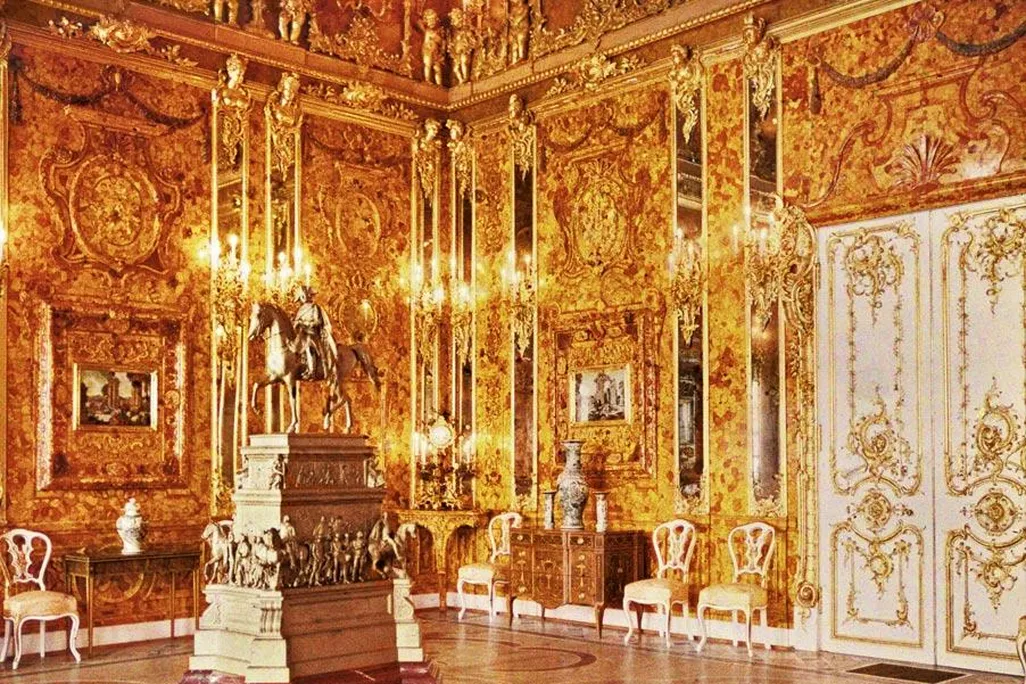
a replica of the amber room A replica of the Amber Room was completed in 2003, but the contents of the original have remained missing for decades.

Roland Weihrauch / dpa / Corbis

  • World History

A Brief History of the Amber Room

Dubbed the "Eighth Wonder of the World," the room that once symbolized peace was stolen by Nazis then disappeared for good
  • By Jess Blumberg
  • Smithsonian.com, August 01, 2007

Article Tools

 
  • Font
  • Share/Save/Bookmark Share
     
  • Email
  •  
  • Print
  • Digg Digg
     
  • Comments
  • StumbleUpon StumbleUpon
     
  • RSS
  • Reddit Reddit
     

    Most Popular

    • Viewed
    • Emailed
    1. The Ultimate Spy Plane
    2. Photo Contest Grand Prize Winner - In the early morning, fishermen clean their nets by Erhai Lake
    3. Catching a Wave, Powering an Electrical Grid?
    4. Photo Contest Finalist - A mountain dwarfs a passenger boat in the Three Gorges area of the Yangzi River
    5. Photo Contest Finalist - Ganga Arati
    6. Photo Contest Finalist - After a hard night's work at sea, a fisherman collects the rope that ties the nets
    7. Photo Contest Travel Winner - Dining in Gion
    8. Photo Contest Finalist - Erik in the World’s Greatest Store
    9. Frank Baum, the Man Behind the Curtain
    10. Photo Contest Finalist - Michel Frazier plays in the fields next to her trailer
    1. There Oughta Be a Law
    2. Frank Baum, the Man Behind the Curtain
    3. Photo Contest Grand Prize Winner - In the early morning, fishermen clean their nets by Erhai Lake
    4. Terra Cotta Soldiers on the March
    5. Catching a Wave, Powering an Electrical Grid?
    6. High Hopes for a New Kind of Gene
    7. Up in Arms Over a Co-Ed Plebe Summer
    8. The Ultimate Spy Plane
    9. Buenos Aires: a City's Power and Promise
    10. Photo Contest Finalist - Walk on Water

    While many Americans associate amber with the casing for dinosaur DNA in 1993's Jurassic Park, the stone has enthralled Europeans, and especially Russians, for centuries because of the golden, jewel-encrusted Amber Room, which was made of several tons of the gemstone. A gift to Peter the Great in 1716 celebrating peace between Russia and Prussia, the room's fate became anything but peaceful: Nazis looted it during World War II, and in the final months of the war, the amber panels, which had been packed away in crates, disappeared. A replica was completed in 2003, but the contents of the original, dubbed "the Eighth Wonder of the World," have remained missing for decades.

    Golden Gift

    Construction of the Amber Room began in 1701. It was originally installed at Charlottenburg Palace, home of Friedrich I, the first King of Prussia. Truly an international collaboration, the room was designed by German baroque sculptor Andreas Schlüter and constructed by the Danish amber craftsman Gottfried Wolfram. Peter the Great admired the room on a visit, and in 1716 the King of Prussia—then Frederick William I—presented it to the Peter as a gift, cementing a Prussian-Russian alliance against Sweden.

    The Amber Room was shipped to Russia in 18 large boxes and installed in the Winter House in St. Petersburg as a part of a European art collection. In 1755, Czarina Elizabeth ordered the room to be moved to the Catherine Palace in Pushkin, named Tsarskoye Selo, or "Czar's Village." Italian designer Bartolomeo Francesco Rastrelli redesigned the room to fit into its new, larger space using additional amber shipped from Berlin.

    After other 18th-century renovations, the room covered about 180 square feet and glowed with six tons of amber and other semi-precious stones. The amber panels were backed with gold leaf, and historians estimate that, at the time, the room was worth $142 million in today's dollars. Over time, the Amber Room was used as a private meditation chamber for Czarina Elizabeth, a gathering room for Catherine the Great and a trophy space for amber connoisseur Alexander II.

    Nazi Looting

    On June 22, 1941, Adolf Hitler initiated Operation Barbarossa, which launched three million German soldiers into the Soviet Union. The invasion led to the looting of tens of thousands of art treasures, including the illustrious Amber Room, which the Nazis believed was made by Germans and, most certainly, made for Germans.

    As the forces moved into Pushkin, officials and curators of the Catherine Palace attempted to disassemble and hide the Amber Room. When the dry amber began to crumble, the officials instead tried hiding the room behind thin wallpaper. But the ruse didn't fool the German soldiers, who tore down the Amber Room within 36 hours, packed it up in 27 crates and shipped it to Königsberg, Germany (present-day Kaliningrad). The room was reinstalled in Königsberg's castle museum on the Baltic Coast.

    1 2

    While many Americans associate amber with the casing for dinosaur DNA in 1993's Jurassic Park, the stone has enthralled Europeans, and especially Russians, for centuries because of the golden, jewel-encrusted Amber Room, which was made of several tons of the gemstone. A gift to Peter the Great in 1716 celebrating peace between Russia and Prussia, the room's fate became anything but peaceful: Nazis looted it during World War II, and in the final months of the war, the amber panels, which had been packed away in crates, disappeared. A replica was completed in 2003, but the contents of the original, dubbed "the Eighth Wonder of the World," have remained missing for decades.

    Golden Gift

    Construction of the Amber Room began in 1701. It was originally installed at Charlottenburg Palace, home of Friedrich I, the first King of Prussia. Truly an international collaboration, the room was designed by German baroque sculptor Andreas Schlüter and constructed by the Danish amber craftsman Gottfried Wolfram. Peter the Great admired the room on a visit, and in 1716 the King of Prussia—then Frederick William I—presented it to the Peter as a gift, cementing a Prussian-Russian alliance against Sweden.

    The Amber Room was shipped to Russia in 18 large boxes and installed in the Winter House in St. Petersburg as a part of a European art collection. In 1755, Czarina Elizabeth ordered the room to be moved to the Catherine Palace in Pushkin, named Tsarskoye Selo, or "Czar's Village." Italian designer Bartolomeo Francesco Rastrelli redesigned the room to fit into its new, larger space using additional amber shipped from Berlin.

    After other 18th-century renovations, the room covered about 180 square feet and glowed with six tons of amber and other semi-precious stones. The amber panels were backed with gold leaf, and historians estimate that, at the time, the room was worth $142 million in today's dollars. Over time, the Amber Room was used as a private meditation chamber for Czarina Elizabeth, a gathering room for Catherine the Great and a trophy space for amber connoisseur Alexander II.

    Nazi Looting

    On June 22, 1941, Adolf Hitler initiated Operation Barbarossa, which launched three million German soldiers into the Soviet Union. The invasion led to the looting of tens of thousands of art treasures, including the illustrious Amber Room, which the Nazis believed was made by Germans and, most certainly, made for Germans.

    As the forces moved into Pushkin, officials and curators of the Catherine Palace attempted to disassemble and hide the Amber Room. When the dry amber began to crumble, the officials instead tried hiding the room behind thin wallpaper. But the ruse didn't fool the German soldiers, who tore down the Amber Room within 36 hours, packed it up in 27 crates and shipped it to Königsberg, Germany (present-day Kaliningrad). The room was reinstalled in Königsberg's castle museum on the Baltic Coast.

    The museum's director, Alfred Rohde, was an amber aficionado and studied the room's panel history while it was on display for the next two years. In late 1943, with the end of the war in sight, Rohde was advised to dismantle the Amber Room and crate it away. In August of the following year, allied bombing raids destroyed the city and turned the castle museum into ruins. And with that, the trail of the Amber Room was lost.

    Conspiracies, Curses and Construction

    It seems hard to believe that crates of several tons of amber could go missing, and many historians have tried to solve the mystery. The most basic theory is that the crates were destroyed by the bombings of 1944. Others believe that the amber is still in Kaliningrad, while some say it was loaded onto a ship and can be found somewhere at the bottom of the Baltic Sea. In 1997, a group of German art detectives got a tip that someone was trying to hawk a piece of the Amber Room. They raided the office of the seller's lawyer and found one of the room's mosaic panels in Bremen, but the seller was the son of a deceased soldier and had no idea as to the panel's origin. One of the more extreme theories is that Stalin actually had a second Amber Room and the Germans stole a fake.

    Another bizarre aspect of this story is the "Amber Room Curse." Many people connected to the room have met untimely ends. Take Rohde and his wife, for example, who died of typhus while the KGB was investigating the room. Or General Gusev, a Russian intelligence officer who died in a car crash after he talked to a journalist about the Amber Room. Or, most disturbing of all, Amber Room hunter and former German soldier Georg Stein, who in 1987 was murdered in a Bavarian forest.

    The history of the new Amber Room, at least, is known for sure. The reconstruction began in 1979 at Tsarskoye Selo and was completed 25 years—and $11 million—later. Dedicated by Russian President Vladimir Putin and then-German Chancellor Gerhard Schröder, the new room marked the 300-year anniversary of St. Petersburg in a unifying ceremony that echoed the peaceful sentiment behind the original. The room remains on display to the public at the Tsarskoye Selo State Museum Reserve outside of St. Petersburg.


    Comments

    amber is not a stone or a gemstone

    Posted by adam on January 22,2008 | 01:50AM

    very interesting, but PLEASE don't use the wretched word "Tsarina". Tsar is the masculine - Emperor (Kaiser, Empereur) Tsaritsa is the Russian feminine. German has two forms: Kaiserin, and Tsarin. (-in is the German feminizing suffix). French gives us Imperatrice, or in English Empress. All forms seem to govern both the wife/consort of a male ruler, and a female ruler. happy New Year ben Cosin.

    Posted by Ben Cosin on January 22,2008 | 06:33AM

    Those panels are in a crate inside that U.S military base at the end of Raiders of The Lost Ark!

    Posted by Josh on January 22,2008 | 05:28PM

    that is so cool i wonder how big the chunk of amber had to be to make panels of amber also if there is that much amber in Prussia why do they not just re-make the panels? well thats all.

    Posted by me me me on January 23,2008 | 03:48PM

    that's pretty sweet and i would absolutely love to see it. however i'm not clear if the panels were ever found, or if they just replicated it trying to be as accurate as possible...?

    Posted by Jo on January 30,2008 | 03:46PM

    The amber was made into figures and other small pieces and then stuck onto the wall to make the scenes. There is a book by Steven Berry that about this room.....called the Amber Room.

    Posted by kellie on January 30,2008 | 04:13PM

    I think amber is resin from pine trees that has been submerged in water for a long time where it becomes "petrified."

    Posted by vivien morris on February 10,2008 | 02:47PM

    Is there, somewhere, a photo of the amber room panel that appeared on the blackmarket a few years back??

    Posted by George W Robinson on February 26,2008 | 08:23AM

    Mayor Hans-Peter Haustein of Deutschneudorf in Germany and Christian Hanisch,son of a Luftwaffe navigator who was instructed by the Nazis to hide stolen artifacts during the last days of the war claim to have found a local cavern containing up to two tonnes of precious metal. They have used electromagnetic tests to reach this conclusion and claim this underground chamber also contains Russias' lost Amber Room. We shall see.

    Posted by James L.T. Muskett on March 10,2008 | 03:29PM

    amber is also special to people in other countries like poland

    Posted by Susie Mary Jane on March 21,2008 | 08:16AM

    Does anyone know the history behind why the Amber Room was originally made and why? (Other than a gift for Katherine the Great?) Thanks

    Posted by Cindi White on March 24,2008 | 01:40PM

    Jus finished Steve Berry's "The Amber Room" and had to look up something about the Aamber Room. His book is fun.

    Posted by JOANNE hANNON on May 8,2008 | 12:21PM

    Some researchers and scholars, as well as hunters of the amber room, came to the sad conclusion that the room was looted and trashed by the red army in 1941, with many people taking small bits of it for souveniers, and the rest being destroyed by fire. The Soviets wanted to cover up that fact, and so even knowing that it didn't exist anymore, staged "hunts" for it, all the while blaming it on the Germans.

    Posted by Patty on June 3,2008 | 02:16PM

    I think the Soviets have it hidden, just as they have other items they "acquired" during WWII. Probably hidden in that famous underground storage at their national museum.

    Posted by Robby on June 8,2008 | 06:47AM

    There is also book "Amber Room" by Catherine Scott-Clark and Adrian Levy; I', in the middle of it ! very interesting! Makes you go hunting for hidden treasure ! But also you feel tremendous loss of precious arts forever ! War is and always will be the most evil acts, people had ever done.

    Posted by grace on July 4,2008 | 11:30AM

    Fascinating. I became interested after reading Steve Berry's "The Amber Room" - although fiction it captured my imagination. Tragic if the Room is lost forever - the casualties of war is not limited to lives, property, liberty etc but to civilization.

    Posted by Tupousolo on July 15,2008 | 04:36PM

    I too have just read The Amber Room by Steve Berry. He is an excellent writer...all his books are great. As to the room, we will probably never know..but one can surmise that the worst done was probally true. Neither of those 2 countries have any do-right in them.

    Posted by Sadie on July 25,2008 | 04:13PM

    Since Amber is really pitch, it burns very quickly. It could have all been lost in a fire, with no remaining traces.

    Posted by Sonni on October 13,2008 | 03:19PM

    I also just finished Steve Berry's book. One point he made was that if the Amber Room was burned, there would have been a noticeable and distinct of smell of the burning amber. There are no contemporary accounts of such a smell during the time of the burning. Hey, it's fiction but could that be true? If its pine resin, I would imagine it would have distinct odor. Curious . . .

    Posted by Kathy on October 18,2008 | 11:24AM

    Just finished the Scott-Clark/Levy rendition of the Amber Room. I thought they had it sewed up but Kathy's comment of Oct 18/08 re the smell of burning amber (mentioned in Berry's book which I haven't read) is not mentioned at all by Scott-Clark/Levy. Maybe it was lost in the other putrid smells of war and of an old city that would not meet our current standards of sanitation. Just grabbin' at straws.

    Posted by glenna on January 11,2009 | 02:17AM

    i did research on the amber room but to Josh it is not in a us military base

    Posted by person on February 17,2009 | 10:15AM

    T. Davis Bunn writes a series of novels, The Priceless Collection, about lost and found treasures in Eastern Europe. Florian's Gate focuses on Poland; The Amber Room has a fictionalized account of finding and resurrecting this lost artifact; and The Winter Palace features Russia's art heritage. I heartily recommend these books if you liked others about the Amber Room.

    Posted by Pam on February 28,2009 | 07:05AM

    Just read Berry's Amber Room. Very Interesting. Had no idea it actually did exist. We managed to stamp out a lot of evil in WWII but does anyone really 'win' in a war. 3/24/09/ 01:30 AM

    Posted by nita on March 24,2009 | 12:02AM

    I just finished reading the Amber Room by Steve Berry and enjoyed it very much. His writing is similar to that of Dan Brown in DiVinci Code, and I enjoyed both books. As the book was fiction but based on some true facts, it peaked my curiosity as to what ever really did happen to it and found this site of great interest. Happy to give my thoughts on the book.

    Posted by Rose on April 4,2009 | 08:44AM

    I believe the amber room is still around just hidden some where. The amber room was rebuilt but its still not the same. an original is always worth more then a copy. i wish to find the real amber room.

    Posted by ashleigh on April 6,2009 | 12:53PM

    Amber room is still hidden in POland, in the Town named "Paslek" It's burried under castle.

    Posted by Sławek on April 10,2009 | 11:54PM

    Just reading Steve Berry's "The Amber Room" right now. Love his books. Makes me want to go on all these adventures. Has the Amber Room really been found? Or is it in some private collector's castle somewhere in Germany or Russia? I think it will remain a secret for many years to come. It is absolutely magnificent, though, just from viewing the pictures. Wish the public could see it and share in its beauty. Yet another hardship and desecration of war. How sad. Still interesting to learn about, though!

    Posted by Leann on May 11,2009 | 06:29PM

    The amber had actually crumbled when the Russians tried to dismantle the room. When the Gemans got ahold of the room behind the hastily pasted and camouflaged wallpaper wall they too in their greed and haste allowed the rest of the room to crumble during the dismantlement and put the sometimes tiny pieces into numerous cases and crates. The rest of the treasures were crated and put into numerous boxes and crates too. I believe these items were kept together due to Hitlers instructions. When they were done, to keep the amber from falling into the wrong hands as a complete room and the contents, they separated the shipments into about 10 different vehicles, some trucks, cars and a couple of motorbikes. Some of the vehicles of course never made it to the destination, some of the drivers literally took off, knowing what they had and the worth of the individual shipments. Some were killed outright by allies, the rest was lost, but found again and kept hidden, where I do not know. Some of you amber collectors and admirers may actually be wearing or keeping the actual amber from the very room as I write. I am not sure if it can be dated and if they can tell exactly where it was mined or found, but it might be interesting to check if you can, and desire to know. josef

    Posted by josef on May 19,2009 | 10:16PM

    Also reading Steve Berry's book The Amber Room, not done yet but decided to check and see if the amber room existed. Very interesting tale. Glad to get to see the pictures, it will bring the book to life for me. Thanks!

    Posted by Kathi on June 20,2009 | 11:59AM

    Post a Comment


    Name: (required)

    Email: (required)

    Comment:


    Advertisement

    Smithsonian Videos

    Counting Down for the Liftoff to the Moon

    Counting Down for the Liftoff to the Moon

    Photographer David Burnett focused his camera on the many tourists who flocked to Florida in 1969 to watch the launch of Apollo 11

    Lucian Perkins Images

    A Navy Plebe Re-Meets His Match

    Photojournalist Lucian Perkins reunites Naval Academy graduates Sandee Irwin and Don Holcomb, 30 years after his photo captured the new gender dynamics at the school

    Deploying the Wave Energy Buoy

    Deploying the Wave Energy Buoy

    See a prototype of a wave energy buoy bob up and down on the water’s surface as researchers from Oregon State University study its efficacy

    Nikita Khrushchevs Great American Tour

    Nikita Khrushchev's Great American Tour

    As part of a diplomatic mission, Soviet premier Nikita Khrushchev traveled across the United States, meeting Americans from New York to Iowa to California

    Terra Cotta Soldiers

    Uncovering the Terra Cotta Soldiers

    A curator from the Houston Museum of Natural Science explains how the terra cotta warriors were discovered and what they reveal about China’s Qin dynasty

    Advertisement

    Culturespotter

    New at Viva Mexico

    Mexico is home to 43 active volcanoes and over 10% of all living organisms. Discover Mexico's natural (and social) diversity in the all-new "Mexican Culture" section.

    Marketplace

    SmithsonianStore

    Night at the Museum Plush Monkey
    Item No. 67925

    Window Shopping

    Gifts, Gadgets and Great Finds!

    From Our Advertisers: Products, Offers and Free Info

    Travel & Adventure

    Backstage on Broadway

    Meet theater professionals and see three Broadway's hits including Billy Elliot and Next to Normal (Nov. 18 - 22, 2009)

    Sojourners

    Join Us

    Facebook

    Facebook

    Become a fan of Smithsonian magazine's official Facebook page!

    Twitter

    Follow Smithsonian magazine on Twitter

    In The Magazine

    July 2009 Issue Cover

    July 2009

    • On the March
    • Nikita in Hollywood
    • We Have Liftoff
    • Birth of a Robot
    • Catching a Wave

    View Table of Contents


    Smithsonian magazine presents

    6th Annual Smithsonian Photo Contest Winners

    Out of more than 17,000 entries contributed from around the world, Smithsonian and its readers select the year's best

    Smithsonian Connections

    Connect to Lincoln

    Smithsonian Connections Connects You To Abraham Lincoln. Share ideas, thoughts, and more.

    Smithsonian Journeys

    Lake Como and Villa del Balbianello, Villas and Vistas of the Italian Lake District Villas and Vistas of the Italian Lake District
    A stay amid romantic Lake Como and Lake Maggiore


    View full archiveRecent Issues

    • July 2009 Issue Cover
      Jul 2009

    • June 2009 Issue Cover
      Jun 2009

    • May 2009 Issue Cover
      May 2009

    Newsletter

    Sign up for regular email updates from Smithsonian magazine, including free newsletters, special offers and current news updates.

    Subscribe Now

    About Us

    Smithsonian.com expands on Smithsonian magazine's in-depth coverage of history, science, nature, the arts, travel, world culture and technology. Join us regularly as we take a dynamic and interactive approach to exploring modern and historic perspectives on the arts, sciences, nature, world culture and travel, including videos, blogs and a reader forum.

    Explore our Brands

    • goSmithsonian.com
    • Smithsonian Air & Space Museum
    • Smithsonian Institution
    • Smithsonian Catalogue
    • Smithsonian Journeys
    • Smithsonian Channel
    • Site Map
    • Privacy Policy
    • Copyright
    • About Smithsonian
    • Contact Us
    • Advertising
    • Reader Panel
    • Subscribe
    • RSS

    Smithsonian Institution

    Produced by Clickability