• About Smithsonian
  • Email Updates
  • Member Services
  • Shop
  • Archive

Smithsonian.com

  • Smithsonian Institution
  • Smithsonian Channel
  • goSmithsonian
  • Air & Space magazine
  • Home
  • History & Archaeology
  • People & Places
  • Science & Nature
  • Arts & Culture
  • Travel
  • Subscribe
  • Archaeology
  • Biography
  • Today in History
  • U.S. History
  • World History
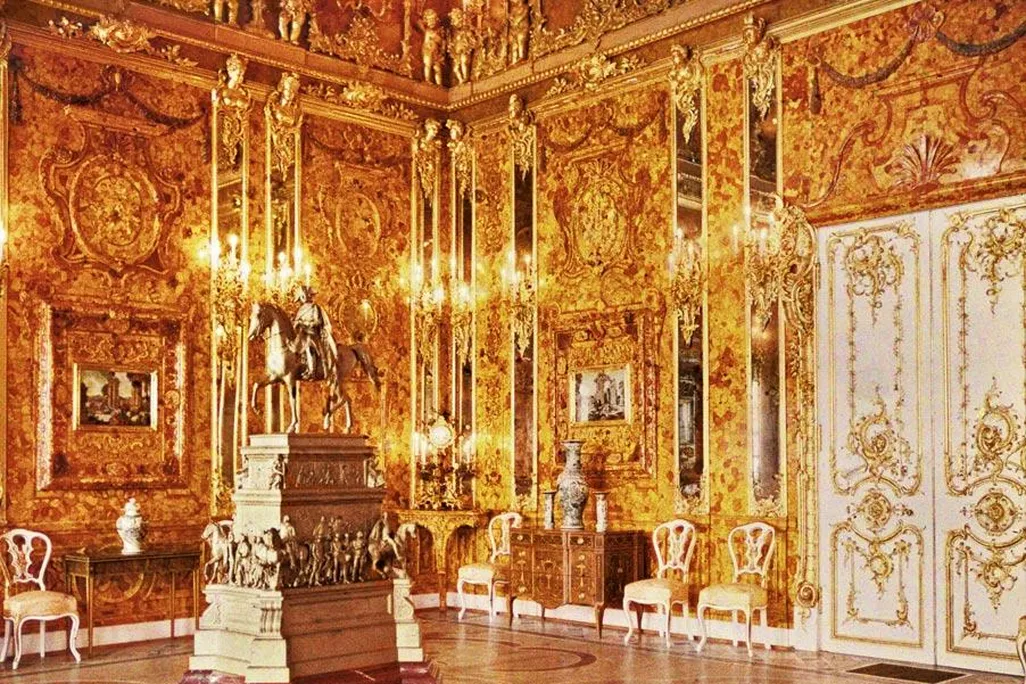
A replica of the Amber Room was completed in 2003, but the contents of the original have remained missing for decades.

Roland Weihrauch / dpa / Corbis

  • World History

A Brief History of the Amber Room

Dubbed the "Eighth Wonder of the World," the room that once symbolized peace was stolen by Nazis then disappeared for good
  • By Jess Blumberg
  • Smithsonian.com, August 01, 2007

Article Tools

 
  • Font
  • Email
  •  
  • Print
  • Comments
  •  
  • RSS

  • Most Popular

    • Viewed
    • Emailed
    1. A Brief History of the Amber Room
    2. A Brief History of Scotland Yard
    3. Before the Revolution
    4. Comrades and Arms
    5. Decade by Decade
    6. A Brief History of the St. Bernard Rescue Dog
    7. Cixi: The Woman Behind the Throne
    8. Jewel of the Jungle
    9. Conquering Everest
    10. Ike at D-Day
    1. Comrades and Arms

    While many Americans associate amber with the casing for dinosaur DNA in 1993's Jurassic Park, the stone has enthralled Europeans, and especially Russians, for centuries because of the golden, jewel-encrusted Amber Room, which was made of several tons of the gemstone. A gift to Peter the Great in 1716 celebrating peace between Russia and Prussia, the room's fate became anything but peaceful: Nazis looted it during World War II, and in the final months of the war, the amber panels, which had been packed away in crates, disappeared. A replica was completed in 2003, but the contents of the original, dubbed "the Eighth Wonder of the World," have remained missing for decades.

    Golden Gift

    Construction of the Amber Room began in 1701. It was originally installed at Charlottenburg Palace, home of Friedrich I, the first King of Prussia. Truly an international collaboration, the room was designed by German baroque sculptor Andreas Schlüter and constructed by the Danish amber craftsman Gottfried Wolfram. Peter the Great admired the room on a visit, and in 1716 the King of Prussia—then Frederick William I—presented it to the Peter as a gift, cementing a Prussian-Russian alliance against Sweden.

    The Amber Room was shipped to Russia in 18 large boxes and installed in the Winter House in St. Petersburg as a part of a European art collection. In 1755, Czarina Elizabeth ordered the room to be moved to the Catherine Palace in Pushkin, named Tsarskoye Selo, or "Czar's Village." Italian designer Bartolomeo Francesco Rastrelli redesigned the room to fit into its new, larger space using additional amber shipped from Berlin.

    After other 18th-century renovations, the room covered about 180 square feet and glowed with six tons of amber and other semi-precious stones. The amber panels were backed with gold leaf, and historians estimate that, at the time, the room was worth $142 million in today's dollars. Over time, the Amber Room was used as a private meditation chamber for Czarina Elizabeth, a gathering room for Catherine the Great and a trophy space for amber connoisseur Alexander II.

    Nazi Looting

    On June 22, 1941, Adolf Hitler initiated Operation Barbarossa, which launched three million German soldiers into the Soviet Union. The invasion led to the looting of tens of thousands of art treasures, including the illustrious Amber Room, which the Nazis believed was made by Germans and, most certainly, made for Germans.

    As the forces moved into Pushkin, officials and curators of the Catherine Palace attempted to disassemble and hide the Amber Room. When the dry amber began to crumble, the officials instead tried hiding the room behind thin wallpaper. But the ruse didn't fool the German soldiers, who tore down the Amber Room within 36 hours, packed it up in 27 crates and shipped it to Königsberg, Germany (present-day Kaliningrad). The room was reinstalled in Königsberg's castle museum on the Baltic Coast.

    1 2

    While many Americans associate amber with the casing for dinosaur DNA in 1993's Jurassic Park, the stone has enthralled Europeans, and especially Russians, for centuries because of the golden, jewel-encrusted Amber Room, which was made of several tons of the gemstone. A gift to Peter the Great in 1716 celebrating peace between Russia and Prussia, the room's fate became anything but peaceful: Nazis looted it during World War II, and in the final months of the war, the amber panels, which had been packed away in crates, disappeared. A replica was completed in 2003, but the contents of the original, dubbed "the Eighth Wonder of the World," have remained missing for decades.

    Golden Gift

    Construction of the Amber Room began in 1701. It was originally installed at Charlottenburg Palace, home of Friedrich I, the first King of Prussia. Truly an international collaboration, the room was designed by German baroque sculptor Andreas Schlüter and constructed by the Danish amber craftsman Gottfried Wolfram. Peter the Great admired the room on a visit, and in 1716 the King of Prussia—then Frederick William I—presented it to the Peter as a gift, cementing a Prussian-Russian alliance against Sweden.

    The Amber Room was shipped to Russia in 18 large boxes and installed in the Winter House in St. Petersburg as a part of a European art collection. In 1755, Czarina Elizabeth ordered the room to be moved to the Catherine Palace in Pushkin, named Tsarskoye Selo, or "Czar's Village." Italian designer Bartolomeo Francesco Rastrelli redesigned the room to fit into its new, larger space using additional amber shipped from Berlin.

    After other 18th-century renovations, the room covered about 180 square feet and glowed with six tons of amber and other semi-precious stones. The amber panels were backed with gold leaf, and historians estimate that, at the time, the room was worth $142 million in today's dollars. Over time, the Amber Room was used as a private meditation chamber for Czarina Elizabeth, a gathering room for Catherine the Great and a trophy space for amber connoisseur Alexander II.

    Nazi Looting

    On June 22, 1941, Adolf Hitler initiated Operation Barbarossa, which launched three million German soldiers into the Soviet Union. The invasion led to the looting of tens of thousands of art treasures, including the illustrious Amber Room, which the Nazis believed was made by Germans and, most certainly, made for Germans.

    As the forces moved into Pushkin, officials and curators of the Catherine Palace attempted to disassemble and hide the Amber Room. When the dry amber began to crumble, the officials instead tried hiding the room behind thin wallpaper. But the ruse didn't fool the German soldiers, who tore down the Amber Room within 36 hours, packed it up in 27 crates and shipped it to Königsberg, Germany (present-day Kaliningrad). The room was reinstalled in Königsberg's castle museum on the Baltic Coast.

    The museum's director, Alfred Rohde, was an amber aficionado and studied the room's panel history while it was on display for the next two years. In late 1943, with the end of the war in sight, Rohde was advised to dismantle the Amber Room and crate it away. In August of the following year, allied bombing raids destroyed the city and turned the castle museum into ruins. And with that, the trail of the Amber Room was lost.

    Conspiracies, Curses and Construction

    It seems hard to believe that crates of several tons of amber could go missing, and many historians have tried to solve the mystery. The most basic theory is that the crates were destroyed by the bombings of 1944. Others believe that the amber is still in Kaliningrad, while some say it was loaded onto a ship and can be found somewhere at the bottom of the Baltic Sea. In 1997, a group of German art detectives got a tip that someone was trying to hawk a piece of the Amber Room. They raided the office of the seller's lawyer and found one of the room's mosaic panels in Bremen, but the seller was the son of a deceased soldier and had no idea as to the panel's origin. One of the more extreme theories is that Stalin actually had a second Amber Room and the Germans stole a fake.

    Another bizarre aspect of this story is the "Amber Room Curse." Many people connected to the room have met untimely ends. Take Rohde and his wife, for example, who died of typhus while the KGB was investigating the room. Or General Gusev, a Russian intelligence officer who died in a car crash after he talked to a journalist about the Amber Room. Or, most disturbing of all, Amber Room hunter and former German soldier Georg Stein, who in 1987 was murdered in a Bavarian forest.

    The history of the new Amber Room, at least, is known for sure. The reconstruction began in 1979 at Tsarskoye Selo and was completed 25 years—and $11 million—later. Dedicated by Russian President Vladimir Putin and then-German Chancellor Gerhard Schröder, the new room marked the 300-year anniversary of St. Petersburg in a unifying ceremony that echoed the peaceful sentiment behind the original. The room remains on display to the public at the Tsarskoye Selo State Museum Reserve outside of St. Petersburg.


    Comments

    amber is not a stone or a gemstone

    Posted by adam on January 22,2008 | 01:50AM

    very interesting, but PLEASE don't use the wretched word "Tsarina". Tsar is the masculine - Emperor (Kaiser, Empereur) Tsaritsa is the Russian feminine. German has two forms: Kaiserin, and Tsarin. (-in is the German feminizing suffix). French gives us Imperatrice, or in English Empress. All forms seem to govern both the wife/consort of a male ruler, and a female ruler. happy New Year ben Cosin.

    Posted by Ben Cosin on January 22,2008 | 06:33AM

    Those panels are in a crate inside that U.S military base at the end of Raiders of The Lost Ark!

    Posted by Josh on January 22,2008 | 05:28PM

    that is so cool i wonder how big the chunk of amber had to be to make panels of amber also if there is that much amber in Prussia why do they not just re-make the panels? well thats all.

    Posted by me me me on January 23,2008 | 03:48PM

    that's pretty sweet and i would absolutely love to see it. however i'm not clear if the panels were ever found, or if they just replicated it trying to be as accurate as possible...?

    Posted by Jo on January 30,2008 | 03:46PM

    The amber was made into figures and other small pieces and then stuck onto the wall to make the scenes. There is a book by Steven Berry that about this room.....called the Amber Room.

    Posted by kellie on January 30,2008 | 04:13PM

    I think amber is resin from pine trees that has been submerged in water for a long time where it becomes "petrified."

    Posted by vivien morris on February 10,2008 | 02:47PM

    Is there, somewhere, a photo of the amber room panel that appeared on the blackmarket a few years back??

    Posted by George W Robinson on February 26,2008 | 08:23AM

    Mayor Hans-Peter Haustein of Deutschneudorf in Germany and Christian Hanisch,son of a Luftwaffe navigator who was instructed by the Nazis to hide stolen artifacts during the last days of the war claim to have found a local cavern containing up to two tonnes of precious metal. They have used electromagnetic tests to reach this conclusion and claim this underground chamber also contains Russias' lost Amber Room. We shall see.

    Posted by James L.T. Muskett on March 10,2008 | 03:29PM

    amber is also special to people in other countries like poland

    Posted by Susie Mary Jane on March 21,2008 | 08:16AM

    Does anyone know the history behind why the Amber Room was originally made and why? (Other than a gift for Katherine the Great?) Thanks

    Posted by Cindi White on March 24,2008 | 01:40PM

    Jus finished Steve Berry's "The Amber Room" and had to look up something about the Aamber Room. His book is fun.

    Posted by JOANNE hANNON on May 8,2008 | 12:21PM

    Post a Comment


    Name: (required)

    Email: (required)

    Comment:


    Advertisement

    In The Magazine

    May 2008

    • Acadia Country
    • Ancient Citadel
    • The Life Aquatic with Bruce Mozert
    • Back to the Frontier
    • End of the Road
    • Who's Laughing Now?
    • Hidden Depths

    View Table of Contents

    Advertisement

    Marketplace

    Gifts, Gadgets & Great Finds!

    Now you can visit the sites of select advertisers directly!

    Promotions

    Subscribe Today & Win a FREE Trip to Paris!

    Smithsonian magazine presents

    5th Annual Photo Contest

    Review and discuss the 50 finalists now >>

    ECOCENTER

    Greener Living

    Celebrate Earth Day with Smithsonian.com


    View full archiveRecent Issues


    • May 2008


    • Apr 2008


    • Mar 2008

    Newsletter

    Sign up for regular email updates from Smithsonian magazine, including free newsletters, special offers and current news updates.

    Subscribe Now

    About Us

    Smithsonian.com expands on Smithsonian magazine's in-depth coverage of history, science, nature, the arts, travel, world culture and technology. Join us regularly as we take a dynamic and interactive approach to exploring modern and historic perspectives on the arts, sciences, nature, world culture and travel, including videos, blogs and a reader forum.

    Explore our Brands

    • goSmithsonian.com
    • Smithsonian Air & Space Museum
    • Smithsonian Institution
    • Smithsonian Catalogue
    • Smithsonian Journeys
    • Smithsonian Channel
    • Site Map
    • Privacy Policy
    • Copyright
    • About Smithsonian
    • Contact Us
    • Advertising
    • Reader Panel
    • Subscribe
    • RSS

    Smithsonian Institution