
A Smithsonian magazine special report
Making Sense of Robert E. Lee
“It is well that war is so terrible, or we should grow too fond of it.”— Robert E. Lee, at Fredericksburg
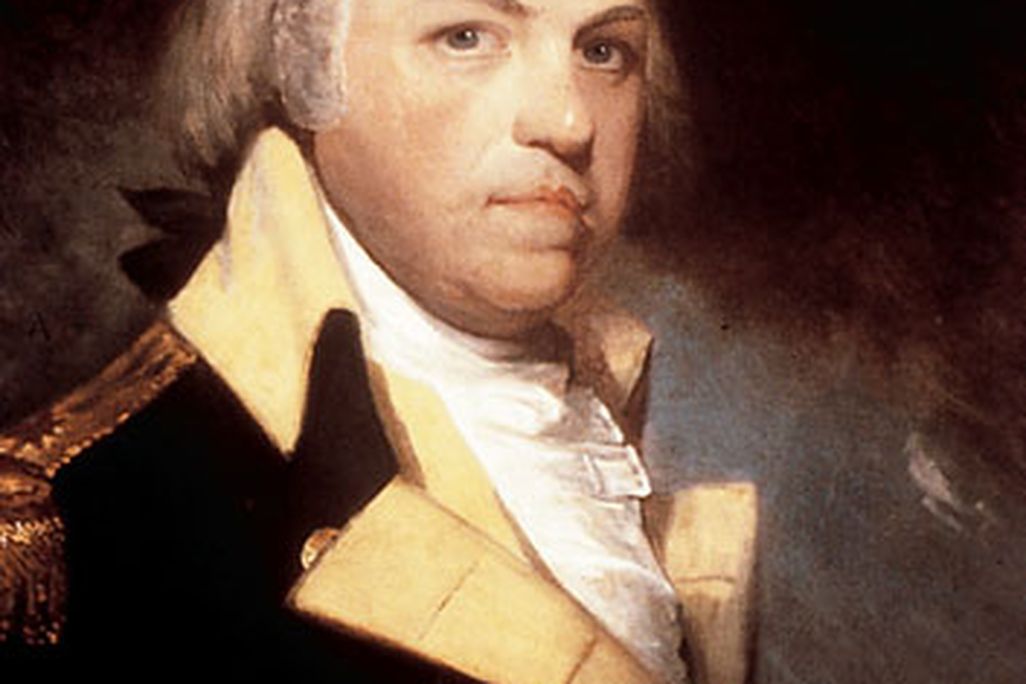
Few figures in American history are more divisive, contradictory or elusive than Robert E. Lee, the reluctant, tragic leader of the Confederate Army, who died in his beloved Virginia at age 63 in 1870, five years after the end of the Civil War. In a new biography, Robert E. Lee, Roy Blount, Jr., treats Lee as a man of competing impulses, a “paragon of manliness” and “one of the greatest military commanders in history,” who was nonetheless “not good at telling men what to do.”
Blount, a noted humorist, journalist, playwright and raconteur, is the author or coauthor of 15 previous books and the editor of Roy Blount’s Book of Southern Humor. A resident of New York City and western Massachusetts, he traces his interest in Lee to his boyhood in Georgia. Though Blount was never a Civil War buff, he says “every Southerner has to make his peace with that War. I plunged back into it for this book, and am relieved to have emerged alive.”
“Also,” he says, “Lee reminds me in some ways of my father.”
At the heart of Lee’s story is one of the monumental choices in American history: revered for his honor, Lee resigned his U.S. Army commission to defend Virginia and fight for the Confederacy, on the side of slavery. “The decision was honorable by his standards of honor—which, whatever we may think of them, were neither self-serving nor complicated,” Blount says. Lee “thought it was a bad idea for Virginia to secede, and God knows he was right, but secession had been more or less democratically decided upon.” Lee’s family held slaves, and he himself was at best ambiguous on the subject, leading some of his defenders over the years to discount slavery’s significance in assessments of his character. Blount argues that the issue does matter: “To me it’s slavery, much more than secession as such, that casts a shadow over Lee’s honorableness.”
In the excerpt that follows, the general masses his troops for a battle over three humid July days in a Pennsylvania town. Its name would thereafter resound with courage, casualties and miscalculation: Gettysburg.
In his dashing (if sometimes depressive) antebellum prime, he may have been the most beautiful person in America, a sort of precursorcross between Cary Grant and Randolph Scott. He was in his element gossiping with belles about their beaux at balls. In theaters of grinding, hellish human carnage he kept a pet hen for company. He had tiny feet that he loved his children to tickle None of these things seems to fit, for if ever there was a grave American icon, it is Robert Edward Lee—hero of the Confederacy in the Civil War and a symbol of nobility to some, of slavery to others.
After Lee’s death in 1870, Frederick Douglass, the former fugitive slave who had become the nation’s most prominent African-American, wrote, “We can scarcely take up a newspaper . . . that is not filled with nauseating flatteries” of Lee, from which “it would seem . . . that the soldier who kills the most men in battle, even in a bad cause, is the greatest Christian, and entitled to the highest place in heaven.” Two years later one of Lee’s ex-generals, Jubal A. Early, apotheosized his late commander as follows: “Our beloved Chief stands, like some lofty column which rears its head among the highest, in grandeur, simple, pure and sublime.”
In 1907, on the 100th anniversary of Lee’s birth, President Theodore Roosevelt expressed mainstream American sentiment, praising Lee’s “extraordinary skill as a General, his dauntless courage and high leadership,” adding, “He stood that hardest of all strains, the strain of bearing himself well through the gray evening of failure; and therefore out of what seemed failure he helped to build the wonderful and mighty triumph of our national life, in which all his countrymen, north and south, share.”
We may think we know Lee because we have a mental image: gray. Not only the uniform, the mythic horse, the hair and beard, but the resignation with which he accepted dreary burdens that offered “neither pleasure nor advantage”: in particular, the Confederacy, a cause of which he took a dim view until he went to war for it. He did not see right and wrong in tones of gray, and yet his moralizing could generate a fog, as in a letter from the front to his invalid wife: “You must endeavour to enjoy the pleasure of doing good. That is all that makes life valuable.” All right. But then he adds: “When I measure my own by that standard I am filled with confusion and despair.”
His own hand probably never drew human blood nor fired a shot in anger, and his only Civil War wound was a faint scratch on the cheek from a sharpshooter’s bullet, but many thousands of men died quite horribly in battles where he was the dominant spirit, and most of the casualties were on the other side. If we take as a given Lee’s granitic conviction that everything is God’s will, however, he was born to lose.
As battlefield generals go, he could be extremely fiery, and could go out of his way to be kind. But in even the most sympathetic versions of his life story he comes across as a bit of a stick—certainly compared with his scruffy nemesis, Ulysses S. Grant; his zany, ferocious “right arm,” Stonewall Jackson; and the dashing “eyes” of his army, J.E.B. “Jeb” Stuart. For these men, the Civil War was just the ticket. Lee, however, has come down in history as too fine for the bloodbath of 1861-65. To efface the squalor and horror of the war, we have the image of Abraham Lincoln freeing the slaves, and we have the image of Robert E. Lee’s gracious surrender. Still, for many contemporary Americans, Lee is at best the moral equivalent of Hitler’s brilliant field marshal Erwin Rommel (who, however, turned against Hitler, as Lee never did against Jefferson Davis, who, to be sure, was no Hitler).
On his father’s side, Lee’s family was among Virginia’s and therefore the nation’s most distinguished. Henry, the scion who was to become known in the Revolutionary War as Light-Horse Harry, was born in 1756. He graduated from Princeton at 19 and joined the Continental Army at 20 as a captain of dragoons, and he rose in rank and independence to command Lee’s light cavalry and then Lee’s legion of cavalry and infantry. Without the medicines, elixirs, and food Harry Lee’s raiders captured from the enemy, George Washington’s army would not likely have survived the harrowing winter encampment of 1777-78 at Valley Forge. Washington became his patron and close friend. With the war nearly over, however, Harry decided he was underappreciated, so he impulsively resigned from the army. In 1785, he was elected to the Continental Congress, and in 1791 he was elected governor of Virginia. In 1794 Washington put him in command of the troops that bloodlessly put down the Whiskey Rebellion in western Pennsylvania. In 1799 he was elected to the U.S. Congress, where he famously eulogized Washington as “first in war, first in peace, and first in the hearts of his countrymen.”
Meanwhile, though, Harry’s fast and loose speculation in hundreds of thousands of the new nation’s acres went sour, and in 1808 he was reduced to chicanery. He and his second wife, Ann Hill Carter Lee, and their children departed the Lee ancestral home, where Robert was born, for a smaller rented house in Alexandria. Under the conditions of bankruptcy that obtained in those days, Harry was still liable for his debts. He jumped a personal appearance bail—to the dismay of his brother, Edmund, who had posted a sizable bond—and wangled passage, with pitying help from President James Monroe, to the West Indies. In 1818, after five years away, Harry headed home to die, but got only as far as Cumberland Island, Georgia, where he was buried. Robert was 11.
Robert appears to have been too fine for his childhood, for his education, for his profession, for his marriage, and for the Confederacy. Not according to him. According to him, he was not fine enough. For all his audacity on the battlefield, he accepted rather passively one raw deal after another, bending over backward for everyone from Jefferson Davis to James McNeill Whistler’s mother. (When he was superintendent of the U.S. Military Academy, Lee acquiesced to Mrs. Whistler’s request on behalf of her cadet son, who was eventually dismissed in 1854.)
By what can we know of him? The works of a general are battles, campaigns and usually memoirs. The engagements of the Civil War shape up more as bloody muddles than as commanders’ chess games. For a long time during the war, “Old Bobbie Lee,” as he was referred to worshipfully by his troops and nervously by the foe, had the greatly superior Union forces spooked, but a century and a third of analysis and counteranalysis has resulted in no core consensus as to the genius or the folly of his generalship. And he wrote no memoir. He wrote personal letters—a discordant mix of flirtation, joshing, lyrical touches, and stern religious adjuration—and he wrote official dispatches that are so impersonal and (generally) unselfserving as to seem above the fray.
During the postbellum century, when Americans North and South decided to embrace R. E. Lee as a national as well as a Southern hero, he was generally described as antislavery. This assumption rests not on any public position he took but on a passage in an 1856 letter to his wife. The passage begins: “In this enlightened age, there are few I believe, but what will acknowledge, that slavery as an institution, is a moral & political evil in any Country. It is useless to expatiate on its disadvantages.” But he goes on: “I think it however a greater evil to the white than to the black race, & while my feelings are strongly enlisted in behalf of the latter, my sympathies are more strong for the former. The blacks are immeasurably better off here than in Africa, morally, socially & physically. The painful discipline they are undergoing, is necessary for their instruction as a race, & I hope will prepare & lead them to better things. How long their subjugation may be necessary is known & ordered by a wise Merciful Providence.”
The only way to get inside Lee, perhaps, is by edging fractally around the record of his life to find spots where he comes through; by holding up next to him some of the fully realized characters—Grant, Jackson, Stuart, Light-Horse Harry Lee, John Brown—with whom he interacted; and by subjecting to contemporary skepticism certain concepts—honor, “gradual emancipation,” divine will—upon which he unreflectively founded his identity.
He wasn’t always gray. Until war aged him dramatically, his sharp dark brown eyes were complemented by black hair (“ebon and abundant,” as his doting biographer Douglas Southall Freeman puts it, “with a wave that a woman might have envied”), a robust black mustache, a strong full mouth and chin unobscured by any beard, and dark mercurial brows. He was not one to hide his looks under a bushel. His heart, on the other hand . . . “The heart, he kept locked away,” as Stephen Vincent Benét proclaimed in “John Brown’s Body,” “from all the picklocks of biographers.” Accounts by people who knew him give the impression that no one knew his whole heart, even before it was broken by the war. Perhaps it broke many years before the war. “You know she is like her papa, always wanting something,” he wrote about one of his daughters. The great Southern diarist of his day, Mary Chesnut, tells us that when a lady teased him about his ambitions, he “remonstrated—said his tastes were of the simplest. He only wanted a Virginia farm—no end of cream and fresh butter—and fried chicken. Not one fried chicken or two—but unlimited fried chicken.” Just before Lee’s surrender at Appomattox, one of his nephews found him in the field, “very grave and tired,” carrying around a fried chicken leg wrapped in a piece of bread, which a Virginia countrywoman had pressed upon him but for which he couldn’t muster any hunger.
One thing that clearly drove him was devotion to his home state. “If Virginia stands by the old Union,” Lee told a friend, “so will I. But if she secedes (though I do not believe in secession as a constitutional right, nor that there is sufficient cause for revolution), then I will follow my native State with my sword, and, if need be, with my life.”
The North took secession as an act of aggression, to be countered accordingly. When Lincoln called on the loyal states for troops to invade the South, Southerners could see the issue as defense not of slavery but of homeland. A Virginia convention that had voted 2 to 1 against secession, now voted 2 to 1 in favor.
When Lee read the news that Virginia had joined the Confederacy, he said to his wife, “Well, Mary, the question is settled,” and resigned the U.S. Army commission he had held for 32 years.
The days of July 1-3, 1863, still stand among the most horrific and formative in American history. Lincoln had given up on Joe Hooker, put Maj. Gen. George G. Meade in command of the Army of the Potomac, and sent him to stop Lee’s invasion of Pennsylvania. Since Jeb Stuart’s scouting operation had been uncharacteristically out of touch, Lee wasn’t sure where Meade’s army was. Lee had actually advanced farther north than the town of Gettysburg, Pennsylvania, when he learned that Meade was south of him, threatening his supply lines. So Lee swung back in that direction. On June 30 a Confederate brigade, pursuing the report that there were shoes to be had in Gettysburg, ran into Federal cavalry west of town, and withdrew. On July 1 a larger Confederate force returned, engaged Meade’s advance force, and pushed it back through the town—to the fishhook-shaped heights comprising Cemetery Hill, Cemetery Ridge, Little Round Top, and Round Top. It was almost a rout, until Maj. Gen. O. O. Howard, to whom Lee as West Point superintendent had been kind when Howard was an unpopular cadet, and Maj. Gen. Winfield Scott Hancock rallied the Federals and held the high ground. Excellent ground to defend from. That evening Lt. Gen. James Longstreet, who commanded the First Corps of the Army of Northern Virginia, urged Lee not to attack, but to swing around to the south, get between Meade and Washington, and find a strategically even better defensive position, against which the Federals might feel obliged to mount one of those frontal assaults that virtually always lost in this war. Still not having heard from Stuart, Lee felt he might have numerical superiority for once. “No,” he said, “the enemy is there, and I am going to attack him there.”
The next morning, Lee set in motion a two-part offensive: Lt. Gen. Richard Ewell’s corps was to pin down the enemy’s right flank, on Culp’s Hill and Cemetery Hill, while Longstreet’s, with a couple of extra divisions, would hit the left flank—believed to be exposed—on Cemetery Ridge. To get there Longstreet would have to make a long march under cover. Longstreet mounted a sulky objection, but Lee was adamant. And wrong.
Lee didn’t know that in the night Meade had managed by forced marches to concentrate nearly his entire army at Lee’s front, and had deployed it skillfully—his left flank was now extended to Little Round Top, nearly three-quarters of a mile south of where Lee thought it was. The disgruntled Longstreet, never one to rush into anything, and confused to find the left flank farther left than expected, didn’t begin his assault until 3:30 that afternoon. It nearly prevailed anyway, but at last was beaten gorily back. Although the two-pronged offensive was ill-coordinated, and the Federal artillery had knocked out the Confederate guns to the north before Ewell attacked, Ewell’s infantry came tantalizingly close to taking Cemetery Hill, but a counterattack forced them to retreat.
On the third morning, July 3, Lee’s plan was roughly the same, but Meade seized the initiative by pushing forward on his right and seizing Culp’s Hill, which the Confederates held. So Lee was forced to improvise. He decided to strike straight ahead, at Meade’s heavily fortified midsection. Confederate artillery would soften it up, and Longstreet would direct a frontal assault across a mile of open ground against the center of Missionary Ridge. Again Longstreet objected; again Lee wouldn’t listen. The Confederate artillery exhausted all its shells ineffectively, so was unable to support the assault—which has gone down in history as Pickett’s charge because Maj. Gen. George Pickett’s division absorbed the worst of the horrible bloodbath it turned into.
Lee’s idolaters strained after the war to shift the blame, but the consensus today is that Lee managed the battle badly. Each supposed major blunder of his subordinates—Ewell’s failure to take the high ground of Cemetery Hill on July 1, Stuart’s getting out of touch and leaving Lee unapprised of what force he was facing, and the lateness of Longstreet’s attack on the second day—either wasn’t a blunder at all (if Longstreet had attacked earlier he would have encountered an even stronger Union position) or was caused by a lack of forcefulness and specificity in Lee’s orders.
Before Gettysburg, Lee had seemed not only to read the minds of Union generals but almost to expect his subordinates to read his. He was not in fact good at telling men what to do. That no doubt suited the Confederate fighting man, who didn’t take kindly to being told what to do—but Lee’s only weakness as a commander, his otherwise reverent nephew Fitzhugh Lee would write, was his “reluctance to oppose the wishes of others, or to order them to do anything that would be disagreeable and to which they would not consent.” With men as well as with women, his authority derived from his sightliness, politeness, and unimpeachability. His usually cheerful detachment patently covered solemn depths, depths faintly lit by glints of previous and potential rejection of self and others. It all seemed Olympian, in a Christian cavalier sort of way. Officers’ hearts went out to him across the latitude he granted them to be willingly, creatively honorable. Longstreet speaks of responding to Lee at another critical moment by “receiving his anxious expressions really as appeals for reinforcement of his unexpressed wish.” When people obey you because they think you enable them to follow their own instincts, you need a keen instinct yourself for when they’re getting out of touch, as Stuart did, and when they are balking for good reason, as Longstreet did. As a father Lee was fond but fretful, as a husband devoted but distant. As an attacking general he was inspiring but not necessarily cogent.
At Gettysburg he was jittery, snappish. He was 56 and bone weary. He may have had dysentery, though a scholar’s widely publicized assertion to that effect rests on tenuous evidence. He did have rheumatism and heart trouble. He kept fretfully wondering why Stuart was out of touch, worrying that something bad had happened to him. He had given Stuart broad discretion as usual, and Stuart had overextended himself. Stuart wasn’t frolicking. He had done his best to act on Lee’s written instructions: “You will . . . be able to judge whether you can pass around their army without hindrance, doing them all the damage you can, and cross the [Potomac] east of the mountains. In either case, after crossing the river, you must move on and feel the right of Ewell’s troops, collecting information, provisions, etc.” But he had not, in fact, been able to judge: he met several hindrances in the form of Union troops, a swollen river that he and his men managed only heroically to cross, and 150 Federal wagons that he captured before he crossed the river. And he had not sent word of what he was up to.
When on the afternoon of the second day Stuart did show up at Gettysburg, after pushing himself nearly to exhaustion, Lee’s only greeting to him is said to have been, “Well, General Stuart, you are here at last.” A coolly devastating cut: Lee’s way of chewing out someone who he felt had let him down. In the months after Gettysburg, as Lee stewed over his defeat, he repeatedly criticized the laxness of Stuart’s command, deeply hurting a man who prided himself on the sort of dashing freelance effectiveness by which Lee’s father, Maj. Gen. Light-Horse Harry, had defined himself. A bond of implicit trust had been broken. Loving-son figure had failed loving-father figure and vice versa.
In the past Lee had also granted Ewell and Longstreet wide discretion, and it had paid off. Maybe his magic in Virginia didn’t travel. “The whole affair was disjointed,” Taylor the aide said of Gettysburg. “There was an utter absence of accord in the movements of the several commands.”
Why did Lee stake everything, finally, on an ill-considered thrust straight up the middle? Lee’s critics have never come up with a logical explanation. Evidently he just got his blood up, as the expression goes. When the usually repressed Lee felt an overpowering need for emotional release, and had an army at his disposal and another one in front of him, he couldn’t hold back. And why should Lee expect his imprudence to be any less unsettling to Meade than it had been to the other Union commanders?
The spot against which he hurled Pickett was right in front of Meade’s headquarters. (Once, Dwight Eisenhower, who admired Lee’s generalship, took Field Marshal Montgomery to visit the Gettysburg battlefield. They looked at the site of Pickett’s charge and were baffled. Eisenhower said, “The man [Lee] must have got so mad that he wanted to hit that guy [Meade] with a brick.”)
Pickett’s troops advanced with precision, closed up the gaps that withering fire tore into their smartly dressed ranks, and at close quarters fought tooth and nail. Acouple of hundred Confederates did break the Union line, but only briefly. Someone counted 15 bodies on a patch of ground less than five feet wide and three feet long. It has been estimated that 10,500 Johnny Rebs made the charge and 5,675—roughly 54 percent—fell dead or wounded. As a Captain Spessard charged, he saw his son shot dead. He laid him out gently on the ground, kissed him, and got back to advancing.
As the minority who hadn’t been cut to ribbons streamed back to the Confederate lines, Lee rode in splendid calm among them, apologizing. “It’s all my fault,” he assured stunned privates and corporals. He took the time to admonish, mildly, an officer who was beating his horse: “Don’t whip him, captain; it does no good. I had a foolish horse, once, and kind treatment is the best.” Then he resumed his apologies: “I am very sorry—the task was too great for you—but we mustn’t despond.” Shelby Foote has called this Lee’s finest moment. But generals don’t want apologies from those beneath them, and that goes both ways. After midnight, he told a cavalry officer, “I never saw troops behave more magnificently than Pickett’s division of Virginians. . . . ” Then he fell silent, and it was then that he exclaimed, as the officer later wrote it down, “Too bad! Too bad! OH! TOO BAD!”
Pickett’s charge wasn’t the half of it. Altogether at Gettysburg as many as 28,000 Confederates were killed, wounded, captured, or missing: more than a third of Lee’s whole army. Perhaps it was because Meade and his troops were so stunned by their own losses—about 23,000—that they failed to pursue Lee on his withdrawal south, trap him against the flooded Potomac, and wipe his army out. Lincoln and the Northern press were furious that this didn’t happen.
For months Lee had been traveling with a pet hen. Meant for the stewpot, she had won his heart by entering his tent first thing every morning and laying his breakfast egg under his Spartan cot. As the Army of Northern Virginia was breaking camp in all deliberate speed for the withdrawal, Lee’s staff ran around anxiously crying, “Where is the hen?” Lee himself found her nestled in her accustomed spot on the wagon that transported his personal matériel. Life goes on.
After Gettysburg, Lee never mounted another murderous head-on assault. He went on the defensive. Grant took over command of the eastern front and 118,700 men. He set out to grind Lee’s 64,000 down. Lee had his men well dug in. Grant resolved to turn his flank, force him into a weaker position, and crush him.
On April 9, 1865, Lee finally had to admit that he was trapped. At the beginning of Lee’s long, combative retreat by stages from Grant’s overpowering numbers, he had 64,000 men. By the end they had inflicted 63,000 Union casualties but had been reduced themselves to fewer than 10,000.
To be sure, there were those in Lee’s army who proposed continuing the struggle as guerrillas or by reorganizing under the governors of the various Confederate states. Lee cut off any such talk. He was a professional soldier. He had seen more than enough of governors who would be commanders, and he had no respect for ragtag guerrilladom. He told Col. Edward Porter Alexander, his artillery commander, . . . the men would become mere bands of marauders, and the enemy’s cavalry would pursue them and overrun many wide sections they may never have occasion to visit. We would bring on a state of affairs it would take the country years to recover from.”
“And, as for myself, you young fellows might go to bushwhacking, but the only dignified course for me would be, to go to Gen. Grant and surrender myself and take the consequences.” That is what he did on April 9, 1865, at a farmhouse in the village of Appomattox Court House, wearing a fulldress uniform and carrying a borrowed ceremonial sword which he did not surrender.
Thomas Morris Chester, the only black correspondent for a major daily newspaper (the Philadelphia Press) during the war, had nothing but scorn for the Confederacy, and referred to Lee as a “notorious rebel.” But when Chester witnessed Lee’s arrival in shattered, burned-out Richmond after the surrender, his dispatch sounded a more sympathetic note. After Lee “alighted from his horse, he immediately uncovered his head, thinly covered with silver hairs, as he had done in acknowledgment of the veneration of the people along the streets,” Chester wrote. “There was a general rush of the small crowd to shake hands with him. During these manifestations not a word was spoken, and when the ceremony was through, the General bowed and ascended his steps. The silence was then broken by a few voices calling for a speech, to which he paid no attention. The General then passed into his house, and the crowd dispersed.”