Content ID:
Field:


  • About Smithsonian
  • Email Updates
  • Member Services
  • Shop
  • Archive
Smithsonian.com
  • Smithsonian Institution
  • Smithsonian Channel
  • goSmithsonian
  • Air & Space magazine
  • Home
  • History & Archaeology
  • People & Places
  • Science & Nature
  • Arts & Culture
  • Travel
  • Photos & Videos
  • Games & Puzzles
  • Subscribe
  • Archaeology
  • Biography
  • Today in History
  • U.S. History
  • World History
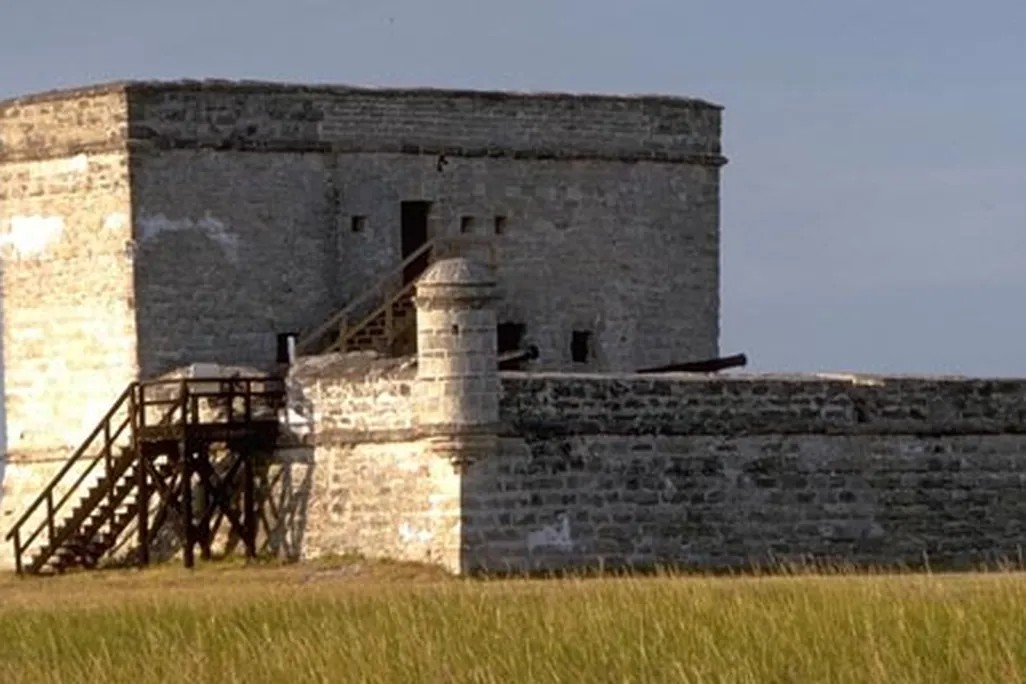
Fort Matanzas Fort Matanzas, about fifty feet long on each side, was constructed of coquina, a local stone formed from clam shells and quarried from a nearby island.

courtesy of National Park Service

  • History & Archaeology

America's First True "Pilgrims"

An excerpt from Kenneth C. Davis's bestselling new book explains they arrived half a century before the Mayflower reached Plymouth Rock
  • By Kenneth C. Davis
  • Smithsonian.com, May 23, 2008

Article Tools

  • Font
  • Share/Save/Bookmark Share
  • Email
  • Print
  • Digg Digg
  • Comments
  • StumbleUpon StumbleUpon
  • RSS
  • Reddit Reddit

    Related Topics

    Books

    American History

    Photo Gallery

    Americas Hidden History book cover

    America's First True "Pilgrims"

    Explore more photos from the story

    Related Links

    America's Hidden History

    More from Smithsonian.com
    • The First “Teflon” Hero

    The first Pilgrims to reach America seeking religious freedom were English and settled in Massachusetts. Right?

    Well, not so fast. Some fifty years before the Mayflower left port, a band of French colonists came to the New World. Like the later English Pilgrims, these Protestants were victims of religious wars, raging across France and much of Europe. And like those later Pilgrims, they too wanted religious freedom and the chance for a new life. But they also wanted to attack Spanish treasure ships sailing back from the Americas.Their story is at the heart of the following excerpt from America's Hidden History: Untold Tales of the First Pilgrims, Fighting Women, and Forgotten Founders Who Shaped a Nation.

    It is a story of America's birth and baptism in a religious bloodbath. A few miles south of St. Augustine sits Fort Mantanzas (the word is Spanish for "slaughters"). Now a national monument, the place reveals the "hidden history" behind America's true "first pilgrims," an episode that speaks volumes about the European arrival in the Americas and the most untidy religious struggles that shaped the nation.


    St. Augustine, Florida — September 1565
    It was a storm-dark night in late summer as Admiral Pedro Menéndez pressed his army of 500 infantrymen up Florida's Atlantic Coast with a Crusader's fervor. Lashed by hurricane winds and sheets of driving rain, these 16th-century Spanish shock troops slogged through the tropical downpour in their heavy armor, carrying pikes, broadswords and the "harquebus," a primitive, front-loading musket which had been used with devastating effect by the conquistador armies of Cortés and Pizarro in Mexico and Peru. Each man also carried a twelve-pound sack of bread and a bottle of wine.

    Guided by friendly Timucuan tribesmen, the Spanish assault force had spent two difficult days negotiating the treacherous 38-mile trek from St. Augustine, their recently established settlement further down the coast. Slowed by knee-deep muck that sucked at their boots, they had been forced to cross rain-swollen rivers, home to the man-eating monsters and flying fish of legend. Wet, tired and miserable, they were far from home in a land that had completely swallowed two previous Spanish armies—conquistadors who themselves had been conquered by tropical diseases, starvation and hostile native warriors.

    But Admiral Menéndez was undeterred. Far more at home on sea than leading infantry, Admiral Menéndez drove his men with such ferocity because he was gambling—throwing the dice that he could reach the enemy before they struck him. His objective was the French settlement of Fort Caroline, France's first foothold in the Americas, located near present-day Jacksonville, on what the French called the River of May. On this pitch-black night, the small, triangular, wood-palisaded fort was occupied by a few hundred men, women and children. They were France's first colonists in the New World—and the true first "Pilgrims" in America.

    Attacking before dawn on September 20, 1565 with the frenzy of holy warriors, the Spanish easily overwhelmed Fort Caroline. With information provided by a French turncoat, the battle-tested Spanish soldiers used ladders to quickly mount the fort's wooden walls. Inside the settlement, the sleeping Frenchmen—most of them farmers or laborers rather than soldiers—were caught off-guard, convinced that no attack could possibly come in the midst of such a terrible storm. But they had fatally miscalculated. The veteran Spanish harquebusiers swept in on the nightshirted and naked Frenchmen who leapt from their beds and grabbed futilely for weapons. Their attempts to mount any real defense were hopeless. The battle lasted less than an hour.

    Although some of the French defenders managed to escape the carnage, 132 soldiers and civilians were killed in the fighting in the small fort. The Spanish suffered no losses and only a single man was wounded. The forty or so French survivors fortunate enough to reach the safety of some boats anchored nearby, watched helplessly as Spanish soldiers flicked the eyeballs of the French dead with the points of their daggers. The shaken survivors then scuttled one of their boats and sailed the other two back to France.

    The handful of Fort Caroline's defenders who were not lucky enough to escape were quickly rounded up by the Spanish. About fifty women and children were also taken captive, later to be shipped to Puerto Rico. The men were hung without hesitation. Above the dead men, the victorious Admiral Menéndez placed a sign reading, "I do this, not as to Frenchmen, but as to Lutherans." Renaming the captured French settlement San Mateo (St. Matthew) and its river San Juan (St. John's), Menéndez later reported to Spain's King Philip II that he had taken care of the "evil Lutheran sect."

    The first Pilgrims to reach America seeking religious freedom were English and settled in Massachusetts. Right?

    Well, not so fast. Some fifty years before the Mayflower left port, a band of French colonists came to the New World. Like the later English Pilgrims, these Protestants were victims of religious wars, raging across France and much of Europe. And like those later Pilgrims, they too wanted religious freedom and the chance for a new life. But they also wanted to attack Spanish treasure ships sailing back from the Americas.Their story is at the heart of the following excerpt from America's Hidden History: Untold Tales of the First Pilgrims, Fighting Women, and Forgotten Founders Who Shaped a Nation.

    It is a story of America's birth and baptism in a religious bloodbath. A few miles south of St. Augustine sits Fort Mantanzas (the word is Spanish for "slaughters"). Now a national monument, the place reveals the "hidden history" behind America's true "first pilgrims," an episode that speaks volumes about the European arrival in the Americas and the most untidy religious struggles that shaped the nation.


    St. Augustine, Florida — September 1565
    It was a storm-dark night in late summer as Admiral Pedro Menéndez pressed his army of 500 infantrymen up Florida's Atlantic Coast with a Crusader's fervor. Lashed by hurricane winds and sheets of driving rain, these 16th-century Spanish shock troops slogged through the tropical downpour in their heavy armor, carrying pikes, broadswords and the "harquebus," a primitive, front-loading musket which had been used with devastating effect by the conquistador armies of Cortés and Pizarro in Mexico and Peru. Each man also carried a twelve-pound sack of bread and a bottle of wine.

    Guided by friendly Timucuan tribesmen, the Spanish assault force had spent two difficult days negotiating the treacherous 38-mile trek from St. Augustine, their recently established settlement further down the coast. Slowed by knee-deep muck that sucked at their boots, they had been forced to cross rain-swollen rivers, home to the man-eating monsters and flying fish of legend. Wet, tired and miserable, they were far from home in a land that had completely swallowed two previous Spanish armies—conquistadors who themselves had been conquered by tropical diseases, starvation and hostile native warriors.

    But Admiral Menéndez was undeterred. Far more at home on sea than leading infantry, Admiral Menéndez drove his men with such ferocity because he was gambling—throwing the dice that he could reach the enemy before they struck him. His objective was the French settlement of Fort Caroline, France's first foothold in the Americas, located near present-day Jacksonville, on what the French called the River of May. On this pitch-black night, the small, triangular, wood-palisaded fort was occupied by a few hundred men, women and children. They were France's first colonists in the New World—and the true first "Pilgrims" in America.

    Attacking before dawn on September 20, 1565 with the frenzy of holy warriors, the Spanish easily overwhelmed Fort Caroline. With information provided by a French turncoat, the battle-tested Spanish soldiers used ladders to quickly mount the fort's wooden walls. Inside the settlement, the sleeping Frenchmen—most of them farmers or laborers rather than soldiers—were caught off-guard, convinced that no attack could possibly come in the midst of such a terrible storm. But they had fatally miscalculated. The veteran Spanish harquebusiers swept in on the nightshirted and naked Frenchmen who leapt from their beds and grabbed futilely for weapons. Their attempts to mount any real defense were hopeless. The battle lasted less than an hour.

    Although some of the French defenders managed to escape the carnage, 132 soldiers and civilians were killed in the fighting in the small fort. The Spanish suffered no losses and only a single man was wounded. The forty or so French survivors fortunate enough to reach the safety of some boats anchored nearby, watched helplessly as Spanish soldiers flicked the eyeballs of the French dead with the points of their daggers. The shaken survivors then scuttled one of their boats and sailed the other two back to France.

    The handful of Fort Caroline's defenders who were not lucky enough to escape were quickly rounded up by the Spanish. About fifty women and children were also taken captive, later to be shipped to Puerto Rico. The men were hung without hesitation. Above the dead men, the victorious Admiral Menéndez placed a sign reading, "I do this, not as to Frenchmen, but as to Lutherans." Renaming the captured French settlement San Mateo (St. Matthew) and its river San Juan (St. John's), Menéndez later reported to Spain's King Philip II that he had taken care of the "evil Lutheran sect."

    Victims of the political and religious wars raging across Europe, the ill-fated inhabitants of Fort Caroline were not "Lutherans" at all. For the most part, they were Huguenots, French Protestants who followed the teachings of John Calvin, the French-born Protestant theologian. Having built and settled Fort Caroline more than a year earlier, these French colonists had been left all but defenseless by the questionable decision of one of their leaders, Jean Ribault. An experienced sea captain, Ribault had sailed off from Fort Caroline a few days earlier with between five and six hundred men aboard his flagship, the Trinité, and three other galleons.  Against the advice of René de Laudonniére, his fellow commander at Fort Caroline, Ribault planned to strike the new Spanish settlement before the recently arrived Spanish could establish their defenses. Unfortunately for Ribault and his shipmates, as well as those left behind at Fort Caroline, the hurricane that slowed Admiral Menéndez and his army also ripped into the small French flotilla, scattering and grounding most of the ships, sending hundreds of men to their deaths. According to René de Laudonniére, it was, "the worst weather ever seen on this coast."

    Unaware that Fort Caroline had fallen, groups of French survivors of the storm-savaged fleet came ashore near present-day Daytona Beach and Cape Canaveral. Trudging north, they were spotted by Indians who alerted Menéndez. The bedraggled Frenchmen were met and captured by Spanish troops at a coastal inlet about 17 miles south of St. Augustine on September 29, 1565.

    Expecting to be imprisoned or perhaps ransomed, the exhausted and hungry Frenchmen surrendered without a fight. They were ferried across the inlet to a group of dunes where they were fed what proved to be a last meal. At the Admiral's orders, between 111 and 200 of the French captives—documents differ on the exact number—were put to death. In his own report to King Philip, Admiral Menéndez wrote matter-of-factly, if not proudly, "I caused their hands to be tied behind them, and put them to the knife." Sixteen of the company were allowed to live—self-professed Catholics who were spared at the behest of the priest, who reported, "All the rest died for being Lutherans and against our Holy Catholic Faith."

    Twelve days later, on October 11, the remaining French survivors, including Captain Jean Ribault, whose Trinité had been beached further south, straggled north to the same inlet. Met by Menéndez and ignorant of their countrymen's fates, they too surrendered to the Spanish. A handful escaped in the night, but on the next morning, 134 more French captives were ferried across the same inlet and executed; once again, approximately a dozen were spared. Those who escaped death had either professed to be Catholic, hastily agreed to convert or possessed some skills that Admiral Menéndez thought might be useful in settling St. Augustine—the first permanent European settlement in the future United States, born and baptized in a religious bloodbath.

    Although Jean Ribault offered Menéndez a large ransom to secure his safe return to France, the Spanish Admiral refused. Ribault suffered the same fate as his men. Following Ribault's execution, the French leader's beard and a piece of his skin were sent to King Philip II. His head was cut into four parts, set on pikes and displayed in St. Augustine. Reporting back to King Philip II, Admiral Menéndez wrote, "I think it great good fortune that this man be dead, for the King of France could accomplish more with him and fifty thousand ducats than with other men and five hundred thousand ducats; and he could do more in one year, than another in ten . . . ."

    Just south of modern St. Augustine, hidden off the well-worn tourist path of t-shirt stands, sprawling condos and beach-front hotels, stands a rather inconspicuous National Monument called Fort Matanzas. Accessible by a short ferry ride across a small river, it was built by the Spanish in 1742 to protect St. Augustine from surprise attack. Fort Matanzas is more a large guardhouse than full-fledged fort. The modest structure, about fifty feet long on each side, was constructed of coquina, a local stone formed from clam shells and quarried from a nearby island. Tourists who come across the simple tower certainly find it far less impressive than the formidable Castillo de San Marco, the star-shaped citadel that dominates St. Augustine's historic downtown.

    Unlike other Spanish sites in Florida named for Catholic saints or holy days, the fort's name comes from the Spanish word, matanzas, for "killings" or "slaughters." Fort Matanzas stands near the site of the grim massacre of the few hundred luckless French soldiers in an undeclared war of religious animosity. This largely unremarked atrocity from America's distant past was one small piece of the much larger struggle for the future of North America among contending European powers.

    The notion of Spaniards fighting Frenchmen in Florida four decades before England established its first permanent settlement in America, and half a century before the Pilgrims sailed, is an unexpected notion to those accustomed to the familiar legends of Jamestown and Plymouth. The fact that these first settlers were Huguenots dispatched to establish a colony in America in 1564, and motivated by the same sort of religious persecution that later drove the Pilgrims from England, may be equally surprising. That the mass execution of hundreds of French Protestants by Spanish Catholics could be mostly overlooked may be more surprising still. But this salient story speaks volumes about the rapacious quest for new territory and brutal religious warfare that characterized the European arrival in the future America.

    Excerpted from America's Hidden History: Untold Tales of the First Pilgrims, Fighting Women, and Forgotten Founders Who Shaped a Nation, by Kenneth C. Davis. Copyright(c) 2008 by Kenneth C. Davis. By permission of Smithsonian Books, an imprint of HarperCollins Publishers.


    1 2


    Related topics: Books American History

     
    Comments

    I had heard about this before but never really looked into it.

    Posted by Amazed on May 30,2008 | 11:35AM

    Very interesting. I had only known of the "Plymouth" version of the first pilgrams. Sadder still was the deaths due to differences in religeous beliefs. What a waste of life. To think that one of the biggest reasons for coming to America was to escape religeous persecution, and to be killed here by religeous persecuters is a shame at the very least. I live in Fla and have vistited the fort at St. Augustine and was in awe of the history that I "was aware" of, now makes me rethink of the story of the Spanish against the French. "Why can't we all just get along?" Maybe someday...

    Posted by Ron Edlind on June 6,2008 | 05:09PM

    The history of the Spanish in the New World is a long list of crimes against humanity. The gold-hungry Conquistadors performing bloodthirsty acts against both native as well as non-Spanish colonists were arguably some of the worst acts ever done in recorded history. Performing under the protection of the Roman Catholic Church - sometimes even under specific directions and orders of the Pope - these black hearted invaders destroyed civilizations of far higher sophistication than any in Europe. They not only slaughtered tens of millions of native peoples, but, perhaps even worse, burned entire libraries filled with ancient writings kept by the Central and South American natives, vast amounts of their own ancient history we will now never know. The history of the Spanish in the New World should be taught in schools NOT as explorations of discovery and conquest, but as the atrocity against the world it truly was - sick, horrible, and inexcusable. The Spanish people today have nothing to feel any pride about in this history.

    Posted by billbeau on June 7,2008 | 12:47PM

    My folks took us to Fort Matazans many years ago when I was just a child. I remember being floored by the stories about the massaceur. Whata dissmal start for a country that has religous freedom as one of its founding points.

    Posted by Carol Traxler on June 7,2008 | 07:56PM

    This is yet another proof of the axium that "more lives have been lost under the flag(s) of the CHURCH than of a flag of any Country." Leif Ericksson of 500 years earlier and of 1,500+/- miles north of Florida was the Heathen / Catholic / Lutheran, depending on how you want to date belief systems. Some things just don't change! At least the Spanish gave us Don Quixote to "Dream the Impossible Dream." Can it be possible?

    Posted by Bryce on June 10,2008 | 09:23PM

    Thank you for your data.I for one wish for time travel, in order to track these murdering scum down and teach them true love with modern weapons at close range.my heart hurts for the families that sought freedom and found cruel death at the hands of religious deviants.Satan rules religious fanantics.

    Posted by Art J Van Nostrand on June 11,2008 | 11:49AM

    amazing how cruel people could be in gods name

    Posted by dave niese on June 14,2008 | 04:34PM

    What do you expect from the Catholic Church?

    Posted by Selena on June 23,2008 | 11:30AM

    I have often wondered why we speak of our ancestors coming to the New World for "religious freedom". Any research, regardless of Protestant denomination, or Jewish sect arrives at the same starting point, ie. Persecution by the Catholic Church. By Persecution, I don't mean name calling; we are talking about the cruelest of deaths. Drawn and Quartered, Rack and Pinion, etc. The Catholic Church did not just target the leaders; everyone was killed, or imprisioned, or had their children taken away. . . This article helps to expose the reality of our history, instead of glossing over the inhumanity.

    Posted by Ashley Simpson on June 24,2008 | 12:56PM

    A revelation to hear about this. A tragedy to be sure, but I personally don't know of any religous order in the world which hasn't been guilty of similar crimes. And it's still going on today; look at the middle East..

    Posted by Neal W Olson on June 27,2008 | 11:23PM

    "Too many people have died in the name of Christ for anyone to heed the call" (CSN&Y) If you want the truth about history, read books by author Howard Zinn.

    Posted by MaryBeth Smith on July 6,2008 | 06:16AM

    i found this site very well writen and very insitful!

    Posted by Stephanyi White on October 26,2008 | 02:06PM

    Indeed, Satan has clouded the minds of humanity and has used religious creeds to slaughter humans throughout history. From the time of Adam and Eve's disobedient act against eating the fruit of the tree. Religion started it's world wide domination from the time of Nimrod and his rebellious heart against Jehovah and continued to this day. Call it Christendom (branches of true Christianity), Muslim, Hinduism, Judaism etc. How wonderful it would be if everyone in the world would turn away from religious creeds and live in harmony with each other. I think John Lennon had a similar idea when he wrote REVOLUTION. Sadly humans have a defect when we adhere to religion with fanatic views and can not accept other views and allow those that disagree with us to live their lives in peace. Yes, Spain's history is stain with blood, but so is the history of the conquest of the Americas by the White Anglo race and their religion. After 40 years of religious worship I've decided to turn away from it.

    Posted by H. Chris Rodriguez on November 2,2008 | 09:38AM

    When is he gonna tell us that the French didn't go to the new world to escape religius persecution but to attack the Spanish?

    Posted by Paul Headstone on November 2,2008 | 08:17PM

    Someone comments above that they don't know of any religion that has not committed cruel inhuman acts. On analysis, it is generally Catholics in the name of Christianity and Muslims in the name of Islam. Mass murders. Defend that if you can. Spend some time on Buddhaism and re-state that opinion.

    Posted by James Crippen on November 5,2008 | 01:36PM

    The account is obviously by a Frenchman. The historic facts are that Pedro Menéndez de Avilés was one of Spain's finest Sea Captains, a military man with a military mission (not a religious one), which he duly accomplished but regretted all his life. He was a naval officer, who commanded several fleets during his long military career, always with noble, hand-picked captains. He was a seaman at a time when sailing charts were hard to come by and hundreds of ships ran aground or got lost every year. He was no more a murderer than any modern-day military commander. Maybe nobody noted this fact, but unlike the non-catholic hordes that later "conquered" the American West, he spared the women and children of Fort Caroline, something a mercenary would not do. Pedro Menéndez never lost a sea battle against anyone and it is widely believed among experts, that he should have been the one to command the Great Armada. His mission was to stop the French from settling in Florida and he couldn't care less if they were Lutherans or Huguenottes.

    Posted by Teresa on November 10,2008 | 02:36PM

    NEVER EVER FORGET: It is true that many unjustices and killings have been done in the name of God and for the cause of religion. But none of those can be traced back to the teachings of Jesus, but by men that have used religion for their own gain. Never forget that the killings done through atheism have been the worst by far. Spanish Inquisition 32,000 death, 200 years of crusades 500,000 Muslim and Christians killed, 1618-1648 wars of religion 50,000. Atheism of Nietzche influecing Hittler, and Communism in Russia by Lenin, Stalin, and China, 150 Million killed. 600 thousand in the name of Christianity vs 150 million in the name of "religion is evil and there is no God." Look the benefits of religion in the morals of society, the hope and strenght that gives to people, and how much it has helped humanity instituting the first universities, and aiding so much the ill and hopeless. We have the Red cross (Jesus), not the red atheist.

    Posted by on November 10,2008 | 07:09PM

    I have read the article, but it seems to counter the claim of The Church of Jesus Christ of Latter Day Saints that the Americas were peopled by the so-called Nephites from Jerusalem headed by Lehi. They were told to leave the land. They had to abondon all their possessions except their families some 600 years before the coming of the civilized world. The account of the history of their people were recorded in the Book of Mormon. In case you meet some people who are members of the church, they will tell you the real first people in the Americas - North to South. After you have read the Book of Mormon, try to analyze and question the authencity of the book.

    Posted by Pete Bon Foliente on November 10,2008 | 07:20PM

    Congratulations to all of you for painting entire faiths with the errors of human beings. Continue to consider yourselves more enlightened than you were before.

    Posted by Robb on November 10,2008 | 09:26PM

    In the book THEY CAME BEFORE COLUMBUS, Iven Sertima has collected information about Africans from the Kingdom of Mali who were conducting trade with S. Americans and Native Americans. This took place in the around the time of 1311. There wasn't any mention of battles or slaughter, but these Mandingo warriors were come to even be worshipped as gods. Olmec artwork was made in the likeness of these men, that were worshipped. They also came to spread their religion and idealogy. So the question that comes to my mind is, "Who were the first Pilgrims from the east to the Americas?"

    Posted by Justice on November 10,2008 | 10:01PM

    I am amazed to hear your magazine perpetuate the falsehood that the pilgrims in New England came to establish religious freedom. In fact, they wished to establish their particular sect to the exclusion of all others. Read the history of the New England colonies, and you will see repeated stories of people who were driven out of each of the early colonies by violence because they professed a different sect of protestantism. There are even a few cases of of people, particularly Quakers, who were killed for their religious beliefs. And it would have been a fatal error for a Catholic to try to settle in any one of the early colonies, save Maryland and Pennsylvania. Historically, the hands of protestants are just as red as those of any other group.

    Posted by roman kozak on November 18,2008 | 11:25AM

    i dont beleive it not one bit. Iknow for a fact that the asians came over here first.THE SHANG DYNASTY

    Posted by reginald on November 19,2008 | 11:19PM

    I think you all need to check your history. The Pilgrims in Massachusettes were not the first english settlers. They arrived, I believe, around 1613. The first english settlers were in Jamestown in Virginia in 1607. Check it out folks.

    Posted by helen parks on November 21,2008 | 06:33AM

    It seems incredible to me that so many different versions of history exist from so many quarters. Supposing that all have some element of truth to them, might we shape out of all the oral histories and the research some semblance of the actual account of history? Surely we are seeing that one simple maxim holds true, that perception is stronger than reality. We all have our biases! Couldn't we hold them in check just long enough to get a consensus from credible work of a collection of credible scholars. After all, as our religions all purport, "The truth will set you free!"

    Posted by Bill Henderson on November 22,2008 | 09:46AM

    thanks.

    Posted by vianca on November 23,2008 | 07:20AM

    who made thanksgiving

    Posted by ronnie on November 25,2008 | 03:22PM

    Funny, not much is mentioned about the natives who were here that owned this land and allowed refuge to outsiders. Its' discusting that arguments over who came here first actually matters at all. Be happy the natives allowed anyone to come here seeking freedom from their oppressors. GOD BLESS THE NATIVES OF AMERICA!

    Posted by James Taskerjtasker on November 25,2008 | 10:00PM

    BEFORE WE GO BASHING ABOUT THE FRENCH, THE SPANISH, THE ENGLISH, THE ETC. ETC., WE HAD BEST LOOK AT OURSELVES (THE INDIGENOUS POPULATION WHO NOW RESIDES IN THE GOOD OLD U.S. OF AMERICA). THE TRUTH IS, NONE OF US SHOULD BE LIVING HERE. THE NATIVE AMERICANS WERE HERE LONG BEFORE WE WERE. WE STOLE THIS LAND FROM THEM, KILLED THEM TO DO IT, CHEATED THEM AND FORCED THEM TO MOVE AWAY FROM THE PRIME AREAS OF THIS BEAUTIFUL PLACE. GOD, YES GOD, FORGIVE US ALL! I'M JUST A WHITE ANGLOSAXON PROTESTANT WHO FINALLY UNDERSTANDS A WHOLE LOT MORE THAN I LEARNED IN SCHOOL. THANKS FOR YOUR ARTICLE. IT ADDS SAND TO THE WOUND BUT IT IS WORTH IT IN THE NAME OF TRUTH.

    Posted by Elsie Mayyasi on November 27,2008 | 07:01AM

    So What? They were Frenchmen. Not part of our Nation's History since they were here for France. I guess The Vikings were here before these Frenchmen. What about the Natives? Who cares!? Back to America, wasn't it the success of the Pilgrim's that brought more colonists? Didn't they have a friendly pact with the natives that lasted a couple generations?

    Posted by DanDan on November 27,2008 | 12:14PM

    I say amen to the comment about the natives allowing us in. Listen people we can go on complaining and blaming for centurys to come. Or we can forgive and go on and enjoy America the way its suppose to be. Lets be thankful for what we have now, after all its Thanksgiving Day, God Bless America.

    Posted by David Yoder on November 27,2008 | 02:21PM

    So much is made of who was first on the shores of America.It is shameful that no one remembers that the indigenous Native American was here before any other visitor and that the African traders were here not to conquer. It is so unnecessary an argument.Why even make statements of human discovery when humans are already there?

    Posted by RG|H on November 27,2008 | 04:44PM

    The bleeding shadows of Thanksgiving Day as it is traditionally celebrated by so many,begs the question...Why give credence to a historical nightmare.It is a nightmare because the writen history conveniently leaves out the only possible first human beings in the Americas.I thank God for a lot of things,and I am not opposed to paying homage to God for all that He has done. I just cannot feast when I know that when the indigenous people of the Americas welcomed the white man with open arms of brotherhood,taught him how to survive ,the white man in return raped,beheaded,killed and cruelly treated the Native American people. If there is going to be a commemeration of thanks to God, it should be by way of fasting...not a feast.

    Posted by Ronald H on November 27,2008 | 07:58PM

    Thank God for the last comment about the natives being here first. How can anyone claim to discovering some place that is already occupied. It is ludicrous. We need to face up to our history and began writing the truth about our history no matter how bad it make us look. To continue teaching our children based on lies is really crazy.

    Posted by ramona fletcher on November 29,2008 | 04:17PM

    It seems that there is very little talk about the Aztec's and their human sacrifices. There are stories of blood flowing like a river down the stairs of their temples. The "Indians" were fighting each other long before the Europeans got here, and they kept fighting each other after Columbus and other arrived. There is no people group on this planet that does not have some dark, terrible secret of wanting to wipe out their enemies. Every race has it villains and heroes. America is a great place, we need to be proud of this country and try to avoid the mistakes of the past. Howard Zinn is a very one sided account of history. There are so many better historians out there. Try Larry Schweikart.

    Posted by Steve Ross on December 3,2008 | 09:32AM

    Question What country did the ships and people that discovered America come from

    Posted by freeland king on December 4,2008 | 12:42PM

    How can you discover a territory that is already occupied? Man killing man all in the name of God. Such Greed. May God forgive us ALL.

    Posted by Sandra on December 5,2008 | 09:48AM

    this website is amazing it teaches young people about the pilgrims it is so amazing lol ..

    Posted by megan on December 7,2008 | 08:48AM

    I am a student currently in school. I am also the youngest in my family and had never really looked into history like this before. Like other children, I am not amazed in history, but this has got me in here like a fish on a hook. I love hearing how pilgrims used to live and that is history for you. I am also the fastest typer in my class and can type without looking.

    Posted by Fantastic on December 9,2008 | 02:06PM

    I am a full blood Cherokee living on the reservation in North Carolina. My people WERE NOT from India and so we're not "Indians". My people were here before Amerigo and so we ARE NOT "Americans". We are Native People, me specifically, Cherokee. My Native ancestors were stupid and provided the first welfare line, the first WIC program and neglected their border patrol/protection and was stabbed in the back for their generosity. We were the ones called "savages" but it was the original illegal aliens who did the massacuring and started the scalping of us for collection of bounty "rewards". The press of yesteryear were bleeding heart liberals creating stories to coddle their egos, same as today. Sob stories of how badly people were treated in their home land so they had no choice but to leave...sound familiar??? Stories of how people come here to "live a better life"...sound familiar??? Stories of how people lived in poverty conditions because of their government...sound familiar???? WAKE UP PEOPLE! Don't let history repeat itself. Our borders MUST be protected to stop any further damage by illegal aliens. My opinion...Elizabeth Dare...1st official anchor baby!

    Posted by Karen on December 15,2008 | 09:15AM

    this is so fun learning about the first actual pilgrims i am really in to history exspecially this thanks a lot

    Posted by megan on January 25,2009 | 03:26PM

    I am part Sioux and part Cherokee - and all American. When I look at America's history and read the arguments about the Native American's being here first, I think many whites support Native peoples out of guilt from the past. I too struggled with this and have considered this for a long time. I have concluded that all mankind whether by evolution or creation originated in Mesopotamia. From there, and over time mankind migrated across the whole of the earth to establish tribes, cultures and societies on nearly every part of the continents. Somewhere, someplace and sometime, someone was first in a new land and migrated there. Everyone is an immigrant somewhere in the tree of history, save perhaps ancient mesopotamia. So I have to wonder, how long do a people have to occupy a land before they too are native? Or does native status only apply to the children of the first and original immigrants of a land? I ask that only to illustrate the folly of such logic. Considering these things, I have concluded in my heart that if you are born upon the land - then you are a native of that land. Many of you refer to us as Native American's and in some regards we are. But so are you. Your guilt and your politically correct terms keep us divided and set apart. Please, stop dividing us. Let us be one people and let the sins of the past finally rest in the graves of those who committed them. Native people's did some horrible things too. Our hands are not completely innocent, we merely lost - but that was hundreds of years ago. Today we are where we are. Lamenting the past will not change it. We, you and I, did not committ those sins. Our forefathers did, but we did not, so let us not wallow in the guilt thereof. Let us move forward as one America, as American's and build upon what we have now, and stop being halted and divided by the sins of our past.
    Welcome to America. If you were born here, you too are a Native American. Let us stand together now and build!

    Posted by Lakota on March 11,2009 | 05:57AM

    Well we should rename Thanksgiving to "Turkey Day", that's what most of the people I know call this day now.

    I'm not being sarcastic... well maybe a bit.

    Posted by joanne grand on July 22,2009 | 11:07PM

    Post a Comment


    Name: (required)

    Email: (required)

    Comment:


    Advertisement


    Most Popular Video

    • Newest
    • Most Viewed
    Coral Reef Spawn

    How Coral Reefs Spawn

    Watch coral reefs reproduce in a flurry of carefully-timed action

    Flipping Out Over Pinball

    David Silverman has collected more than 800 pinball machines to preserve their history

    Sing Along to the Messiah

    Sing Along to the Messiah

    The story within Handel's famous piece is what drives its enduring popularity

    A Rare Look at Tucker Cars

    A Rare Look at Tucker Cars

    Collector David Cammack owns three of the 43 remaining cars in existence designed by Preston Tucker

    The Residents of Arlington Cemetery

    The Residents of Arlington Cemetery

    While President Kennedy may be one of the best known gravesites in Arlington, there are many other notable Americans buried there

    The Ju/Hoansi Tribe in Action

    The Ju/'Hoansi Tribe in Action

    Over the course of 50 years, John Marshall filmed the African tribe, tracking how their nomadic culture slowly died out

    Watch the Geckos Tail Flip

    Watch the Gecko's Tail Flip

    Leopard geckos can shed their tail to distract predators, and the tails can leap up to 3 cm in one jump

    A Final Takeoff

    A Final Takeoff

    Watch one of Amelia Earhart's final takeoffs

    Most Popular

    • Viewed
    • Emailed
    • Commented
    1. Ten Notable Apocalypses That (Obviously) Didn’t Happen
    2. Tattoos
    3. A Brief History of the Salem Witch Trials
    4. How Arlington National Cemetery Came to Be
    5. 28 Places to See Before You Die—the Taj Mahal, Grand Canyon and More
    6. Wildlife Trafficking
    7. Ethiopia's Exotic Monkeys
    8. Crawling Around with Baltimore Street Rats
    9. Wolves and the Balance of Nature in the Rockies
    10. Top Ten Places Where Life Shouldn't Exist... But Does
    1. Ten Notable Apocalypses That (Obviously) Didn’t Happen
    2. Crawling Around with Baltimore Street Rats
    3. Invasion of the Longhorn Beetles
    4. How Arlington National Cemetery Came to Be
    5. Ethiopia's Exotic Monkeys
    6. Terra Cotta Soldiers on the March
    7. Teaching Cops to See
    8. The Surprising Satisfactions of a Home Funeral
    9. The Glorious History of Handel's Messiah
    10. Boise, Idaho: Big Skies and Colorful Characters
    1. Ten Notable Apocalypses That (Obviously) Didn’t Happen
    2. How Arlington National Cemetery Came to Be
    3. Evolution in the Deepest River in the World
    4. A Brief History of the Salem Witch Trials
    5. Man Ray’s Signature Work
    6. From Brooklyn to Worthington, Minnesota
    7. The Rescue of Henry Clay
    8. Underwater Photo of the Human Body
    9. German POWs on the American Homefront
    10. What would you add to the Smithsonian Life List?

    - - - Advertisements - - -


    Join Us

    Facebook

    Facebook

    Become a fan of Smithsonian magazine's official Facebook page!

    Twitter

    Follow Smithsonian magazine on Twitter

    In The Magazine

    December 2009 Issue Cover

    December 2009

    • Wildlife Trafficking
    • Hallelujah
    • The Pyramid Man
    • Glee Mail
    • Savoring Puebla

    View Table of Contents »

    Smithsonian magazine presents

    6th Annual Smithsonian Photo Contest Winners

    Out of more than 17,000 entries contributed from around the world, Smithsonian and its readers select the year's best

    • Smithsonian Store
    • Smithsonian Journeys

    Kokeshi Dolls

    Item No. 85070

    Antarctica: Aboard National Geographic Explorer

    Journey to Antarctica to experience this otherworldly and unparalleled wilderness up close. (Jan 7 - 21, 2010)


    View full archiveRecent Issues

    • December 2009 Issue Cover
      Dec 2009

    • November 2009 Issue
      Nov 2009

    • October 2009 Issue Cover
      Oct 2009

    Newsletter

    Sign up for regular email updates from Smithsonian magazine, including free newsletters, special offers and current news updates.

    Subscribe Now

    About Us

    Smithsonian.com expands on Smithsonian magazine's in-depth coverage of history, science, nature, the arts, travel, world culture and technology. Join us regularly as we take a dynamic and interactive approach to exploring modern and historic perspectives on the arts, sciences, nature, world culture and travel, including videos, blogs and a reader forum.

    Explore our Brands

    • goSmithsonian.com
    • Smithsonian Air & Space Museum
    • Smithsonian Institution
    • Smithsonian Catalogue
    • Smithsonian Journeys
    • Smithsonian Channel
    • Site Map
    • Privacy Policy
    • Copyright
    • About Smithsonian
    • Contact Us
    • Advertising
    • Reader Panel
    • Subscribe
    • RSS
    • Topics

    Smithsonian Institution

    Produced by Clickability