
Cixi: The Woman Behind the Throne
The concubine who became China’s last empress
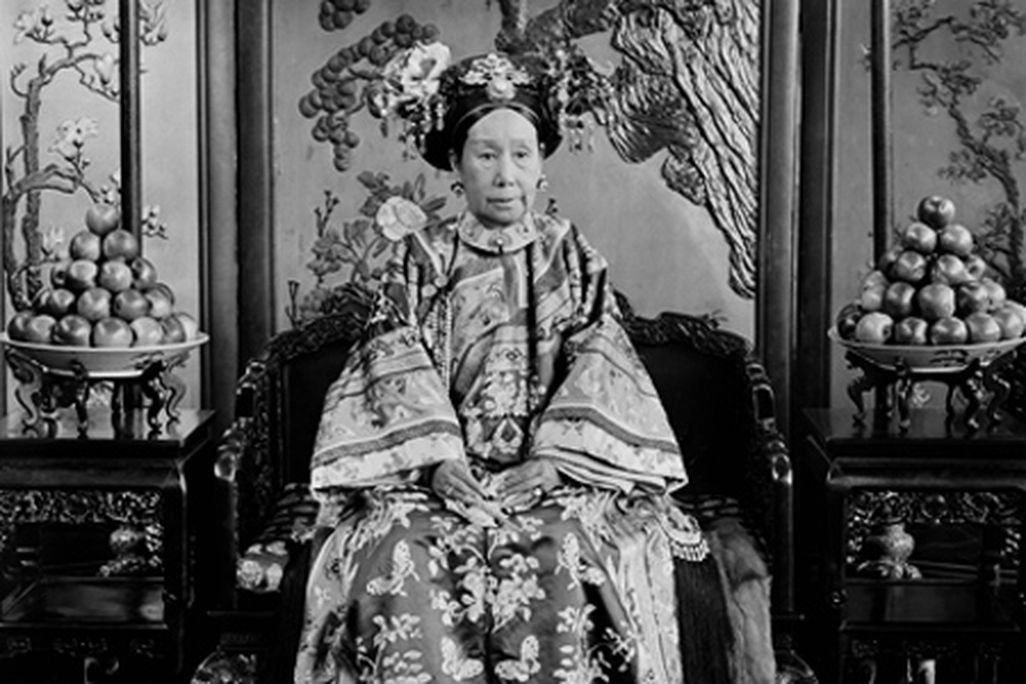
"Too much mystery surrounds the Forbidden City for us to write of its inmates with assured authority. Even when the facts are known, there are two or three versions, each giving a different rendering of what occurred. This vagueness is like the nebulous parts of a Chinese painting; it has a charm that it might be a mistake to dispel. Nor is it certain that the historian, could he lift the veil, would discover the truth."
—Daniele Vare, an Italian diplomat in Peking, in his 1936 biography of Cixi,"The Last Empress"
History can be a slippery substance, particularly when it comes to personalities. A century after the death of China's last and most famous empress, Cixi, the story of her life and reign remains veiled by varying versions of the truth.
Some sources paint her as a veritable wicked witch of the east, whose enemies often mysteriously dropped dead. Others link her to tales of sexual intrigue within the palace walls, even questioning whether her favorite eunuch was truly a eunuch. But recent scholarly analyses discredit many of those sensational stories and suggest a more complicated woman than this caricature.
What do we really know about this woman who indirectly controlled China's throne for almost half a century, in the twilight of the Qing dynasty?
She entered history on November 29, 1835 as a rather ordinary Chinese girl named Yehenara, although there was a certain prestige in being born to a family from the ruling Manchu minority. At age 16, she was brought to the Forbidden City to join Emperor Xianfeng's harem—which may sound like punishment to modern ears, but was considered a swank role for Chinese women of her time.
Daniele Vare's book, The Last Empress, says Yehenara (he calls her Yehonala) rose to the top of the concubine ranks when the emperor overheard her singing and asked to see her. Infatuated, he began picking her name from the nightly roster of choices to visit his bedchamber, and soon she bore him a son. This earned her the title Tzu Hsi, meaning "empress of the western palace," spelled Cixi these days.
When Xianfeng died in 1861, Cixi's five-year-old son was his only male heir and became the emperor Tongzhi, making her the "empress dowager" and a regent ruler. Cixi relinquished the regency when her son turned 17, but Tongzhi died two years later and Cixi became a regent again, this time for her three-year-old nephew Guangxu.
Some historians have pointed to this turn of events as proof of Cixi's political shrewdness because it defied tradition for the new emperor to be of the same generation as his predecessor. Also, although Tongzhi had no heir when he died, his first-ranking concubine, Alute, was pregnant. So it seems far too convenient that Alute and her unborn child died during the debate over succession. The court announced it as a suicide, but as the New York Times reported at the time, the circumstances "aroused general suspicion."
/https://tf-cmsv2-smithsonianmag-media.s3.amazonaws.com/filer/empress-feb08-main.jpg)
/https://tf-cmsv2-smithsonianmag-media.s3.amazonaws.com/filer/empress-feb08-2.jpg)
/https://tf-cmsv2-smithsonianmag-media.s3.amazonaws.com/filer/empress-feb08-3.jpg)
/https://tf-cmsv2-smithsonianmag-media.s3.amazonaws.com/filer/empress-feb08-4.jpg)
/https://tf-cmsv2-smithsonianmag-media.s3.amazonaws.com/filer/empress-feb08-5.jpg)
/https://tf-cmsv2-smithsonianmag-media.s3.amazonaws.com/filer/empress-feb08-6.jpg)
/https://tf-cmsv2-smithsonianmag-media.s3.amazonaws.com/filer/empress-feb08-7.jpg)
/https://tf-cmsv2-smithsonianmag-media.s3.amazonaws.com/filer/empress-feb08-8.jpg)
/https://tf-cmsv2-smithsonianmag-media.s3.amazonaws.com/filer/empress-feb08-9.jpg)
/https://tf-cmsv2-smithsonianmag-media.s3.amazonaws.com/filer/empress-feb08-10.jpg)
Even if Alute was murdered, Cixi wasn't necessarily responsible, as author Sterling Seagrave points out. The late emperor had five brothers, princes of the imperial court, who had their own rivalries and ambitions for controlling the throne indirectly.
Seagrave's 1992 biography of Cixi, Dragon Lady, is among the most thorough attempts to sift the solid facts from the sticky sea of rumors about the empress. He takes nearly 500 pages to explain what he calls "the hoodwinking of history" by a British journalist and his assistant in the early 20th century.
As a reporter for the Times of London, George Morrison's dispatches from Peking in the late 1890s and early 1900s were the only glimpse most Westerners got inside the Forbidden City. He wasn't a bad reporter, but he made the mistake of listening to a young man named Edmund Backhouse, an Oxford-trained linguist who contributed to many of Morrison's articles. As other sources—including Morrison's own diary—later revealed, much of Backhouse's "reporting" was utter fiction. But by the time Morrison realized this, it would have damaged his own reputation too much to reveal the truth.
In 1898, the emperor Guangxu launched the Hundred Days Reform, a well-intentioned but poorly implemented attempt to modernize many aspects of Chinese society that nearly caused a civil war. Cixi ultimately regained the regency with support from conservatives who opposed the reforms. She stayed in power until her death in 1908, but her reputation was tarnished by slanderous rumors spread by the leader of the failed reform, Kang Yu-Wei.
The image of Cixi as a cruel and greedy tyrant gained historical traction in 1910, when Backhouse and another British journalist, J.O.P. Bland, published the book China Under the Empress Dowager. It was praised at the time for being a thoroughly researched biography, but as Seagrave notes, Backhouse forged many of the documents he cited.
It's hard to know what Backhouse's motivations may have been for this historical hoax, but perhaps sensational lies simply paved an easier path to fame than nuanced truth. Seagrave suggests that Backhouse had an unhappy childhood, suffered from mental illness and was "brilliant but highly unstable."
Through Seagrave's lens, the historical image of Cixi takes on a softer, sadder aura than the monster of Backhouse's creation. She was certainly a bright, ambitious woman, but her life was anything but a fairy tale.
"One might wish for her sake that her life had been just such a burlesque filled with Florentine intrigues and Viennese frivolity, because the truth is melancholy…Under those layers of historical graffiti was a spirited and beautiful young woman trapped in a losing proposition: …A figurehead empress who lost three emperors to conspiracy; a frightened matriarch whose reputation was destroyed as she presided over the decline of a bankrupt dynasty," he writes.