Content ID:
Field:


  • About Smithsonian
  • Email Updates
  • Member Services
  • Shop
  • Archive
Smithsonian.com
  • Smithsonian Institution
  • Smithsonian Channel
  • goSmithsonian
  • Air & Space magazine
  • Home
  • History & Archaeology
  • People & Places
  • Science & Nature
  • Arts & Culture
  • Travel
  • Photos & Videos
  • Games & Puzzles
  • Subscribe
  • Archaeology
  • Biography
  • Today in History
  • U.S. History
  • World History
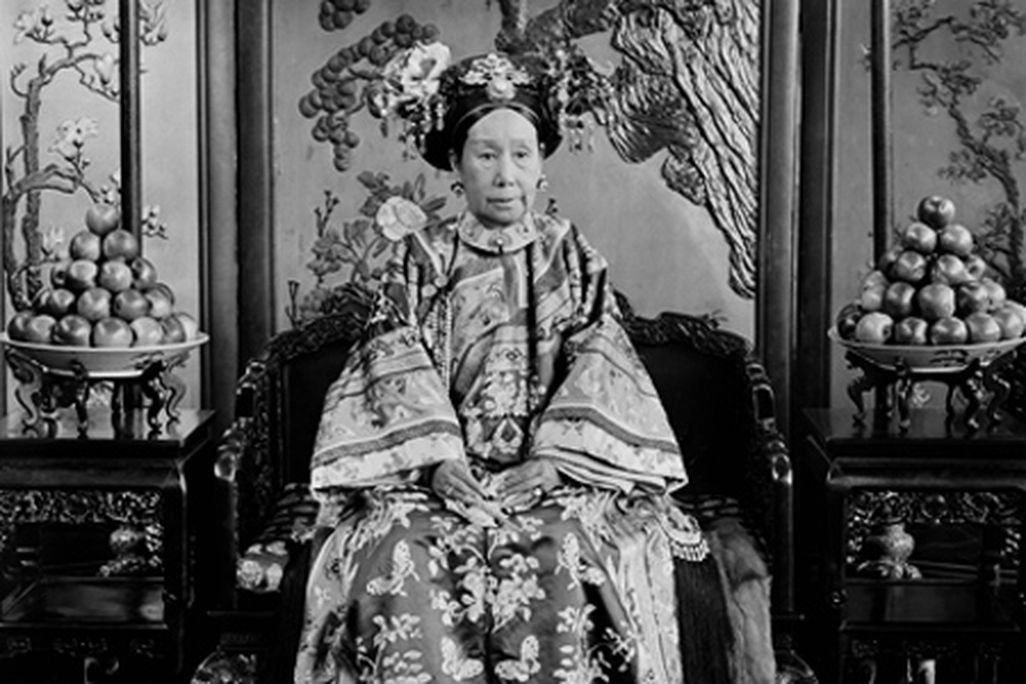
The Empress Dowager Cixi 1903-1905 The Empress Dowager Cixi 1903-1905

Freer Gallery of Art and Arthur M. Sackler Gallery Archives

  • History & Archaeology

Cixi: The Woman Behind the Throne

The concubine who became China’s last empress
  • By Amanda Bensen
  • Smithsonian.com, March 01, 2008

Article Tools

  • Font
  • Share/Save/Bookmark Share
  • Email
  • Print
  • Digg Digg
  • Comments
  • StumbleUpon StumbleUpon
  • RSS
  • Reddit Reddit

    Related Topics

    Women's History

    Political Leaders

    Qing Dynasty

    China

    Photo Gallery

    The Empress Dowager Cixi 1903-1905

    Cixi: The Woman Behind the Throne

    Explore more photos from the story

    More from Smithsonian.com
    • Highlights and Hotspots of Asia
    • Forbidden No More

    "Too much mystery surrounds the Forbidden City for us to write of its inmates with assured authority. Even when the facts are known, there are two or three versions, each giving a different rendering of what occurred. This vagueness is like the nebulous parts of a Chinese painting; it has a charm that it might be a mistake to dispel. Nor is it certain that the historian, could he lift the veil, would discover the truth."

    —Daniele Vare, an Italian diplomat in Peking, in his 1936 biography of Cixi,"The Last Empress"

    History can be a slippery substance, particularly when it comes to personalities. A century after the death of China's last and most famous empress, Cixi, the story of her life and reign remains veiled by varying versions of the truth.

    Some sources paint her as a veritable wicked witch of the east, whose enemies often mysteriously dropped dead. Others link her to tales of sexual intrigue within the palace walls, even questioning whether her favorite eunuch was truly a eunuch. But recent scholarly analyses discredit many of those sensational stories and suggest a more complicated woman than this caricature.

    What do we really know about this woman who indirectly controlled China's throne for almost half a century, in the twilight of the Qing dynasty?

    She entered history on November 29, 1835 as a rather ordinary Chinese girl named Yehenara, although there was a certain prestige in being born to a family from the ruling Manchu minority. At age 16, she was brought to the Forbidden City to join Emperor Xianfeng's harem—which may sound like punishment to modern ears, but was considered a swank role for Chinese women of her time.

    Daniele Vare's book, The Last Empress, says Yehenara (he calls her Yehonala) rose to the top of the concubine ranks when the emperor overheard her singing and asked to see her. Infatuated, he began picking her name from the nightly roster of choices to visit his bedchamber, and soon she bore him a son. This earned her the title Tzu Hsi, meaning "empress of the western palace," spelled Cixi these days.

    When Xianfeng died in 1861, Cixi's five-year-old son was his only male heir and became the emperor Tongzhi, making her the "empress dowager" and a regent ruler. Cixi relinquished the regency when her son turned 17, but Tongzhi died two years later and Cixi became a regent again, this time for her three-year-old nephew Guangxu.

    Some historians have pointed to this turn of events as proof of Cixi's political shrewdness because it defied tradition for the new emperor to be of the same generation as his predecessor. Also, although Tongzhi had no heir when he died, his first-ranking concubine, Alute, was pregnant. So it seems far too convenient that Alute and her unborn child died during the debate over succession. The court announced it as a suicide, but as the New York Times reported at the time, the circumstances "aroused general suspicion."

    Even if Alute was murdered, Cixi wasn't necessarily responsible, as author Sterling Seagrave points out. The late emperor had five brothers, princes of the imperial court, who had their own rivalries and ambitions for controlling the throne indirectly.

    "Too much mystery surrounds the Forbidden City for us to write of its inmates with assured authority. Even when the facts are known, there are two or three versions, each giving a different rendering of what occurred. This vagueness is like the nebulous parts of a Chinese painting; it has a charm that it might be a mistake to dispel. Nor is it certain that the historian, could he lift the veil, would discover the truth."

    —Daniele Vare, an Italian diplomat in Peking, in his 1936 biography of Cixi,"The Last Empress"

    History can be a slippery substance, particularly when it comes to personalities. A century after the death of China's last and most famous empress, Cixi, the story of her life and reign remains veiled by varying versions of the truth.

    Some sources paint her as a veritable wicked witch of the east, whose enemies often mysteriously dropped dead. Others link her to tales of sexual intrigue within the palace walls, even questioning whether her favorite eunuch was truly a eunuch. But recent scholarly analyses discredit many of those sensational stories and suggest a more complicated woman than this caricature.

    What do we really know about this woman who indirectly controlled China's throne for almost half a century, in the twilight of the Qing dynasty?

    She entered history on November 29, 1835 as a rather ordinary Chinese girl named Yehenara, although there was a certain prestige in being born to a family from the ruling Manchu minority. At age 16, she was brought to the Forbidden City to join Emperor Xianfeng's harem—which may sound like punishment to modern ears, but was considered a swank role for Chinese women of her time.

    Daniele Vare's book, The Last Empress, says Yehenara (he calls her Yehonala) rose to the top of the concubine ranks when the emperor overheard her singing and asked to see her. Infatuated, he began picking her name from the nightly roster of choices to visit his bedchamber, and soon she bore him a son. This earned her the title Tzu Hsi, meaning "empress of the western palace," spelled Cixi these days.

    When Xianfeng died in 1861, Cixi's five-year-old son was his only male heir and became the emperor Tongzhi, making her the "empress dowager" and a regent ruler. Cixi relinquished the regency when her son turned 17, but Tongzhi died two years later and Cixi became a regent again, this time for her three-year-old nephew Guangxu.

    Some historians have pointed to this turn of events as proof of Cixi's political shrewdness because it defied tradition for the new emperor to be of the same generation as his predecessor. Also, although Tongzhi had no heir when he died, his first-ranking concubine, Alute, was pregnant. So it seems far too convenient that Alute and her unborn child died during the debate over succession. The court announced it as a suicide, but as the New York Times reported at the time, the circumstances "aroused general suspicion."

    Even if Alute was murdered, Cixi wasn't necessarily responsible, as author Sterling Seagrave points out. The late emperor had five brothers, princes of the imperial court, who had their own rivalries and ambitions for controlling the throne indirectly.

    Seagrave's 1992 biography of Cixi, Dragon Lady, is among the most thorough attempts to sift the solid facts from the sticky sea of rumors about the empress. He takes nearly 500 pages to explain what he calls "the hoodwinking of history" by a British journalist and his assistant in the early 20th century.

    As a reporter for the Times of London, George Morrison's dispatches from Peking in the late 1890s and early 1900s were the only glimpse most Westerners got inside the Forbidden City. He wasn't a bad reporter, but he made the mistake of listening to a young man named Edmund Backhouse, an Oxford-trained linguist who contributed to many of Morrison's articles. As other sources—including Morrison's own diary—later revealed, much of Backhouse's "reporting" was utter fiction. But by the time Morrison realized this, it would have damaged his own reputation too much to reveal the truth.

    In 1898, the emperor Guangxu launched the Hundred Days Reform, a well-intentioned but poorly implemented attempt to modernize many aspects of Chinese society that nearly caused a civil war. Cixi ultimately regained the regency with support from conservatives who opposed the reforms. She stayed in power until her death in 1908, but her reputation was tarnished by slanderous rumors spread by the leader of the failed reform, Kang Yu-Wei.

    The image of Cixi as a cruel and greedy tyrant gained historical traction in 1910, when Backhouse and another British journalist, J.O.P. Bland, published the book China Under the Empress Dowager. It was praised at the time for being a thoroughly researched biography, but as Seagrave notes, Backhouse forged many of the documents he cited.

    It's hard to know what Backhouse's motivations may have been for this historical hoax, but perhaps sensational lies simply paved an easier path to fame than nuanced truth. Seagrave suggests that Backhouse had an unhappy childhood, suffered from mental illness and was "brilliant but highly unstable."

    Through Seagrave's lens, the historical image of Cixi takes on a softer, sadder aura than the monster of Backhouse's creation. She was certainly a bright, ambitious woman, but her life was anything but a fairy tale.

    "One might wish for her sake that her life had been just such a burlesque filled with Florentine intrigues and Viennese frivolity, because the truth is melancholy…Under those layers of historical graffiti was a spirited and beautiful young woman trapped in a losing proposition: …A figurehead empress who lost three emperors to conspiracy; a frightened matriarch whose reputation was destroyed as she presided over the decline of a bankrupt dynasty," he writes.


    1 2


    Related topics: Women's History Political Leaders Qing Dynasty China

     
    Comments

    On a related note, I've just learned about a new book that might interest readers fascinated with Cixi and her era. The author, Grant Hayter-Menzies, offers this information: "My book, "Imperial Masquerade: The Legend of Princess Der Ling," is the first biography of Der Ling, who was the first great apologist of the Empress Dowager who was of the same race as Cixi, and who was rehabilitated along with Cixi in Sterling Seagrave's biography." The book comes out in April from Hong Kong University Press, and Hayter-Menzies will give a reading at the Smithsonian's Freer Gallery of Asian art on May 29. More info on that and other Freer events here: http://www.asia.si.edu/events/lectures.asp

    Posted by Amanda Bensen on February 28,2008 | 09:48AM

    Why does no one mention Pearl S. Buck's excellent biography of Cixi written in 1956, "Imperial Woman"? This portrait of the Dowager Empress' life is beautifully written and gives a great sense of her personality an life. Buck was an apologist for the Empress, but also gives a wonderful portrait of what the Empress faced and how she dealt with her responsibilities and majesty. This is a great book and since Buck loved China so much, it's a disservice not to mention this excellent biography.

    Posted by Lorraine Allen on March 3,2008 | 04:47PM

    Lorraine, you're right, Pearl Buck's book about Cixi is well worth reading, so thanks for mentioning it! However, readers should be aware that it is a work of fiction (though based on history) rather than a true biography.

    Posted by Amanda Bensen on March 4,2008 | 10:21AM

    Dear Amanda, This is very intriguing piece of History! I have an interest in the "forbidden city" and about life in the Imperial court. I had never heard about Cixi before this article. Great Researching! I hope we hear more about other " hidden " women who had a hand in history! Sincerely, Grace

    Posted by Grace in VT on March 4,2008 | 05:34PM

    My grandfather, Warren Abner Seavey, was hired by the Dowager Empress to start a western style law school. The law school was established in Tianjin. This was in 1905 -1908. He was awarded a medal, the order of the double dragon, by the Empress. This was an award created for foreigners.

    Posted by Beverly Seavey on March 11,2008 | 01:02PM

    Wonderful article. When my wife, Naomi, and I visited Cixi's "realm," we saw her cement barge, as well as the man-made lake that she commissioned supposedly for her "navy," to explain the need for her barge, among other incredible extravagances. According to our tour-guide, if nothing else, she knew how to spend money, much the same as a deep-pocketed youngster on a spending spree in Beverly Hills, California.

    Posted by TONY HOROWITZ on March 13,2008 | 12:04AM

    The "cement" barge is actually marble, and was built not by Cixi but in the reign of the Qianlong emperor in the 18th century. An official of Cixi's, Prince Chun, had the paddle wheels added to please her, and some decorations added to the superstructure, in the late 19th century - but that's all. There's been a big business for tour guides at the Summer Palace and Forbidden City in blaming Cixi for everything that went wrong with China, since shortly after the fall of the dynasty opened these sites to the public. Princess Der Ling dealt with it herself when guiding foreigners through the palaces - everyone assumed Cixi had carried around with her a cleaver to decapitate people with, and weren't interested in Der Ling's efforts to clue them in to the reality of the woman she knew. Gossip sells tickets even as it sells books, but it's not the truth.

    Posted by Grant Hayter-Menzies on March 14,2008 | 12:43PM

    It is so fascinating to read about the Empress Dowager and to view the photo gallery.I remember watching the movie 'The Reign behind the Iron Curtain' which featured her life.Thanks for the interesting reviews too.

    Posted by Leslie Thio on May 27,2008 | 06:49AM

    Dear Amanda, as a Chinese reader, I am really amazed by your interpretation of the Empress Dowager, which offered me with a totally different perspective of this controversial woman. Thanks!

    Posted by Zang Yuan on June 29,2008 | 02:18AM

    Wasn't Cixi involved in the Boxer Rebellion?

    Posted by Gerald G. Bigus on July 23,2008 | 04:08PM

    Great article! does anyone know the italian translation of the quote by Daniele Vere?

    Posted by Fra on September 15,2009 | 08:01AM

    Post a Comment


    Name: (required)

    Email: (required)

    Comment:


    Advertisement


    Most Popular Video

    • Newest
    • Most Viewed
    Coral Reef Spawn

    How Coral Reefs Spawn

    Watch coral reefs reproduce in a flurry of carefully-timed action

    Flipping Out Over Pinball

    David Silverman has collected more than 800 pinball machines to preserve their history

    Sing Along to the Messiah

    Sing Along to the Messiah

    The story within Handel's famous piece is what drives its enduring popularity

    A Rare Look at Tucker Cars

    Collector David Cammack owns three of the 43 remaining cars in existence designed by Preston Tucker

    The Residents of Arlington Cemetery

    While President Kennedy may be one of the best known gravesites in Arlington, there are many other notable Americans buried there

    The Ju/'Hoansi Tribe in Action

    Over the course of 50 years, John Marshall filmed the African tribe, tracking how their nomadic culture slowly died out

    Watch the Gecko's Tail Flip

    Leopard geckos can shed their tail to distract predators, and the tails can leap up to 3 cm in one jump

    A Final Takeoff

    Watch one of Amelia Earhart's final takeoffs

    Most Popular

    • Viewed
    • Emailed
    • Commented
    1. Ten Notable Apocalypses That (Obviously) Didn’t Happen
    2. Tattoos
    3. A Brief History of the Salem Witch Trials
    4. Top Ten Places Where Life Shouldn't Exist... But Does
    5. Wolves and the Balance of Nature in the Rockies
    6. 28 Places to See Before You Die—the Taj Mahal, Grand Canyon and More
    7. John Brown's Day of Reckoning
    8. Ethiopia's Exotic Monkeys
    9. How Arlington National Cemetery Came to Be
    10. Evolution in the Deepest River in the World
    1. Ten Notable Apocalypses That (Obviously) Didn’t Happen
    2. Crawling Around with Baltimore Street Rats
    3. How Arlington National Cemetery Came to Be
    4. Invasion of the Longhorn Beetles
    5. 28 Places to See Before You Die—the Taj Mahal, Grand Canyon and More
    6. Ethiopia's Exotic Monkeys
    7. The Surprising Satisfactions of a Home Funeral
    8. Boise, Idaho: Big Skies and Colorful Characters
    9. Tattoos
    10. Memoirs of a World War II Buffalo Soldier
    1. Ten Notable Apocalypses That (Obviously) Didn’t Happen
    2. How Arlington National Cemetery Came to Be
    3. Evolution in the Deepest River in the World
    4. A Brief History of the Salem Witch Trials
    5. Artist William Wegman
    6. What would you add to the Smithsonian Life List?
    7. From Brooklyn to Worthington, Minnesota
    8. Memoirs of a World War II Buffalo Soldier
    9. The Rescue of Henry Clay
    10. Man Ray’s Signature Work

    - - - Advertisements - - -


    Join Us

    Facebook

    Facebook

    Become a fan of Smithsonian magazine's official Facebook page!

    Twitter

    Follow Smithsonian magazine on Twitter

    In The Magazine

    December 2009 Issue Cover

    December 2009

    • Wildlife Trafficking
    • Hallelujah
    • The Pyramid Man
    • Glee Mail
    • Savoring Puebla

    View Table of Contents »

    Smithsonian magazine presents

    6th Annual Smithsonian Photo Contest Winners

    Out of more than 17,000 entries contributed from around the world, Smithsonian and its readers select the year's best

    • Smithsonian Store
    • Smithsonian Journeys

    Kokeshi Dolls

    Item No. 85070

    Antarctica: Aboard National Geographic Explorer

    Journey to Antarctica to experience this otherworldly and unparalleled wilderness up close. (Jan 7 - 21, 2010)


    View full archiveRecent Issues

    • December 2009 Issue Cover
      Dec 2009

    • November 2009 Issue
      Nov 2009

    • October 2009 Issue Cover
      Oct 2009

    Newsletter

    Sign up for regular email updates from Smithsonian magazine, including free newsletters, special offers and current news updates.

    Subscribe Now

    About Us

    Smithsonian.com expands on Smithsonian magazine's in-depth coverage of history, science, nature, the arts, travel, world culture and technology. Join us regularly as we take a dynamic and interactive approach to exploring modern and historic perspectives on the arts, sciences, nature, world culture and travel, including videos, blogs and a reader forum.

    Explore our Brands

    • goSmithsonian.com
    • Smithsonian Air & Space Museum
    • Smithsonian Institution
    • Smithsonian Catalogue
    • Smithsonian Journeys
    • Smithsonian Channel
    • Site Map
    • Privacy Policy
    • Copyright
    • About Smithsonian
    • Contact Us
    • Advertising
    • Reader Panel
    • Subscribe
    • RSS
    • Topics

    Smithsonian Institution

    Produced by Clickability