• Smithsonian
    Institution
  • Travel
    With Us
  • Smithsonian
    Store
  • Smithsonian
    Channel
  • goSmithsonian
    Visitors Guide
  • Air & Space
    magazine

Smithsonian.com

  • Subscribe
  • History & Archaeology
  • Science
  • Ideas & Innovations
  • Arts & Culture
  • Travel & Food
  • At the Smithsonian
  • Photos
  • Videos
  • Games
  • Shop
  • Archaeology
  • U.S. History
  • World History
  • Today in History
  • Document Deep Dives
  • The Jetsons
  • National Treasures
  • Paleofuture
  • History & Archaeology

A Brief History of House Cats

It may be that "nobody owns a cat," but scientists now say the popular pet has lived with people for 12,000 years

| | | Reddit | Digg | Stumble | Email |
  • By David Zax
  • Smithsonian.com, July 01, 2007, Subscribe
 
house cats
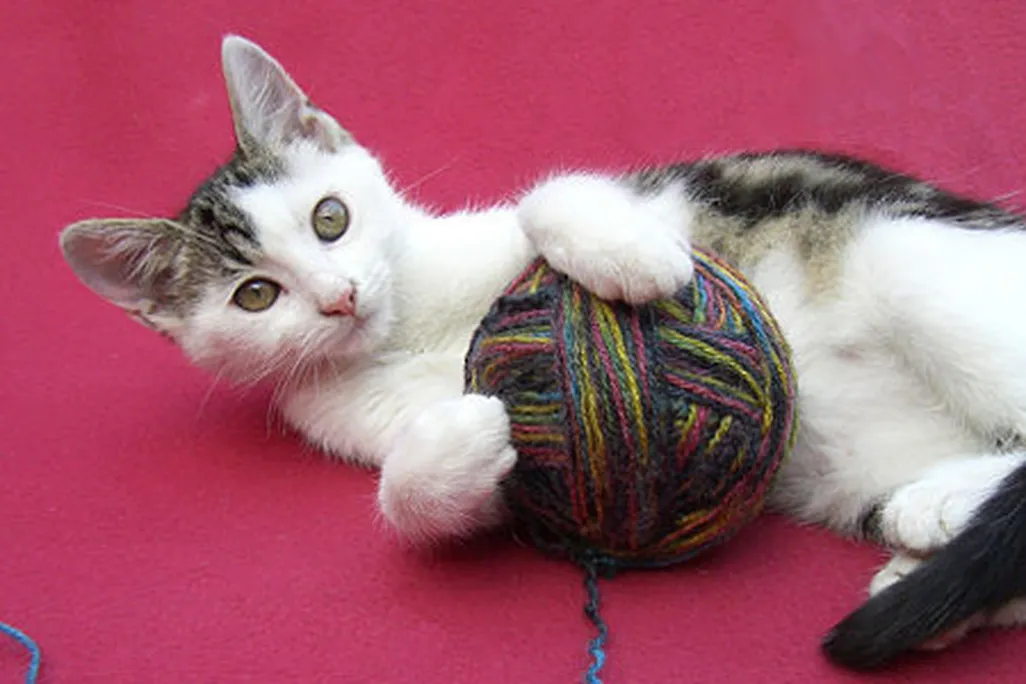
In the United States, cats are the most popular house pet, with about 90 million domesticated cats slinking around 34 percent of U.S. homes. (iStockphoto)

On any of the surprising number of Web sites dedicated entirely to wisdom about cats, one will find quotations like these: "As every cat owner knows, nobody owns a cat" (attributed to Ellen Perry Berkeley); "The phrase 'domestic cat' is an oxymoron" (attributed to George F. Will); and "A dog is a man's best friend. A cat is a cat's best friend" (attributed to Robet J. Vogel). Of course, there is such a thing as the domestic cat, and cats and humans have enjoyed a mostly symbiotic relationship for thousands of years. But the quips do illuminate a very real ambivalence in the long relationship between cats and humans, as this history of the house cat shows.

The Mystery of the Ancient House Cat

It has taken a while for scientists to piece together the riddle of just when and where cats first became domesticated. One would think that the archaeological record might answer the question easily, but wild cats and domesticated cats have remarkably similar skeletons, complicating the matter. Some clues first came from the island of Cyprus in 1983, when archaeologists found a cat's jawbone dating back 8,000 years. Since it seemed highly unlikely that humans would have brought wild cats over to the island (a "spitting, scratching, panic-stricken wild feline would have been the last kind of boat companion they would have wanted," writes Desmond Morris in Catworld: A Feline Encyclopedia), the finding suggested that domestication occurred before 8,000 years ago.

In 2004, the unearthing of an even older site at Cyprus, in which a cat had been deliberately buried with a human, made it even more certain that the island's ancient cats were domesticated, and pushed the domestication date back at least another 1,500 years.

Just last month, a study published in the research journal Science secured more pieces in the cat-domestication puzzle based on genetic analyses. All domestic cats, the authors declared, descended from a Middle Eastern wildcat, Felis sylvestris, which literally means "cat of the woods." Cats were first domesticated in the Near East, and some of the study authors speculate that the process began up to 12,000 years ago.

Civilization's Pet

While 12,000 years ago might seem a bold estimate—nearly 3,000 before the date of the Cyprus tomb's cat—it actually is a perfectly logical one, since that is precisely when the first agricultural societies began to flourish in the Middle East's Fertile Crescent.

When humans were predominantly hunters, dogs were of great use, and thus were domesticated long before cats. Cats, on the other hand, only became useful to people when we began to settle down, till the earth and—crucially—store surplus crops. With grain stores came mice, and when the first wild cats wandered into town, the stage was set for what the Science study authors call "one of the more successful 'biological experiments' ever undertaken." The cats were delighted by the abundance of prey in the storehouses; people were delighted by the pest control.


On any of the surprising number of Web sites dedicated entirely to wisdom about cats, one will find quotations like these: "As every cat owner knows, nobody owns a cat" (attributed to Ellen Perry Berkeley); "The phrase 'domestic cat' is an oxymoron" (attributed to George F. Will); and "A dog is a man's best friend. A cat is a cat's best friend" (attributed to Robet J. Vogel). Of course, there is such a thing as the domestic cat, and cats and humans have enjoyed a mostly symbiotic relationship for thousands of years. But the quips do illuminate a very real ambivalence in the long relationship between cats and humans, as this history of the house cat shows.

The Mystery of the Ancient House Cat

It has taken a while for scientists to piece together the riddle of just when and where cats first became domesticated. One would think that the archaeological record might answer the question easily, but wild cats and domesticated cats have remarkably similar skeletons, complicating the matter. Some clues first came from the island of Cyprus in 1983, when archaeologists found a cat's jawbone dating back 8,000 years. Since it seemed highly unlikely that humans would have brought wild cats over to the island (a "spitting, scratching, panic-stricken wild feline would have been the last kind of boat companion they would have wanted," writes Desmond Morris in Catworld: A Feline Encyclopedia), the finding suggested that domestication occurred before 8,000 years ago.

In 2004, the unearthing of an even older site at Cyprus, in which a cat had been deliberately buried with a human, made it even more certain that the island's ancient cats were domesticated, and pushed the domestication date back at least another 1,500 years.

Just last month, a study published in the research journal Science secured more pieces in the cat-domestication puzzle based on genetic analyses. All domestic cats, the authors declared, descended from a Middle Eastern wildcat, Felis sylvestris, which literally means "cat of the woods." Cats were first domesticated in the Near East, and some of the study authors speculate that the process began up to 12,000 years ago.

Civilization's Pet

While 12,000 years ago might seem a bold estimate—nearly 3,000 before the date of the Cyprus tomb's cat—it actually is a perfectly logical one, since that is precisely when the first agricultural societies began to flourish in the Middle East's Fertile Crescent.

When humans were predominantly hunters, dogs were of great use, and thus were domesticated long before cats. Cats, on the other hand, only became useful to people when we began to settle down, till the earth and—crucially—store surplus crops. With grain stores came mice, and when the first wild cats wandered into town, the stage was set for what the Science study authors call "one of the more successful 'biological experiments' ever undertaken." The cats were delighted by the abundance of prey in the storehouses; people were delighted by the pest control.

"We think what happened is that the cats sort of domesticated themselves," Carlos Driscoll, one of the study authors, told the Washington Post. The cats invited themselves in, and over time, as people favored cats with more docile traits, certain cats adapted to this new environment, producing the dozens of breeds of house cats known today. In the United States, cats are the most popular house pet, with 90 million domesticated cats slinking around 34 percent of U.S. homes.

God and Devil: The Cat in History

If cats seem ambivalent towards us, as the quotations from cat fan-sites indicate, then it may be a reflection of the wildly mixed feelings humans, too, have shown cats over the millennia.

The ancient Egyptian reverence for cats is well-known—and well-documented in the archaeological record: scientists found a cat cemetery in Beni-Hassan brimming with 300,000 cat mummies. Bastet, an Egyptian goddess of love, had the head of a cat, and to be convicted of killing a cat in Egypt often meant a death sentence for the offender.

Ancient Romans held a similar—albeit tempered and secularized—reverence for cats, which were seen as a symbol of liberty. In the Far East, cats were valued for the protection they offered treasured manuscripts from rodents.

For some reason, however, cats came to be demonized in Europe during the Middle Ages. They were seen by many as being affiliated with witches and the devil, and many were killed in an effort to ward off evil (an action that scholars think ironically helped to spread the plague, which was carried by rats). Not until the 1600s did the public image of cats begin to rally in the West.

Nowadays, of course, cats are superstars: the protagonists of comic strips and television shows. By the mid-90s, cat services and products had become a billion-dollar industry. And yet, even in our popular culture, a bit of the age-old ambivalence remains. The cat doesn't seem to be able to entirely shake its association with evil: After all, how often do you see a movie's maniacal arch-villain, as he lounges in a comfy chair and plots the world's destruction, stroke the head of a Golden Retriever?

David Zax, a writer in Washington, D.C., recently wrote a brief history of Wimbledon.


Single Page 1 2 Next »

    Subscribe now for more of Smithsonian's coverage on history, science and nature.


Related topics: Cats


| | | Reddit | Digg | Stumble | Email |
 

Add New Comment


Name: (required)

Email: (required)

Comment:

Comments are moderated, and will not appear until Smithsonian.com has approved them. Smithsonian reserves the right not to post any comments that are unlawful, threatening, offensive, defamatory, invasive of a person's privacy, inappropriate, confidential or proprietary, political messages, product endorsements, or other content that might otherwise violate any laws or policies.

Comments (37)

+ View All Comments

Thank you for the information. We have been feeding a house cat that is wild, for 10 years. If she was on the patio and I opened the door she would run away. The last month she had let me, my daughter and husband pet her. She seems as if she wants to come in the house. Tonight my husband picked her up (no drama, no stress) and put her in a cargo cage with a towel on the bottom . She purred and lated down. I am so happy she is in the house tonight it is on 5'f outside. I would love for her to come in every night, to keep warm and to be safe. My question is. can wild cats change there minds? Can they start to trust? She seemed different after I saved her when a larger cat was fighting with her and I chased it away. That day I stood near the door where the food is and she came next to me to eat.

Posted by Francesca on February 8,2013 | 01:56 AM

wow very interesting

Posted by bautista.diane19@yahoo.com on February 4,2013 | 05:04 AM

wow, this is cool

Posted by nina on November 5,2012 | 12:31 PM

This was very helpful

Posted by on November 3,2012 | 11:15 PM

Cats are the magic animal; civilization could not have progressed without them. But, in the end, and despite their apparently affectionate ways they are still relentless killers. But they kill our enemies and keep us safe.

Posted by Robert Royce on September 18,2012 | 10:05 AM

I have 2 cats living in my home. Both adopted. Both are incrediby affectionate. Cats are loveabe yet independent. I was sn advid dog lover until my son convinced me to adopt our orange tabby. I originally adopted our cats to help my young sons learn how to be nurturing and gentle with animals. As it turned out it worked and now I have had our cats well over 10 years. They certainly give you what you give them. I am an official cat woman.

Posted by LaFrance on August 14,2012 | 02:22 PM

good........................

Posted by abhishek on July 26,2012 | 10:35 AM

CAT ARE NOT EVIL!!!!

Posted by SRG on July 24,2012 | 03:43 AM

cats rock and are so cool no animal can or will for me they are so cute and cuddly and small and playful i do not care what others say CATS ROCK!!!!!!

Posted by srg on July 24,2012 | 03:42 AM

IT IS VERY USEFUL FOR ME.

Posted by GOKUL on July 8,2012 | 05:48 AM

Cats are nice they are just playing leave them alone they are all abstention

Posted by Nita moon on June 3,2012 | 01:23 PM

While the Egyptians may have revered cats, the cats that were mummified had to come from somewhere. There were cat breeders who bred cats specifically for burials. Many of the mummified cats were x-rayed and found to be young and with broken necks. It’s very ironic that a country that held the cat in high esteem would also breed them to kill them. Now who is the evil one?

Posted by J. Min on May 23,2012 | 05:14 PM

This is a great cat story

Posted by blaze hulderman on May 3,2012 | 04:31 PM

Cats are intellectual,dogs require action. However, both species display a language to the significant human that is often silently accompanied communicative uses of stares; always intensive and often (in the case of a cat)a delibrate squinting/smiling, dogs dont do this so well.

My Tomkit knew what I was thinking and sometimes after a brief study of my face would jump into my arms, curling up against me as tight as he could: purring loudly. On the other hand when annoyed with me, would turn his back in complete distain. Dogs are much more forgiving but less interesting.

Posted by Marie T. Thomas on February 11,2012 | 12:46 PM

+ View All Comments


Advertisement


Most Popular

  • Viewed
  • Emailed
  • Commented
  1. For 40 Years, This Russian Family Was Cut Off From All Human Contact, Unaware of WWII
  2. Seven Famous People Who Missed the Titanic
  3. The Battle Over Richard III’s Bones…And His Reputation
  4. Top Ten Demonstrations of Love
  5. Bodybuilders Through the Ages
  6. A Brief History of the Salem Witch Trials
  7. Harry Truman’s Adorable Love “List” to His Wife, Bess
  8. Gobekli Tepe: The World’s First Temple?
  9. The Unsuccessful Plot to Kill Abraham Lincoln
  10. Tattoos
  1. For 40 Years, This Russian Family Was Cut Off From All Human Contact, Unaware of WWII
  2. Native Intelligence
  3. A Brief History of the Salem Witch Trials
  1. Abandoned Ship: the Mary Celeste
  2. The Beer Archaeologist
  3. To Be...Or Not: The Greatest Shakespeare Forgery
  4. Harry Truman’s Adorable Love “List” to His Wife, Bess
  5. The Battle Over Richard III’s Bones…And His Reputation
  6. The American Football League's Foolish Club
  7. Tattoos
  8. Power and the Presidency, From Kennedy to Obama
  9. New Light on Stonehenge

View All Most Popular »

Advertisement

Follow Us

Smithsonian Magazine
@SmithsonianMag
Follow Smithsonian Magazine on Twitter

Sign up for regular email updates from Smithsonian.com, including daily newsletters and special offers.

In The Magazine

February 2013

  • The First Americans
  • See for Yourself
  • The Dragon King
  • America’s Dinosaur Playground
  • Darwin In The House

View Table of Contents »


First Name
Last Name
Address 1
Address 2
City
State   Zip
Email


Travel with Smithsonian


Smithsonian Store

Framed Lincoln Tribute

This Framed Lincoln Tribute includes his photograph, an excerpt from his Gettysburg Address, two Lincoln postage stamps and four Lincoln pennies... $40


View full archiveRecent Issues


  • Feb 2013


  • Jan 2013


  • Dec 2012

Newsletter

Sign up for regular email updates from Smithsonian magazine, including free newsletters, special offers and current news updates.

Subscribe Now

About Us

Smithsonian.com expands on Smithsonian magazine's in-depth coverage of history, science, nature, the arts, travel, world culture and technology. Join us regularly as we take a dynamic and interactive approach to exploring modern and historic perspectives on the arts, sciences, nature, world culture and travel, including videos, blogs and a reader forum.

Explore our Brands

  • goSmithsonian.com
  • Smithsonian Air & Space Museum
  • Smithsonian Student Travel
  • Smithsonian Catalogue
  • Smithsonian Journeys
  • Smithsonian Channel
  • About Smithsonian
  • Contact Us
  • Advertising
  • Subscribe
  • RSS
  • Topics
  • Member Services
  • Copyright
  • Site Map
  • Privacy Policy
  • Ad Choices

Smithsonian Institution