• Smithsonian
    Institution
  • Travel
    With Us
  • Smithsonian
    Store
  • Smithsonian
    Channel
  • goSmithsonian
    Visitors Guide
  • Air & Space
    magazine

Smithsonian.com

  • Subscribe
  • History & Archaeology
  • Science
  • Ideas & Innovations
  • Arts & Culture
  • Travel & Food
  • At the Smithsonian
  • Photos
  • Videos
  • Games
  • Shop
  • Archaeology
  • U.S. History
  • World History
  • Today in History
  • Document Deep Dives
  • The Jetsons
  • National Treasures
  • Paleofuture
  • History & Archaeology

A Brief History of Scotland Yard

Investigating London's famous police force and some of its most infamous cases
| | | Reddit | Digg | Stumble | Email |
  • By Jess Blumberg
  • Smithsonian.com, September 28, 2007, Subscribe
 
Scotland yard
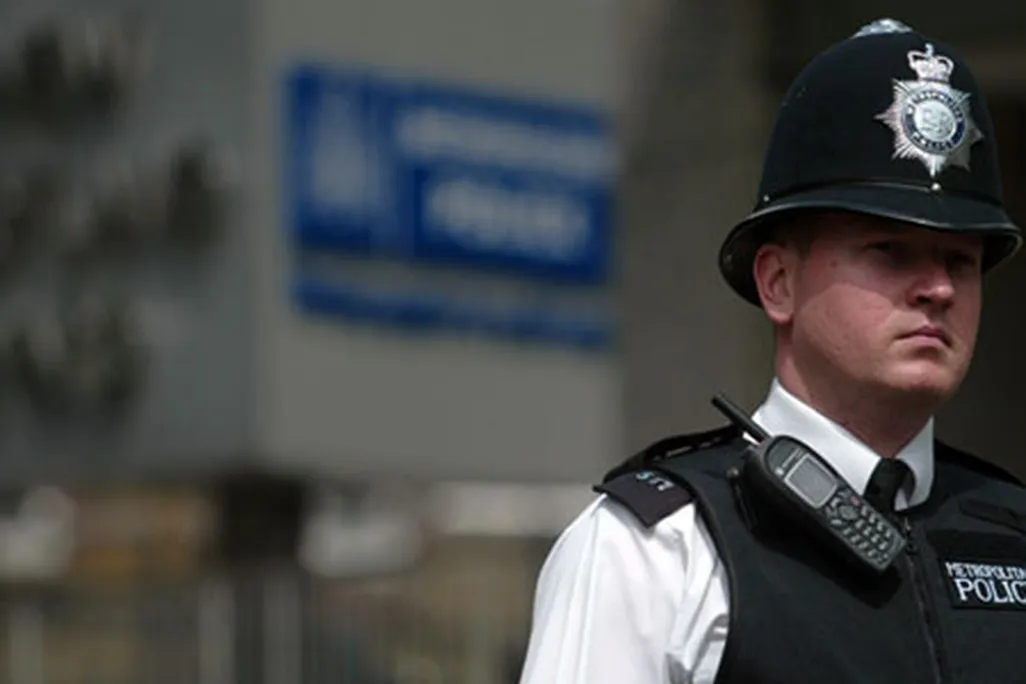
Neither in Scotland, nor in a yard, Scotland Yard is the name of the headquarters of London's Metropolitan Police and has become synonymous with the force. (Reuters / Rob Dawson)

More from Smithsonian.com

  • A Brief History of the Salem Witch Trials
  • Sherlock Holmes' London

(Page 2 of 2)

Earlier in Wensley's career, he did minor detective work on the infamous case of Jack the Ripper, which had gripped London's East End. Jack the Ripper was the self-proclaimed alias of the serial killer (or killers) responsible for five murders between 1888 and 1891. The officers of Scotland Yard were assigned to apprehend the suspect who was responsible for 11 attacks on prostitutes in the largely impoverished Whitechapel area. Police determined the killer's pattern—he would offer to pay for sex, lure the women away and slice their throats—but struggled to track down the criminal.

Without modern forensic technology, the officers of Scotland Yard, namely Inspector Frederick Abberline, relied on anthropometry—or identifying criminals by certain facial features, such as brow thickness or jaw shape. More than 160 people were accused of the Whitechapel murders, ranging from Alice in Wonderland author Lewis Carroll to painter William Richard Sickert. The force received many letters from people claiming to be the killer; two in particular gave detailed facts and were signed "Jack the Ripper." Still, in 1892, with no more leads or murders, the Jack the Ripper case was officially closed.

The Yard Today

Since its inception, Scotland Yard has always held a place in popular culture. The officers have appeared frequently as characters in the backdrop of mysteries, including Sir Arthur Conan Doyle's Sherlock Holmes stories. On television and in magazines today, Scotland Yard "bobbies" can be found standing stoically behind the royal family and other dignitaries that they are assigned to protect.

In 1967, the force moved once again to its present location, a modern 20-story building near the Houses of Parliament. The CID has become well-known for its investigative methods, primarily its fingerprinting techniques, which have been borrowed by the FBI. Today, Scotland Yard has roughly 30,000 officers patrolling 620 square miles occupied by 7.2 million citizens.

Currently, Scotland Yard's reputation is in jeopardy, just as it was 130 years ago. On July 22, 2005, during the investigation of the 2005 London bombings, police officers mistook Brazilian electrician Jean Charles de Menezes for a suicide bomber and fatally shot him. Menezes lived in one of the flats the police were staking out, wore bulky clothing that day and, according to police, resembled an Ethiopian suspect that was later arrested for the bombings. Earlier this month, members of the Metropolitan Police Authority, Scotland Yard's watchdog, denounced Commissioner Sir Ian Blair for "not knowing where the truth lay." The commissioner has repeatedly stated he will not resign over the killing.

Correction appended, October 2, 2007: Originally this article compared the British Home Secretary with the U.S. Secretary of Defense. This should instead be the Secretary of the Interior.


The name Scotland Yard invokes the image of a foggy London street being patrolled by a detective in a trench coat puffing smoke from his pipe. But Scotland Yard has an easily muddled history, full of misnomers and controversy. Neither in Scotland, nor in a yard, it is the name of the headquarters of London's Metropolitan Police and, by association, has become synonymous with the force. The Yard doesn't serve the city either, but instead the Greater London area. With all this confusion, it's time to investigate the story of Scotland Yard and some of its most infamous cases, from Jack the Ripper to the 2005 London bombings.

Making the Force

The London police force was created in 1829 by an act introduced in Parliament by Home Secretary (similar to the U.S. Secretary of the Interior) Sir Robert Peel—hence the nickname "bobbies," for policeman. The new police superseded the old system of watchmen. By 1839 these men had replaced the Bow Street Patrols, who enforced the decisions of magistrates, and the River Police, who worked to prevent crime along the Thames.

The responsibility of organizing the new police force was placed on Colonel Charles Rowan and Richard Mayne, who occupied a private house at 4 Whitehall Place, the back of which opened onto a courtyard: the Great Scotland Yard. The Yard's name was inspired by its site, a medieval palace which housed Scottish royalty on their visits to London.

The staff of Scotland Yard was responsible for the protection of important individuals, community patrols, public affairs, recruitment and personnel management. When the Yard sent out its first plainclothes police agents in 1842, the public felt uncomfortable with these "spies" on the streets. But the force's role in several important cases, and the charisma of many of its detectives, helped it win the people's trust.

One such personality, Inspector Charles Frederick Field, joined the force upon its establishment in 1829. He became good friends with Charles Dickens, who occasionally accompanied constables on their nightly rounds. Dickens wrote a short essay about Field, "On Duty With Inspector Field," and used him as a model for the all-knowing, charming Inspector Bucket in his novel Bleak House. Field retired as a chief of the detective branch in 1852.

In 1877, four out of the five heads for the detective branch were brought to trial for conspiring with criminals in a betting scheme. In an effort to repair the force's tarnished reputation, Howard Vincent submitted a restructuring proposal to the force. Soon Vincent was appointed director of criminal investigations and he reorganized Scotland Yard, strengthening its central unit. And with that, the Criminal Investigation Department (CID), a respected unit of plainclothes police detectives, was born.

Blood Work

The turn of the century saw many monumental events at Scotland Yard. Britain's "Bloody Sunday" occurred on November 13, 1887, when 2,000 police officers disrupted a meeting in Trafalgar Square organized by the Social Democratic Federation, resulting in more than 100 casualties. A few years later, the force moved to its new building on the Victoria Embankment. The premises became known as New Scotland Yard.

Also during this time, one of Scotland Yard's most durable detectives, Frederick Porter Wensley (a.k.a. "the weasel"), began his 40-year post. Wensley joined the force in 1888, and his career was highlighted with many landmark cases, including the murder of 32-year-old French woman Emilienne Gerard, also known as the "Blodie Belgium" case. On the morning of November 2, 1917, street sweepers found Gerard's torso along with a note reading "Blodie Belgium." Wensley questioned Gerard's lover, Louis Voisin, asking him to write the message "Bloody Belgium." Voisin made the same spelling error, sealing his guilt.

Earlier in Wensley's career, he did minor detective work on the infamous case of Jack the Ripper, which had gripped London's East End. Jack the Ripper was the self-proclaimed alias of the serial killer (or killers) responsible for five murders between 1888 and 1891. The officers of Scotland Yard were assigned to apprehend the suspect who was responsible for 11 attacks on prostitutes in the largely impoverished Whitechapel area. Police determined the killer's pattern—he would offer to pay for sex, lure the women away and slice their throats—but struggled to track down the criminal.

Without modern forensic technology, the officers of Scotland Yard, namely Inspector Frederick Abberline, relied on anthropometry—or identifying criminals by certain facial features, such as brow thickness or jaw shape. More than 160 people were accused of the Whitechapel murders, ranging from Alice in Wonderland author Lewis Carroll to painter William Richard Sickert. The force received many letters from people claiming to be the killer; two in particular gave detailed facts and were signed "Jack the Ripper." Still, in 1892, with no more leads or murders, the Jack the Ripper case was officially closed.

The Yard Today

Since its inception, Scotland Yard has always held a place in popular culture. The officers have appeared frequently as characters in the backdrop of mysteries, including Sir Arthur Conan Doyle's Sherlock Holmes stories. On television and in magazines today, Scotland Yard "bobbies" can be found standing stoically behind the royal family and other dignitaries that they are assigned to protect.

In 1967, the force moved once again to its present location, a modern 20-story building near the Houses of Parliament. The CID has become well-known for its investigative methods, primarily its fingerprinting techniques, which have been borrowed by the FBI. Today, Scotland Yard has roughly 30,000 officers patrolling 620 square miles occupied by 7.2 million citizens.

Currently, Scotland Yard's reputation is in jeopardy, just as it was 130 years ago. On July 22, 2005, during the investigation of the 2005 London bombings, police officers mistook Brazilian electrician Jean Charles de Menezes for a suicide bomber and fatally shot him. Menezes lived in one of the flats the police were staking out, wore bulky clothing that day and, according to police, resembled an Ethiopian suspect that was later arrested for the bombings. Earlier this month, members of the Metropolitan Police Authority, Scotland Yard's watchdog, denounced Commissioner Sir Ian Blair for "not knowing where the truth lay." The commissioner has repeatedly stated he will not resign over the killing.

Correction appended, October 2, 2007: Originally this article compared the British Home Secretary with the U.S. Secretary of Defense. This should instead be the Secretary of the Interior.


Single Page « Previous 1 2

    Subscribe now for more of Smithsonian's coverage on history, science and nature.


Related topics: Police England


| | | Reddit | Digg | Stumble | Email |
 

Add New Comment


Name: (required)

Email: (required)

Comment:

Comments are moderated, and will not appear until Smithsonian.com has approved them. Smithsonian reserves the right not to post any comments that are unlawful, threatening, offensive, defamatory, invasive of a person's privacy, inappropriate, confidential or proprietary, political messages, product endorsements, or other content that might otherwise violate any laws or policies.

Comments (14)

why did the police disrupt the meeting at trafalgar square?

Posted by hena on July 28,2012 | 01:27 PM

The early police were also known as Peelers. Does anyone know of a source dealing with the "thief takers" of an earlier era? The book "The Great Train Robbery" gives some interesting details of the mid 1850's London Police Force. I recall a conversation with a, now long deceased grandmother, who lived in East London at the time of the murders. She put them down to some Jewish ritual murders. And you thought conspiracies were a "new thing".

Posted by ErnestPayne on December 7,2011 | 07:45 PM

I am looking up information on a man named Wentworth who was said to have worked for Scotland Yard and left to come to the United States many years agoon business. He settled in the South, maybe MS. If there is any information you can possibly give me, it would prove most helpful. Supposedly, this man is my great-great grandfather.

Posted by LaWanda Swan on April 3,2011 | 02:36 PM

I understand that a great-uncle of my husband was head of Scotland Yard, I only know his last name is Allen, he was born in Chichester England, His mother was Ada and his father was Alfred Allen, could you confirm this for me. I am doing the Allen Family tree and would like to include this in our tree. Thanking you in advance,
Gladys McPherson (wife of Wayne Allen-McPherson

Posted by Gladys McPherson on February 8,2011 | 04:21 PM

With reference to your great grandfather Frederick P Wensley, you said in your message dated 11 jan 2008 that you have sketches of the Sidney Street Siege. My reason for trying to contact you is to say I have a great uncle, Ambrose Rayner, who served under your great grandfather at Scotland Yard. He was also involved with the siege in Sidney Street.

Over the past couple of years I have been researching Ambrose's life and I'm almost about two thirds of the way through writing a book on his life. I have a few photos of the siege, but no sketches, and I was hoping if it would be possible to request copies of the sketches you have to include in my book. They will of course be accredited in your name. Please do contact me.

Posted by Ron Larter on February 1,2011 | 01:42 PM

I am conducting a family research programme, and am keen to hear from anyone who can give me any information at all, even the slightest about my ancestor :

Archibald Philipott.

He joined the Met in 1919, worked his way up the ranks and at the end of his career worked in Scotland Yard, retiring in 1955.

Posted by gail constentias on September 19,2010 | 03:55 AM

I am a pre-law student for a local community collge in the united states. In our english class, we are to write a research paper about a subjuect of choice. Mine is on the famous " Jack the Ripper" the WhiteChapel Murderer. I have several published books on the topic. However, this case is interesting to myself on a personal level and I would like to know how to get more information on this case from the archives of Scotland Yard. I know this was an unsolved case, but I want to know if I could get copies of the newspaper articles. If there is some possible way to get more information than the books and internet. If you know how to get more information. Please email me. This is important to me and the paper I am writing.

Posted by Mary Caples on July 21,2010 | 12:15 PM

For Emma Robinson

Please contact me if Wensley history includes.
Jack (John?) - Maurice - Frederick - Charles (Walter?)- Elizabeth (Bessie?) - Ethel - Clara - Eve and finally Elsie all Children of Charles.

Posted by Joseph Jones on February 13,2010 | 05:49 PM

As an addition to the aboved message, if you would like to contact me you can do so at ron.larter@talktalk.net

Thanks Ron Larter - family historian

Posted by Ron Larter on November 3,2009 | 04:25 PM

This message in for Emma Robinson with regards to the history of Frederick Porter Wensley of the Metroploitan Police Force. In your message you statded that you have an extensive history of your gt grandfather Wensley and of his life in the police force. I have a gt uncle, Ambrose Rayner who worked alside Frederick Wensley during the early to mid 1900's and I am in the process of researching further information of his connection as a police officer / plain clothes detective while in the East End. If you can help with my research I would be eternally grateful.

Ron Larter - family historian

Posted by Ron Larter on November 2,2009 | 06:39 PM

To Emma Robinson: I am the granddaughter of Edwin G. Wensley, who told us from childhood about our ancestor who worked at Scotland Yard. To my knowledge Edwin's grandfather, James Wensley came to the U.S. in 1839 from a town in Yorkshire. I have attempted for the past few years to determine the connection and would love to communicate with you. My great grandfather was Thomas Brownson(sen) Wensley, son of James Wensley.
Mary Masters Smith

Posted by Mary Masters Smith on September 22,2009 | 04:47 AM

I am looking for information about my maternal great grandfather who was born at Scotland Yard mid 1800s? He served in the Boer War in S Africa as a pipe major. any help much appreciated.

Posted by Elizabeth Collins on July 23,2009 | 05:49 AM

I have been engaged by the Oxford University Press to write the entry for Frederick Wensley in the Dictionary of National Biography. I would be most grateful if Mrs Robinson would be kind enough to get in touch since I am anxious to do full justice to a remarkable detective officer. It follows I shall be glad for the webmaster to release my email address to Mrs Robinson who can also find my postal address in SE21 and my phone number in the London telephone directory.

Posted by R.M.Morris on February 15,2009 | 07:01 PM

Mrs. Emma Robinson: I just finished reading your grandfather's book on his 40 years in Scotland Yard and found it fascinating! Much of what he has to say about life as a police detective still applies. You should be very proud.

Posted by Bernard Schaffer on January 10,2009 | 05:08 PM


Advertisement


Most Popular

  • Viewed
  • Emailed
  • Commented
  1. For 40 Years, This Russian Family Was Cut Off From All Human Contact, Unaware of WWII
  2. Seven Famous People Who Missed the Titanic
  3. Top Ten Demonstrations of Love
  4. Bodybuilders Through the Ages
  5. The Battle Over Richard III’s Bones…And His Reputation
  6. Harry Truman’s Adorable Love “List” to His Wife, Bess
  7. A Brief History of the Salem Witch Trials
  8. Gobekli Tepe: The World’s First Temple?
  9. Tattoos
  10. The Unsuccessful Plot to Kill Abraham Lincoln
  1. For 40 Years, This Russian Family Was Cut Off From All Human Contact, Unaware of WWII
  2. A Brief History of the Salem Witch Trials
  3. Uncovering Secrets of the Sphinx
  1. Tattoos
  2. Roberto Clemente: The King of Béisbol
  3. Harry Truman’s Adorable Love “List” to His Wife, Bess
  4. For 40 Years, This Russian Family Was Cut Off From All Human Contact, Unaware of WWII
  5. New Light on Stonehenge
  6. The Surprisingly Colorful Spaces Where the World’s Biggest Decisions Get Made (PHOTOS)
  7. The Battle Over Richard III’s Bones…And His Reputation
  8. Power and the Presidency, From Kennedy to Obama

View All Most Popular »

Advertisement

Follow Us

Smithsonian Magazine
@SmithsonianMag
Follow Smithsonian Magazine on Twitter

Sign up for regular email updates from Smithsonian.com, including daily newsletters and special offers.

In The Magazine

February 2013

  • The First Americans
  • See for Yourself
  • The Dragon King
  • America’s Dinosaur Playground
  • Darwin In The House

View Table of Contents »


First Name
Last Name
Address 1
Address 2
City
State   Zip
Email


Travel with Smithsonian


Smithsonian Store

Framed Lincoln Tribute

This Framed Lincoln Tribute includes his photograph, an excerpt from his Gettysburg Address, two Lincoln postage stamps and four Lincoln pennies... $40


View full archiveRecent Issues


  • Feb 2013


  • Jan 2013


  • Dec 2012

Newsletter

Sign up for regular email updates from Smithsonian magazine, including free newsletters, special offers and current news updates.

Subscribe Now

About Us

Smithsonian.com expands on Smithsonian magazine's in-depth coverage of history, science, nature, the arts, travel, world culture and technology. Join us regularly as we take a dynamic and interactive approach to exploring modern and historic perspectives on the arts, sciences, nature, world culture and travel, including videos, blogs and a reader forum.

Explore our Brands

  • goSmithsonian.com
  • Smithsonian Air & Space Museum
  • Smithsonian Student Travel
  • Smithsonian Catalogue
  • Smithsonian Journeys
  • Smithsonian Channel
  • About Smithsonian
  • Contact Us
  • Advertising
  • Subscribe
  • RSS
  • Topics
  • Member Services
  • Copyright
  • Site Map
  • Privacy Policy
  • Ad Choices

Smithsonian Institution