• About Smithsonian
  • Email Updates
  • Member Services
  • Shop
  • Archive

Smithsonian.com

  • Smithsonian Institution
  • Smithsonian Channel
  • goSmithsonian
  • Air & Space magazine
  • Home
  • History & Archaeology
  • People & Places
  • Science & Nature
  • Arts & Culture
  • Travel
  • Subscribe
  • Archaeology
  • Biography
  • Today in History
  • U.S. History
  • World History
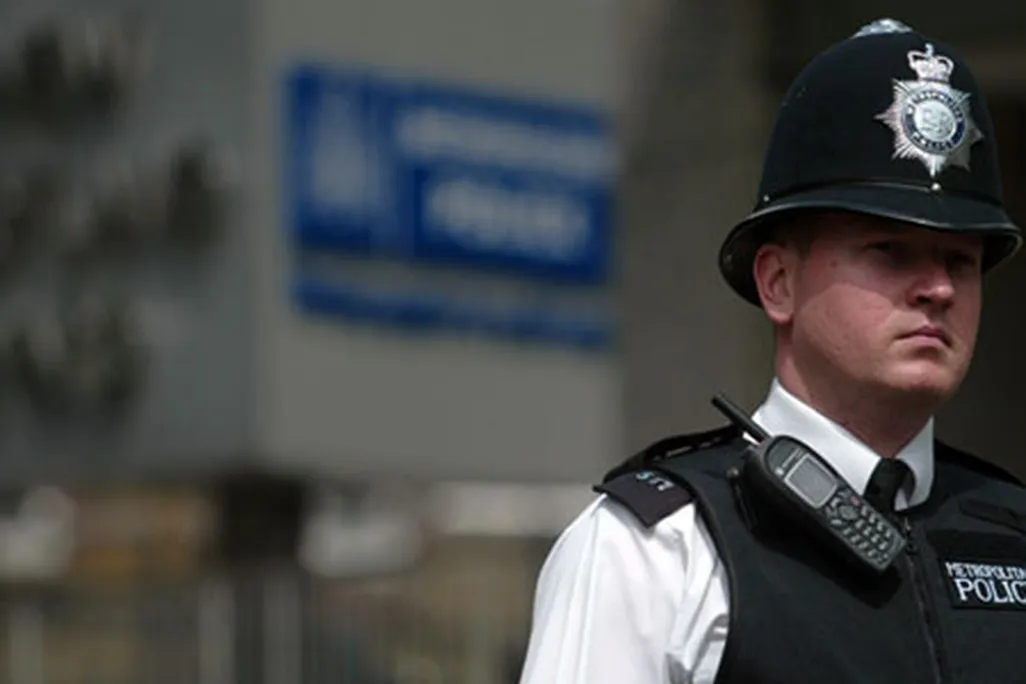
Neither in Scotland, nor in a yard, Scotland Yard is the name of the headquarters of London

Reuters / Rob Dawson

  • History & Archaeology

A Brief History of Scotland Yard

Investigating London's famous police force and some of its most infamous cases
  • By Jess Blumberg
  • Smithsonian.com, September 28, 2007

Article Tools

 
  • Font
  • Email
  •  
  • Print
  • Comments
  •  
  • RSS

  • Most Popular

    • Viewed
    • Emailed
    1. Tattoos
    2. Benjamin Franklin Joins the Revolution
    3. A Brief History of the Salem Witch Trials
    4. To Catch a Thief
    5. Where Dinosaurs Roamed
    6. Goodbye, Columbus
    7. Unlocking Mysteries of the Parthenon
    8. The Strange Lives of Polar Dinosaurs
    9. Who Was Cleopatra?
    10. The Ambush That Changed History
    1. Goodbye, Columbus
    2. Where Dinosaurs Roamed
    3. Unlocking Mysteries of the Parthenon
    4. To Catch a Thief
    5. Tattoos
    6. Showdown on the Court
    7. Faces of War
    8. A Walk Across England
    9. A Brief History of the St. Bernard Rescue Dog
    10. Helen Gurley Brown, the World Trade Center and Nobel Prizes...

    The name Scotland Yard invokes the image of a foggy London street being patrolled by a detective in a trench coat puffing smoke from his pipe. But Scotland Yard has an easily muddled history, full of misnomers and controversy. Neither in Scotland, nor in a yard, it is the name of the headquarters of London's Metropolitan Police and, by association, has become synonymous with the force. The Yard doesn't serve the city either, but instead the Greater London area. With all this confusion, it's time to investigate the story of Scotland Yard and some of its most infamous cases, from Jack the Ripper to the 2005 London bombings.

    Making the Force

    The London police force was created in 1829 by an act introduced in Parliament by Home Secretary (similar to the U.S. Secretary of the Interior) Sir Robert Peel—hence the nickname "bobbies," for policeman. The new police superseded the old system of watchmen. By 1839 these men had replaced the Bow Street Patrols, who enforced the decisions of magistrates, and the River Police, who worked to prevent crime along the Thames.

    The responsibility of organizing the new police force was placed on Colonel Charles Rowan and Richard Mayne, who occupied a private house at 4 Whitehall Place, the back of which opened onto a courtyard: the Great Scotland Yard. The Yard's name was inspired by its site, a medieval palace which housed Scottish royalty on their visits to London.

    The staff of Scotland Yard was responsible for the protection of important individuals, community patrols, public affairs, recruitment and personnel management. When the Yard sent out its first plainclothes police agents in 1842, the public felt uncomfortable with these "spies" on the streets. But the force's role in several important cases, and the charisma of many of its detectives, helped it win the people's trust.

    One such personality, Inspector Charles Frederick Field, joined the force upon its establishment in 1829. He became good friends with Charles Dickens, who occasionally accompanied constables on their nightly rounds. Dickens wrote a short essay about Field, "On Duty With Inspector Field," and used him as a model for the all-knowing, charming Inspector Bucket in his novel Bleak House. Field retired as a chief of the detective branch in 1852.

    In 1877, four out of the five heads for the detective branch were brought to trial for conspiring with criminals in a betting scheme. In an effort to repair the force's tarnished reputation, Howard Vincent submitted a restructuring proposal to the force. Soon Vincent was appointed director of criminal investigations and he reorganized Scotland Yard, strengthening its central unit. And with that, the Criminal Investigation Department (CID), a respected unit of plainclothes police detectives, was born.

    Blood Work

    The turn of the century saw many monumental events at Scotland Yard. Britain's "Bloody Sunday" occurred on November 13, 1887, when 2,000 police officers disrupted a meeting in Trafalgar Square organized by the Social Democratic Federation, resulting in more than 100 casualties. A few years later, the force moved to its new building on the Victoria Embankment. The premises became known as New Scotland Yard.

    Also during this time, one of Scotland Yard's most durable detectives, Frederick Porter Wensley (a.k.a. "the weasel"), began his 40-year post. Wensley joined the force in 1888, and his career was highlighted with many landmark cases, including the murder of 32-year-old French woman Emilienne Gerard, also known as the "Blodie Belgium" case. On the morning of November 2, 1917, street sweepers found Gerard's torso along with a note reading "Blodie Belgium." Wensley questioned Gerard's lover, Louis Voisin, asking him to write the message "Bloody Belgium." Voisin made the same spelling error, sealing his guilt.

    1 2

    The name Scotland Yard invokes the image of a foggy London street being patrolled by a detective in a trench coat puffing smoke from his pipe. But Scotland Yard has an easily muddled history, full of misnomers and controversy. Neither in Scotland, nor in a yard, it is the name of the headquarters of London's Metropolitan Police and, by association, has become synonymous with the force. The Yard doesn't serve the city either, but instead the Greater London area. With all this confusion, it's time to investigate the story of Scotland Yard and some of its most infamous cases, from Jack the Ripper to the 2005 London bombings.

    Making the Force

    The London police force was created in 1829 by an act introduced in Parliament by Home Secretary (similar to the U.S. Secretary of the Interior) Sir Robert Peel—hence the nickname "bobbies," for policeman. The new police superseded the old system of watchmen. By 1839 these men had replaced the Bow Street Patrols, who enforced the decisions of magistrates, and the River Police, who worked to prevent crime along the Thames.

    The responsibility of organizing the new police force was placed on Colonel Charles Rowan and Richard Mayne, who occupied a private house at 4 Whitehall Place, the back of which opened onto a courtyard: the Great Scotland Yard. The Yard's name was inspired by its site, a medieval palace which housed Scottish royalty on their visits to London.

    The staff of Scotland Yard was responsible for the protection of important individuals, community patrols, public affairs, recruitment and personnel management. When the Yard sent out its first plainclothes police agents in 1842, the public felt uncomfortable with these "spies" on the streets. But the force's role in several important cases, and the charisma of many of its detectives, helped it win the people's trust.

    One such personality, Inspector Charles Frederick Field, joined the force upon its establishment in 1829. He became good friends with Charles Dickens, who occasionally accompanied constables on their nightly rounds. Dickens wrote a short essay about Field, "On Duty With Inspector Field," and used him as a model for the all-knowing, charming Inspector Bucket in his novel Bleak House. Field retired as a chief of the detective branch in 1852.

    In 1877, four out of the five heads for the detective branch were brought to trial for conspiring with criminals in a betting scheme. In an effort to repair the force's tarnished reputation, Howard Vincent submitted a restructuring proposal to the force. Soon Vincent was appointed director of criminal investigations and he reorganized Scotland Yard, strengthening its central unit. And with that, the Criminal Investigation Department (CID), a respected unit of plainclothes police detectives, was born.

    Blood Work

    The turn of the century saw many monumental events at Scotland Yard. Britain's "Bloody Sunday" occurred on November 13, 1887, when 2,000 police officers disrupted a meeting in Trafalgar Square organized by the Social Democratic Federation, resulting in more than 100 casualties. A few years later, the force moved to its new building on the Victoria Embankment. The premises became known as New Scotland Yard.

    Also during this time, one of Scotland Yard's most durable detectives, Frederick Porter Wensley (a.k.a. "the weasel"), began his 40-year post. Wensley joined the force in 1888, and his career was highlighted with many landmark cases, including the murder of 32-year-old French woman Emilienne Gerard, also known as the "Blodie Belgium" case. On the morning of November 2, 1917, street sweepers found Gerard's torso along with a note reading "Blodie Belgium." Wensley questioned Gerard's lover, Louis Voisin, asking him to write the message "Bloody Belgium." Voisin made the same spelling error, sealing his guilt.

    Earlier in Wensley's career, he did minor detective work on the infamous case of Jack the Ripper, which had gripped London's East End. Jack the Ripper was the self-proclaimed alias of the serial killer (or killers) responsible for five murders between 1888 and 1891. The officers of Scotland Yard were assigned to apprehend the suspect who was responsible for 11 attacks on prostitutes in the largely impoverished Whitechapel area. Police determined the killer's pattern—he would offer to pay for sex, lure the women away and slice their throats—but struggled to track down the criminal.

    Without modern forensic technology, the officers of Scotland Yard, namely Inspector Frederick Abberline, relied on anthropometry—or identifying criminals by certain facial features, such as brow thickness or jaw shape. More than 160 people were accused of the Whitechapel murders, ranging from Alice in Wonderland author Lewis Carroll to painter William Richard Sickert. The force received many letters from people claiming to be the killer; two in particular gave detailed facts and were signed "Jack the Ripper." Still, in 1892, with no more leads or murders, the Jack the Ripper case was officially closed.

    The Yard Today

    Since its inception, Scotland Yard has always held a place in popular culture. The officers have appeared frequently as characters in the backdrop of mysteries, including Sir Arthur Conan Doyle's Sherlock Holmes stories. On television and in magazines today, Scotland Yard "bobbies" can be found standing stoically behind the royal family and other dignitaries that they are assigned to protect.

    In 1967, the force moved once again to its present location, a modern 20-story building near the Houses of Parliament. The CID has become well-known for its investigative methods, primarily its fingerprinting techniques, which have been borrowed by the FBI. Today, Scotland Yard has roughly 30,000 officers patrolling 620 square miles occupied by 7.2 million citizens.

    Currently, Scotland Yard's reputation is in jeopardy, just as it was 130 years ago. On July 22, 2005, during the investigation of the 2005 London bombings, police officers mistook Brazilian electrician Jean Charles de Menezes for a suicide bomber and fatally shot him. Menezes lived in one of the flats the police were staking out, wore bulky clothing that day and, according to police, resembled an Ethiopian suspect that was later arrested for the bombings. Earlier this month, members of the Metropolitan Police Authority, Scotland Yard's watchdog, denounced Commissioner Sir Ian Blair for "not knowing where the truth lay." The commissioner has repeatedly stated he will not resign over the killing.

    Correction appended, October 2, 2007: Originally this article compared the British Home Secretary with the U.S. Secretary of Defense. This should instead be the Secretary of the Interior.


    Comments

    My great grandfather was Frederick Porter Wensley. We now hold the substantial family archive. My husband Dr David John Robinson has spent the last year cataloguing and researching the background. A family history of 200+ pages was printed in Decemaber 2007 for close family members. The archive throws light onto your text. We find that your account has a number of inaccuracies.which we could correct. If you could point us to the right person we would be pleased to make contact. In the longer term we are looking for a home for these papers which includes original material (for example, some of the sketches pertaining to the Sidney Street Siege). We look forward to hearing from you. Emma and David Robinson

    Posted by Emma Robinson on January 11,2008 | 08:31AM

    Post a Comment


    Name: (required)

    Email: (required)

    Comment:


    Advertisement

    In The Magazine

    May 2008

    • Acadia Country
    • Ancient Citadel
    • The Life Aquatic with Bruce Mozert
    • Back to the Frontier
    • End of the Road
    • Who's Laughing Now?
    • Hidden Depths

    View Table of Contents

    Advertisement

    Marketplace

    Gifts, Gadgets & Great Finds!

    Now you can visit the sites of select advertisers directly!

    Promotions

    Subscribe Today & Win a FREE Trip to Paris!

    Smithsonian magazine presents

    5th Annual Photo Contest

    Review and discuss the 50 finalists now >>

    ECOCENTER

    Greener Living

    Celebrate Earth Day with Smithsonian.com


    View full archiveRecent Issues


    • May 2008


    • Apr 2008


    • Mar 2008

    Newsletter

    Sign up for regular email updates from Smithsonian magazine, including free newsletters, special offers and current news updates.

    Subscribe Now

    About Us

    Smithsonian.com expands on Smithsonian magazine's in-depth coverage of history, science, nature, the arts, travel, world culture and technology. Join us regularly as we take a dynamic and interactive approach to exploring modern and historic perspectives on the arts, sciences, nature, world culture and travel, including videos, blogs and a reader forum.

    Explore our Brands

    • goSmithsonian.com
    • Smithsonian Air & Space Museum
    • Smithsonian Institution
    • Smithsonian Catalogue
    • Smithsonian Journeys
    • Smithsonian Channel
    • Site Map
    • Privacy Policy
    • Copyright
    • About Smithsonian
    • Contact Us
    • Advertising
    • Reader Panel
    • Subscribe
    • RSS

    Smithsonian Institution