Content ID:
Field:


  • About Smithsonian
  • Email Updates
  • Member Services
  • Shop
  • Archive
Smithsonian.com
  • Smithsonian Institution
  • Smithsonian Channel
  • goSmithsonian
  • Air & Space magazine
  • Home
  • History & Archaeology
  • People & Places
  • Science & Nature
  • Arts & Culture
  • Travel
  • Photos & Videos
  • Games & Puzzles
  • Subscribe
  • Archaeology
  • Biography
  • Today in History
  • U.S. History
  • World History
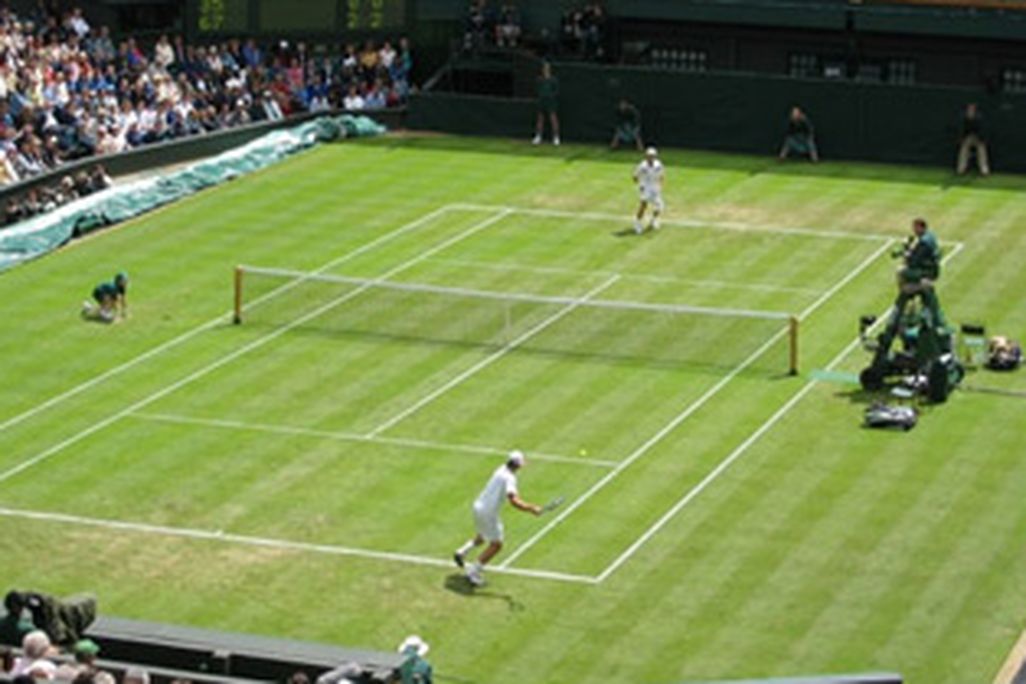
wimbledon Wimbledon has been more than a site for the greatest players to shine; often, it has shaped the entire sport.

iStockphoto

  • History & Archaeology

A Brief History of Wimbledon

From a 19th century garden-party event to today's international spectacle, the storied tournament has defined tennis

  • By David Zax
  • Smithsonian.com, June 01, 2007

Article Tools

  • Font
  • Share/Save/Bookmark Share
  • Email
  • Print
  • Digg Digg
  • Comments
  • StumbleUpon StumbleUpon
  • RSS
  • Reddit Reddit

    Related Topics

    Tennis

    For two weeks beginning in late June, the greatest tennis players in the world will converge on Wimbledon, a suburb on the southwestern outskirts of London. They will compete for a total of about $22.1 million in prize money, with the winners of the men's and women's singles competitions taking almost $1.4 million each. But more than that, they will be competing for a place in tennis history. John Barrett, a former Wimbledon player and author of Wimbledon: The Official History, says that Wimbledon is the most sought-after title in tennis because it's "the granddaddy of them all." Indeed, since the late 19th century, Wimbledon has been more than a site for the greatest players to shine; often, it has shaped the entire sport: "It is the history of tennis," Barrett says.

    The Overthrow of Croquet

    Monks and kings had played indoor ball games that resembled tennis since the Middle Ages, but it wasn't until the late 19th century that tennis acquired the form we recognize. In about 1873, an Englishman adapted indoor tennis to be played on grass, naming the game "sphairistike," after an ancient Greek game. Sphairistike quickly became popular among the idle upper classes, who were itching for a new sport to play: "The game has much more healthy and manly excitement than croquet," the Dundee Advertiser proclaimed (though the Sporting Gazette wondered "why a less jaw-breaking name could not be found").

    As the game's popularity grew, various "lawn tennis" clubs—sphairistike yielding to a simpler term—arose to settle the question of just how it ought to be played. Among these was the All England Croquet Club, located near Wimbledon station, which in 1877 changed its name to the All England Croquet and Lawn Tennis Club and announced it would hold the first tennis championships, largely in order to raise money for "a pony-drawn roller for its croquet lawns," according to Cameron Brown, author of Wimbledon: Facts, Figures, and Fun. Within years, however, those croquet lawns were all but obsolete, and at one point the All England Club even dropped the word "Croquet" from its official name. Eventually it was reintroduced merely, says Barrett, "for sentimental reasons."

    Forging a Sport

    In the weeks prior to the first Wimbledon championships, the commissioners of the All England Club "achieved something truly remarkable," writes Heiner Gillmeister in Tennis: A Cultural History. "When the first ball at a Wimbledon tournament was served on Monday, 9 July 1877, they had laid down rules which have been allowed to stand until the present day, and with hardly any exception." Since then, the All England Club has been "the supreme court of appeal on the question of rules," codifying and shaping the game.

    This is not the only way in which Wimbledon has made tennis what it is. Since each year's championship would bring together the fiercest, most innovative players the sport has seen, the All England Club became an annual Darwinian laboratory where competitors were forced to adapt or perish. The first championships were won by a man named Spencer Gore, who employed the novel idea of approaching the net and swiftly volleying the ball left and right (his opponents, used to playing from the baseline, were flabbergasted).

    The following year, Gore's innovation was met with a new one, when a man named Frank Hadow in effect invented the lob shot, pitching the ball over Gore's head. A gentler game persisted at Wimbledon until 1881, when twin brothers William and Ernest Renshaw debuted the overhead serve they had been practicing against each other. The awe-struck spectators dubbed it the "Renshaw Smash," and it earned William seven titles that decade, and Ernest one.

    For two weeks beginning in late June, the greatest tennis players in the world will converge on Wimbledon, a suburb on the southwestern outskirts of London. They will compete for a total of about $22.1 million in prize money, with the winners of the men's and women's singles competitions taking almost $1.4 million each. But more than that, they will be competing for a place in tennis history. John Barrett, a former Wimbledon player and author of Wimbledon: The Official History, says that Wimbledon is the most sought-after title in tennis because it's "the granddaddy of them all." Indeed, since the late 19th century, Wimbledon has been more than a site for the greatest players to shine; often, it has shaped the entire sport: "It is the history of tennis," Barrett says.

    The Overthrow of Croquet

    Monks and kings had played indoor ball games that resembled tennis since the Middle Ages, but it wasn't until the late 19th century that tennis acquired the form we recognize. In about 1873, an Englishman adapted indoor tennis to be played on grass, naming the game "sphairistike," after an ancient Greek game. Sphairistike quickly became popular among the idle upper classes, who were itching for a new sport to play: "The game has much more healthy and manly excitement than croquet," the Dundee Advertiser proclaimed (though the Sporting Gazette wondered "why a less jaw-breaking name could not be found").

    As the game's popularity grew, various "lawn tennis" clubs—sphairistike yielding to a simpler term—arose to settle the question of just how it ought to be played. Among these was the All England Croquet Club, located near Wimbledon station, which in 1877 changed its name to the All England Croquet and Lawn Tennis Club and announced it would hold the first tennis championships, largely in order to raise money for "a pony-drawn roller for its croquet lawns," according to Cameron Brown, author of Wimbledon: Facts, Figures, and Fun. Within years, however, those croquet lawns were all but obsolete, and at one point the All England Club even dropped the word "Croquet" from its official name. Eventually it was reintroduced merely, says Barrett, "for sentimental reasons."

    Forging a Sport

    In the weeks prior to the first Wimbledon championships, the commissioners of the All England Club "achieved something truly remarkable," writes Heiner Gillmeister in Tennis: A Cultural History. "When the first ball at a Wimbledon tournament was served on Monday, 9 July 1877, they had laid down rules which have been allowed to stand until the present day, and with hardly any exception." Since then, the All England Club has been "the supreme court of appeal on the question of rules," codifying and shaping the game.

    This is not the only way in which Wimbledon has made tennis what it is. Since each year's championship would bring together the fiercest, most innovative players the sport has seen, the All England Club became an annual Darwinian laboratory where competitors were forced to adapt or perish. The first championships were won by a man named Spencer Gore, who employed the novel idea of approaching the net and swiftly volleying the ball left and right (his opponents, used to playing from the baseline, were flabbergasted).

    The following year, Gore's innovation was met with a new one, when a man named Frank Hadow in effect invented the lob shot, pitching the ball over Gore's head. A gentler game persisted at Wimbledon until 1881, when twin brothers William and Ernest Renshaw debuted the overhead serve they had been practicing against each other. The awe-struck spectators dubbed it the "Renshaw Smash," and it earned William seven titles that decade, and Ernest one.

    Though a mere 200 spectators had flocked to the first Wimbledon championships, the crowds had grown along with the game by the heyday of the "Renshaw Boom." Thousands were flocking to the stands by the mid-80s, and by 1905, the championships would attract competitors from overseas. Tennis had grown up rather quickly.

    A Game for Amateurs

    Perhaps surprisingly, the program for the first championships specified that only "amateurs" were allowed to compete—something that remained true at Wimbledon for more than 90 years. If this seems incomprehensible, it is because "amateur" meant something very particular to the earliest organizers at Wimbledon: "the term amateur had become a synonym of gentleman," explains Gillmeister; "the term professional … had the stigma of the manual laborer." To the elite running exclusive country clubs of the day, sport wasn't sport unless it was played purely in one's spare time—which was a lot easier to do if you could afford to build a private court on the French Riviera, as the Renshaw brothers had.

    It wasn't until 1968 that Wimbledon first allowed professionals—players who in some manner were paid for their tennis ability—to compete at the championships, ushering in the "open era." "Open tennis came far too late," laments Barrett. He decries that professional athletes were viewed as "second-class citizens," and says that the decades-long insistence on amateurism "held back" the entire sport of tennis.

    Traditions Good and Bad

    "Tradition is a very strong part of Wimbledon," says Barrett—a fact that accounts both for the tournament's charm and for the more unsavory bits of its history. In some ways, the history of Wimbledon is a history of an institution slowly yielding its traditions to the changing times.

    Women began playing at Wimbledon in 1884, seven years after the men, but it has taken until this year for Wimbledon to institute complete prize money equality. 1920 was the first year in which a woman played without wearing a corset, and it took until the 1930s until shorts were acceptable on either men (in '33) or women (in '39). Althea Gibson became the first African-American player invited to Wimbledon in 1951, and was the first black player to win the singles title, in 1957. Wimbledon refused to use yellow tennis balls, which are more easily captured by television cameras, until 1986.

    But Barrett says he would be loath to see one Wimbledon tradition disappear: grass. Wimbledon is the last of the four Grand Slam tournaments (the others are the French, Australian, and U.S. Opens) to use grass courts. "It would be a sad day if we ever failed to play it on grass," says Barrett, who loves the surface because it "is never the same two days running, so you have to be able to adapt very quickly." And naturally, the longstanding Wimbledon tradition of eating strawberries and cream is also widely loved: in one recent year, spectators consumed 59,000 pounds of strawberries and nearly 2,000 gallons of cream.

    There is one tradition, though, that Barrett and most of his fellow Englishmen would like to see broken: that of the English consistently losing at their own tournament. The last woman to win the singles at Wimbledon was Virginia Wade in 1977; the last man, Fred Perry in 1936.

    David Zax has written brief histories of the Orient Express and the Honus Wagner baseball card.


    1 2 3


    Related topics: Tennis

     
    Comments

    thiz is a good web side. u guyz have good information

    Posted by marisol on March 11,2008 | 09:19AM

    this is really a good matter for my project. I really thanks yahoofor this for offering such a good matter

    Posted by ayush on July 1,2008 | 11:12AM

    Enjoyable and informative reading, but I didn't find what I was looking for... I understand that there is a sign at Wimbledon which is an excerpt from the poem "Desiderata" I would like to know which portion of the poem it is?

    Posted by margie on July 11,2009 | 11:53PM

    Post a Comment


    Name: (required)

    Email: (required)

    Comment:


    Advertisement


    Most Popular Video

    • Newest
    • Most Viewed
    Coral Reef Spawn

    How Coral Reefs Spawn

    Watch coral reefs reproduce in a flurry of carefully-timed action

    Flipping Out Over Pinball

    David Silverman has collected more than 800 pinball machines to preserve their history

    Sing Along to the Messiah

    Sing Along to the Messiah

    The story within Handel's famous piece is what drives its enduring popularity

    A Rare Look at Tucker Cars

    A Rare Look at Tucker Cars

    Collector David Cammack owns three of the 43 remaining cars in existence designed by Preston Tucker

    The Residents of Arlington Cemetery

    The Residents of Arlington Cemetery

    While President Kennedy may be one of the best known gravesites in Arlington, there are many other notable Americans buried there

    The Ju/Hoansi Tribe in Action

    The Ju/'Hoansi Tribe in Action

    Over the course of 50 years, John Marshall filmed the African tribe, tracking how their nomadic culture slowly died out

    Watch the Geckos Tail Flip

    Watch the Gecko's Tail Flip

    Leopard geckos can shed their tail to distract predators, and the tails can leap up to 3 cm in one jump

    A Final Takeoff

    A Final Takeoff

    Watch one of Amelia Earhart's final takeoffs

    Most Popular

    • Viewed
    • Emailed
    • Commented
    1. Ten Notable Apocalypses That (Obviously) Didn’t Happen
    2. Tattoos
    3. A Brief History of the Salem Witch Trials
    4. Top Ten Places Where Life Shouldn't Exist... But Does
    5. Wolves and the Balance of Nature in the Rockies
    6. 28 Places to See Before You Die—the Taj Mahal, Grand Canyon and More
    7. John Brown's Day of Reckoning
    8. How Arlington National Cemetery Came to Be
    9. Ethiopia's Exotic Monkeys
    10. Evolution in the Deepest River in the World
    1. Ten Notable Apocalypses That (Obviously) Didn’t Happen
    2. How Arlington National Cemetery Came to Be
    3. Invasion of the Longhorn Beetles
    4. Crawling Around with Baltimore Street Rats
    5. Memoirs of a World War II Buffalo Soldier
    6. Ethiopia's Exotic Monkeys
    7. 28 Places to See Before You Die—the Taj Mahal, Grand Canyon and More
    8. The Surprising Satisfactions of a Home Funeral
    9. Boise, Idaho: Big Skies and Colorful Characters
    10. Decoding Jackson Pollock
    1. Evolution in the Deepest River in the World
    2. How Arlington National Cemetery Came to Be
    3. Ten Notable Apocalypses That (Obviously) Didn’t Happen
    4. A Brief History of the Salem Witch Trials
    5. Artist William Wegman
    6. Man Ray’s Signature Work
    7. Memoirs of a World War II Buffalo Soldier
    8. From Brooklyn to Worthington, Minnesota
    9. The Rescue of Henry Clay
    10. Rain Forest Rebel

    - - - Advertisements - - -


    Join Us

    Facebook

    Facebook

    Become a fan of Smithsonian magazine's official Facebook page!

    Twitter

    Follow Smithsonian magazine on Twitter

    In The Magazine

    December 2009 Issue Cover

    December 2009

    • Wildlife Trafficking
    • Hallelujah
    • The Pyramid Man
    • Glee Mail
    • Savoring Puebla

    View Table of Contents »

    Smithsonian magazine presents

    6th Annual Smithsonian Photo Contest Winners

    Out of more than 17,000 entries contributed from around the world, Smithsonian and its readers select the year's best

    • Smithsonian Store
    • Smithsonian Journeys

    Kokeshi Dolls

    Item No. 85070

    Antarctica: Aboard National Geographic Explorer

    Journey to Antarctica to experience this otherworldly and unparalleled wilderness up close. (Jan 7 - 21, 2010)


    View full archiveRecent Issues

    • December 2009 Issue Cover
      Dec 2009

    • November 2009 Issue
      Nov 2009

    • October 2009 Issue Cover
      Oct 2009

    Newsletter

    Sign up for regular email updates from Smithsonian magazine, including free newsletters, special offers and current news updates.

    Subscribe Now

    About Us

    Smithsonian.com expands on Smithsonian magazine's in-depth coverage of history, science, nature, the arts, travel, world culture and technology. Join us regularly as we take a dynamic and interactive approach to exploring modern and historic perspectives on the arts, sciences, nature, world culture and travel, including videos, blogs and a reader forum.

    Explore our Brands

    • goSmithsonian.com
    • Smithsonian Air & Space Museum
    • Smithsonian Institution
    • Smithsonian Catalogue
    • Smithsonian Journeys
    • Smithsonian Channel
    • Site Map
    • Privacy Policy
    • Copyright
    • About Smithsonian
    • Contact Us
    • Advertising
    • Reader Panel
    • Subscribe
    • RSS
    • Topics

    Smithsonian Institution

    Produced by Clickability