• Smithsonian
    Institution
  • Travel
    With Us
  • Smithsonian
    Store
  • Smithsonian
    Channel
  • goSmithsonian
    Visitors Guide
  • Air & Space
    magazine

Smithsonian.com

  • Subscribe
  • History & Archaeology
  • Science
  • Ideas & Innovations
  • Arts & Culture
  • Travel & Food
  • At the Smithsonian
  • Photos
  • Videos
  • Games
  • Shop
  • Archaeology
  • U.S. History
  • World History
  • Today in History
  • Document Deep Dives
  • The Jetsons
  • National Treasures
  • Paleofuture
  • History & Archaeology

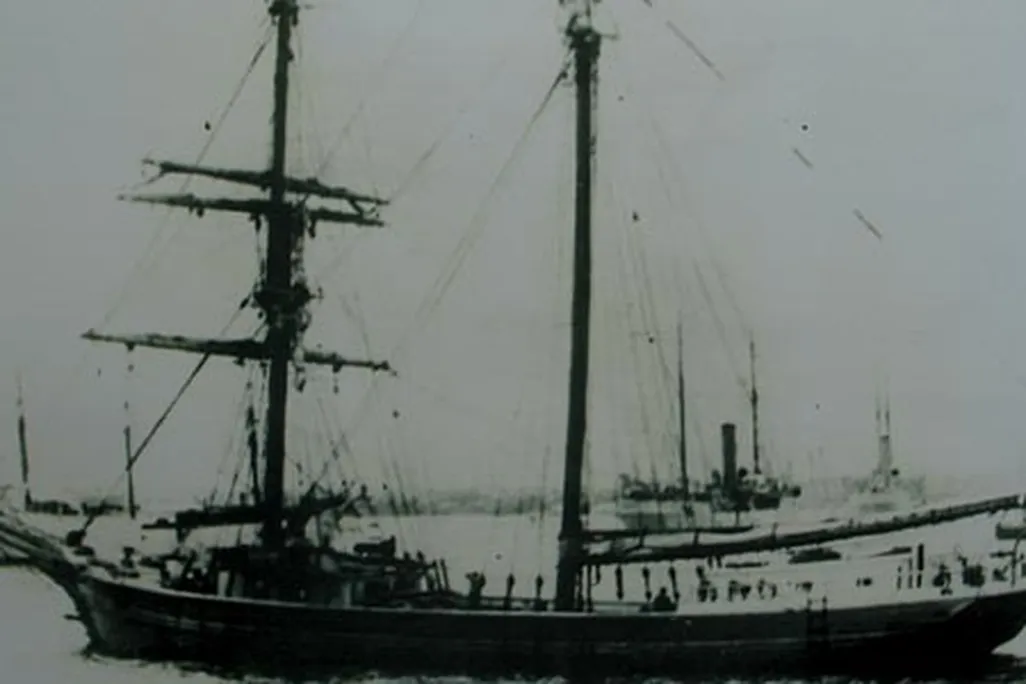
Abandoned Ship: the Mary Celeste

What really happened aboard the Mary Celeste? More than a century after her crew went missing, a scenario is emerging
| | | Reddit | Digg | Stumble | Email |
  • By Jess Blumberg
  • Smithsonian magazine, November 2007, Subscribe
View More Photos »
$Alt
(Cumberland County Museum and Archives, Amherst, Nova Scotia Canada)

Photo Gallery (1/2)

After the <i>Mary Celeste</i>

Explore more photos from the story

More from Smithsonian.com

  • Saving Our Shipwrecks
  • The Search for the Guggenheim Treasure

The British brig Dei Gratia was about 400 miles east of the Azores on December 5, 1872, when crew members spotted a ship adrift in the choppy seas. Capt. David Morehouse was taken aback to discover that the unguided vessel was the Mary Celeste, which had left New York City eight days before him and should have already arrived in Genoa, Italy. He changed course to offer help.

Morehouse sent a boarding party to the ship. Belowdecks, the ship's charts had been tossed about, and the crewmen's belongings were still in their quarters. The ship's only lifeboat was missing, and one of its two pumps had been disassembled. Three and a half feet of water was sloshing in the ship's bottom, though the cargo of 1,701 barrels of industrial alcohol was largely intact. There was a six-month supply of food and water—but not a soul to consume it.

Thus was born one of the most durable mysteries in nautical history: What happened to the ten people who had sailed aboard the Mary Celeste? Through the decades, a lack of hard facts has only spurred speculation as to what might have taken place. Theories have ranged from mutiny to pirates to sea monsters to killer waterspouts. Arthur Conan Doyle's 1884 short story based on the case posited a capture by a vengeful ex-slave, a 1935 movie featured Bela Lugosi as a homicidal sailor. Now, a new investigation, drawing on modern maritime technology and newly discovered documents, has pieced together the most likely scenario.

"I love the idea of mysteries, but you should always revisit these things using knowledge that has since come to light," says Anne MacGregor, the documentarian who launched the investigation and wrote, directed and produced The True Story of the 'Mary Celeste,' partly with funding from Smithsonian Networks.

The ship began its fateful voyage on November 7, 1872, sailing with seven crewmen and Capt. Benjamin Spooner Briggs, his wife, Sarah, and the couple's 2-year-old daughter, Sophia. The 282-ton brigantine battled heavy weather for two weeks to reach the Azores, where the ship log's last entry was recorded at 5 a.m. on November 25.

After spotting the Mary Celeste ten days later, the Dei Gratia crewmen sailed the ship some 800 miles to Gibraltar, where a British vice admiralty court convened a salvage hearing, which was usually limited to determining whether the salvagers—in this case, the Dei Gratia crewmen—were entitled to payment from the ship's insurers. But the attorney general in charge of the inquiry, Frederick Solly-Flood, suspected mischief and investigated accordingly. After more than three months, the court found no evidence of foul play. Eventually, the salvagers received a payment, but only one-sixth of the $46,000 for which the ship and its cargo had been insured, suggesting that the authorities were not entirely convinced of the Dei Gratia crew's innocence.

The story of the Mary Celeste might have drifted into history if Conan Doyle hadn't published "J. Habakuk Jephson's Statement" in 1884; his sensationalistic account, printed in Cornhill Magazine, set off waves of theorizing about the ship's fate. Even Attorney General Solly-Flood revisited the case, writing summaries of his interviews and notes. But the mystery remained unsolved. MacGregor picked up the trail in 2002. "There's so much nonsense written about this legend," she said. "I felt compelled to find the truth."

MacGregor's four previous investigative documentaries, including The Hindenburg Disaster: Probable Cause (2001), applied modern forensic techniques to historical questions. "There are obvious limitations for historic cases," she says. "But using the latest technology, you can come to a different conclusion."

For her Mary Celeste film, MacGregor began by asking what didn't happen. Speculation concerning sea monsters was easy to dismiss. The ship's condition—intact and with full cargo—seemed to rule out pirates. One theory bandied about in the 19th century held that crew members drank the alcohol onboard and mutinied; after interviewing crewmen's descendants, MacGregor deemed that scenario unlikely. Another theory assumed that alcohol vapors expanded in the Azores heat and blew off the main hatch, prompting those aboard to fear an imminent explosion. But MacGregor notes that the boarding party found the main hatch secured and did not report smelling any fumes. True, she says, nine of the 1,701 barrels in the hold were empty, but the empty nine had been recorded as being made of red oak, not white oak like the others. Red oak is known to be a more porous wood and therefore more likely to leak.

As for that homicidal sailor played by Lugosi in The Mystery of the Mary Celeste, he may have been drawn from two German crewmen, brothers Volkert and Boye Lorenzen, who fell under suspicion because none of their personal possessions were found on the abandoned ship. But a Lorenzen descendant told MacGregor that the pair had lost their gear in a shipwreck earlier in 1872. "They had no motive," MacGregor says.

After ruling out what didn't happen, MacGregor confronted the question of what might have.

Abandoning a ship in the open sea is the last thing a captain would order and a sailor would do. But is that what Captain Briggs ordered? If so, why?


The British brig Dei Gratia was about 400 miles east of the Azores on December 5, 1872, when crew members spotted a ship adrift in the choppy seas. Capt. David Morehouse was taken aback to discover that the unguided vessel was the Mary Celeste, which had left New York City eight days before him and should have already arrived in Genoa, Italy. He changed course to offer help.

Morehouse sent a boarding party to the ship. Belowdecks, the ship's charts had been tossed about, and the crewmen's belongings were still in their quarters. The ship's only lifeboat was missing, and one of its two pumps had been disassembled. Three and a half feet of water was sloshing in the ship's bottom, though the cargo of 1,701 barrels of industrial alcohol was largely intact. There was a six-month supply of food and water—but not a soul to consume it.

Thus was born one of the most durable mysteries in nautical history: What happened to the ten people who had sailed aboard the Mary Celeste? Through the decades, a lack of hard facts has only spurred speculation as to what might have taken place. Theories have ranged from mutiny to pirates to sea monsters to killer waterspouts. Arthur Conan Doyle's 1884 short story based on the case posited a capture by a vengeful ex-slave, a 1935 movie featured Bela Lugosi as a homicidal sailor. Now, a new investigation, drawing on modern maritime technology and newly discovered documents, has pieced together the most likely scenario.

"I love the idea of mysteries, but you should always revisit these things using knowledge that has since come to light," says Anne MacGregor, the documentarian who launched the investigation and wrote, directed and produced The True Story of the 'Mary Celeste,' partly with funding from Smithsonian Networks.

The ship began its fateful voyage on November 7, 1872, sailing with seven crewmen and Capt. Benjamin Spooner Briggs, his wife, Sarah, and the couple's 2-year-old daughter, Sophia. The 282-ton brigantine battled heavy weather for two weeks to reach the Azores, where the ship log's last entry was recorded at 5 a.m. on November 25.

After spotting the Mary Celeste ten days later, the Dei Gratia crewmen sailed the ship some 800 miles to Gibraltar, where a British vice admiralty court convened a salvage hearing, which was usually limited to determining whether the salvagers—in this case, the Dei Gratia crewmen—were entitled to payment from the ship's insurers. But the attorney general in charge of the inquiry, Frederick Solly-Flood, suspected mischief and investigated accordingly. After more than three months, the court found no evidence of foul play. Eventually, the salvagers received a payment, but only one-sixth of the $46,000 for which the ship and its cargo had been insured, suggesting that the authorities were not entirely convinced of the Dei Gratia crew's innocence.

The story of the Mary Celeste might have drifted into history if Conan Doyle hadn't published "J. Habakuk Jephson's Statement" in 1884; his sensationalistic account, printed in Cornhill Magazine, set off waves of theorizing about the ship's fate. Even Attorney General Solly-Flood revisited the case, writing summaries of his interviews and notes. But the mystery remained unsolved. MacGregor picked up the trail in 2002. "There's so much nonsense written about this legend," she said. "I felt compelled to find the truth."

MacGregor's four previous investigative documentaries, including The Hindenburg Disaster: Probable Cause (2001), applied modern forensic techniques to historical questions. "There are obvious limitations for historic cases," she says. "But using the latest technology, you can come to a different conclusion."

For her Mary Celeste film, MacGregor began by asking what didn't happen. Speculation concerning sea monsters was easy to dismiss. The ship's condition—intact and with full cargo—seemed to rule out pirates. One theory bandied about in the 19th century held that crew members drank the alcohol onboard and mutinied; after interviewing crewmen's descendants, MacGregor deemed that scenario unlikely. Another theory assumed that alcohol vapors expanded in the Azores heat and blew off the main hatch, prompting those aboard to fear an imminent explosion. But MacGregor notes that the boarding party found the main hatch secured and did not report smelling any fumes. True, she says, nine of the 1,701 barrels in the hold were empty, but the empty nine had been recorded as being made of red oak, not white oak like the others. Red oak is known to be a more porous wood and therefore more likely to leak.

As for that homicidal sailor played by Lugosi in The Mystery of the Mary Celeste, he may have been drawn from two German crewmen, brothers Volkert and Boye Lorenzen, who fell under suspicion because none of their personal possessions were found on the abandoned ship. But a Lorenzen descendant told MacGregor that the pair had lost their gear in a shipwreck earlier in 1872. "They had no motive," MacGregor says.

After ruling out what didn't happen, MacGregor confronted the question of what might have.

Abandoning a ship in the open sea is the last thing a captain would order and a sailor would do. But is that what Captain Briggs ordered? If so, why?

His ship was seaworthy. "It wasn't flooded or horribly damaged," says Phil Richardson, a physical oceanographer at the Woods Hole Oceanographic Institution in Massachusetts and an expert in derelict vessels, whom MacGregor enlisted in her investigation. "The discovery crew sailed it, so it was in really good shape."

Briggs' life before the Mary Celeste offered no clues, says MacGregor, who visited the captain's hometown of Marion, Massachusetts, and interviewed descendants of Arthur Briggs, the 7-year-old son the Briggses had left behind so he could attend school. MacGregor learned that the captain was experienced and respected in shipping circles. "There was never a question that he would do something irrational," she says.

Did Briggs, then, have a rational reason to abandon ship? MacGregor figured that if she could determine the precise spot from which Briggs, his family and crew abandoned ship, she might be able to shed light on why. She knew from the transcriptions of the Mary Celeste's log slate—where notations were made before they were transcribed into the log—that the ship was six miles from, and within sight of, the Azores island of Santa Maria on November 25; she knew from the testimony of the Dei Gratia crew that ten days later, the ship was some 400 miles east of the island. MacGregor asked Richardson "to work backward and create a path between these two points."

Richardson said he would need water temperatures, wind speeds and wind directions at the time, data that MacGregor found in the International Comprehensive Ocean-Atmosphere Data Set (ICOADS), a database that stores global marine information from 1784 to 2007 and is used to study climate change. She, her yachtsman husband, Scott, and Richardson drew on the data to determine whether the Mary Celeste could have drifted from its recorded location on November 25 to where the Dei Gratia crew reported finding it on December 5. Their conclusion: yes, it could have, even without a crew to sail it. "We found out it basically just sailed itself," Richardson says.

At that point, MacGregor considered the fact that a captain would most likely order a ship abandoned within sight of land. Since Santa Maria was the last land for hundreds of miles, it seemed safe to assume that the Mary Celeste had been abandoned the morning of November 25, after the last log entry was written.

But why?

On this point, MacGregor says, Attorney General Solly-Flood's notes are crucial. He wrote that he saw nothing unusual about the voyage until the last five days, which is why he transcribed the ship's log starting five days from the end. The ship's log is believed to have been lost in 1885, so those transcriptions provided the only means for MacGregor and Richardson to plot the course and positions logged for the ship. The two then reconsidered those positions in light of ICOADS data and other information on sea conditions at the time. Their conclusion: Briggs was actually 120 miles west of where he thought he was, probably because of an inaccurate chronometer. By the captain's calculations, he should have sighted land three days earlier than he did.

Solly-Flood's notes yielded one other piece of information that MacGregor and Richardson consider significant: the day before he reached the Azores, Briggs changed course and headed north of Santa Maria Island, perhaps seeking haven.

The night before the last entry in the ship's log, the Mary Celeste again faced rough seas and winds of more than 35 knots. Still, MacGregor reasons, rough seas and a faulty chronometer wouldn't, by themselves, prompt an experienced captain to abandon ship. Was there something else?

MacGregor learned that on its previous voyage, the Mary Celeste had carried coal and that the ship had recently been extensively refitted. Coal dust and construction debris could have fouled the ship's pumps, which would explain the disassembled pump found on the Mary Celeste. With the pump inoperative, Briggs would not have known how much seawater was in his ship's hull, which was too fully packed for him to measure visually.

At that point, says MacGregor, Briggs—having come through rough weather, having finally and belatedly sighted land and having no way of determining whether his ship would sink—might well have issued an order to abandon ship.

But, like Attorney General Solly-Flood, MacGregor can't leave the story of the Mary Celeste alone; she is continuing her investigation for a book. "The research goes on," she says. "Because I have been touched by the story, as I hope other people will be."

Jess Blumberg is an intern at Smithsonian.

The True Story of the 'Mary Celeste' will première November 4 on the Smithsonian Channel on high-definition DirecTV.


Single Page 1 2 3 Next »

    Subscribe now for more of Smithsonian's coverage on history, science and nature.


Related topics: History Boats 19th Century


| | | Reddit | Digg | Stumble | Email |
 

Add New Comment


Name: (required)

Email: (required)

Comment:

Comments are moderated, and will not appear until Smithsonian.com has approved them. Smithsonian reserves the right not to post any comments that are unlawful, threatening, offensive, defamatory, invasive of a person's privacy, inappropriate, confidential or proprietary, political messages, product endorsements, or other content that might otherwise violate any laws or policies.

Comments (36)

+ View All Comments

I have a theroy that captin briggs was a little parinoid because his 2yr old was with them and he saw water on the bottom of the ship he thought they were sinking so he ordered abandonment

Posted by samantha on April 24,2013 | 08:54 AM

I am looking for this information for English homework, I find this information very useful, but is there anyway you could add any more new information to the page? And if you could any pictures of the Ship itself and hyperlinks. The captain needs to be investigated thoroughly. Just saying he was well respected doesn't mean he was infallible or un-naive. A book could delve into captains' training and skills of the time and also, their knowledge of cargo and business, not just sailing and navigating. I think the captain was at fault and caused the deaths of 10 people through bad judgement, panic and ill-preparedness. In his last letter to his mother, he sounds like he wants nothing more than to enjoy quality time with his family. And also like he doesn't cotton to business too much. His father was also a bad businessman. So, maybe he didn't study up on his cargo and the dangers involved. What did this dude transport in previous voyages? But I think the fume theory of the alcohol almost poisoning the crew is preposterous. Before devising more theories research the world of shipping in the 1870's out of New York harbor. What did other captains do with similar cargoes, routes, etc. One commenter claims alot of ships went down that November but was that unusual? These books and articles on the Mary Celeste don't provide a vivid and detailed enough picture of the times. Instead, they overdo the research on nonsense like debunked theories and the inquiry with all its characters. Who cares? It's time someone looked at the person in charge of the ship.

Posted by Jack m on April 22,2013 | 04:21 PM

Does anyone know what eventually happened?

Posted by Sparkle on February 26,2013 | 02:28 PM

lots of info

Posted by chris on February 12,2013 | 01:07 PM

i thought it gave a lot of info

Posted by trevor on February 5,2013 | 01:30 PM

today in class we learned about the mary celeste.just by hearing the story it seemed HAUNTED!!!!! but maybe not to you.

Posted by Ryli on January 16,2013 | 09:38 PM

Hello hello what's all this mischief about a SHIP ooooh look at me and my ship er i've made a film too don't see me making films about it lol

Posted by Bilbo Baggins on December 16,2012 | 02:03 PM

hey i am reasearching about this it is awesome

Posted by on December 11,2012 | 04:53 PM

wow! were leaning about the mary celeste in school.I just wanted to do some reserch to laen more.

Posted by on December 5,2012 | 04:59 PM

I think this read is very educational and has kids to think with their imagination. I honestly think its amazing!

Posted by Coledyn on November 30,2012 | 09:52 AM

this is awesome

Posted by anisa on November 30,2012 | 09:50 AM

The captain needs to be investigated thoroughly. Just saying he was well respected doesn't mean he was infallible or un-naive. A book could delve into captains' training and skills of the time and also, their knowledge of cargo and business, not just sailing and navigating. I think the captain was at fault and caused the deaths of 10 people through bad judgement, panic and ill-preparedness. In his last letter to his mother, he sounds like he wants nothing more than to enjoy quality time with his family. And also like he doesn't cotton to business too much. His father was also a bad businessman. So, maybe he didn't study up on his cargo and the dangers involved. What did this dude transport in previous voyages? But I think the fume theory of the alcohol almost poisoning the crew is preposterous. Before devising more theories research the world of shipping in the 1870's out of New York harbor. What did other captains do with similar cargoes, routes, etc. One commenter claims alot of ships went down that November but was that unusual? These books and articles on the Mary Celeste don't provide a vivid and detailed enough picture of the times. Instead, they overdo the research on nonsense like debunked theories and the inquiry with all its characters. Who cares? It's time someone looked at the person in charge of the ship.

Posted by S on October 20,2012 | 01:46 PM

this is anb excellent report on the mary celeste

Posted by joey jckson on October 1,2012 | 12:06 PM

i think that this is interesting

Posted by brittany on September 19,2012 | 03:21 PM

+ View All Comments


Advertisement


Most Popular

  • Viewed
  • Emailed
  • Commented
  1. Myths of the American Revolution
  2. For 40 Years, This Russian Family Was Cut Off From All Human Contact, Unaware of WWII
  3. Seven Famous People Who Missed the Titanic
  4. Women Spies of the Civil War
  5. A Brief History of the Salem Witch Trials
  6. The History of the Short-Lived Independent Republic of Florida
  7. Tattoos
  8. We Had No Idea What Alexander Graham Bell Sounded Like. Until Now
  9. The True Story of the Battle of Bunker Hill
  10. Gobekli Tepe: The World’s First Temple?
  1. A Brief History of the Salem Witch Trials
  2. Uncovering Secrets of the Sphinx
  3. Abandoned Ship: the Mary Celeste
  4. Looking at the Battle of Gettysburg Through Robert E. Lee’s Eyes

View All Most Popular »

Advertisement

Follow Us

Smithsonian Magazine
@SmithsonianMag
Follow Smithsonian Magazine on Twitter

Sign up for regular email updates from Smithsonian.com, including daily newsletters and special offers.

In The Magazine

May 2013

  • Patriot Games
  • The Next Revolution
  • Blowing Up The Art World
  • The Body Eclectic
  • Microbe Hunters

View Table of Contents »


First Name
Last Name
Address 1
Address 2
City
State   Zip
Email


Travel with Smithsonian


Smithsonian Store

Stars and Stripes Throw

Our exclusive Stars and Stripes Throw is a three-layer adaption of the 1861 “Stars and Stripes” quilt... $65


View full archiveRecent Issues


  • May 2013


  • Apr 2013


  • Mar 2013

Newsletter

Sign up for regular email updates from Smithsonian magazine, including free newsletters, special offers and current news updates.

Subscribe Now

About Us

Smithsonian.com expands on Smithsonian magazine's in-depth coverage of history, science, nature, the arts, travel, world culture and technology. Join us regularly as we take a dynamic and interactive approach to exploring modern and historic perspectives on the arts, sciences, nature, world culture and travel, including videos, blogs and a reader forum.

Explore our Brands

  • goSmithsonian.com
  • Smithsonian Air & Space Museum
  • Smithsonian Student Travel
  • Smithsonian Catalogue
  • Smithsonian Journeys
  • Smithsonian Channel
  • About Smithsonian
  • Contact Us
  • Advertising
  • Subscribe
  • RSS
  • Topics
  • Member Services
  • Copyright
  • Site Map
  • Privacy Policy
  • Ad Choices

Smithsonian Institution