
44 Years Later, a Washington, D.C. Death Unresolved
Mary Pinchot Meyer’s death remains a mystery. But it’s her life that holds more interest now
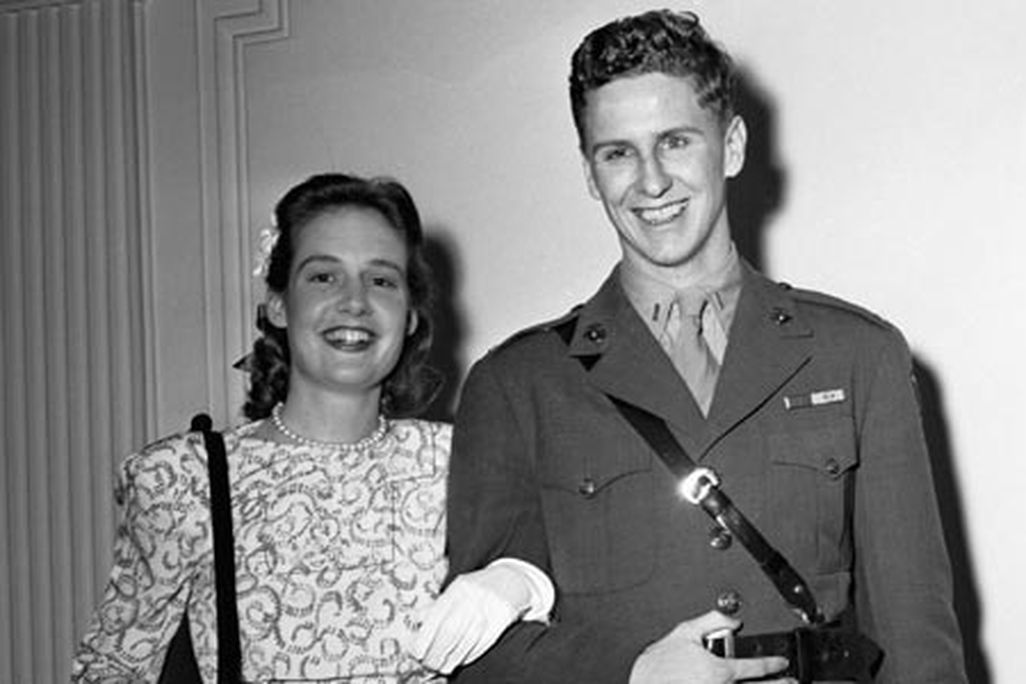
On a perfect October day in 1964, Mary Pinchot Meyer—mistress of John Kennedy, friend of Jackie Kennedy and ex-wife of a top CIA man, Cord Meyer—was murdered in the rarefied Washington precinct of Georgetown.
It was half past noon. I was a cub reporter on the Washington Star. In the classically scruffy pressroom at police headquarters, I heard the radio dispatcher direct Cruisers 25 and 26 (which I recognized as homicide squad cars) to the C&O Canal. I alerted the city desk, drove to Georgetown, ran to the wall overlooking the canal and saw a body curled up in a ball on the towpath. Two men who had been changing a tire nearby told me they had heard a shot...a cry for help...a second shot...and had called the police.
There were no cops with the body yet. But in the distance, between the Potomac and the canal, I saw the lines of the police dragnet closing in along the towpath from west and east.
Because I had played there as a boy, I knew there was a tunnel under the canal a few hundred yards west of where the body lay. I knew the killer was still at large and might also have known about it. But the tunnel would be the quickest way for me to get to the other side of the canal, to where the body was. I pushed aside the vines at the tunnel entrance and hurried through, heart pounding, and burst into sunshine on the other side. I approached the body of Mary Pinchot Meyer and stood over it, weirdly and awkwardly alone as the police advanced from either direction.
She lay on her side, as if sleeping. She was dressed in a light blue fluffy angora sweater, pedal pushers and sneakers. She was an artist and had a studio nearby, and she had gone out for her usual lunchtime walk. I saw a neat and almost bloodless bullet hole in her head. She looked entirely peaceful, vaguely patrician. She had an air of Georgetown. I stood there with her until the police came up. I held a reporter's notebook. The cops from the homicide squad knew me. They told me to move away.
The police found a man in the woods down by the river. His name was Ray Crump Jr., and he was black. His clothes were wet. He had cut his hand. He gave the police a couple of stories. He said he had been fishing and had dropped his fishing pole and gone into the river to retrieve it; he said he had been drinking beer and went to sleep and fell in. The two men who had heard the shots told the police they had seen Crump standing over the body. He was booked for homicide. The police found his jacket and cap in the river. His fishing rod was in a closet where he lived, on the other side of the city. The murder weapon was never found. It may still be at the bottom of the river. Crump eventually was acquitted for lack of evidence.
That October day rests in a corner of my mind, a vivid and mysterious curio. I pick it up from time to time and examine it in different lights. I have not figured it out, though I have theories. I thought of Mary Meyer's murder again during the presidential campaign, when the drama of a black man, Barack Obama, and two women, Hillary Clinton and Sarah Palin, in a race for the top places in American government took me back over a distance of time to a city that was then, for black people and for women, a different universe.
When Mary Meyer died, no one knew about her affair with John Kennedy, or about her ex-husband's job managing the CIA's clandestine services. In newspapers, Cord Meyer—wounded World War II hero and young idealist who helped found the United World Federalists—was identified as an author, with a vague government job. The papers noted that Mary, 43, was a Georgetown artist, born to a wealthy Pennsylvania family, daughter of Amos Pinchot, the Progressive lawyer, and niece of Gifford Pinchot, the conservationist and Teddy Roosevelt's chief forester. Her younger sister, Tony, was married to Ben Bradlee, then of Newsweek, later of the Washington Post. It was Bradlee who identified the body at the morgue.
Then other news supervened. There was a presidential election coming, Johnson (who had recently signed the Gulf of Tonkin Resolution) versus Goldwater (the warmonger, according to the 1964 narrative). Khrushchev was deposed. China exploded its first nuclear bomb.
But over the years, sensational fragments of the story (JFK, CIA) turned up. Inevitably, conspiracy theories emerged. Who killed Mary—really? Was Ray Crump set up? By whom? Why?
As real evidence went mute, the public imagination worked on two possible narratives.
The first was what might be called the Oliver Stone Solution—that is, to posit a conspiracy elaborate enough and sinister enough to do imaginative and, as it were, cinematic justice to the murder of a woman with such suggestive, powerful connections. The journalist Nina Burleigh sifted through plot possibilities in her excellent book on Meyer, A Very Private Woman (1998), and quoted the critic Morris Dickstein on the temptations of the 1960s' paranoid style—"a sense at once joyful and threatening that things are not what they seem, that reality is mysteriously overorganized and can be decoded if only we attend to the hundred little hints and byways that beckon to us."
Thus in the Stone Solution, popular on the Internet, Meyer was done in by "the same sons of bitches that killed John F. Kennedy," as one writer, C. David Heymann, claims he was told by the dying Cord Meyer. Another writer, Leo Damore (also dead), argued that Crump "was the perfect patsy, better even than Lee Harvey Oswald. Mary Meyer was killed by a well-trained professional hit man, very likely somebody connected to the CIA"—the idea being that she knew "too much for her own good."
The second scenario might be called the Richard Wright Solution, after the author of the 1940 novel Native Son, whose protagonist, Bigger Thomas, is tormented by the oppressions of poverty and racism: "To Bigger and his kind white people were not really people; they were a sort of great natural force, like a stormy sky looming overhead, or like a deep swirling river stretching suddenly at one's feet in the dark." In this scenario, Crump one day left his home in black Southeast Washington, crossed the segregated city, passing the Capitol and the White House, and entered white Georgetown. And there—on the home turf of mandarins, of Joe Alsop and Kay Graham and Scotty Reston and Dean Acheson—his path intersected for a moment with Mary Meyer's.
You could choose your movie. Solution One drew Mary Meyer into the world of James Ellroy, the grassy knoll, Jim Garrison, the Mafia, Judith Exner, Fair Play for Cuba, Operation Mongoose and so on. Solution Two inserted Mary Meyer by accident into an entirely different story: the primal drama of race in America.
The Oliver Stone Solution regards Ray Crump as misdirection. The Richard Wright Solution regards the conspiracy as misdirection. I don't buy either—the conspiracy theory smacks of the Oedipal paranoid (fantasies of hidden plots by sinister super-elders), and the other doesn't cover the particularities of this act. (At the same time, given what the two witnesses said, and given Crump's alcoholism and mental instability and criminal record before and after the murder, I believe the jury erred in acquitting him.)
In retrospect, the case suggests other movies, ones from Mary Meyer's youth—like the intricate murder puzzle Laura, or else that Greatest Generation favorite Casablanca, with its throbbing moral choices, worked out over endless cigarettes and sacramental booze.
Sometimes, the mere whodunit questions about Mary Meyer's murder seem mechanical. Especially today, in the context of Hillary Clinton, Sarah Palin, Condoleezza Rice, Nancy Pelosi and others who have enlarged the professional horizons of women, the memory of Washington at the earlier time returns with a certain sadness and sense of waste.
It is less the mystery of Mary Meyer's death—I am used to that—than something complicated and poignant and elusive in her life that I have come to find moving.
I grew up watching my mother and a number of women of her generation (which included Mary Meyer, born two years before my mother) struggling, in different ways, with the dilemmas of marriage and children and power and alcohol and ambition in a city that was politically charged, noisy with controversy and at the same time stunningly dull. There was hardly a decent restaurant in town, and not much theater beyond the pedestrian National Theatre down by the Treasury Department. (The National offered visiting Bulgarian dance troupes, dancing dogs, perhaps, and an occasional Broadway roadshow.) Sunday afternoons seemed to go on for months. Washington was hermetically segregated, ideologically overtriumphant, militarily overpowerful...yet also overanxious, overboozed, overstretched.
You saw those traits in Georgetown, which seemed to house half the hierarchy of the State Department and the CIA and the journalistic establishment, many of whom gathered for argumentative high-policy dinner parties on Sunday nights ("the Sunday Night Drunk," as one regular called it). Men from Wild Bill Donovan's old OSS and Allen Dulles' CIA and other cold warriors out of Groton and Yale and Princeton would drink too much and shout and might even, toward one or two in the morning, go for one another's throats. They would send a note of apology next day. The expensively educated had styles of cluelessness and overcompensating machismo that would come to grief at the Bay of Pigs.
Mary Meyer was a 1940s-50s American housewife (postwar marriage, suburbs and children in the Eisenhower years) who plunged headlong (with an aristocratically concealed recklessness that was a trademark of hers) into the '60s and into her private new frontiers. After her divorce, she had moved to Georgetown, become an artist (and longtime lover of the painter Kenneth Noland), experimented with drugs (in part, it seems, under the tutelage of Timothy Leary, who, in a book many years later, claimed that Mary wanted to turn Camelot into a peace-and-love acid trip). Mary climbed the back stairs of the White House to have her affair. Then she died on the towpath—woman interrupted. By unhappy irony, the questing, independent woman would be known after her death not as an artist, but as Kennedy's girlfriend.
Washington was a small town. My parents' cast of characters and Mary Meyer's cast of characters overlapped sometimes. I played touch football on Saturday mornings at the playground field at 34th and Q streets, near Mary's house, with Bobby Kennedy and his cronies, with Byron "Whizzer" White and others. John Kennedy sometimes came to watch, leaning on crutches.
It was a masculine town. Joe Kennedy was known to remark that if his daughter Eunice had been born male, "she would have been a hell of a politician." Bobby Kennedy became furious in a football game when his wife, Ethel, about six months pregnant, dropped a pass. The drama of the transformation of Washington women began with gunshots to the head—Philip Graham's suicide in August 1963; John Kennedy's assassination in November 1963; Mary Meyer's death in October 1964. Katharine Graham, the formerly suppressed wife (mousewife/housewife, by her own account) of Philip, took over his job running the Washington Post after his death. She became a national force. It was Kay Graham who decisively ended the after-dinner ritual of having the ladies go off by themselves to powder noses and discuss women's things while the men had coffee and cognac and talked about the cold war. She simply balked at this one night at Joseph Alsop's.
The Washington gender dramas had been going on for a long time, with different casts and styles. Kay Graham had an interesting predecessor, Cissy Patterson, editor of Hearst's old Washington Herald in the '30s and '40s. She was a stylish drinker, imaginative newspaper editor and occasional hell-raiser, an heiress of the McCormick-Medill-Patterson newspaper dynasty who in her heedless youth had gone off and married a Polish count. Cissy once said most men thought of women editors as Samuel Johnson had famously regarded women preachers: "Sir, a woman preaching is like a dog's walking on his hind legs. It is not done well; but you are surprised to find it done at all."
But women like my mother, or like Cissy Patterson, or like Mary Meyer, enjoyed the surprise and the delight that they were able to elicit in men—a little like the effect Marlene Dietrich achieved in Blonde Venus when she came on stage dressed in a gorilla suit and slowly removed the head to reveal her taunting, spectacular self. They knew the uses of electrical currents, erotic jolts that were lively with a cross-grained politics of sex. Exceptional women of that era were more interesting, more vivid, more dramatic—if sometimes more troubled and vulnerable and prone to folly—than some of the ironclads that emerged in Washington later on, after Mary's death, evolving through the generation of Barbara Jordan and Bella Abzug and on into the accession of Hillary Clinton or Condoleezza Rice. The political success of women—still only partial—sometimes has the perversely flattening and narrowing effect of making them (much like male politicians) a little dull, a little relentless and charmlessly self-important. Although Sarah Palin, of course, proved to be, for better or for worse, not dull.
Kennedy did not treat Mary Meyer as one of his mere sexual conveniences. He cherished a quizzical respect for her originality and independence. He told Ben Bradlee, more than once, "Mary would be rough to live with." Bradlee, her brother-in-law, agreed.
My mother, Elise Morrow, wrote a syndicated column called "Capital Capers" that appeared in papers around the country. She had an extravagant admiration for Cissy Patterson, though she disapproved of Patterson's anti-FDR isolationism. My mother's column worked the after-dark borderline between Perle Mesta's territory (parties, ladies, gossip, Embassy Row, the things that senators and congressmen said at night after several drinks) and the men's world of power and cold war.
My mother was a small woman who looked a bit like Ingrid Bergman and affected a knowing Mae West swagger. I have a photograph of her posed behind her Smith Corona, wearing long black evening gloves, with a glass of white wine on the table beside her. She knew how to drink like a man, and how to cuss like a man as well, a talent that Lyndon Johnson found hilarious. She could always get his attention.
One night at some political dinner at the Shoreham Hotel she sat next to Richard Nixon, then a young congressman. They both got a little drunk. My mother told Nixon he should get out of politics because he did not understand people and if he did not get out, things would end badly. The next day Nixon telephoned my father at his office at the Saturday Evening Post, where he was an editor, and said, "Hugh, can't you control your wife?" The answer was no.
Nixon's own wife went a separate and, when possible, more private road. An attractive, able, courageous woman, Pat Nixon had no interest in banging her head against the Washington wall that my mother banged her head against. She regarded women like my mother, media types, as the enemy. She settled into what turned out to be the complicated fate of being Mrs. Richard Nixon.
My mother had two marriages and seven children. She was an avid, headlong and brilliantly self-educated woman (married at 15!) who wanted a great deal (motherhood, a career as a great writer, lovers). Her fate was complicated as well.
Mary Meyer did not survive. My mother did. She lived to be 84. She thought now and then of writing a memoir called Before My Time. On a drizzly morning not many months ago, as she had wished, my brothers and my sister and I brought her ashes—coarse, grainy, salt-and-pepper ashes, all that was left of a vivid life—to the bank of the Potomac above Great Falls and scattered them on the surface of the brown, swollen river. The ashes swirled off downstream toward Washington, and for a second I imagined them floating down by Georgetown, passing over a pistol in the mud.
Lance Morrow, a former essayist for Time, is writing a biography of Henry Luce.