• Smithsonian
    Institution
  • Travel
    With Us
  • Smithsonian
    Store
  • Smithsonian
    Channel
  • goSmithsonian
    Visitors Guide
  • Air & Space
    magazine

Smithsonian.com

  • Subscribe
  • History & Archaeology
  • Science
  • Ideas & Innovations
  • Arts & Culture
  • Travel & Food
  • At the Smithsonian
  • Photos
  • Videos
  • Games
  • Shop
  • Archaeology
  • U.S. History
  • World History
  • Today in History
  • Document Deep Dives
  • The Jetsons
  • National Treasures
  • Paleofuture
  • History & Archaeology

Document Deep Dive: A Peek at the Last Time London Hosted the Olympics

Records at the National Archives in London show how organizers cobbled together the 1948 "Austerity" Games

| | | Reddit | Digg | Stumble | Email |
  • By Megan Gambino
  • Smithsonian.com, July 31, 2012, Subscribe
 
$Alt
(© International Olympics Committee)

Related Books

Austerity Olympics: When the Games Came to London in 1948

by Janie Hampton

More from Smithsonian.com

  • The XXX Olympics: Smithsonian's Guide to the Games

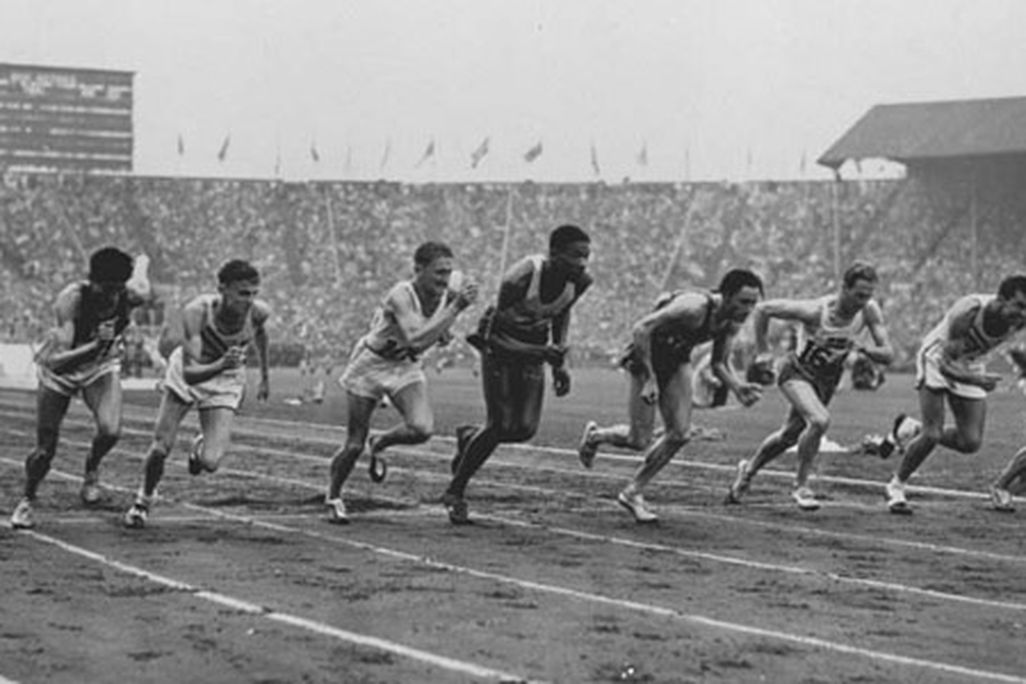
In 1948, many had their doubts that London, largely in ruins from the Blitz of World War II, could host the Olympics. Brits had strict food rations and thousands were still in temporary housing, so feeding and boarding some 4,000 athletes from 59 countries would be a colossal feat.

The London Olympic Organizing Committee, made up of high-ranking military officers, nonetheless took to the task, as if it were a military operation. Unlike the multi-billion-pound affair that kicked off in London last week, the 1948 Olympics were executed on a lean budget of 730,000 pounds. Wembley Stadium was transformed from a greyhound track to a more versatile venue, with a cinder track. German prisoners of war were put to work constructing Olympic Way, a road connecting the stadium to a rail station. And, the nearby Empire Pool, drained and used as an ice skating rink, was converted back for swimming events.

Certainly, none of the preparations were extravagant. But, as Janie Hampton, author of The Austerity Olympics, says, “The 1948 Games were an extraordinary occasion, a true celebration of victory after dark times and one of the most inexpensive and unpretentious Olympiads of the twentieth century.”

This May, the National Archives in London unveiled a new website, The Olympic Record, containing hundreds of digitized documents and images spanning 112 years of Olympic history, from Athens in 1896 to Beijing in 2008. Two charts, in particular, capture the humble nature of the 1948 Games. One lists the javelins, wrestling mats and other equipment that countries pitched in and the other outlines the teams’ housing arrangements. Hampton was kind enough to help me bring these documents to life.


In 1948, many had their doubts that London, largely in ruins from the Blitz of World War II, could host the Olympics. Brits had strict food rations and thousands were still in temporary housing, so feeding and boarding some 4,000 athletes from 59 countries would be a colossal feat.

The London Olympic Organizing Committee, made up of high-ranking military officers, nonetheless took to the task, as if it were a military operation. Unlike the multi-billion-pound affair that kicked off in London last week, the 1948 Olympics were executed on a lean budget of 730,000 pounds. Wembley Stadium was transformed from a greyhound track to a more versatile venue, with a cinder track. German prisoners of war were put to work constructing Olympic Way, a road connecting the stadium to a rail station. And, the nearby Empire Pool, drained and used as an ice skating rink, was converted back for swimming events.

Certainly, none of the preparations were extravagant. But, as Janie Hampton, author of The Austerity Olympics, says, “The 1948 Games were an extraordinary occasion, a true celebration of victory after dark times and one of the most inexpensive and unpretentious Olympiads of the twentieth century.”

This May, the National Archives in London unveiled a new website, The Olympic Record, containing hundreds of digitized documents and images spanning 112 years of Olympic history, from Athens in 1896 to Beijing in 2008. Two charts, in particular, capture the humble nature of the 1948 Games. One lists the javelins, wrestling mats and other equipment that countries pitched in and the other outlines the teams’ housing arrangements. Hampton was kind enough to help me bring these documents to life.


    Subscribe now for more of Smithsonian's coverage on history, science and nature.


Related topics: Olympics World War II 1940s England


| | | Reddit | Digg | Stumble | Email |
 

Add New Comment


Name: (required)

Email: (required)

Comment:

Comments are moderated, and will not appear until Smithsonian.com has approved them. Smithsonian reserves the right not to post any comments that are unlawful, threatening, offensive, defamatory, invasive of a person's privacy, inappropriate, confidential or proprietary, political messages, product endorsements, or other content that might otherwise violate any laws or policies.

Comments


Advertisement


More Document Deep Dives

 A close look at documents that changed history

Document Deep Dive: The Menu From President Lincoln’s Second Inaugural Ball

Document Deep Dive: A Firsthand Account of the Hindenburg Disaster

Document Deep Dive: What Does the Magna Carta Really Say?

Document Deep Dive: What Did the Zimmermann Telegram Say?

Document Deep Dive: Rosa Parks’ Arrest Records

Document Deep Dive: A Holocaust Survivor Finds Hope in America

Document Deep Dive: Emancipation Proclamation

View All Document Deep Dives»

Most Popular

  • Viewed
  • Emailed
  • Commented
  1. Myths of the American Revolution
  2. For 40 Years, This Russian Family Was Cut Off From All Human Contact, Unaware of WWII
  3. Seven Famous People Who Missed the Titanic
  4. A Brief History of the Salem Witch Trials
  5. Women Spies of the Civil War
  6. The History of the Short-Lived Independent Republic of Florida
  7. Tattoos
  8. We Had No Idea What Alexander Graham Bell Sounded Like. Until Now
  9. The True Story of the Battle of Bunker Hill
  10. Gobekli Tepe: The World’s First Temple?
  1. Uncovering Secrets of the Sphinx
  2. A Brief History of the Salem Witch Trials
  3. Looking at the Battle of Gettysburg Through Robert E. Lee’s Eyes
  4. Abandoned Ship: the Mary Celeste
  5. The Women Who Fought in the Civil War

View All Most Popular »

Advertisement

Follow Us

Smithsonian Magazine
@SmithsonianMag
Follow Smithsonian Magazine on Twitter

Sign up for regular email updates from Smithsonian.com, including daily newsletters and special offers.

In The Magazine

May 2013

  • Patriot Games
  • The Next Revolution
  • Blowing Up The Art World
  • The Body Eclectic
  • Microbe Hunters

View Table of Contents »


First Name
Last Name
Address 1
Address 2
City
State   Zip
Email


Travel with Smithsonian


Smithsonian Store

Stars and Stripes Throw

Our exclusive Stars and Stripes Throw is a three-layer adaption of the 1861 “Stars and Stripes” quilt... $65


View full archiveRecent Issues


  • May 2013


  • Apr 2013


  • Mar 2013

Newsletter

Sign up for regular email updates from Smithsonian magazine, including free newsletters, special offers and current news updates.

Subscribe Now

About Us

Smithsonian.com expands on Smithsonian magazine's in-depth coverage of history, science, nature, the arts, travel, world culture and technology. Join us regularly as we take a dynamic and interactive approach to exploring modern and historic perspectives on the arts, sciences, nature, world culture and travel, including videos, blogs and a reader forum.

Explore our Brands

  • goSmithsonian.com
  • Smithsonian Air & Space Museum
  • Smithsonian Student Travel
  • Smithsonian Catalogue
  • Smithsonian Journeys
  • Smithsonian Channel
  • About Smithsonian
  • Contact Us
  • Advertising
  • Subscribe
  • RSS
  • Topics
  • Member Services
  • Copyright
  • Site Map
  • Privacy Policy
  • Ad Choices

Smithsonian Institution