• Smithsonian
    Institution
  • Travel
    With Us
  • Smithsonian
    Store
  • Smithsonian
    Channel
  • goSmithsonian
    Visitors Guide
  • Air & Space
    magazine

Smithsonian.com

  • Subscribe
  • History & Archaeology
  • Science
  • Ideas & Innovations
  • Arts & Culture
  • Travel & Food
  • At the Smithsonian
  • Photos
  • Videos
  • Games
  • Shop
  • Archaeology
  • U.S. History
  • World History
  • Today in History
  • Document Deep Dives
  • The Jetsons
  • National Treasures
  • Paleofuture
  • History & Archaeology

Document Deep Dive: A Firsthand Account of the Hindenburg Disaster

Frank Ward was a 17-year-old crewman when he saw the infamous disaster, but his memories of that day are still strong, 75 years later

| | | Reddit | Digg | Stumble | Email |
  • By Megan Gambino
  • Smithsonian.com, May 02, 2012, Subscribe
View More Photos »
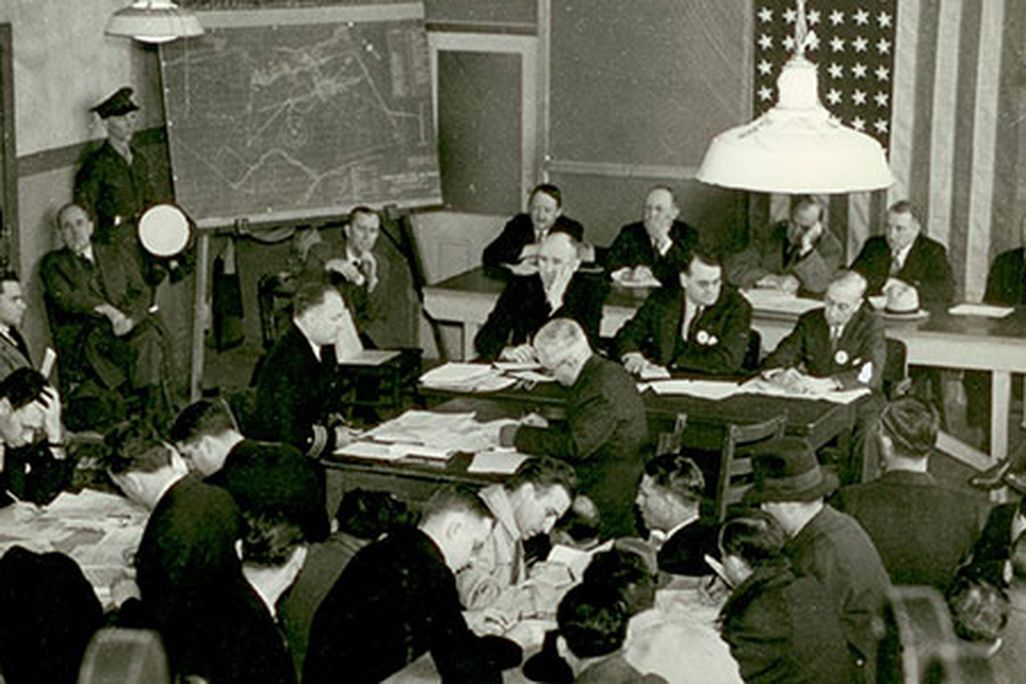
Hindenburg inquiry board
The Bureau of Air Commerce's inquiry board was tasked with investigating the cause of the accident. (Anonymous)

Photo Gallery (1/3)

Frank Ward

Explore more photos from the story


Video Gallery

The Lost Map of the Hindenburg

Related Links

  • Fire and Ice: Hindenburg and Titanic

More from Smithsonian.com

  • Found: Letters from the Hindenburg

On May 6, 1937, Frank Ward cut school at noon and hitchhiked to the Naval Air Station in Lakehurst, New Jersey. His father, Peter Ward, was an engineer at the base. So, by extension, 17-year-old Frank, a brawny baseball player and track star at Seton Hall Prep, was regularly recruited to help pull down incoming airships.

This particular day, the Hindenburg was scheduled to land. The 804-foot-long dirigible, built by the Zeppelin Company of Friedrichshafen, Germany, had left Frankfurt just three days prior for its first transatlantic flight of the season. In 14 months of operation, the zeppelin had logged 63 trips. Ward served on the ground crew for five of the Hindenburg’s landings at Lakehurst the previous year and expected this one to go as smoothly as the rest.

Around 7 p.m., the airship edged over the pine-tree horizon and, after some maneuvering, drifted in for landing. Ward and a cluster of other linemen grabbed one of several landing ropes tossed out of the zeppelin. They ran to tighten the slack in the rope, but before they were able to dock the ship to its mooring mast, disaster struck.

The Hindenburg suddenly burst into flames. In just 34 seconds, the vessel crashed to the ground, the future of lighter-than-air commercial travel grinding to a fiery halt with it. While 62 passengers and crew escaped from the smoldering wreckage, 35 perished, as did one ground crew member.

Cheryl Ganz, a leading Hindenburg historian, has spent the better part of her career resurrecting stories from salvaged artifacts. Her primary interest is in zeppelin mail; 360 of the 17,609 pieces of mail aboard the Hindenburg were recovered from the crash site. But her research has also turned up never-before-published photographs taken from the Hindenburg, as well as other documents.

While preparing “Fire and Ice: Hindenburg and Titanic,” an exhibition at the Smithsonian’s National Postal Museum, Ganz studied 1,278 pages of Hindenburg testimony in 14 file boxes held at the National Archives in College Park, Maryland. Amid the documents, she found a form dated May 17, 1937, filled out by Ward. The Bureau of Air Commerce’s inquiry board, tasked with investigating the cause of the accident, asked the lineman ten questions about what he saw and heard as the tragedy played out.

“The board collected these little descriptions and eyewitness accounts before the actual investigation,” says Ganz. “Then, based on what the witnesses saw or what their knowledge level was, they were called for testimony.”

Ward was not plucked for oral testimony. But, 75 years later, his story has become ever more precious. At age 92, Ward, who now resides in Charlottesville, Virginia, is one of the only living members of the Hindenburg ground crew.

The retired history teacher and veteran of both World War II and the Korean War recently shared his memory of the Hindenburg disaster with me. Based on our conversation, I annotated the document Ganz uncovered with added detail.


On May 6, 1937, Frank Ward cut school at noon and hitchhiked to the Naval Air Station in Lakehurst, New Jersey. His father, Peter Ward, was an engineer at the base. So, by extension, 17-year-old Frank, a brawny baseball player and track star at Seton Hall Prep, was regularly recruited to help pull down incoming airships.

This particular day, the Hindenburg was scheduled to land. The 804-foot-long dirigible, built by the Zeppelin Company of Friedrichshafen, Germany, had left Frankfurt just three days prior for its first transatlantic flight of the season. In 14 months of operation, the zeppelin had logged 63 trips. Ward served on the ground crew for five of the Hindenburg’s landings at Lakehurst the previous year and expected this one to go as smoothly as the rest.

Around 7 p.m., the airship edged over the pine-tree horizon and, after some maneuvering, drifted in for landing. Ward and a cluster of other linemen grabbed one of several landing ropes tossed out of the zeppelin. They ran to tighten the slack in the rope, but before they were able to dock the ship to its mooring mast, disaster struck.

The Hindenburg suddenly burst into flames. In just 34 seconds, the vessel crashed to the ground, the future of lighter-than-air commercial travel grinding to a fiery halt with it. While 62 passengers and crew escaped from the smoldering wreckage, 35 perished, as did one ground crew member.

Cheryl Ganz, a leading Hindenburg historian, has spent the better part of her career resurrecting stories from salvaged artifacts. Her primary interest is in zeppelin mail; 360 of the 17,609 pieces of mail aboard the Hindenburg were recovered from the crash site. But her research has also turned up never-before-published photographs taken from the Hindenburg, as well as other documents.

While preparing “Fire and Ice: Hindenburg and Titanic,” an exhibition at the Smithsonian’s National Postal Museum, Ganz studied 1,278 pages of Hindenburg testimony in 14 file boxes held at the National Archives in College Park, Maryland. Amid the documents, she found a form dated May 17, 1937, filled out by Ward. The Bureau of Air Commerce’s inquiry board, tasked with investigating the cause of the accident, asked the lineman ten questions about what he saw and heard as the tragedy played out.

“The board collected these little descriptions and eyewitness accounts before the actual investigation,” says Ganz. “Then, based on what the witnesses saw or what their knowledge level was, they were called for testimony.”

Ward was not plucked for oral testimony. But, 75 years later, his story has become ever more precious. At age 92, Ward, who now resides in Charlottesville, Virginia, is one of the only living members of the Hindenburg ground crew.

The retired history teacher and veteran of both World War II and the Korean War recently shared his memory of the Hindenburg disaster with me. Based on our conversation, I annotated the document Ganz uncovered with added detail.

    Subscribe now for more of Smithsonian's coverage on history, science and nature.


Related topics: Air Transportation Catastrophes


| | | Reddit | Digg | Stumble | Email |
 

Add New Comment


Name: (required)

Email: (required)

Comment:

Comments are moderated, and will not appear until Smithsonian.com has approved them. Smithsonian reserves the right not to post any comments that are unlawful, threatening, offensive, defamatory, invasive of a person's privacy, inappropriate, confidential or proprietary, political messages, product endorsements, or other content that might otherwise violate any laws or policies.

Comments (3)

These are exactly the people we need to listen to and record their experiences. Oral histories are primary documents that help us understand our history, and they are of the utmost importance to our understanding.

Posted by Karen Jourden on May 17,2012 | 02:04 PM

I often think of the Hindenberg disaster as a part of aviation history, reminding me each time I look at the heat distorted piece of that doomed airship sitting in my living room in a glass display case.

Posted by Jim on May 16,2012 | 11:46 PM

It is like survivors of the Holocaust. Some voices still speak and remember. The survivors of Titanic were the same. That would alter your memory and life forever.

Posted by Roberta Weideman on May 3,2012 | 06:41 PM


Advertisement


More Document Deep Dives

 A close look at documents that changed history

Document Deep Dive: The Menu From President Lincoln’s Second Inaugural Ball

Document Deep Dive: A Firsthand Account of the Hindenburg Disaster

Document Deep Dive: What Does the Magna Carta Really Say?

Document Deep Dive: What Did the Zimmermann Telegram Say?

Document Deep Dive: Rosa Parks’ Arrest Records

Document Deep Dive: A Holocaust Survivor Finds Hope in America

Document Deep Dive: Emancipation Proclamation

View All Document Deep Dives»

Most Popular

  • Viewed
  • Emailed
  • Commented
  1. Myths of the American Revolution
  2. For 40 Years, This Russian Family Was Cut Off From All Human Contact, Unaware of WWII
  3. Seven Famous People Who Missed the Titanic
  4. Women Spies of the Civil War
  5. A Brief History of the Salem Witch Trials
  6. The History of the Short-Lived Independent Republic of Florida
  7. Tattoos
  8. We Had No Idea What Alexander Graham Bell Sounded Like. Until Now
  9. The True Story of the Battle of Bunker Hill
  10. Gobekli Tepe: The World’s First Temple?
  1. A Brief History of the Salem Witch Trials
  2. Uncovering Secrets of the Sphinx
  3. Abandoned Ship: the Mary Celeste
  4. Looking at the Battle of Gettysburg Through Robert E. Lee’s Eyes

View All Most Popular »

Advertisement

Follow Us

Smithsonian Magazine
@SmithsonianMag
Follow Smithsonian Magazine on Twitter

Sign up for regular email updates from Smithsonian.com, including daily newsletters and special offers.

In The Magazine

May 2013

  • Patriot Games
  • The Next Revolution
  • Blowing Up The Art World
  • The Body Eclectic
  • Microbe Hunters

View Table of Contents »


First Name
Last Name
Address 1
Address 2
City
State   Zip
Email


Travel with Smithsonian


Smithsonian Store

Stars and Stripes Throw

Our exclusive Stars and Stripes Throw is a three-layer adaption of the 1861 “Stars and Stripes” quilt... $65


View full archiveRecent Issues


  • May 2013


  • Apr 2013


  • Mar 2013

Newsletter

Sign up for regular email updates from Smithsonian magazine, including free newsletters, special offers and current news updates.

Subscribe Now

About Us

Smithsonian.com expands on Smithsonian magazine's in-depth coverage of history, science, nature, the arts, travel, world culture and technology. Join us regularly as we take a dynamic and interactive approach to exploring modern and historic perspectives on the arts, sciences, nature, world culture and travel, including videos, blogs and a reader forum.

Explore our Brands

  • goSmithsonian.com
  • Smithsonian Air & Space Museum
  • Smithsonian Student Travel
  • Smithsonian Catalogue
  • Smithsonian Journeys
  • Smithsonian Channel
  • About Smithsonian
  • Contact Us
  • Advertising
  • Subscribe
  • RSS
  • Topics
  • Member Services
  • Copyright
  • Site Map
  • Privacy Policy
  • Ad Choices

Smithsonian Institution