Content ID:
Field:


  • About Smithsonian
  • Email Updates
  • Member Services
  • Shop
  • Archive
Smithsonian.com
  • Smithsonian Institution
  • Smithsonian Channel
  • goSmithsonian
  • Air & Space magazine
  • Home
  • History & Archaeology
  • People & Places
  • Science & Nature
  • Arts & Culture
  • Travel
  • Photos & Videos
  • Games & Puzzles
  • Subscribe
  • Art & Artists
  • Music & Literature
  • Photo of the Day
  • Smithsonian Institution
  • Trends & Traditions

Dina Modianot-Fox

  • Trends & Traditions

The Art of Pizza

Cooking up the world's most authentic pie in Naples, Italy

  • By Dina Modianot-Fox
  • Smithsonian.com, August 01, 2007

Article Tools

  • Font
  • Share/Save/Bookmark Share
  • Email
  • Print
  • Digg Digg
  • Comments
  • StumbleUpon StumbleUpon
  • RSS
  • Reddit Reddit

    Related Topics

    Food and Drink

    Italy

    Photo Gallery

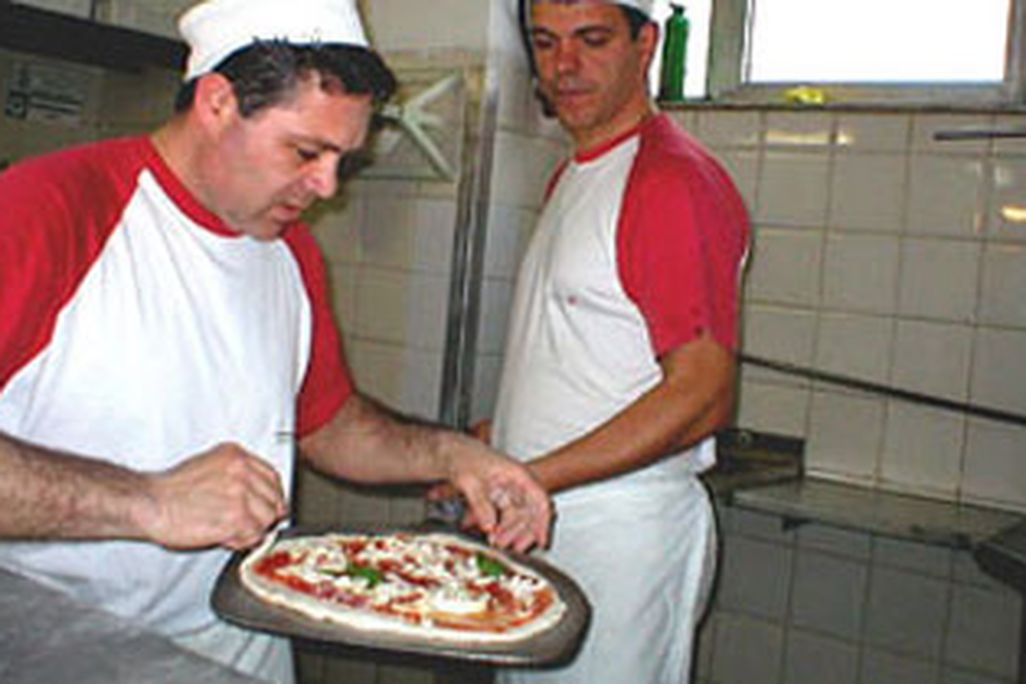
    Geatano di Lorenzo (holding pan) and Enzo Mariniello put the finishing touches on an authentic Neapolitan pizza at Ristorante Umberto.

    The Art of Pizza

    Explore more photos from the story

    More from Smithsonian.com
    • 13 Places and Events to See in Your Lifetime

    Sitting in Ristorante Umberto, owned by the Di Porzio family for three generations and one of the oldest and most popular pizzerias in Naples, Italy's southern megalopolis, Massimo Di Porzio talks about pizza as though it were human. "The dough should be moved carefully," he says, "as if it were a baby."

    You have to understand: Naples is the traditional home of pizza and a place where people take their food seriously. So seriously that they masterminded an Italian law, passed three years ago, specifying what is real Neapolitan pizza—and it bears little resemblance to what we chow down in the United States in record numbers, an estimated 350 slices per second, amounting to a $37-billion blockbuster industry. Credit-card thin at the base with sparse toppings, the Neapolitan version is American pizza on a slimming diet.

    But Di Porzio, not only a restaurateur but also an international economics graduate, will not be drawn into a food fight over which version is better, or condemn such U.S. creations as Pizza Hut's "Stuffed Crust Pizza" or Papa John's "Hawaiian BBQ Chicken pizza."

    "We are not the pizza police," he says, reacting to some media description of the law passed in Italy in 2004 and currently being considered by the European Union, giving three pizzas—Marinara (tomato, garlic and oregano), Margherita and Extra Margherita (both with tomato, basil and mozzarella)—the same name protection as fine wine.

    "I love all kinds of pizza," continues the open-minded Di Porzio, who is general manager of Associazione Verace Pizza Napoletana (VPN)—verace means real—the non-profit organization of pizza-makers, called pizzaioli, that helped write the law. "In New York," he says, "we found some good pizza, other not so good, but these other pizzas are a different product—not the Neapolitan pizza."

    The Neapolitan pizza, as defined by law, is made from a specific kind of wheat flour and yeast, round, no more than 14 inches in diameter and cooked in a wood-fired oven at temperatures above 905 degrees Fahrenheit. Only top-quality ingredients can be used, including two local delights: plum tomatoes from San Marzano and, for Extra Margherita, mozzarella made from the milk of water buffalo, whose numbers have soared along with the cheese's popularity.

    But since the law went into effect, no one has been hauled into court for not pouring the extra virgin olive oil in a circular pattern starting from the middle, or for mixing the ingredients in a different order than the one prescribed by the painfully detailed regulations. The backers of the law—not all Italian pizzaioli are advocates—insist this is not about punishment but rather information regarding a key aspect of their culture.

    Although the flatbread-with-topping idea is generally attributed to the Greeks, for centuries pizza has for been associated with Naples and its long struggle with poverty. Cheap to make and requiring few ingredients, pizza was a staple by the 18th century, sold on city streets and served on ships sailing from the Port of Naples (that's how Marinara got its name). In the post-World War II era, residents were so poor that many bought pizza on credit, paying for it eight days later—when they got another one. This practice, called oggiaotto, was featured in the 1954 film L'Oro di Napoli (The Gold of Naples) and is still honored by some pizzerias.

    Sitting in Ristorante Umberto, owned by the Di Porzio family for three generations and one of the oldest and most popular pizzerias in Naples, Italy's southern megalopolis, Massimo Di Porzio talks about pizza as though it were human. "The dough should be moved carefully," he says, "as if it were a baby."

    You have to understand: Naples is the traditional home of pizza and a place where people take their food seriously. So seriously that they masterminded an Italian law, passed three years ago, specifying what is real Neapolitan pizza—and it bears little resemblance to what we chow down in the United States in record numbers, an estimated 350 slices per second, amounting to a $37-billion blockbuster industry. Credit-card thin at the base with sparse toppings, the Neapolitan version is American pizza on a slimming diet.

    But Di Porzio, not only a restaurateur but also an international economics graduate, will not be drawn into a food fight over which version is better, or condemn such U.S. creations as Pizza Hut's "Stuffed Crust Pizza" or Papa John's "Hawaiian BBQ Chicken pizza."

    "We are not the pizza police," he says, reacting to some media description of the law passed in Italy in 2004 and currently being considered by the European Union, giving three pizzas—Marinara (tomato, garlic and oregano), Margherita and Extra Margherita (both with tomato, basil and mozzarella)—the same name protection as fine wine.

    "I love all kinds of pizza," continues the open-minded Di Porzio, who is general manager of Associazione Verace Pizza Napoletana (VPN)—verace means real—the non-profit organization of pizza-makers, called pizzaioli, that helped write the law. "In New York," he says, "we found some good pizza, other not so good, but these other pizzas are a different product—not the Neapolitan pizza."

    The Neapolitan pizza, as defined by law, is made from a specific kind of wheat flour and yeast, round, no more than 14 inches in diameter and cooked in a wood-fired oven at temperatures above 905 degrees Fahrenheit. Only top-quality ingredients can be used, including two local delights: plum tomatoes from San Marzano and, for Extra Margherita, mozzarella made from the milk of water buffalo, whose numbers have soared along with the cheese's popularity.

    But since the law went into effect, no one has been hauled into court for not pouring the extra virgin olive oil in a circular pattern starting from the middle, or for mixing the ingredients in a different order than the one prescribed by the painfully detailed regulations. The backers of the law—not all Italian pizzaioli are advocates—insist this is not about punishment but rather information regarding a key aspect of their culture.

    Although the flatbread-with-topping idea is generally attributed to the Greeks, for centuries pizza has for been associated with Naples and its long struggle with poverty. Cheap to make and requiring few ingredients, pizza was a staple by the 18th century, sold on city streets and served on ships sailing from the Port of Naples (that's how Marinara got its name). In the post-World War II era, residents were so poor that many bought pizza on credit, paying for it eight days later—when they got another one. This practice, called oggiaotto, was featured in the 1954 film L'Oro di Napoli (The Gold of Naples) and is still honored by some pizzerias.

    Naples' history is replete with pizza legends. A local pizzaiolo is said to have made the first Margherita in 1889, adding mozzarella to the tomatoes and basil to give the pizza, which he reportedly named after a visiting Italian queen, the colors of the Italian flag—red, white and green.

    Much more recently, Di Porzio tells of the "the Dean of Pizzaioli," VPN founder Vincenso Pace, who began making pizzas when he was ten and was so skilled that he altered the proportion of the ingredients according to the weather—for instance, adding more salt it if was hot, less if it was cold.

    The VPN has taken the gospel of authentic pizza-making around the world, training locals and certifying restaurants, especially in Japan, where tourists returning from Naples have fueled interest for traditional pizza, and the United States, where the national branch has certified 16 restaurants.

    At first, gaining fans for the Neapolitan pizza was "something of an uphill battle," admits Dino Cardone, marketing director for VPN Americas. But recently, he says, the challenge has been to meet the demand for information, training and certification.

    And what does a real Neapolitan pizza taste like? To someone used to American-style pizzas, a little bland in the beginning. But then you start enjoying the freshness of the ingredients and the lightness of the crust—the more you eat it, the better it tastes.

    That said, don't count on having it delivered. The law states that the real thing "should be consumed immediately, straight out of the oven, at the pizzeria. If the pizza is removed from the pizzeria to be eaten later, it can no longer carry the certification of a true Neapolitan pizza."

    Dina Modianot-Fox, a regular Smithsonian.com contributor, recently wrote about "Ancient Rome's Forgotten Paradise."


    1 2


    Related topics: Food and Drink Italy

     
    Comments

    Ciao Dino- Ti ricordi di me? Nancy

    Posted by Nancy Stefani on December 21,2007 | 06:37PM

    I think this site is very educational ,but it needs more viewers and publicity

    Posted by Buttercup on January 2,2008 | 11:40AM

    thanks for helping me how to make pizza because I didn't know before I read this!!!!!

    Posted by bria taylor on May 12,2008 | 07:31AM

    Post a Comment


    Name: (required)

    Email: (required)

    Comment:


    Advertisement


    Most Popular Video

    • Newest
    • Most Viewed
    Coral Reef Spawn

    How Coral Reefs Spawn

    Watch coral reefs reproduce in a flurry of carefully-timed action

    Flipping Out Over Pinball

    David Silverman has collected more than 800 pinball machines to preserve their history

    Sing Along to the Messiah

    Sing Along to the Messiah

    The story within Handel's famous piece is what drives its enduring popularity

    A Rare Look at Tucker Cars

    Collector David Cammack owns three of the 43 remaining cars in existence designed by Preston Tucker

    The Residents of Arlington Cemetery

    While President Kennedy may be one of the best known gravesites in Arlington, there are many other notable Americans buried there

    The Ju/'Hoansi Tribe in Action

    Over the course of 50 years, John Marshall filmed the African tribe, tracking how their nomadic culture slowly died out

    Watch the Gecko's Tail Flip

    Leopard geckos can shed their tail to distract predators, and the tails can leap up to 3 cm in one jump

    A Final Takeoff

    Watch one of Amelia Earhart's final takeoffs

    Most Popular

    • Viewed
    • Emailed
    • Commented
    1. Ten Notable Apocalypses That (Obviously) Didn’t Happen
    2. Tattoos
    3. A Brief History of the Salem Witch Trials
    4. Top Ten Places Where Life Shouldn't Exist... But Does
    5. Wolves and the Balance of Nature in the Rockies
    6. 28 Places to See Before You Die—the Taj Mahal, Grand Canyon and More
    7. John Brown's Day of Reckoning
    8. Ethiopia's Exotic Monkeys
    9. How Arlington National Cemetery Came to Be
    10. Evolution in the Deepest River in the World
    1. Ten Notable Apocalypses That (Obviously) Didn’t Happen
    2. Crawling Around with Baltimore Street Rats
    3. How Arlington National Cemetery Came to Be
    4. Invasion of the Longhorn Beetles
    5. 28 Places to See Before You Die—the Taj Mahal, Grand Canyon and More
    6. Ethiopia's Exotic Monkeys
    7. The Surprising Satisfactions of a Home Funeral
    8. Boise, Idaho: Big Skies and Colorful Characters
    9. Memoirs of a World War II Buffalo Soldier
    10. Tattoos
    1. Ten Notable Apocalypses That (Obviously) Didn’t Happen
    2. Evolution in the Deepest River in the World
    3. How Arlington National Cemetery Came to Be
    4. Artist William Wegman
    5. A Brief History of the Salem Witch Trials
    6. The Rescue of Henry Clay
    7. From Brooklyn to Worthington, Minnesota
    8. Man Ray’s Signature Work
    9. What would you add to the Smithsonian Life List?
    10. Memoirs of a World War II Buffalo Soldier

    - - - Advertisements - - -


    Join Us

    Facebook

    Facebook

    Become a fan of Smithsonian magazine's official Facebook page!

    Twitter

    Follow Smithsonian magazine on Twitter

    In The Magazine

    December 2009 Issue Cover

    December 2009

    • Wildlife Trafficking
    • Hallelujah
    • The Pyramid Man
    • Glee Mail
    • Savoring Puebla

    View Table of Contents »

    Smithsonian magazine presents

    6th Annual Smithsonian Photo Contest Winners

    Out of more than 17,000 entries contributed from around the world, Smithsonian and its readers select the year's best

    • Smithsonian Store
    • Smithsonian Journeys

    Kokeshi Dolls

    Item No. 85070

    Antarctica: Aboard National Geographic Explorer

    Journey to Antarctica to experience this otherworldly and unparalleled wilderness up close. (Jan 7 - 21, 2010)


    View full archiveRecent Issues

    • December 2009 Issue Cover
      Dec 2009

    • November 2009 Issue
      Nov 2009

    • October 2009 Issue Cover
      Oct 2009

    Newsletter

    Sign up for regular email updates from Smithsonian magazine, including free newsletters, special offers and current news updates.

    Subscribe Now

    About Us

    Smithsonian.com expands on Smithsonian magazine's in-depth coverage of history, science, nature, the arts, travel, world culture and technology. Join us regularly as we take a dynamic and interactive approach to exploring modern and historic perspectives on the arts, sciences, nature, world culture and travel, including videos, blogs and a reader forum.

    Explore our Brands

    • goSmithsonian.com
    • Smithsonian Air & Space Museum
    • Smithsonian Institution
    • Smithsonian Catalogue
    • Smithsonian Journeys
    • Smithsonian Channel
    • Site Map
    • Privacy Policy
    • Copyright
    • About Smithsonian
    • Contact Us
    • Advertising
    • Reader Panel
    • Subscribe
    • RSS
    • Topics

    Smithsonian Institution

    Produced by Clickability