Content ID:
Field:


  • About Smithsonian
  • Email Updates
  • Member Services
  • Shop
  • Archive
Smithsonian.com
  • Smithsonian Institution
  • Smithsonian Channel
  • goSmithsonian
  • Air & Space magazine
  • Home
  • History & Archaeology
  • People & Places
  • Science & Nature
  • Arts & Culture
  • Travel
  • Photos & Videos
  • Subscribe
  • Art & Artists
  • Music & Literature
  • Photo of the Day
  • Smithsonian Institution
  • Trends & Traditions
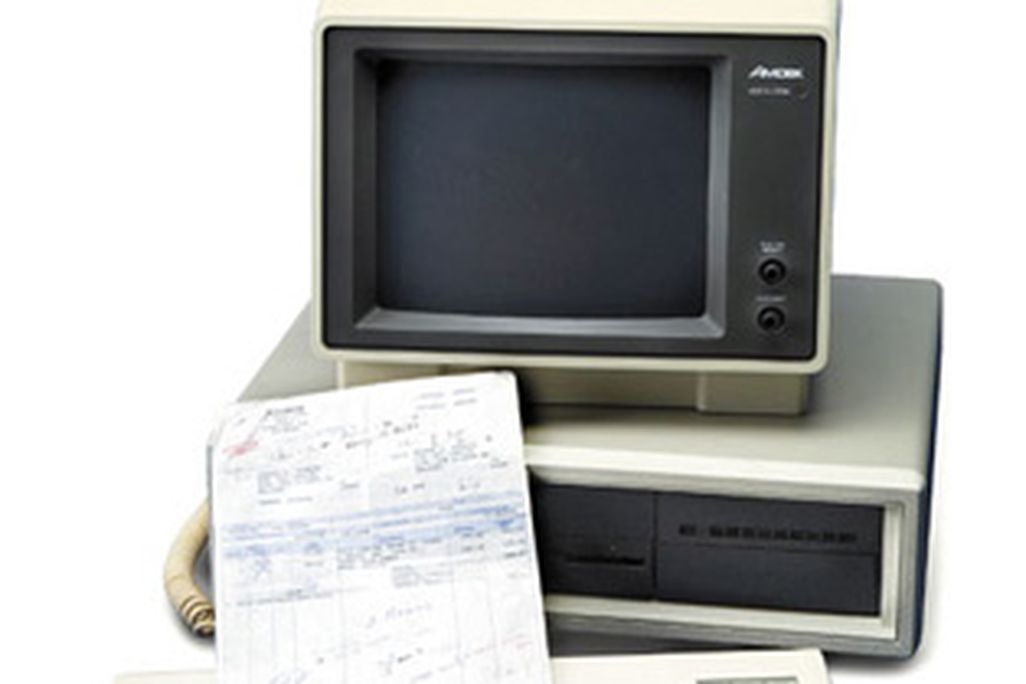
Michael Dell may have assembled this Turbo PC. Michael Dell may have assembled this Turbo PC.

Harold Dorwin, SI

  • Smithsonian Institution

Baby Dell

A proto PC harkens back to the birth of an industry

  • By Owen Edwards
  • Smithsonian magazine, August 2007

Article Tools

 
  • Font
  • Share/Save/Bookmark Share
     
  • Email
  •  
  • Print
  • Digg Digg
     
  • Comments
  • StumbleUpon StumbleUpon
     
  • RSS
  • Reddit Reddit
     

    Most Popular

    • Viewed
    • Emailed
    1. Tattoos
    2. A Monumental Struggle to Preserve Hagia Sophia
    3. The Pygmies' Plight
    4. Gobekli Tepe: The World’s First Temple?
    5. A Brief History of the Salem Witch Trials
    6. 44 Years Later, a Washington, D.C. Death Unresolved
    7. Family Ties
    8. Pakistan's Sufis Preach Faith and Ecstasy
    9. America's First True "Pilgrims"
    10. Choosing Civility in a Rude Culture
    1. A Monumental Struggle to Preserve Hagia Sophia
    2. Choosing Civility in a Rude Culture
    3. Pakistan's Sufis Preach Faith and Ecstasy
    4. What's Killing the Aspen?
    5. The 'Secret Jews' of San Luis Valley
    6. 44 Years Later, a Washington, D.C. Death Unresolved
    7. Inside the Capitol Visitors Center
    8. The Pygmies' Plight
    9. Julia Alvarez on Weybridge, Vermont
    10. Tattoos

    When he was 15, in 1980, Michael Dell took apart an Apple II computer and reassembled it, much as an earlier generation of teenagers had taken apart the engines of their Fords and Chevies. A few years later, Dell, by then a pre-med student at the University of Texas at Austin and founder of a small company he called PC's Limited, was putting together computers from components and selling the machines to fellow students.

    Dell never became a doctor, but he did all right. In 2007, his net worth was reported to exceed $14.2 billion. Along with other pioneers in a nascent industry—among them Steve Jobs and Bill Gates—Dell joined one of his generation's most select clubs—self-made tech moguls.

    Of course, willing consumers were essential to his success. One of them was Clint Johnson, a freelance writer living outside Jefferson, North Carolina. In 1985, at age 32, Johnson bade farewell to his Remington typewriter and ordered a PC's Limited Turbo computer. He was customer number 00100. "In those days," he recalls, "there wasn't any Internet or big box electronic store where you could get information about computers. I ended up asking the tech guys at the corporate offices of Red Lobster [where Johnson worked] what they'd recommend. The reason I decided on a PC's Limited machine was that you could order over the phone and they'd deliver it."

    The PC's Limited, of course, remains the model that defines Dell Computers. Johnson's pre-Dell computer featured a 10-megabyte hard drive and a 5.25-inch floppy drive (back when floppies really were floppy). To compare the PC's Limited Turbo with any current desktop (or even laptop) is, of course, to set a BB gun against an ICBM. The monitor, made by Amdek, had a dark screen with low-contrast amber letters and numbers, the digital equivalent of shadows on the wall of Plato's cave. The complete package cost Johnson $895. "It always sounded as if it were coming apart," Johnson recalls. "I never did figure out why."

    When Johnson read a 1987 BusinessWeek article about Dell and his company, he "recognized that I had a historic artifact, an early product of what is now a Fortune 50 company. So when I moved up to a newer computer, I wrapped it up and put it in the attic." At the keyboard of several later Dell computers, Johnson went on to write several books (his most recent, A Politically Incorrect Guide to the South). But, he says, "I wrote a lot of articles on that first machine." Some years ago, Johnson phoned Dell's PR department to ask if there might be interest in his relic. "All I got for my trouble," he recalls, "was a plastic Dell coffee cup."

    But in 2005, when Dell opened a new factory in Winston-Salem, North Carolina, not far from where Johnson and his wife, Barbara, were living at the time, he tried again. His hope was to trade his piece of digital history for the latest Dell. This time he reached Donna Oldham in the PR office; she readily agreed to the trade.

    Soon after, Dell offered the computer to David K. Allison, a curator at Smithsonian's National Museum of American History (NMAH). Allison recognized that it would fit well into what he calls the museum's "rich collection of early personal computers, including an Altair and an Apple Lisa." The Johnson computer is on temporary display in the "Treasures of American History" exhibition, housed at the Air and Space Museum until the renovated NMAH opens in 2008.

    That Michael Dell had never tried to acquire a PC's Limited computer as his company grew did not surprise Allison. "Entrepreneurs aren't thinking about the past," he says, "they're focused on tomorrow." Dell, 42, may still be focusing on tomorrow, but the PC's Limited Turbo did evoke a hint of nostalgia. At the Smithsonian's donation ceremony in May, Dell disclosed that he might have assembled this very Dell himself; he was still working on the factory floor in 1985. When asked if the machine had been booted up since the company reacquired it, Dell replied that it hadn't. "It's out of warranty," he said.

    Owen Edwards is a freelance writer and author of the book Elegant Solutions.

    When he was 15, in 1980, Michael Dell took apart an Apple II computer and reassembled it, much as an earlier generation of teenagers had taken apart the engines of their Fords and Chevies. A few years later, Dell, by then a pre-med student at the University of Texas at Austin and founder of a small company he called PC's Limited, was putting together computers from components and selling the machines to fellow students.

    Dell never became a doctor, but he did all right. In 2007, his net worth was reported to exceed $14.2 billion. Along with other pioneers in a nascent industry—among them Steve Jobs and Bill Gates—Dell joined one of his generation's most select clubs—self-made tech moguls.

    Of course, willing consumers were essential to his success. One of them was Clint Johnson, a freelance writer living outside Jefferson, North Carolina. In 1985, at age 32, Johnson bade farewell to his Remington typewriter and ordered a PC's Limited Turbo computer. He was customer number 00100. "In those days," he recalls, "there wasn't any Internet or big box electronic store where you could get information about computers. I ended up asking the tech guys at the corporate offices of Red Lobster [where Johnson worked] what they'd recommend. The reason I decided on a PC's Limited machine was that you could order over the phone and they'd deliver it."

    The PC's Limited, of course, remains the model that defines Dell Computers. Johnson's pre-Dell computer featured a 10-megabyte hard drive and a 5.25-inch floppy drive (back when floppies really were floppy). To compare the PC's Limited Turbo with any current desktop (or even laptop) is, of course, to set a BB gun against an ICBM. The monitor, made by Amdek, had a dark screen with low-contrast amber letters and numbers, the digital equivalent of shadows on the wall of Plato's cave. The complete package cost Johnson $895. "It always sounded as if it were coming apart," Johnson recalls. "I never did figure out why."

    When Johnson read a 1987 BusinessWeek article about Dell and his company, he "recognized that I had a historic artifact, an early product of what is now a Fortune 50 company. So when I moved up to a newer computer, I wrapped it up and put it in the attic." At the keyboard of several later Dell computers, Johnson went on to write several books (his most recent, A Politically Incorrect Guide to the South). But, he says, "I wrote a lot of articles on that first machine." Some years ago, Johnson phoned Dell's PR department to ask if there might be interest in his relic. "All I got for my trouble," he recalls, "was a plastic Dell coffee cup."

    But in 2005, when Dell opened a new factory in Winston-Salem, North Carolina, not far from where Johnson and his wife, Barbara, were living at the time, he tried again. His hope was to trade his piece of digital history for the latest Dell. This time he reached Donna Oldham in the PR office; she readily agreed to the trade.

    Soon after, Dell offered the computer to David K. Allison, a curator at Smithsonian's National Museum of American History (NMAH). Allison recognized that it would fit well into what he calls the museum's "rich collection of early personal computers, including an Altair and an Apple Lisa." The Johnson computer is on temporary display in the "Treasures of American History" exhibition, housed at the Air and Space Museum until the renovated NMAH opens in 2008.

    That Michael Dell had never tried to acquire a PC's Limited computer as his company grew did not surprise Allison. "Entrepreneurs aren't thinking about the past," he says, "they're focused on tomorrow." Dell, 42, may still be focusing on tomorrow, but the PC's Limited Turbo did evoke a hint of nostalgia. At the Smithsonian's donation ceremony in May, Dell disclosed that he might have assembled this very Dell himself; he was still working on the factory floor in 1985. When asked if the machine had been booted up since the company reacquired it, Dell replied that it hadn't. "It's out of warranty," he said.

    Owen Edwards is a freelance writer and author of the book Elegant Solutions.


    Comments

    I have a PC's Limited computer with monitor and keyboard in storage and wondered if there's anyone else who might value this computer as part of history. I worked at PC's limited from 1985 to 1986 as well.

    Posted by Sandi Etheredge on June 2,2008 | 12:16PM

    Post a Comment


    Name: (required)

    Email: (required)

    Comment:


    Advertisement

    Smithsonian Videos

    Star-Spangled Salute

    Re-enactors relive the Battle of Baltimore


    One Life: The Mask of Lincoln

    National Portrait Gallery historian David C. Ward discusses images of Abraham Lincoln


    Fallow Groan

    Watch a fallow buck groan


    Fishermen's Fate

    In the town of Fort Bragg, California, fishermen scramble to make a living


    Coral Reefs and Creatures

    The Phoenix Islands provide an unspoiled center for marine science


    Advertisement

    Culturespotter

    Experience Mexico

    Choose from seven videos to learn more about Mexico and its rich history.

    Marketplace

    SmithsonianStore

    Animated Musical Ornaments
    Item no: 97625

    Window Shopping

    Gifts, Gadgets and Great Finds!

    From Our Advertisers: Products, Offers and Free Info

    Travel & Adventure

    Subscribe Today & Win a FREE Trip to Paris!


    Sojourners

    Love to travel? We've collected some of the best offerings from our most valued travel partners, across the country and around the world

    In The Magazine

    December 2008 Issue Cover

    December 2008

    • Faith and Ecstasy
    • Brave New World
    • Fading Glory
    • Karsh Reality
    • The Pygmies' Plight

    View Table of Contents


    Wonders of the Deep

    Wonders of the Deep

    The National Museum of Natural History's Ocean Hall illuminates the murky waters of the deep blue sea

    Smithsonian Journeys

    Japan & China
    Currents of Change: Japan & China
    Explore the ancient traditions and modern-day cultures of Japan and China on a springtime cruise


    View full archiveRecent Issues

    • December 2008 Issue Cover
      Dec 2008


    • Nov 2008


    • Oct 2008

    Newsletter

    Sign up for regular email updates from Smithsonian magazine, including free newsletters, special offers and current news updates.

    Subscribe Now

    About Us

    Smithsonian.com expands on Smithsonian magazine's in-depth coverage of history, science, nature, the arts, travel, world culture and technology. Join us regularly as we take a dynamic and interactive approach to exploring modern and historic perspectives on the arts, sciences, nature, world culture and travel, including videos, blogs and a reader forum.

    Explore our Brands

    • goSmithsonian.com
    • Smithsonian Air & Space Museum
    • Smithsonian Institution
    • Smithsonian Catalogue
    • Smithsonian Journeys
    • Smithsonian Channel
    • Site Map
    • Privacy Policy
    • Copyright
    • About Smithsonian
    • Contact Us
    • Advertising
    • Reader Panel
    • Subscribe
    • RSS

    Smithsonian Institution

    Produced by Clickability