
Lost and Found Again: Photos of African-Americans on the Plains
What would otherwise be a local-interest story became a snapshot of history integral to the American experience
/https://tf-cmsv2-smithsonianmag-media.s3.amazonaws.com/accounts/headshot/joseph-stromberg-240.jpg)
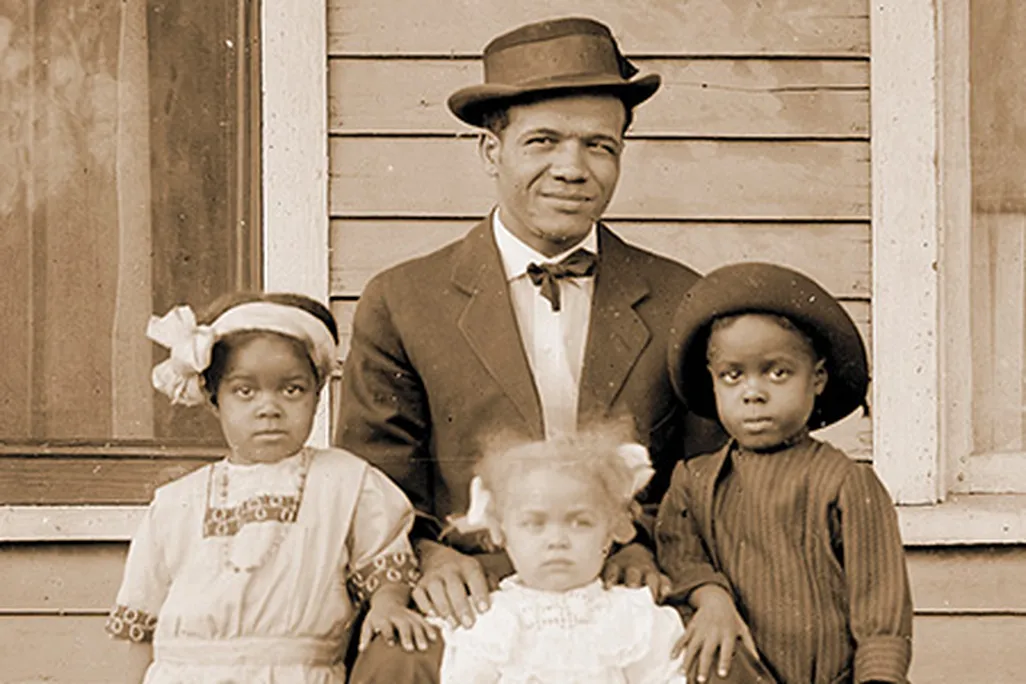
Douglas Keister has spent the past four decades traveling the country to photograph subjects as varied as architecture, folk art and cemeteries. Over the years, as he moved from his hometown of Lincoln, Nebraska, to several different cities in California, he carted around a heavy box of 280 antique glass-plate negatives that he’d bought when he was 17 from a friend who’d found them at a garage sale. “I thought, ‘Why the heck am I keeping these things?’” he says.
Then, in 1999, Keister’s mother sent him an article she’d seen in the Lincoln Journal Star saying historians in Lincoln had unearthed a few dozen glass negatives that featured portraits of the city’s small African-American population from the 1910s and ’20s, an era from which few other photos survived. Keister compared the images with his negatives, and “I just thought, ‘Wow,’” he says. “The style of the pictures, the backdrops used—they looked the exact same.” Almost by accident, he realized, he had conserved a rare glimpse into the everyday lives of an African-American community on the Great Plains.
Now Keister, who is 64 and lives in Chico, California, is donating 60 large-scale prints made from his collection for display in a permanent home—the National Museum of African American History and Culture, under construction and due to open on the National Mall in 2015. “They speak to a time and a place where African-Americans were treated as second-class citizens but lived their lives with dignity,” says curator Michèle Gates Moresi. “You can read about it and hear people talk about it, but to actually see the images is something entirely different.”
Determining exactly who those people were—and what skilled hand took their photographs—has taken significant detective work. After Keister read the Journal Star article, he took his negatives back to Lincoln and showed them to local historian Ed Zimmer, who was surprised to see how many there were. Together, they set out to identify the mystery photographer. “We took some wrong turns,” Zimmer says, but their search led them to a 94-year-old Lincolnite named Ruth Folley. “She went and got her box of family photos, and one of them matched ours, and she just said, ‘Well, Mr. Johnny Johnson took all of these.’” Her assertion was confirmed when Zimmer turned up a vintage print with a signature in the corner: John Johnson.
Through census records, Zimmer discovered that Johnson was born in Lincoln in 1879 to Harrison Johnson, an escaped slave and Civil War veteran, and his wife, Margaret. After graduating from high school and briefly attending the University of Nebraska (where he played football), Johnson found work in one of the few realms open to African-Americans at the time: manual labor. “He was a janitor and a drayman,” says Zimmer, “but also a very prolific and talented community photographer.” From roughly 1910 to 1925, he took as many as 500 photographs using a bulky view camera and flash powder. Some appear to have been commissioned portraits, while others feature co-workers, family and friends, and yet others convey Johnson’s personal interests—construction sites and local architecture.
As they scrutinized the portraits, Keister and Zimmer began to see something else emerge: an untold story of what historians call the new negro movement. Following World War I, African-American writers, musicians, artists and academics across the country sought to promote confidence, dignity and self-expression—a movement that would blossom into the Harlem Renaissance. Johnson’s portraits, they realized, were part of the same intellectual current. His subjects were formally posed and dressed in their best, and they often held books to show that they were educated. “Up until then, many photos of African-Americans showed the plight of the poor,” Keister says. “These photos are elevating. They’re ennobling.”
Douglas Keister has spent the past four decades traveling the country to photograph subjects as varied as architecture, folk art and cemeteries. Over the years, as he moved from his hometown of Lincoln, Nebraska, to several different cities in California, he carted around a heavy box of 280 antique glass-plate negatives that he’d bought when he was 17 from a friend who’d found them at a garage sale. “I thought, ‘Why the heck am I keeping these things?’” he says.
Then, in 1999, Keister’s mother sent him an article she’d seen in the Lincoln Journal Star saying historians in Lincoln had unearthed a few dozen glass negatives that featured portraits of the city’s small African-American population from the 1910s and ’20s, an era from which few other photos survived. Keister compared the images with his negatives, and “I just thought, ‘Wow,’” he says. “The style of the pictures, the backdrops used—they looked the exact same.” Almost by accident, he realized, he had conserved a rare glimpse into the everyday lives of an African-American community on the Great Plains.
Now Keister, who is 64 and lives in Chico, California, is donating 60 large-scale prints made from his collection for display in a permanent home—the National Museum of African American History and Culture, under construction and due to open on the National Mall in 2015. “They speak to a time and a place where African-Americans were treated as second-class citizens but lived their lives with dignity,” says curator Michèle Gates Moresi. “You can read about it and hear people talk about it, but to actually see the images is something entirely different.”
Determining exactly who those people were—and what skilled hand took their photographs—has taken significant detective work. After Keister read the Journal Star article, he took his negatives back to Lincoln and showed them to local historian Ed Zimmer, who was surprised to see how many there were. Together, they set out to identify the mystery photographer. “We took some wrong turns,” Zimmer says, but their search led them to a 94-year-old Lincolnite named Ruth Folley. “She went and got her box of family photos, and one of them matched ours, and she just said, ‘Well, Mr. Johnny Johnson took all of these.’” Her assertion was confirmed when Zimmer turned up a vintage print with a signature in the corner: John Johnson.
Through census records, Zimmer discovered that Johnson was born in Lincoln in 1879 to Harrison Johnson, an escaped slave and Civil War veteran, and his wife, Margaret. After graduating from high school and briefly attending the University of Nebraska (where he played football), Johnson found work in one of the few realms open to African-Americans at the time: manual labor. “He was a janitor and a drayman,” says Zimmer, “but also a very prolific and talented community photographer.” From roughly 1910 to 1925, he took as many as 500 photographs using a bulky view camera and flash powder. Some appear to have been commissioned portraits, while others feature co-workers, family and friends, and yet others convey Johnson’s personal interests—construction sites and local architecture.
As they scrutinized the portraits, Keister and Zimmer began to see something else emerge: an untold story of what historians call the new negro movement. Following World War I, African-American writers, musicians, artists and academics across the country sought to promote confidence, dignity and self-expression—a movement that would blossom into the Harlem Renaissance. Johnson’s portraits, they realized, were part of the same intellectual current. His subjects were formally posed and dressed in their best, and they often held books to show that they were educated. “Up until then, many photos of African-Americans showed the plight of the poor,” Keister says. “These photos are elevating. They’re ennobling.”
/https://tf-cmsv2-smithsonianmag-media.s3.amazonaws.com/accounts/headshot/joseph-stromberg-240.jpg)