• Smithsonian
    Institution
  • Travel
    With Us
  • Smithsonian
    Store
  • Smithsonian
    Channel
  • goSmithsonian
    Visitors Guide
  • Air & Space
    magazine

Smithsonian.com

  • Subscribe
  • History & Archaeology
  • Science
  • Ideas & Innovations
  • Arts & Culture
  • Travel & Food
  • At the Smithsonian
  • Photos
  • Videos
  • Games
  • Shop
  • New at the Smithsonian

America’s Got a Case of Souvenir Mania

A new book from a Smithsonian curator looks at the culture and business of memorabilia

| | | Reddit | Digg | Stumble | Email |
  • By Paul Bisceglio
  • Smithsonian magazine, April 2013, Subscribe
View More Photos »
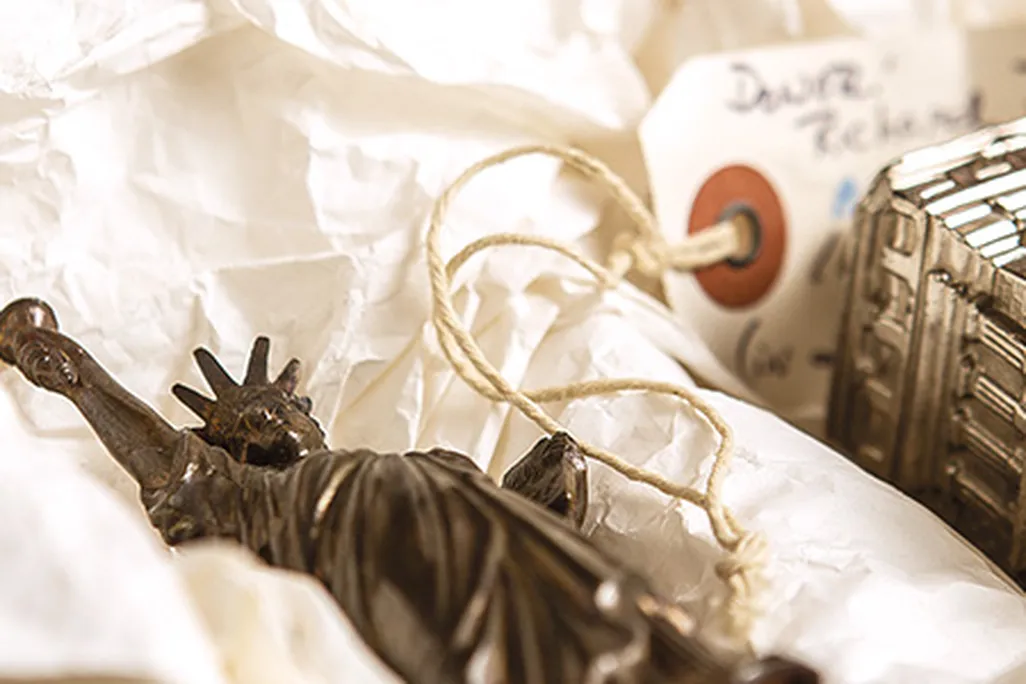
Statue of Liberty
A toy Statue of Liberty was one of thousands sold to raise funds to build the real statue's pedestal. (Eli Meir Kaplan)

Photo Gallery (1/3)

Museum artifacts

Explore more photos from the story


Video Gallery

Why is a Piece of Joan of Arc's Dungeon in the Smithsonian?

Related Books

Souvenir Nation: Relics, Keepsakes, and Curios from the Smithsonian's National Museum of American History

by William Bird


For days on end William Bird locked himself in a brightly lit storage room with hair clippings, a wood chip and two 80-year-old pieces of cake. There was also a punch bowl and the cuff of a woman’s blouse stained with Abraham Lincoln’s blood. Bird, known to friends as Larry (no Celtics jersey, but almost as tall), was digging through the American History Museum’s political history collection for overlooked gems to put in his new book, Souvenir Nation, out this month from Princeton Architectural Press, and the subject of an exhibit by the same title opening August 9 at the Smithsonian Castle.

The things he exhumed didn’t usually look like treasure at all: bits of rock, a napkin, a fish-shaped can opener. But “if you drill down deeply enough into the things that you have,” says Bird, a curator at the museum, “there really is a much richer history than you might ever think just by looking at the surface.”

The United States, it turns out, was a nation of casual plunderers from the start. Visitors to Mount Vernon snapped splinters from the moldings; beachgoers in Massachusetts chiseled off chunks of Plymouth Rock; tourists snipped fabric from the White House curtains. By the early 19th century, newspapers were referring to illicit souvenir hunting as a “national mania.”

Bird thinks that the practice was so popular because it allowed any American, regardless of social standing, to connect with the nation’s history. “If the past could be touched,” he says, “it could be chipped away, excavated, carted off and whittled into pocket-size bits, giving form to persons, places and events that lingered forever in the act of possession.” In contrast, mass-produced mementos, he says, “only partially satisfy an emotional urge to connect with an ached-for past.”

After culling the museum’s collection, Bird ditched the white gloves and moved back into his office down the hall to research the keepsakes. He focused on more than 50 relics, including a vase carved out of a timber from the USS Constitution, a piece of the white towel used to signal the Confederate surrender at Appomattox and a chunk of Plymouth Rock. The two pieces of cake are from President Franklin D. Roosevelt’s 52nd birthday celebration (a fund-raiser for polio patients), and the hair clippings are from various presidents. (A reporter once wrote that Andrew Jackson gave away so many locks that he sometimes had “the appearance of having passed from the hands of the barber.”)

Objects arrived in the collection from abroad as well—a sugar cube-size block of the Bastille, a painted fragment of the Berlin Wall, a stone from Joan of Arc’s dungeon. When Napoleon Bonaparte left for exile on the island of Elba in 1815, he gave two table napkins to William Bayard, a wealthy American traveler, who in turn passed them on to the future mother-in-law of Smithsonian Secretary Spencer Fullerton Baird.

Bird’s favorite object in the collection is a pinkie-size chip from the wooden tie that completed America’s first transcontinental railroad. An 8-year-old named Hart Farwell collected the chip a month after the tie was nailed down in May 1869 and kept it with him as he grew to become a pioneer independent telephone company developer in Indiana. Bird likes to display the sliver on an oversized pedestal, partly as a joke, but partly as a reminder of how large it loomed in the mind of the boy collector.

“Many historians are grounded in the belief that objects are not supposed to cause you to have feelings,” he says. “When it comes to this stuff, though, each thing has its own little human story. How can you not feel a personal connection?”

Americans mostly quit defacing historical objects after the rise of the preservation movement in the late 19th century. Yet travelers and history buffs still pick up found objects, Bird suggests, because they’re more personal than prefab trinkets. The collecting impulse lives on—thank goodness. “You can’t have a museum without people who are interested in finding and saving things,” Bird says.


For days on end William Bird locked himself in a brightly lit storage room with hair clippings, a wood chip and two 80-year-old pieces of cake. There was also a punch bowl and the cuff of a woman’s blouse stained with Abraham Lincoln’s blood. Bird, known to friends as Larry (no Celtics jersey, but almost as tall), was digging through the American History Museum’s political history collection for overlooked gems to put in his new book, Souvenir Nation, out this month from Princeton Architectural Press, and the subject of an exhibit by the same title opening August 9 at the Smithsonian Castle.

The things he exhumed didn’t usually look like treasure at all: bits of rock, a napkin, a fish-shaped can opener. But “if you drill down deeply enough into the things that you have,” says Bird, a curator at the museum, “there really is a much richer history than you might ever think just by looking at the surface.”

The United States, it turns out, was a nation of casual plunderers from the start. Visitors to Mount Vernon snapped splinters from the moldings; beachgoers in Massachusetts chiseled off chunks of Plymouth Rock; tourists snipped fabric from the White House curtains. By the early 19th century, newspapers were referring to illicit souvenir hunting as a “national mania.”

Bird thinks that the practice was so popular because it allowed any American, regardless of social standing, to connect with the nation’s history. “If the past could be touched,” he says, “it could be chipped away, excavated, carted off and whittled into pocket-size bits, giving form to persons, places and events that lingered forever in the act of possession.” In contrast, mass-produced mementos, he says, “only partially satisfy an emotional urge to connect with an ached-for past.”

After culling the museum’s collection, Bird ditched the white gloves and moved back into his office down the hall to research the keepsakes. He focused on more than 50 relics, including a vase carved out of a timber from the USS Constitution, a piece of the white towel used to signal the Confederate surrender at Appomattox and a chunk of Plymouth Rock. The two pieces of cake are from President Franklin D. Roosevelt’s 52nd birthday celebration (a fund-raiser for polio patients), and the hair clippings are from various presidents. (A reporter once wrote that Andrew Jackson gave away so many locks that he sometimes had “the appearance of having passed from the hands of the barber.”)

Objects arrived in the collection from abroad as well—a sugar cube-size block of the Bastille, a painted fragment of the Berlin Wall, a stone from Joan of Arc’s dungeon. When Napoleon Bonaparte left for exile on the island of Elba in 1815, he gave two table napkins to William Bayard, a wealthy American traveler, who in turn passed them on to the future mother-in-law of Smithsonian Secretary Spencer Fullerton Baird.

Bird’s favorite object in the collection is a pinkie-size chip from the wooden tie that completed America’s first transcontinental railroad. An 8-year-old named Hart Farwell collected the chip a month after the tie was nailed down in May 1869 and kept it with him as he grew to become a pioneer independent telephone company developer in Indiana. Bird likes to display the sliver on an oversized pedestal, partly as a joke, but partly as a reminder of how large it loomed in the mind of the boy collector.

“Many historians are grounded in the belief that objects are not supposed to cause you to have feelings,” he says. “When it comes to this stuff, though, each thing has its own little human story. How can you not feel a personal connection?”

Americans mostly quit defacing historical objects after the rise of the preservation movement in the late 19th century. Yet travelers and history buffs still pick up found objects, Bird suggests, because they’re more personal than prefab trinkets. The collecting impulse lives on—thank goodness. “You can’t have a museum without people who are interested in finding and saving things,” Bird says.

    Subscribe now for more of Smithsonian's coverage on history, science and nature.


Related topics: American History


| | | Reddit | Digg | Stumble | Email |
 

Add New Comment


Name: (required)

Email: (required)

Comment:

Comments are moderated, and will not appear until Smithsonian.com has approved them. Smithsonian reserves the right not to post any comments that are unlawful, threatening, offensive, defamatory, invasive of a person's privacy, inappropriate, confidential or proprietary, political messages, product endorsements, or other content that might otherwise violate any laws or policies.

Comments (1)

A few years ago we visited Dealey Plaza in Dallas. Noticed that the pedestal that the famous Zapruder film was taken from was missing it's corner, no doubt the work of a souvenir hunter.

Posted by Richard Surratt on April 17,2013 | 10:41 PM


Advertisement


Most Popular

  • Viewed
  • Emailed
  • Commented
  1. How Long Can Turtles Stay Underwater and Other Questions From Our Readers
  2. How the Smithsonian is Coming to You
  3. Skateboard Culture and Other Seriously Amazing Smithsonian Exhibits Coming to a Museum Near You
  4. Lost and Found Again: Photos of African-Americans on the Plains
  5. America’s Got a Case of Souvenir Mania
  6. What Happened to the Wizard of Oz Costumes and More Great Questions From our Readers
  7. The Wild Bunch and More Are New Faces at the Portrait Gallery
  8. Baby Dell
  9. The Different Faces of Korean Heritage at the Portrait Gallery
  10. 17 Billion Earth-Size Planets! An Astronomer Reflects on the Possibility of Alien Life

View All Most Popular »

Advertisement

Follow Us

Smithsonian Magazine
@SmithsonianMag
Follow Smithsonian Magazine on Twitter

Sign up for regular email updates from Smithsonian.com, including daily newsletters and special offers.

In The Magazine

May 2013

  • Patriot Games
  • The Next Revolution
  • Blowing Up The Art World
  • The Body Eclectic
  • Microbe Hunters

View Table of Contents »


First Name
Last Name
Address 1
Address 2
City
State   Zip
Email


Travel with Smithsonian


Smithsonian Store

Stars and Stripes Throw

Our exclusive Stars and Stripes Throw is a three-layer adaption of the 1861 “Stars and Stripes” quilt... $65


View full archiveRecent Issues


  • May 2013


  • Apr 2013


  • Mar 2013

Newsletter

Sign up for regular email updates from Smithsonian magazine, including free newsletters, special offers and current news updates.

Subscribe Now

About Us

Smithsonian.com expands on Smithsonian magazine's in-depth coverage of history, science, nature, the arts, travel, world culture and technology. Join us regularly as we take a dynamic and interactive approach to exploring modern and historic perspectives on the arts, sciences, nature, world culture and travel, including videos, blogs and a reader forum.

Explore our Brands

  • goSmithsonian.com
  • Smithsonian Air & Space Museum
  • Smithsonian Student Travel
  • Smithsonian Catalogue
  • Smithsonian Journeys
  • Smithsonian Channel
  • About Smithsonian
  • Contact Us
  • Advertising
  • Subscribe
  • RSS
  • Topics
  • Member Services
  • Copyright
  • Site Map
  • Privacy Policy
  • Ad Choices

Smithsonian Institution