
A Brief History of Chocolate
Uncover the bittersweet story of this ancient treat and watch a video
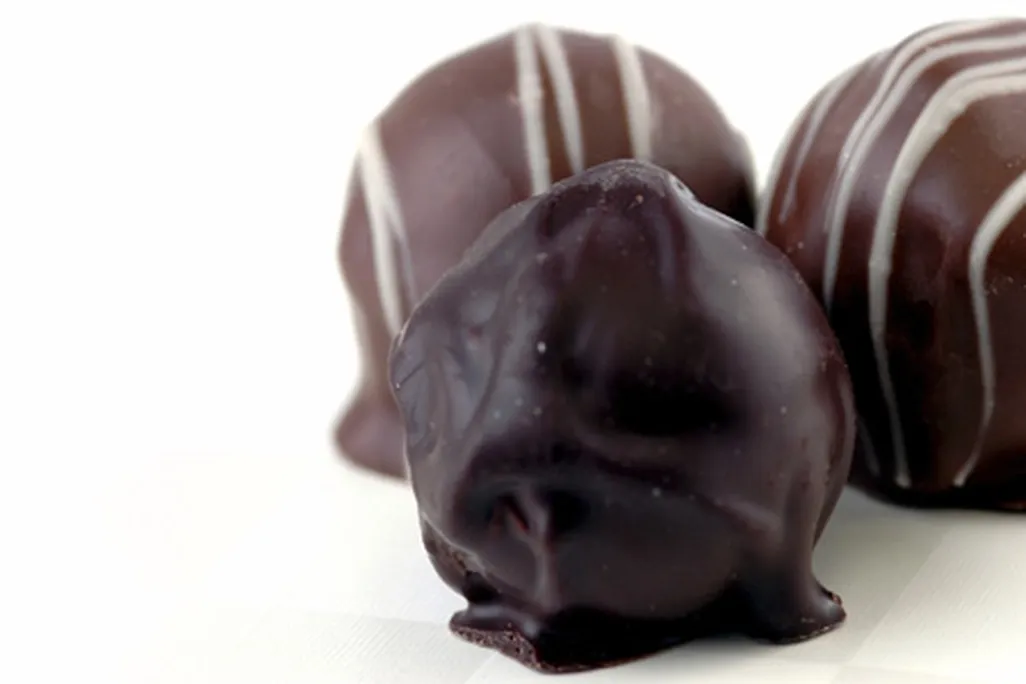
When most of us hear the word chocolate, we picture a bar, a box of bonbons, or a bunny. The verb that comes to mind is probably "eat," not "drink," and the most apt adjective would seem to be "sweet." But for about 90 percent of chocolate's long history, it was strictly a beverage, and sugar didn't have anything to do with it.
"I often call chocolate the best-known food that nobody knows anything about," said Alexandra Leaf, a self-described "chocolate educator" who runs a business called Chocolate Tours of New York City.
The terminology can be a little confusing, but most experts these days use the term "cacao" to refer to the plant or its beans before processing, while the term "chocolate" refers to anything made from the beans, she explained. "Cocoa" generally refers to chocolate in a powdered form, although it can also be a British form of "cacao."
Etymologists trace the origin of the word "chocolate" to the Aztec word "xocoatl," which referred to a bitter drink brewed from cacao beans. The Latin name for the cacao tree, Theobroma cacao, means "food of the gods."
Many modern historians have estimated that chocolate has been around for about 2000 years, but recent research suggests that it may be even older.
In the book The True History of Chocolate, authors Sophie and Michael Coe make a case that the earliest linguistic evidence of chocolate consumption stretches back three or even four millennia, to pre-Columbian cultures of Mesoamerica such as the Olmec.
Last November, anthropologists from the University of Pennsylvania announced the discovery of cacao residue on pottery excavated in Honduras that could date back as far as 1400 B.C.E. It appears that the sweet pulp of the cacao fruit, which surrounds the beans, was fermented into an alcoholic beverage of the time.
"Who would have thought, looking at this, that you can eat it?" said Richard Hetzler, executive chef of the café at the Smithsonian's National Museum of the American Indian, as he displayed a fresh cacao pod during a recent chocolate-making demonstration. "You would have to be pretty hungry, and pretty creative!"
It's hard to pin down exactly when chocolate was born, but it's clear that it was cherished from the start. For several centuries in pre-modern Latin America, cacao beans were considered valuable enough to use as currency. One bean could be traded for a tamale, while 100 beans could purchase a good turkey hen, according to a 16th-century Aztec document.
/https://tf-cmsv2-smithsonianmag-media.s3.amazonaws.com/filer/fa/51/fa51b55b-7444-45a8-b5f7-211cc1a343a4/42-27304692.jpg)
/https://tf-cmsv2-smithsonianmag-media.s3.amazonaws.com/filer/79/aa/79aa717c-d402-44c8-b94e-f161359ee9f3/42-27620268.jpg)
/https://tf-cmsv2-smithsonianmag-media.s3.amazonaws.com/filer/4e/d2/4ed29e7a-90bd-44a7-a3cd-8a9fb3ae9fde/42-52019856.jpg)
/https://tf-cmsv2-smithsonianmag-media.s3.amazonaws.com/filer/2c/68/2c685282-eaf6-4f0f-95c6-e6de8d251411/42-24152268.jpg)
/https://tf-cmsv2-smithsonianmag-media.s3.amazonaws.com/filer/1f/05/1f050483-b622-48f0-979f-350c1deb8fab/42-53718003.jpg)
/https://tf-cmsv2-smithsonianmag-media.s3.amazonaws.com/filer/1e/c2/1ec28ff2-838f-4045-80cf-2a996b363055/of013160.jpg)
/https://tf-cmsv2-smithsonianmag-media.s3.amazonaws.com/filer/52/41/5241da1f-b9bc-4a28-b214-88a84229922e/be053048.jpg)
/https://tf-cmsv2-smithsonianmag-media.s3.amazonaws.com/filer/2c/40/2c407127-553f-4ebe-9365-d04a24e25454/42-36985537.jpg)
Both the Mayans and Aztecs believed the cacao bean had magical, or even divine, properties, suitable for use in the most sacred rituals of birth, marriage and death. According to Chloe Doutre-Roussel's book The Chocolate Connoisseur, Aztec sacrifice victims who felt too melancholy to join in ritual dancing before their death were often given a gourd of chocolate (tinged with the blood of previous victims) to cheer them up.
Sweetened chocolate didn't appear until Europeans discovered the Americas and sampled the native cuisine. Legend has it that the Aztec king Montezuma welcomed the Spanish explorer Hernando Cortes with a banquet that included drinking chocolate, having tragically mistaken him for a reincarnated deity instead of a conquering invader. Chocolate didn't suit the foreigners' tastebuds at first –one described it in his writings as "a bitter drink for pigs" – but once mixed with honey or cane sugar, it quickly became popular throughout Spain.
By the 17th century, chocolate was a fashionable drink throughout Europe, believed to have nutritious, medicinal and even aphrodisiac properties (it's rumored that Casanova was especially fond of the stuff). But it remained largely a privilege of the rich until the invention of the steam engine made mass production possible in the late 1700s.
In 1828, a Dutch chemist found a way to make powdered chocolate by removing about half the natural fat (cacao butter) from chocolate liquor, pulverizing what remained and treating the mixture with alkaline salts to cut the bitter taste. His product became known as "Dutch cocoa," and it soon led to the creation of solid chocolate.
The creation of the first modern chocolate bar is credited to Joseph Fry, who in 1847 discovered that he could make a moldable chocolate paste by adding melted cacao butter back into Dutch cocoa.
By 1868, a little company called Cadbury was marketing boxes of chocolate candies in England. Milk chocolate hit the market a few years later, pioneered by another name that may ring a bell – Nestle.
In America, chocolate was so valued during the Revolutionary War that it was included in soldiers' rations and used in lieu of wages. While most of us probably wouldn't settle for a chocolate paycheck these days, statistics show that the humble cacao bean is still a powerful economic force. Chocolate manufacturing is a more than 4-billion-dollar industry in the United States, and the average American eats at least half a pound of the stuff per month.
In the 20th century, the word "chocolate" expanded to include a range of affordable treats with more sugar and additives than actual cacao in them, often made from the hardiest but least flavorful of the bean varieties (forastero).
But more recently, there's been a "chocolate revolution," Leaf said, marked by an increasing interest in high-quality, handmade chocolates and sustainable, effective cacao farming and harvesting methods. Major corporations like Hershey's have expanded their artisanal chocolate lines by purchasing smaller producers known for premium chocolates, such as Scharffen Berger and Dagoba, while independent chocolatiers continue to flourish as well.
"I see more and more American artisans doing incredible things with chocolate," Leaf said. "Although, I admit that I tend to look at the world through cocoa-tinted glasses."


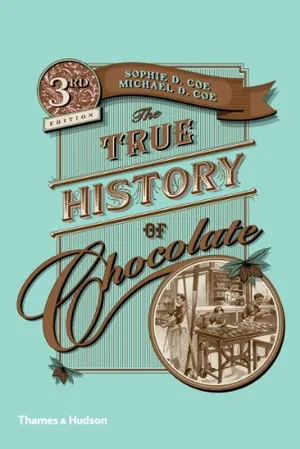
The True History of Chocolate
The True History of Chocolate [Sophie D. Coe, Michael D. Coe] on Amazon.com. *FREE* shipping on qualifying offers. "A beautifully written . . .