Content ID:
Field:


  • About Smithsonian
  • Email Updates
  • Member Services
  • Shop
  • Archive
Smithsonian.com
  • Smithsonian Institution
  • Smithsonian Channel
  • goSmithsonian
  • Air & Space magazine
  • Home
  • History & Archaeology
  • People & Places
  • Science & Nature
  • Arts & Culture
  • Travel
  • Photos & Videos
  • Games & Puzzles
  • Subscribe
  • Art & Artists
  • Music & Literature
  • Photo of the Day
  • Smithsonian Institution
  • Trends & Traditions
Kenneth R. Fletcher with Nakki Goranin in a photobooth

Courtesy of Kenneth R. Fletcher

  • Art & Artists

Kenneth R. Fletcher on "Four for a Quarter"

  • By Megan Gambino
  • Smithsonian.com, September 01, 2008

Article Tools

  • Font
  • Share/Save/Bookmark Share
  • Email
  • Print
  • Digg Digg
  • Comments
  • StumbleUpon StumbleUpon
  • RSS
  • Reddit Reddit
    More from Smithsonian.com
    • Four for a Quarter

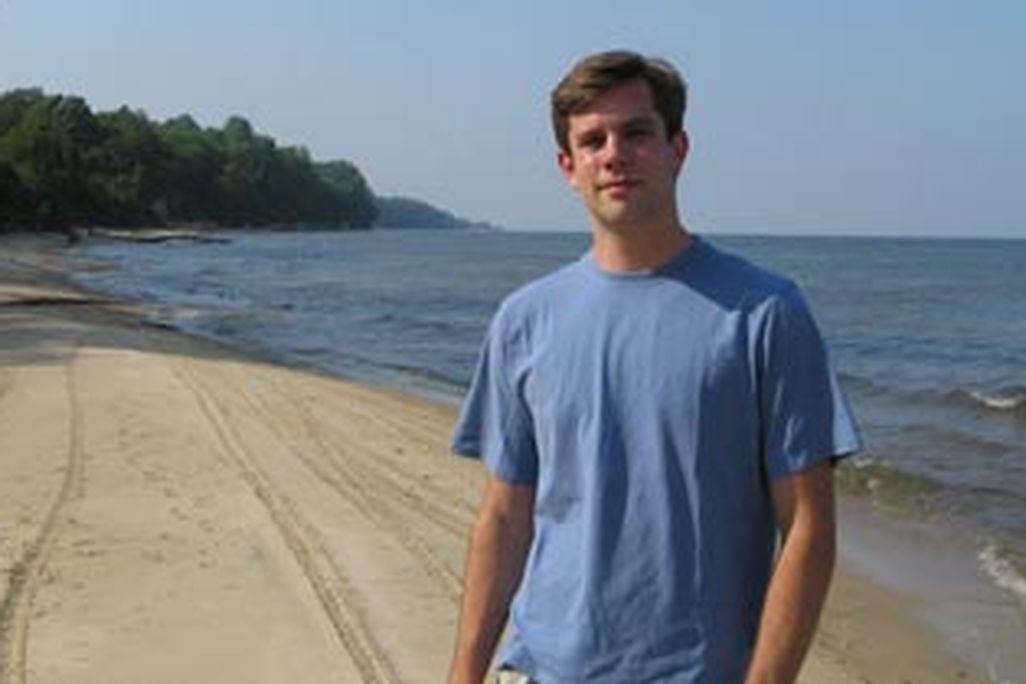
    Kenneth Fletcher graduated with a master's degree in journalism from University of Maryland, where he covered agriculture and the environment for the Capital News Service, in 2007. From there, he became Smithsonian's writing intern, contributing primarily to the magazine's Around the Mall section. I recently caught up with Fletcher, who has since left the magazine to freelance from Latin America, to chat about his experience reporting and writing "Four for a Quarter," in our September issue.

    What drew you to this story?
    Back in April, Nakki Goranin came to the American History museum to give a talk about her new book. I thought it would be a great story. The pictures in the book are very arresting. They're very intimate portraits unlike any other historical photography I had seen. And Goranin's enthusiasm is contagious. She spent years and years crisscrossing the US and Canada to put together a comprehensive history of the photobooth. That's dedication.

    Had you used photobooths before? If so, what memories had you captured in them?
    I didn't really grow up in the photobooth's heyday. I do remember seeing them around as a kid but never actually used one. After speaking with Goranin the first time, I went to the Web site photobooth.net and looked at the list of remaining classic chemical photobooths. There happened to be one at a mall just a few miles from my house. I had to give it a try. I headed over there one Sunday afternoon, fed a few crumpled bills into the machine and sat through the four shots, trying to figure out what expression I wanted on my face. Chemical booths take only a few minutes to develop the pictures, so I sat in the food court anxiously awaiting my strip. When it finally popped out of the slot, the strip showed three teenage girls crowded into the booth making funny faces. There must have been some malfunction and I got the strip of whoever was in there before me. So it's likely that later that day some teenagers were very disappointed when they got a strip of four boring pictures of me.

    Do you think they will be on your radar now? That you'll look for them in malls and things?
    I'm sure that I'll notice photobooths more now that I've done the story, and probably start rattling off obscure photobooth history and the pros and cons of digital booths to whoever is with me. And I might even get in a booth again and hope that this time my picture comes out.

    What do you think is behind the photobooth's longevity? Why are sales still up and people still wanting to use them?
    Goranin and others will say that being in a photobooth is a magical experience. It's true that posing for a machine gives you a freedom unlike any other form of photography. But I think there are less abstract reasons that explain its longevity despite a proliferation of cheap digital photography. It's quick and easy to take your picture in a booth on a whim. It's a very controlled environment, so you know you'll get a decent portrait. And, unlike a digital camera, you almost instantly get something you can hold in your hand and keep.

    What was the highlight of your reporting in Vermont?
    Goranin is really lively; she's got a great personality. In her home she has thousands of photobooth pictures she's collected. When I visited her, she spread a few dozen of her favorites on the table and told me there were 80 years of photo strips there, from 1927 until today. To see firsthand these pictures that people obviously cherished made a big impression on me. I wondered about all the stories behind the photos. Who were they? And what made them decide to enter that booth?

    Kenneth Fletcher graduated with a master's degree in journalism from University of Maryland, where he covered agriculture and the environment for the Capital News Service, in 2007. From there, he became Smithsonian's writing intern, contributing primarily to the magazine's Around the Mall section. I recently caught up with Fletcher, who has since left the magazine to freelance from Latin America, to chat about his experience reporting and writing "Four for a Quarter," in our September issue.

    What drew you to this story?
    Back in April, Nakki Goranin came to the American History museum to give a talk about her new book. I thought it would be a great story. The pictures in the book are very arresting. They're very intimate portraits unlike any other historical photography I had seen. And Goranin's enthusiasm is contagious. She spent years and years crisscrossing the US and Canada to put together a comprehensive history of the photobooth. That's dedication.

    Had you used photobooths before? If so, what memories had you captured in them?
    I didn't really grow up in the photobooth's heyday. I do remember seeing them around as a kid but never actually used one. After speaking with Goranin the first time, I went to the Web site photobooth.net and looked at the list of remaining classic chemical photobooths. There happened to be one at a mall just a few miles from my house. I had to give it a try. I headed over there one Sunday afternoon, fed a few crumpled bills into the machine and sat through the four shots, trying to figure out what expression I wanted on my face. Chemical booths take only a few minutes to develop the pictures, so I sat in the food court anxiously awaiting my strip. When it finally popped out of the slot, the strip showed three teenage girls crowded into the booth making funny faces. There must have been some malfunction and I got the strip of whoever was in there before me. So it's likely that later that day some teenagers were very disappointed when they got a strip of four boring pictures of me.

    Do you think they will be on your radar now? That you'll look for them in malls and things?
    I'm sure that I'll notice photobooths more now that I've done the story, and probably start rattling off obscure photobooth history and the pros and cons of digital booths to whoever is with me. And I might even get in a booth again and hope that this time my picture comes out.

    What do you think is behind the photobooth's longevity? Why are sales still up and people still wanting to use them?
    Goranin and others will say that being in a photobooth is a magical experience. It's true that posing for a machine gives you a freedom unlike any other form of photography. But I think there are less abstract reasons that explain its longevity despite a proliferation of cheap digital photography. It's quick and easy to take your picture in a booth on a whim. It's a very controlled environment, so you know you'll get a decent portrait. And, unlike a digital camera, you almost instantly get something you can hold in your hand and keep.

    What was the highlight of your reporting in Vermont?
    Goranin is really lively; she's got a great personality. In her home she has thousands of photobooth pictures she's collected. When I visited her, she spread a few dozen of her favorites on the table and told me there were 80 years of photo strips there, from 1927 until today. To see firsthand these pictures that people obviously cherished made a big impression on me. I wondered about all the stories behind the photos. Who were they? And what made them decide to enter that booth?

     
    Comments

    Post a Comment


    Name: (required)

    Email: (required)

    Comment:


    Advertisement


    Most Popular Video

    • Newest
    • Most Viewed
    Coral Reef Spawn

    How Coral Reefs Spawn

    Watch coral reefs reproduce in a flurry of carefully-timed action

    Flipping Out Over Pinball

    David Silverman has collected more than 800 pinball machines to preserve their history

    Sing Along to the Messiah

    Sing Along to the Messiah

    The story within Handel's famous piece is what drives its enduring popularity

    A Rare Look at Tucker Cars

    A Rare Look at Tucker Cars

    Collector David Cammack owns three of the 43 remaining cars in existence designed by Preston Tucker

    The Residents of Arlington Cemetery

    The Residents of Arlington Cemetery

    While President Kennedy may be one of the best known gravesites in Arlington, there are many other notable Americans buried there

    The Ju/Hoansi Tribe in Action

    The Ju/'Hoansi Tribe in Action

    Over the course of 50 years, John Marshall filmed the African tribe, tracking how their nomadic culture slowly died out

    Watch the Geckos Tail Flip

    Watch the Gecko's Tail Flip

    Leopard geckos can shed their tail to distract predators, and the tails can leap up to 3 cm in one jump

    A Final Takeoff

    A Final Takeoff

    Watch one of Amelia Earhart's final takeoffs

    Most Popular

    • Viewed
    • Emailed
    • Commented
    1. Ten Notable Apocalypses That (Obviously) Didn’t Happen
    2. Tattoos
    3. A Brief History of the Salem Witch Trials
    4. Wolves and the Balance of Nature in the Rockies
    5. Top Ten Places Where Life Shouldn't Exist... But Does
    6. 28 Places to See Before You Die—the Taj Mahal, Grand Canyon and More
    7. Ethiopia's Exotic Monkeys
    8. John Brown's Day of Reckoning
    9. Crawling Around with Baltimore Street Rats
    10. How Arlington National Cemetery Came to Be
    1. Ten Notable Apocalypses That (Obviously) Didn’t Happen
    2. Crawling Around with Baltimore Street Rats
    3. Invasion of the Longhorn Beetles
    4. How Arlington National Cemetery Came to Be
    5. 28 Places to See Before You Die—the Taj Mahal, Grand Canyon and More
    6. Ethiopia's Exotic Monkeys
    7. The Surprising Satisfactions of a Home Funeral
    8. Boise, Idaho: Big Skies and Colorful Characters
    9. Terra Cotta Soldiers on the March
    10. Decoding Jackson Pollock
    1. Ten Notable Apocalypses That (Obviously) Didn’t Happen
    2. How Arlington National Cemetery Came to Be
    3. Evolution in the Deepest River in the World
    4. Artist William Wegman
    5. A Brief History of the Salem Witch Trials
    6. Man Ray’s Signature Work
    7. From Brooklyn to Worthington, Minnesota
    8. The Rescue of Henry Clay
    9. Memoirs of a World War II Buffalo Soldier
    10. What would you add to the Smithsonian Life List?

    - - - Advertisements - - -


    Join Us

    Facebook

    Facebook

    Become a fan of Smithsonian magazine's official Facebook page!

    Twitter

    Follow Smithsonian magazine on Twitter

    In The Magazine

    December 2009 Issue Cover

    December 2009

    • Wildlife Trafficking
    • Hallelujah
    • The Pyramid Man
    • Glee Mail
    • Savoring Puebla

    View Table of Contents »

    Smithsonian magazine presents

    6th Annual Smithsonian Photo Contest Winners

    Out of more than 17,000 entries contributed from around the world, Smithsonian and its readers select the year's best

    • Smithsonian Store
    • Smithsonian Journeys

    Kokeshi Dolls

    Item No. 85070

    Antarctica: Aboard National Geographic Explorer

    Journey to Antarctica to experience this otherworldly and unparalleled wilderness up close. (Jan 7 - 21, 2010)


    View full archiveRecent Issues

    • December 2009 Issue Cover
      Dec 2009

    • November 2009 Issue
      Nov 2009

    • October 2009 Issue Cover
      Oct 2009

    Newsletter

    Sign up for regular email updates from Smithsonian magazine, including free newsletters, special offers and current news updates.

    Subscribe Now

    About Us

    Smithsonian.com expands on Smithsonian magazine's in-depth coverage of history, science, nature, the arts, travel, world culture and technology. Join us regularly as we take a dynamic and interactive approach to exploring modern and historic perspectives on the arts, sciences, nature, world culture and travel, including videos, blogs and a reader forum.

    Explore our Brands

    • goSmithsonian.com
    • Smithsonian Air & Space Museum
    • Smithsonian Institution
    • Smithsonian Catalogue
    • Smithsonian Journeys
    • Smithsonian Channel
    • Site Map
    • Privacy Policy
    • Copyright
    • About Smithsonian
    • Contact Us
    • Advertising
    • Reader Panel
    • Subscribe
    • RSS
    • Topics

    Smithsonian Institution

    Produced by Clickability