• Smithsonian
    Institution
  • Travel
    With Us
  • Smithsonian
    Store
  • Smithsonian
    Channel
  • goSmithsonian
    Visitors Guide
  • Air & Space
    magazine

Smithsonian.com

  • Subscribe
  • History & Archaeology
  • Science
  • Ideas & Innovations
  • Arts & Culture
  • Travel & Food
  • At the Smithsonian
  • Photos
  • Videos
  • Games
  • Shop
  • Art
  • Design
  • Fashion
  • Music & Film
  • Books
  • Art Meets Science
  • Arts & Culture

Words to Remember

Amanda McKittrick Ros predicted she would achieve lasting fame as a novelist. Unfortunately, she did
| | | Reddit | Digg | Stumble | Email |
  • By Miles Corwin
  • Smithsonian magazine, June 2009, Subscribe
 
Amanda McKittrick Ros
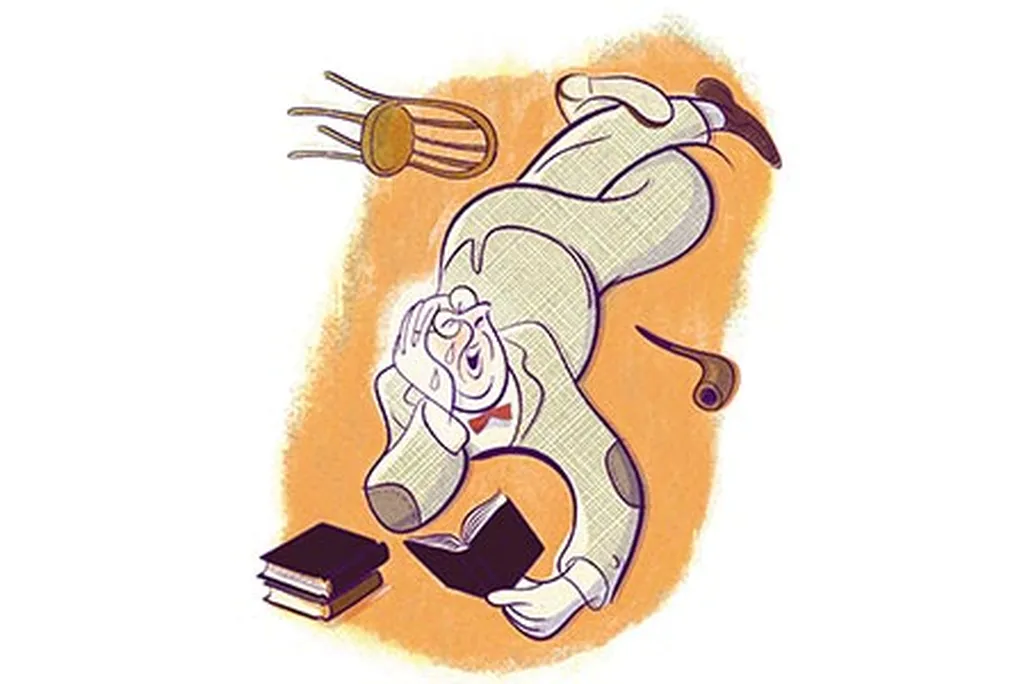
"Amanda McKittrick Ros, who died in 1939, abused the English language in three novels and dozens of poems." (Illustration by Eric Palma)

Related Books

In Search of the World's Worst Writers: A Celebration of Triumphantly Bad Literature

by Nick Page
Trafalgar Square, 2001

More from Smithsonian.com

  • There Oughta Be a Law
  • Darwin for Dads

There has never been a shortage of bad writers. Almost anyone can bang out an atrocious book, but to achieve fame and adulation for it takes a certain kind of genius.

In this literary sub-genre, Irish writer Amanda McKittrick Ros reigns supreme. "Uniquely dreadful," proclaims the Oxford Companion to Irish Literature. "The greatest bad writer who ever lived," says author Nick Page.

Ros, who died in 1939, abused (some would say, tortured) the English language in three novels and dozens of poems. She refers to eyes as "globes of glare," legs as "bony supports," pants as a "southern necessary," sweat as "globules of liquid lava" and alcohol as the "powerful monster of mangled might." The Oxford literary group "The Inklings," which included C. S. Lewis and J.R.R. Tolkien, held competitions to see who could read her work aloud longest while keeping a straight face.

Mark Twain considered her first book, Irene Iddesleigh, as "one of the greatest unin­tentionally humorous novels of all time." Consider this passage: "Speak! Irene! Wife! Woman! Do not sit in silence and allow the blood that now boils in my veins to ooze through cavities of unrestrained passion and trickle down to drench me with its crimson hue!"

In Ros' last novel, Helen Huddleson, she named characters after fruits, including Lord Raspberry (and his sister Cherry), Sir Peter Plum, Christopher Currant and the Earl of Grape. And Ros' penchant for alliteration resists restraint: The villainous Madame Pear, she wrote, "had a swell staff of sweet-faced helpers swathed in stratagem, whose members and garments glowed with the lust of the loose, sparkled with the tears of the tortured, shone with the sunlight of bribery, dangled with the diamonds of distrust, slashed with sapphires of scandals...."

Ros' husband, a train station manager in a small Northern Ireland town, financed the publication of Irene Iddesleigh as a tenth wedding anniversary present. A reader sent a copy to humorist Barry Pain, who in an 1898 review called it "a thing that happens once in a million years." Initially entertained, he soon "shrank before it in tears and terror." In the preface to her next book Ros attacked Pain as a "clay crab of corruption" and a "cancerous irritant wart." Like many novelists, she believed her critics lacked the intellect to appreciate her talent and came to believe that her growing legion of detractors conspired against her for revealing the corruption of the ruling class—thereby disturbing, as she put it, "the bowels of millions."

In the past century, a few Ros enthusiasts have kept her legend alive. A biography—O Rare Amanda!—was published in 1954; a collection of her most memorable passages was anthologized—Thine in Storm and Calm—in 1988; and two years ago, she was feted at a Belfast literary festival.

Ros imagined "the million and one who thirst for aught that drops from my pen," and predicted she would "be talked about at the end of a thousand years."

She's well on her way.

Miles Corwin is the author of three books and teaches literary journalism at the University of California at Irvine.


There has never been a shortage of bad writers. Almost anyone can bang out an atrocious book, but to achieve fame and adulation for it takes a certain kind of genius.

In this literary sub-genre, Irish writer Amanda McKittrick Ros reigns supreme. "Uniquely dreadful," proclaims the Oxford Companion to Irish Literature. "The greatest bad writer who ever lived," says author Nick Page.

Ros, who died in 1939, abused (some would say, tortured) the English language in three novels and dozens of poems. She refers to eyes as "globes of glare," legs as "bony supports," pants as a "southern necessary," sweat as "globules of liquid lava" and alcohol as the "powerful monster of mangled might." The Oxford literary group "The Inklings," which included C. S. Lewis and J.R.R. Tolkien, held competitions to see who could read her work aloud longest while keeping a straight face.

Mark Twain considered her first book, Irene Iddesleigh, as "one of the greatest unin­tentionally humorous novels of all time." Consider this passage: "Speak! Irene! Wife! Woman! Do not sit in silence and allow the blood that now boils in my veins to ooze through cavities of unrestrained passion and trickle down to drench me with its crimson hue!"

In Ros' last novel, Helen Huddleson, she named characters after fruits, including Lord Raspberry (and his sister Cherry), Sir Peter Plum, Christopher Currant and the Earl of Grape. And Ros' penchant for alliteration resists restraint: The villainous Madame Pear, she wrote, "had a swell staff of sweet-faced helpers swathed in stratagem, whose members and garments glowed with the lust of the loose, sparkled with the tears of the tortured, shone with the sunlight of bribery, dangled with the diamonds of distrust, slashed with sapphires of scandals...."

Ros' husband, a train station manager in a small Northern Ireland town, financed the publication of Irene Iddesleigh as a tenth wedding anniversary present. A reader sent a copy to humorist Barry Pain, who in an 1898 review called it "a thing that happens once in a million years." Initially entertained, he soon "shrank before it in tears and terror." In the preface to her next book Ros attacked Pain as a "clay crab of corruption" and a "cancerous irritant wart." Like many novelists, she believed her critics lacked the intellect to appreciate her talent and came to believe that her growing legion of detractors conspired against her for revealing the corruption of the ruling class—thereby disturbing, as she put it, "the bowels of millions."

In the past century, a few Ros enthusiasts have kept her legend alive. A biography—O Rare Amanda!—was published in 1954; a collection of her most memorable passages was anthologized—Thine in Storm and Calm—in 1988; and two years ago, she was feted at a Belfast literary festival.

Ros imagined "the million and one who thirst for aught that drops from my pen," and predicted she would "be talked about at the end of a thousand years."

She's well on her way.

Miles Corwin is the author of three books and teaches literary journalism at the University of California at Irvine.

    Subscribe now for more of Smithsonian's coverage on history, science and nature.


Related topics: Writers


Additional Sources

O Rare Amanda! The Life of Amanda McKittrick Ros by Jack Loudan, Chattos & Windus (London, England) 1969 (second edition)

Thine in Storm and Calm: An Amanda McKittrick Ros Reader, edited by Frank Ormsby, Blackstaff Press (St. Paul, Minnesota), 1988


| | | Reddit | Digg | Stumble | Email |
 

Add New Comment


Name: (required)

Email: (required)

Comment:

Comments are moderated, and will not appear until Smithsonian.com has approved them. Smithsonian reserves the right not to post any comments that are unlawful, threatening, offensive, defamatory, invasive of a person's privacy, inappropriate, confidential or proprietary, political messages, product endorsements, or other content that might otherwise violate any laws or policies.

Comments (5)

Really Alfred,

You're trying to say that there is none of the 'M' word (Mysogyny!!!) about Barry Pain, Thomas Beer and Mark Twain's treatment of Amanda, but at least Amanda had someone, somewhere, who could judge her value as a great literary 'Primitive.' (see Aldous Huxley's essay ‘Euphues Redivivus,’ on Alfred's own site).

Bravo! Lynn, for pointing the elephant in the corner out! Can I quote you?

And Alfred, Amanda is a 'real' writer, McGonagal was self-consciously a clown!!!

Posted by Roland on July 29,2010 | 07:19 AM

Really, Lynn! Ros published her first novel herself so there's not much to boast about there. There were many many successful women writing at the time (not the Brontes, who belong to an earlier era). She was a contemporary of Virginia Woolf, Katherine Mansfield and E. Nesbit for example, none of whom are much mocked today.

And there are plenty of male writers whose efforts are consistently pooh-poohed in a similar manner. The Great McGonagal, for instance. This page is pretty evenly divided by sex, for example: http://www.nickpage.co.uk/worstweb/authors.html

The fact that we still remember Ros's peculiarly terrible prose has nothing to do with her being a woman. Find me anyone of either sex who has ever written like she did, if you can.

Posted by Alfred Armstrong on April 17,2010 | 08:08 AM

Really, you do not want to make Ros an exemplum of all that women can accomplish.

The Brontes were more or less contemporaneous, and they are much better writers. Much more adequate writers, I should say.

Posted by Sean on November 10,2009 | 09:49 PM

Love the magazine, and the diverse articles and the last page, in the last edition however, Mr. Corwin has continued to malign a woman author Amanda McKitrick Ros, this attitude has held for 100 years it seems, in the good old boy attitude that seems to hold its head high and point the finger of lack on a woman long dead but probably still laughing at her longevity prolonged by .... male arrogance at her style. If there was a woman critic of this work let her stand and deliver. Tolkin, "Mark Twain" who ever, she did get published at a time most women could not get in the door.

Mr. Colvin's article only makes Ms. Ros’ fame stand the test of time, if she was/is interested in a man's opinion of her work, she must be more than amused that 100 years has not changed the boys club “women stay out” even today. But any man did not then or today make that door impenetrable by women who do not see them as a threat. Wow sweat noted as “globules of liquid lava” women of the day must have been amazed. I wonder if there is a terrible male author that would stand this test well. Hummmm.

Posted by Lynn Anderson on October 22,2009 | 07:45 AM

This reminds me of a story I read yesterday in Best American Creative Non-Fiction v. 2, "In Search of the Great Bad Novelist".

Posted by donna on May 24,2009 | 01:24 PM


Advertisement


Most Popular

  • Viewed
  • Emailed
  • Commented
  1. Most of What You Think You Know About Grammar is Wrong
  2. The Story Behind Banksy
  3. The Psychology Behind Superhero Origin Stories
  4. The Saddest Movie in the World
  5. Real Places Behind Famously Frightening Stories
  6. Teller Reveals His Secrets
  7. When Did Girls Start Wearing Pink?
  8. A Brief History of Chocolate
  9. Best. Gumbo. Ever.
  10. The History of Sweetheart Candies
  1. Requiem for the Redhead
  1. Most of What You Think You Know About Grammar is Wrong
  2. The Glorious History of Handel's Messiah

View All Most Popular »

Advertisement

Follow Us

Smithsonian Magazine
@SmithsonianMag
Follow Smithsonian Magazine on Twitter

Sign up for regular email updates from Smithsonian.com, including daily newsletters and special offers.

In The Magazine

February 2013

  • The First Americans
  • See for Yourself
  • The Dragon King
  • America’s Dinosaur Playground
  • Darwin In The House

View Table of Contents »


First Name
Last Name
Address 1
Address 2
City
State   Zip
Email


Travel with Smithsonian


Smithsonian Store

Framed Lincoln Tribute

This Framed Lincoln Tribute includes his photograph, an excerpt from his Gettysburg Address, two Lincoln postage stamps and four Lincoln pennies... $40


View full archiveRecent Issues


  • Feb 2013


  • Jan 2013


  • Dec 2012

Newsletter

Sign up for regular email updates from Smithsonian magazine, including free newsletters, special offers and current news updates.

Subscribe Now

About Us

Smithsonian.com expands on Smithsonian magazine's in-depth coverage of history, science, nature, the arts, travel, world culture and technology. Join us regularly as we take a dynamic and interactive approach to exploring modern and historic perspectives on the arts, sciences, nature, world culture and travel, including videos, blogs and a reader forum.

Explore our Brands

  • goSmithsonian.com
  • Smithsonian Air & Space Museum
  • Smithsonian Student Travel
  • Smithsonian Catalogue
  • Smithsonian Journeys
  • Smithsonian Channel
  • About Smithsonian
  • Contact Us
  • Advertising
  • Subscribe
  • RSS
  • Topics
  • Member Services
  • Copyright
  • Site Map
  • Privacy Policy
  • Ad Choices

Smithsonian Institution