• Smithsonian
    Institution
  • Travel
    With Us
  • Smithsonian
    Store
  • Smithsonian
    Channel
  • goSmithsonian
    Visitors Guide
  • Air & Space
    magazine

Smithsonian.com

  • Subscribe
  • History & Archaeology
  • Science
  • Ideas & Innovations
  • Arts & Culture
  • Travel & Food
  • At the Smithsonian
  • Photos
  • Videos
  • Games
  • Shop
  • Art
  • Design
  • Fashion
  • Music & Film
  • Books
  • Art Meets Science
  • Arts & Culture

A Forgotten Tennessee Williams Work Now a Motion Picture

Written in the 1950s, The Loss of a Teardrop Diamond was forgotten until it was recently adapted into a major motion picture

| | | Reddit | Digg | Stumble | Email |
  • By Chloë Schama
  • Smithsonian.com, January 04, 2010, Subscribe
View More Photos »
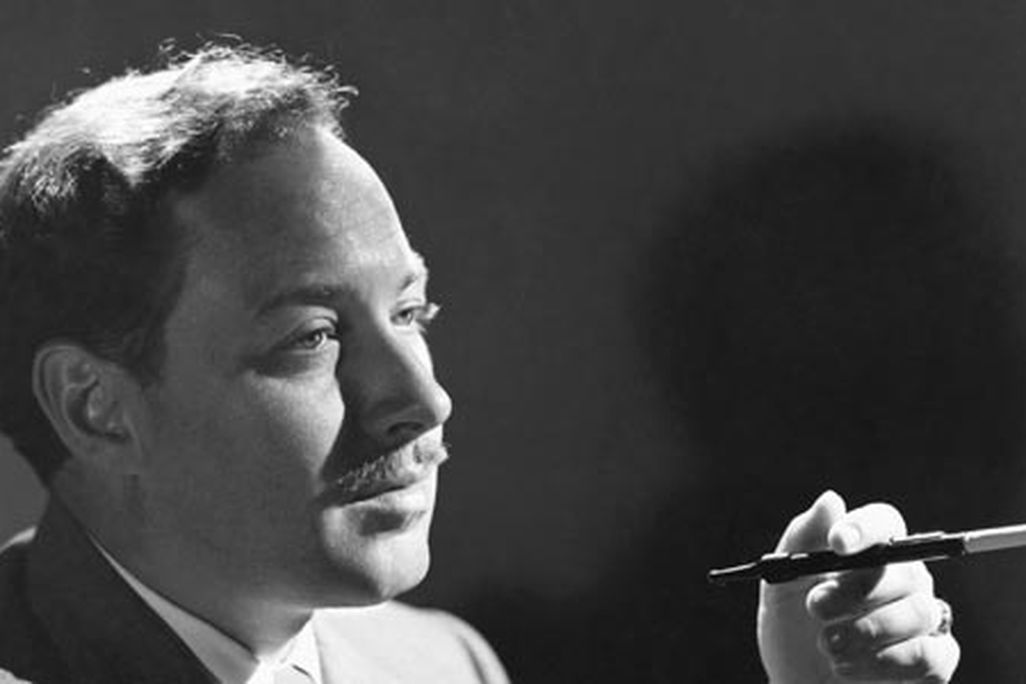
Tennessee Williams
Last December, The Loss of a Teardrop Diamond, a film based on a never-before-produced screenplay by Tennessee Williams opened in theaters. (John Springer Collection / Corbis)

Photo Gallery (1/3)

Bryce Howard in The Loss of a Teardrop Diamond

Explore more photos from the story


In April 2009, a collection of previously unpublished short stories and essays by Mark Twain was issued by HarperStudio. Vladimir Nabokov’s last novel, The Original of Laura, came out last November, despite instructions that his notes be burned should he fail to finish it. Now the trend of posthumous publication is seeping from books to movies. In December, The Loss of a Teardrop Diamond, a film based on a never-before-produced screenplay by Tennessee Williams opened in theaters.

Set in the 1920s, The Loss of a Teardrop Diamond centers upon Fisher Willow, a young woman living with her aging aunt while navigating the treacherous waters of Memphis society. The reputation of her father, an unscrupulous plantation owner, lingers over Fisher like a dark cloud as the headstrong heroine tries to distance herself from the tainted legacy. With her aunt’s teardrop-shaped diamond earrings clipped to her ears and with the handsome young Jimmy Dobyne as her escort, she flaunts her charms and ignores the gossip. Jimmy is the youngest scion of a once-great Southern family now fallen on hard times. (His father is a drunk and his mother is in an insane asylum.) Aware that Fisher’s affection, combined with her wealth, might help him lift his family from its penurious state, Jimmy toys with the idea of a more formal commitment. When one of Fisher’s earrings goes missing, however, he becomes a suspect, and the tensions that have simmered between them come to a boil.

When Williams began writing Teardrop Diamond in 1957, he had already developed the signature dramatic themes and characters that his work evokes. His strong, but seemingly neurotic female characters who chafe against the strictures of society, are fully present in Teardrop Diamond. Williams scholar Robert Bray draws parallels between Fisher and Carol Cutrere in Williams’ Orpheus Descending. Both “are decadent aristocrats who choose to ignore Southern conventions and act more like reckless Gypsies,” says Bray. Such sympathetic characters distill the essence of Williams’ work, says Jodie Markell, director of The Loss of a Teardrop Diamond. Like Blanche in A Streetcar Named Desire and Maggie in Cat on a Hot Tin Roof, Fisher, Markell says, is “too smart, too sensitive, too sensual, too romantic, to survive in a harsh world.” Bryce Dallas Howard, the actress who plays Fisher, adds another flawed but subtly charming Williams woman to the canon.

Although Williams was not new to screenwriting when he began Teardrop Diamond, his earliest efforts had not met with much success. As a nearly unknown young writer working for MGM in 1943, he saw much of his screen writing flat-out rejected, including a work that would become the basis for The Glass Menagerie. It was not until director Elia Kazan urged him to write Baby Doll (1956) that one of his original screenplays was made into a movie. It garnered a Golden Globe for Kazan and several Oscar nominations. Teardrop Diamond, like Baby Doll and Cat on a Hot Tin Roof, is set in the Mississippi Delta, an area that Bray says was one of the playwright’s central locales during his youth. Mentally and physically, Williams was “revisiting” the region in the 1950s, says Bray, editor of The Tennessee Williams Annual Review. Cat had won a Pulitzer Prize in 1955, “so Williams very much had the Delta in mind during these years for financial as well as artistic and inspirational reasons.”

At the time Williams started Teardrop Diamond in the late ’50s, his fame and fortune were peaking and he had numerous projects under way. After Cat on a Hot Tin Roof was made into a critically lauded film, Hollywood came courting. Still, despite earning a portion of the box-office revenue and up to $400,000 a pop for selling the film rights to his plays, Williams remained paranoid about the precariousness of his finances and his talent. “My writing [is] declining,” he told an interviewer after negative reviews of Orpheus Descending. He was also growing apart from his longtime companion, Frank Merlo. As he worked on Teardrop Diamond in the summer of 1957, Williams, struggling with depression, addiction and extreme paranoia, began intensive and regular psychotherapy, meeting a doctor five times a week. The analyst suggested that Williams leave Merlo and attempt to live as a heterosexual. Worried by the playwright’s increasingly unstable state, he also advised a total hiatus from work.

Williams ignored the doctor’s advice. And it seems that working on Teardrop Diamond was a palliative. “This A.M.,” he wrote in a diary entry from June 1957, “I was able, for the first time in months to do some satisfactory work.” The work, he added in a parenthetical note, was The Loss of a Teardrop Diamond. But the screenplay would remain unproduced, and practically unheard of, for years to come.

It seems to have dropped off the radar for a time. It’s unlikely, though, that it completely disappeared from Williams’ consideration.

In 1984, one year after Williams’ death at age 71, New Directions published four then unseen screenplays that had been found among the playwright’s papers. They included an “Author’s Note” that Williams had attached in 1980. “I feel that The Loss of a Teardrop Diamond (on film) will require a great deal of visual magic,” Williams wrote, “the kind that added so much to such recent films as Coal Miner’s Daughter, The Deer Hunter and Apocalypse Now.” Set in the ’20s, written in the ’50s and updated in the early ’80s, Teardrop Diamond, Williams apparently hoped, would still be produced at some point.

Even if the story does not rank aesthetically among Williams’ best—works like Streetcar, which recently played on stage to sold-out audiences in Washington D.C. and New York—it is still a welcome addition for those with an interest in the playwright’s oeuvre. In his memoirs Williams once wrote, “All good art is an indiscretion.” Perhaps the act of reviving a deceased author’s work is itself a kind of indiscretion, a potential insult to the reputation the writer left at the time of his death. But with the unearthing of this work, the canon of Williams’ art expands, and this deepened insight into a playwright’s life and work is a cause for celebration.


In April 2009, a collection of previously unpublished short stories and essays by Mark Twain was issued by HarperStudio. Vladimir Nabokov’s last novel, The Original of Laura, came out last November, despite instructions that his notes be burned should he fail to finish it. Now the trend of posthumous publication is seeping from books to movies. In December, The Loss of a Teardrop Diamond, a film based on a never-before-produced screenplay by Tennessee Williams opened in theaters.

Set in the 1920s, The Loss of a Teardrop Diamond centers upon Fisher Willow, a young woman living with her aging aunt while navigating the treacherous waters of Memphis society. The reputation of her father, an unscrupulous plantation owner, lingers over Fisher like a dark cloud as the headstrong heroine tries to distance herself from the tainted legacy. With her aunt’s teardrop-shaped diamond earrings clipped to her ears and with the handsome young Jimmy Dobyne as her escort, she flaunts her charms and ignores the gossip. Jimmy is the youngest scion of a once-great Southern family now fallen on hard times. (His father is a drunk and his mother is in an insane asylum.) Aware that Fisher’s affection, combined with her wealth, might help him lift his family from its penurious state, Jimmy toys with the idea of a more formal commitment. When one of Fisher’s earrings goes missing, however, he becomes a suspect, and the tensions that have simmered between them come to a boil.

When Williams began writing Teardrop Diamond in 1957, he had already developed the signature dramatic themes and characters that his work evokes. His strong, but seemingly neurotic female characters who chafe against the strictures of society, are fully present in Teardrop Diamond. Williams scholar Robert Bray draws parallels between Fisher and Carol Cutrere in Williams’ Orpheus Descending. Both “are decadent aristocrats who choose to ignore Southern conventions and act more like reckless Gypsies,” says Bray. Such sympathetic characters distill the essence of Williams’ work, says Jodie Markell, director of The Loss of a Teardrop Diamond. Like Blanche in A Streetcar Named Desire and Maggie in Cat on a Hot Tin Roof, Fisher, Markell says, is “too smart, too sensitive, too sensual, too romantic, to survive in a harsh world.” Bryce Dallas Howard, the actress who plays Fisher, adds another flawed but subtly charming Williams woman to the canon.

Although Williams was not new to screenwriting when he began Teardrop Diamond, his earliest efforts had not met with much success. As a nearly unknown young writer working for MGM in 1943, he saw much of his screen writing flat-out rejected, including a work that would become the basis for The Glass Menagerie. It was not until director Elia Kazan urged him to write Baby Doll (1956) that one of his original screenplays was made into a movie. It garnered a Golden Globe for Kazan and several Oscar nominations. Teardrop Diamond, like Baby Doll and Cat on a Hot Tin Roof, is set in the Mississippi Delta, an area that Bray says was one of the playwright’s central locales during his youth. Mentally and physically, Williams was “revisiting” the region in the 1950s, says Bray, editor of The Tennessee Williams Annual Review. Cat had won a Pulitzer Prize in 1955, “so Williams very much had the Delta in mind during these years for financial as well as artistic and inspirational reasons.”

At the time Williams started Teardrop Diamond in the late ’50s, his fame and fortune were peaking and he had numerous projects under way. After Cat on a Hot Tin Roof was made into a critically lauded film, Hollywood came courting. Still, despite earning a portion of the box-office revenue and up to $400,000 a pop for selling the film rights to his plays, Williams remained paranoid about the precariousness of his finances and his talent. “My writing [is] declining,” he told an interviewer after negative reviews of Orpheus Descending. He was also growing apart from his longtime companion, Frank Merlo. As he worked on Teardrop Diamond in the summer of 1957, Williams, struggling with depression, addiction and extreme paranoia, began intensive and regular psychotherapy, meeting a doctor five times a week. The analyst suggested that Williams leave Merlo and attempt to live as a heterosexual. Worried by the playwright’s increasingly unstable state, he also advised a total hiatus from work.

Williams ignored the doctor’s advice. And it seems that working on Teardrop Diamond was a palliative. “This A.M.,” he wrote in a diary entry from June 1957, “I was able, for the first time in months to do some satisfactory work.” The work, he added in a parenthetical note, was The Loss of a Teardrop Diamond. But the screenplay would remain unproduced, and practically unheard of, for years to come.

It seems to have dropped off the radar for a time. It’s unlikely, though, that it completely disappeared from Williams’ consideration.

In 1984, one year after Williams’ death at age 71, New Directions published four then unseen screenplays that had been found among the playwright’s papers. They included an “Author’s Note” that Williams had attached in 1980. “I feel that The Loss of a Teardrop Diamond (on film) will require a great deal of visual magic,” Williams wrote, “the kind that added so much to such recent films as Coal Miner’s Daughter, The Deer Hunter and Apocalypse Now.” Set in the ’20s, written in the ’50s and updated in the early ’80s, Teardrop Diamond, Williams apparently hoped, would still be produced at some point.

Even if the story does not rank aesthetically among Williams’ best—works like Streetcar, which recently played on stage to sold-out audiences in Washington D.C. and New York—it is still a welcome addition for those with an interest in the playwright’s oeuvre. In his memoirs Williams once wrote, “All good art is an indiscretion.” Perhaps the act of reviving a deceased author’s work is itself a kind of indiscretion, a potential insult to the reputation the writer left at the time of his death. But with the unearthing of this work, the canon of Williams’ art expands, and this deepened insight into a playwright’s life and work is a cause for celebration.

    Subscribe now for more of Smithsonian's coverage on history, science and nature.


Related topics: Movies American Writers 20th Century


| | | Reddit | Digg | Stumble | Email |
 

Add New Comment


Name: (required)

Email: (required)

Comment:

Comments are moderated, and will not appear until Smithsonian.com has approved them. Smithsonian reserves the right not to post any comments that are unlawful, threatening, offensive, defamatory, invasive of a person's privacy, inappropriate, confidential or proprietary, political messages, product endorsements, or other content that might otherwise violate any laws or policies.

Comments (4)

I watched Loss of a teardrop movie last night and loved it. Visually beautiful as were the leads. Will watch it again.

Posted by Valerie Weaver on March 4,2011 | 02:06 PM

Is there any sights I can find out more about Robert Bray

Posted by jack wade on January 20,2011 | 01:35 PM

I look forward to reading and viewing the motion picture, the biographcal info was interesting after discussing some his works with a friend i was told as part of their inheritance they recieved a trunk of personal letters possibly some unfinished plays and other writings by Tennessee Williams ,they expressed a disire to sell these writings and ask me to help research possibilities and wishes to remain annonomous at this time.If the Smithsonian may be able to tell me how to properley handle these writings when we read them and how to authintacate these any information would be appreciated.Thank You JW

Posted by jack wade on January 20,2011 | 01:30 PM

This was interesting. I have added these movies to my queue in netflix so that I can see them. I am looking forward to seeing Katharine Hepburn and Paul Newman.

Posted by Kim on January 9,2010 | 06:05 PM


Advertisement


Most Popular

  • Viewed
  • Emailed
  • Commented
  1. Will the Real Great Gatsby Please Stand Up?
  2. The Revolutionary Effect of the Paperback Book
  3. Never Underestimate the Power of a Paint Tube
  4. TKO By Checkmate: Inside the World of Chessboxing
  5. The Story Behind Banksy
  6. The Real Deal With the Hirshhorn Bubble
  7. Before There Was Photoshop, These Photographers Knew How to Manipulate an Image
  8. A Brief History of Chocolate
  9. When Did Girls Start Wearing Pink?
  10. The Saddest Movie in the World
  1. The Story Behind Banksy
  1. Will the Real Great Gatsby Please Stand Up?
  2. When Did Girls Start Wearing Pink?
  3. How David Mamet Became a Memorabilia Addict
  4. The Story Behind the Peacock Room's Princess
  5. Never Underestimate the Power of a Paint Tube

View All Most Popular »

Advertisement

Follow Us

Smithsonian Magazine
@SmithsonianMag
Follow Smithsonian Magazine on Twitter

Sign up for regular email updates from Smithsonian.com, including daily newsletters and special offers.

In The Magazine

May 2013

  • Patriot Games
  • The Next Revolution
  • Blowing Up The Art World
  • The Body Eclectic
  • Microbe Hunters

View Table of Contents »


First Name
Last Name
Address 1
Address 2
City
State   Zip
Email


Travel with Smithsonian


Smithsonian Store

Stars and Stripes Throw

Our exclusive Stars and Stripes Throw is a three-layer adaption of the 1861 “Stars and Stripes” quilt... $65


View full archiveRecent Issues


  • May 2013


  • Apr 2013


  • Mar 2013

Newsletter

Sign up for regular email updates from Smithsonian magazine, including free newsletters, special offers and current news updates.

Subscribe Now

About Us

Smithsonian.com expands on Smithsonian magazine's in-depth coverage of history, science, nature, the arts, travel, world culture and technology. Join us regularly as we take a dynamic and interactive approach to exploring modern and historic perspectives on the arts, sciences, nature, world culture and travel, including videos, blogs and a reader forum.

Explore our Brands

  • goSmithsonian.com
  • Smithsonian Air & Space Museum
  • Smithsonian Student Travel
  • Smithsonian Catalogue
  • Smithsonian Journeys
  • Smithsonian Channel
  • About Smithsonian
  • Contact Us
  • Advertising
  • Subscribe
  • RSS
  • Topics
  • Member Services
  • Copyright
  • Site Map
  • Privacy Policy
  • Ad Choices

Smithsonian Institution