


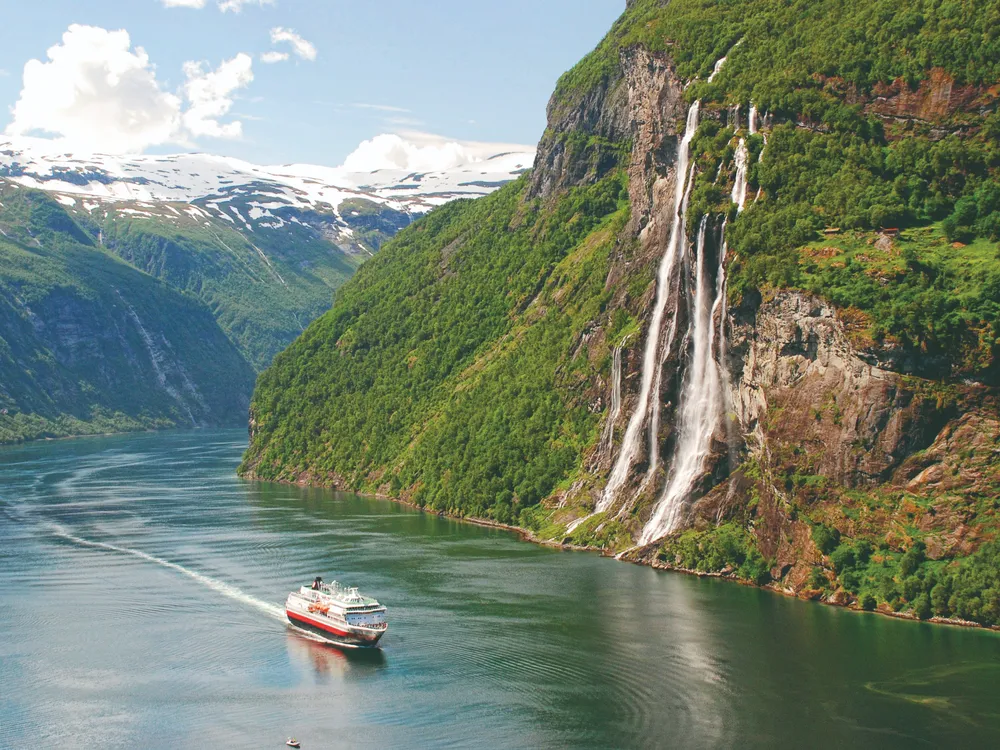
High above the Arctic Circle sit the Lofoten Islands. This scenic archipelago is brimming with jagged peaks that rise directly from the sea and dotted with red wooden fishing huts (known locally as rorbuer) that rest upon stilts along rugged, rocky shorelines. It’s a landscape that’s truly remarkable, especially when viewed from the deck of a classic Hurtigruten ship. These small-cruise vessels bring passengers face-to-face with some of the archipelago’s most impressive sights. In fact, for well over a century, Hurtigruten has been sharing their story.
Since 1893, Hurtigruten has traced Norway’s fjord-carved shoreline, carrying travelers along the same waters that have connected coastal communities for generations. Here, the voyage isn't separate from the destination—it is the destination. With a maximum of 500 passengers, Hurtigruten’s purpose-built vessels are compact enough to navigate narrow straits, sailing right alongside towering cliffs. They can hug the country’s extensive coastline, reaching shallow docks that larger cruise ships cannot. Along the way, passengers have opportunities to meet Norway’s people, experience its traditions, and feel the rhythm of the coast.
From the Arctic wonders to world-class hiking, roaring waterfalls, and deep-blue fjords, there are so many reasons to visit Norway. Doing so aboard Hurtigruten offers an authentic connection to the country's coastal communities, helping create a lifetime of memories in the process.
Here are five of our favorite ways to immerse yourself in Norwegian culture and the country’s wondrous way of life.
Exploring Historic Routes
Long before Norway’s roads existed, Vikings traversed the land’s rocky and fjord-laden coastlines in clinker-built wooden boats. They navigated along sheltered inshore channels, bypassing treacherous seas to trade goods, fish for substance and transport people and supplies. Since the late 19th century, Hurtigruten has been traveling many of these same routes. Its ships make their way between Bergen in the south and Kirkenes in the far north on a 2,500-nautical-mile round-trip journey that includes 34 coastal ports. This 12-day classic Coastal Express, which carries both passengers and goods, has been called “The World's Most Beautiful Voyage.” Save
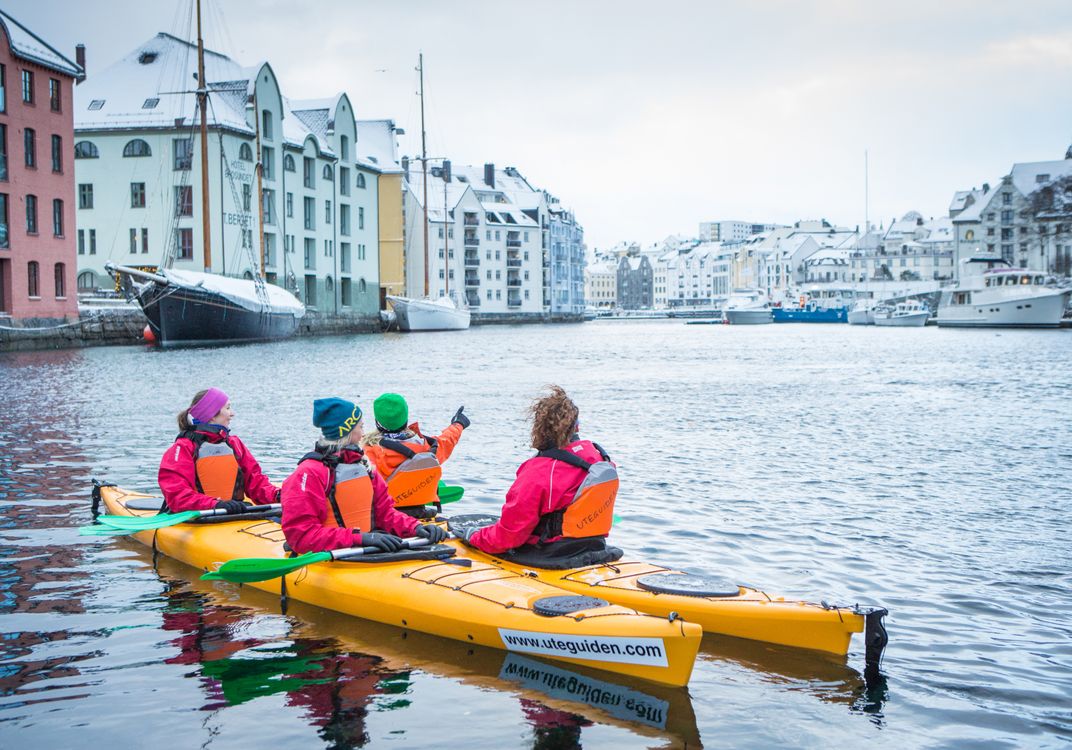
Stops along the way include Trøndelag, Norway’s historic Viking capital and home to the original 1893 departure point of the iconic Hurtigruten Coastal Express, as well as Ålesund, whose pastel-colored Art Nouveau architecture looks straight from a fairy tale. Above the Arctic Circle there’s Stokmarknes, the birthplace of the Coastal Express and home to the Hurtigruten Museum. Here, visitors can explore the history of the iconic ship line, from its 19th-century beginnings to the present day.
Visiting Coastal Communities
Norway has always been a seafaring nation, and its ties to the ocean run deep. Stretching approximately 62,706 miles, its shoreline is among the longest and most rugged in the world. For thousands of years, the inland’s mountainous terrain made overland travel nearly impossible. This left the expansive coast and its surrounding sea to shape the local culture, economy, and history.
In fact, long before the modern Norwegian state, the indigenous Sea Sámi, a subgroup of the Sámi people, settled along the land’s northern coastlines and fjords. In these remote environments, they combined fishing with marine harvesting and small-scale farming for substance. Later, early Norwegian Viking communities turned to advanced shipbuilding technology, which they then used to establish vital trade routes across Europe and the North Atlantic.
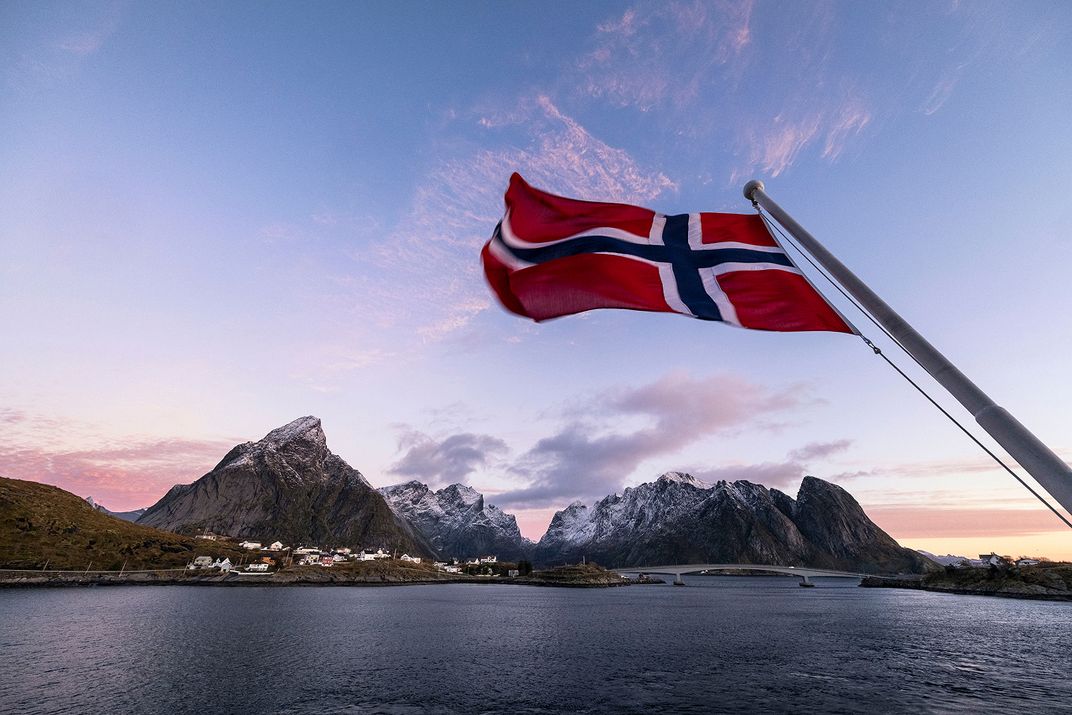
For thousands of years, the ocean served as the primary highway connecting isolated coastal villages. Hurtigruten has been keeping that same tradition alive since 1893. Along with delivering mail, goods, and travelers, the company highlights the coastal folklore, traditional rorbuer, and culinary essentials like cod, herring, and gravlax that have evolved along this route. Through its Norway’s Coastal Kitchen program, up to 80 percent of ingredients are sourced from local farms, bakeries, and fisheries, connecting guests to fresh regional flavors from port to port. It also links major coastal cities like Bergen and Trondheim with quiet island fishing villages, giving travelers a taste of traditional life along the shoreline.
Seasonal Wonders
With its spring waterfalls, summer Midnight Sun, autumn foliage, and winter northern lights, Norway delivers wonders year-round. There are many ways to experience them, no matter the season, whether through scenic hikes, cultural encounters, wildlife outings, or more than 130 optional excursions available along the coast.
May and June are known for gushing cascades along the coast, with famous waterfalls like the multi-stream Seven Sisters in Geirangerfjord and Vøringsfossen, one of the country’s most spectacular natural attractions, churning in full force. Spring is also home to Norway’s Constitution Day (May 17th). Marking the day on which the country became an independent kingdom, its festivities include children’s parades, traditional folk costumes (known as bunads) and plenty of hot dogs, ice cream, and waffles.
From late May through late July, Norway’s far north regions experience 24-hour daylight. This Midnight Sun brings with it night hikes, kayaking excursions and swimming beneath an extended golden light, while communities come alive with festivals, cultural celebrations, and seasonal events. All along the country’s coast, hikers take to trails that reward them with towering sea cliffs, deep fjords, and white sand Arctic beaches.
Come fall, the nights grow longer and there’s a chance of spotting the northern lights. Throughout September and October, birch trees ignite with colors of yellow and gold, while the heather that blankets the rocky coastline transforms into shades of copper, crimson, and orange. Beginning September 20 and continuing through March 31, Hurtigruten even offers a northern lights promise. Guests who sail the Norwegian Coast with for 11 days or more and do not see the aurora, as verified by the ship’s deck officers, receive a complimentary sailing on a select coastal voyage.
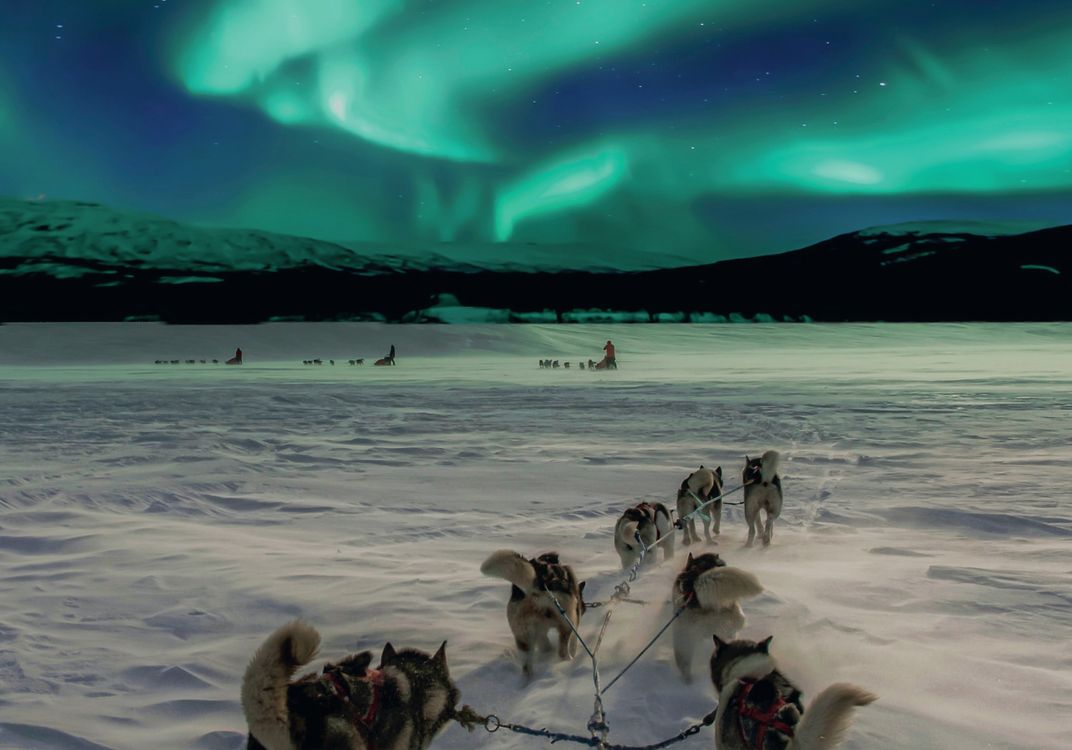
Winter offers the perfect opportunity for activities like dog-sledding, whale safaris to see both humpbacks and orcas as they gather to feed on herring, and cross-country skiing. What’s more, the season’s dark polar nights offer prime conditions for catching the Aurora Borealis at its peak, as it explodes in ribbons of green, with occasional rarer hues of red, pink, and blue.
Local Cuisine
Traditional Norwegian cuisine is shaped by the country’s long, cold winters, as well as its coastline. In fact, Hurtigruten’s “Norway’s Coastal Kitchen” is a culinary concept that sources up to 80 percent of its ingredients—such as fish, meats, and cheeses—from local farms, bakeries, and coastal fisheries up and down the shore. On Hurtigruten cruises, every plate tells a story, with pamphlets providing information on the traditions, history, and provenance behind individual dishes. In some restaurants, staff further bring those stories to life by sharing the history and origins of the food directly with guests.

Some of the Norwegian culinary highlights served onboard Hurtigruten ships include king crab harvested from the Arctic waters, authentic Sámi fare like bidos (reindeer stew) and souvas (sliced smoked reindeer meat with lingonberry aioli), and local cheeses such as brunost (Brown Cheese). Sweet and caramelly, it’s perfect atop crispbread or waffles. Keep an eye out for fårikål, a mutton and cabbage stew that’s Norway's national dish. It's especially warming and welcoming when temperatures start to drop.
Dramatic Landscapes
Norway has no shortage of spectacular scenery, whether it’s deep fjords tucked amid towering mountains or bright white beaches and sharp peaks that rise straight from the sea. Its small ship size gives Hurtigruten access to some of the country’s most iconic landscapes. Places like Geirangerfjord, a UNESCO-listed fjord brimming with blue waters, surrounded by sheer rock walls, and home to iconic waterfalls such as the Seven Sisters and Bridal Veil; and Trolltunga, a dramatic rock ledge that juts out 2,296 feet at Lake Ringedalsvatnet. Fun fact: its name means “Troll’s Tongue” in Norwegian.
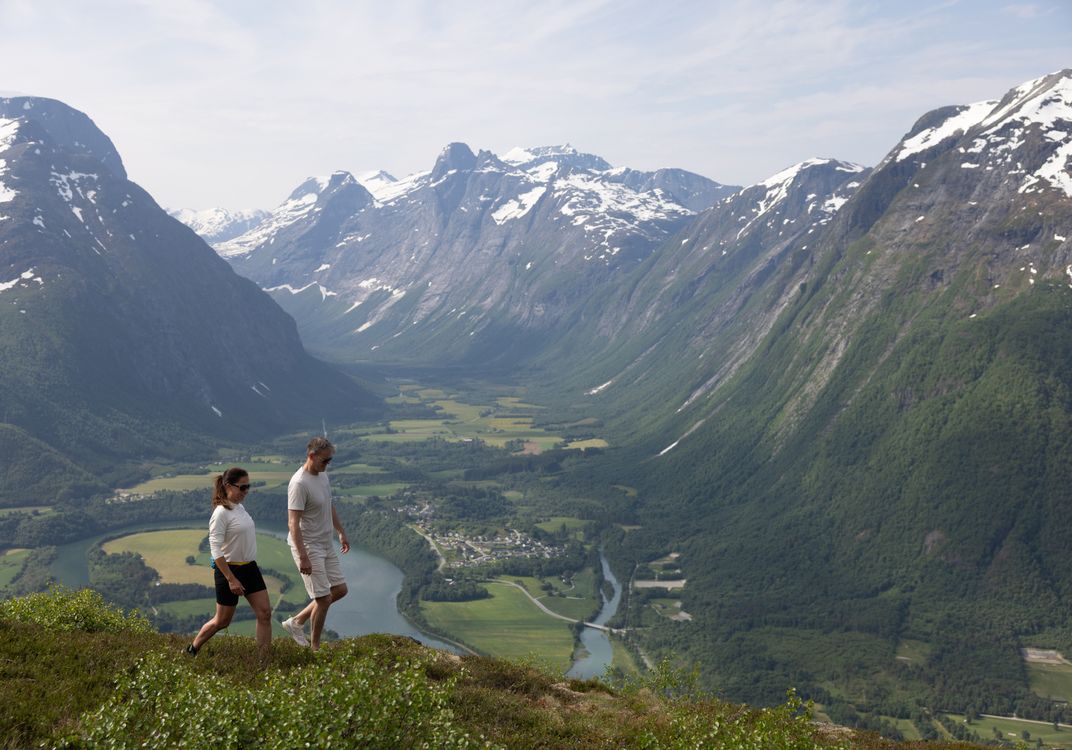
Other jaw-dropping spots include the extraordinary Lofoten Islands and massive Preikestolen (Pulpit Rock), a 1,980-foot-tall cliff sporting breathtaking views. Norway also boasts coastal settings like Flåm, a tiny, postcard-perfect village perched on the arm of the massive Sognefjord, and Bergen. The historic “Gateway to the Fjords,” this walkable and vibrant cultural hub is framed by seven majestic mountains—each of them brimming with hiking paths, stone-step pathways, or forested scrambles.
Whether it's immersing yourself in the culture of coastal communities, dining on foods derived straight from the local landscape, or accessing places off-limits to larger ships, Hurtigruten is your entry into 12,000 years of Norwegian heritage.