
/https://tf-cmsv2-smithsonianmag-media.s3.amazonaws.com/filer_public/18/10/18101890-5076-4c47-8ef1-a141f370c46c/resized23.png)
Thirty-Seven Smithsonian Artifacts That Tell the Story of 9/11, From a Flight 93 Logbook to a Squeegee Handle Used While Escaping From the World Trade Center
The National Museum of American History houses hundreds of objects linked to the attacks. Ahead of the 25th anniversary of the tragedy, learn the stories behind some of the most poignant items in the collections
/https://tf-cmsv2-smithsonianmag-media.s3.amazonaws.com/accounts/headshot/meilan_headshot2.png)
:focal(606x309:607x310)/https://tf-cmsv2-smithsonianmag-media.s3.amazonaws.com/filer_public/18/10/18101890-5076-4c47-8ef1-a141f370c46c/resized23.png)
When terrorists attacked the United States on September 11, 2001, curators at the Smithsonian Institution recognized the urgency of documenting this unprecedented moment in American history. After Congress designated the Smithsonian’s National Museum of American History (NMAH) as the official repository for all related objects, photographs and documents, staff focused their attention on three areas: the attacks themselves, first responders and recovery efforts. As time passed, curators expanded their purview to include the nation’s response to the tragedy, recording 9/11’s reverberations across the country.
“This effectively put a net over the story, covering what happened on that day, then plus one month, plus one year,” Cedric Yeh, curator of the museum’s National September 11 Collection, told Smithsonian magazine in 2021. “But [this net] had a lot of holes. I don’t mean holes in the curators’ work, but there were areas not covered because it was impossible to cover the entirety of the story.”
Twenty-five years after 9/11, as the first generation with no firsthand memories of that day reaches adulthood, the American History Museum has shifted away from preserving what happened during the attacks to discussing the events’ long-term effects on the nation. “We want our audience to tell us what 9/11 means to them, not necessarily just for remembrance’s sake, but also to hear some of these stories that have not been heard,” Yeh said.
/https://tf-cmsv2-smithsonianmag-media.s3.amazonaws.com/filer_public/5c/bd/5cbdbba9-c022-4567-b756-1927387bd92d/lefler-and-stairwell.png)
To mark the 25th anniversary of the attacks later this month, NMAH is hosting three main events. Between 11 a.m. and 2 p.m. on September 9-12, visitors to the museum’s third floor can view some 40 objects recovered from New York City, the Pentagon and the United Airlines Flight 93 crash site in Pennsylvania. The artifacts will be displayed on a table instead of behind glass, creating an intimate environment that fosters “respect and reflection.”
On multiple days in September, the museum will show 9/11: Stories in Fragments, a 2011 Smithsonian Channel production. Finally, on September 12, the Kronos Quartet will perform WTC 9/11, a composition by Steve Reich that combines live music with recorded footage of the attacks. After the free show, members of the ensemble will participate in a roundtable discussion with museum staff.
Today, hundreds of objects linked to the attacks, from office supplies recovered at the World Trade Center to firefighters’ gear used at the Pentagon to fragments pulled from the crash site of Flight 93, reside in the national collection. As the late associate curator David Shayt told Smithsonian in 2002, most of the 50 or so artifacts featured in “September 11: Bearing Witness to History,” the Smithsonian’s first exhibition about 9/11, were “perfectly ordinary, everyday objects we might otherwise not collect, except for the extraordinary nature of their context.”
Below, read about 37 Smithsonian artifacts (listed in bold) that help unravel the complex story of 9/11 and its aftermath.
Maria Cecilia Benavente’s sandals
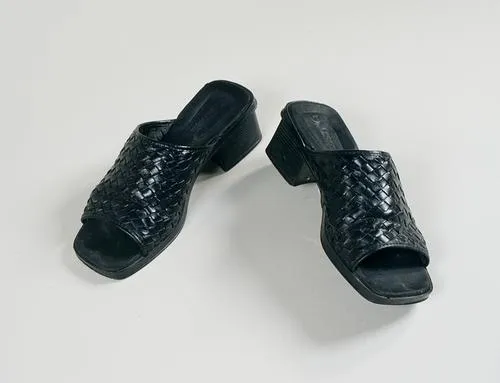
Among the items displayed in the 2002 exhibition was a pair of backless sandals owned by Maria Cecilia Benavente, who worked at Aon Risk Services, Inc., on the 103rd floor of the World Trade Center’s South Tower. When American Airlines Flight 11 crashed into the North Tower at 8:46 a.m., Benavente evacuated quickly, winding her way down 25 flights of stairs to an express elevator on the 78th floor. As she descended, she found herself slowed by her shoes: sandals with two-inch heels. Removing them, Benavente made the rest of the journey barefoot, clutching her discarded sandals closely until she reached a co-worker’s parents’ home more than 15 miles away in Queens. There, she received a replacement pair of flip-flops.
A second hijacked plane—United Airlines Flight 175—crashed into the South Tower at 9:03 a.m., trapping everyone above the 78th floor. Fifty-six minutes later, the building collapsed, killing 176 of Benavente’s co-workers.
By September 2002, Benavente had relocated from New York to Chicago. Haunted by memories of 9/11, she replaced the long skirts and fashionable sandals she’d previously sported with pants and practical footwear that could “take her places rapidly,” as she told Smithsonian.
Window washer Jan Demczur’s squeegee handle
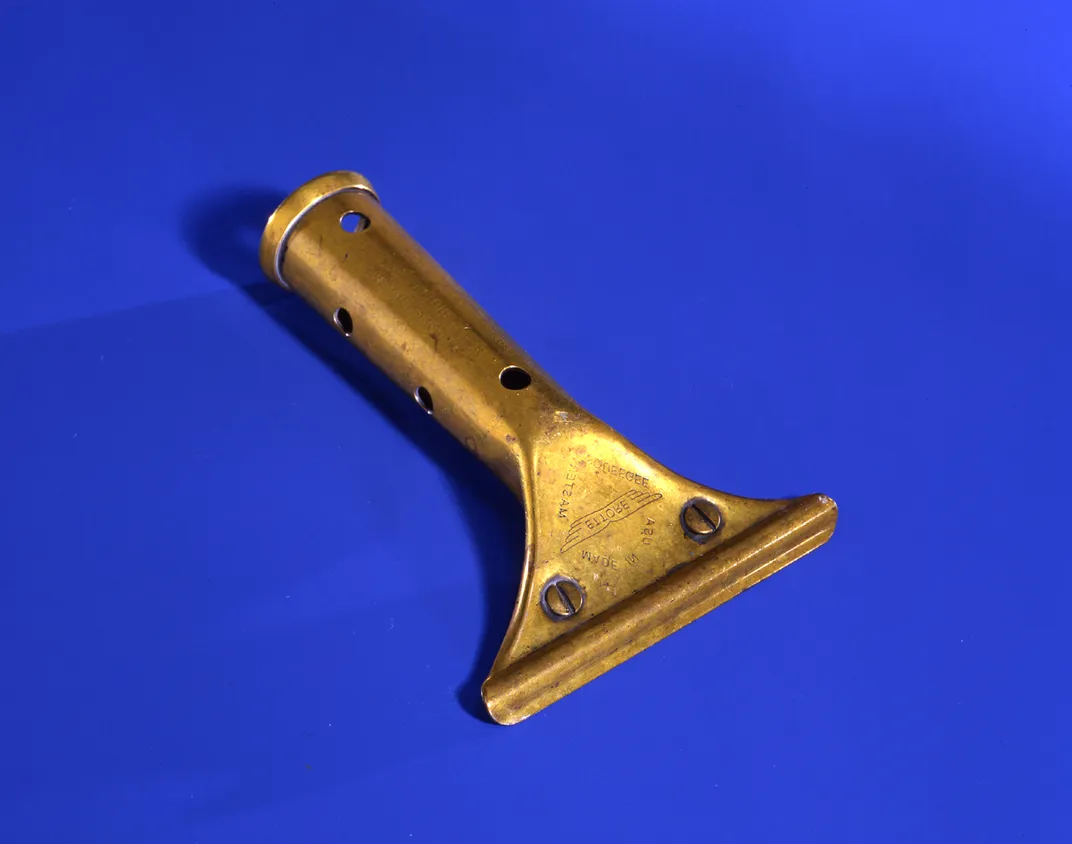
On 9/11, this unassuming squeegee tool saved the lives of six men. As Smithsonian recounted in July 2002, window washer Jan Demczur and five others were riding an elevator in the World Trade Center’s North Tower when their ride suddenly started careening down. Pressing the emergency stop button, the men managed to halt the elevator’s plunge at the building’s 50th floor. Upon opening the compartment’s doors, however, they found their escape route blocked by a thick wall of Sheetrock.
The only sharp object at hand was Demczur’s squeegee blade. Taking turns, the men scraped away at the drywall, slowly carving an exit. “We just started working,” Demczur told Smithsonian. “Focused on this way to get out. We knew we had only one chance.” Then, disaster struck: Demczur dropped the blade down the elevator shaft, leaving the group with only the squeegee handle. But the men persevered, using the small metal tool to continue pushing through the Sheetrock. They emerged in a men’s bathroom and raced down the tower’s stairs, escaping the building just a few minutes before it collapsed.
After the attacks, Shayt decided to track down Demczur. As the curator recalled:
I called Jan in December … met with him and asked him the big question: Did you hang onto the handle? Do you still have that squeegee handle? He left the room and came back with something wrapped in a red handkerchief. Turned out to be the handle. He had kept the handle without realizing it. In his blind escape, he had somehow stuffed it in his pocket rather than put it in the bucket that he dropped later. His wife found it, rolled up in his dirty uniform, weeks later.
Demczur donated both the handle and the debris-covered outfit he’d worn in the elevator to the Smithsonian.
Cellphone used by Mayor Rudy Giuliani
/https://tf-cmsv2-smithsonianmag-media.s3.amazonaws.com/filer_public/e0/a8/e0a88c5e-59e6-462b-bace-4f247982f001/giuliani_hat_and_phone.png)
New York City’s then-mayor, Rudy Giuliani, won accolades in 2001 for his leadership at a time of tragedy. Then at the end of his seven years in office, Giuliani used this Motorola i1000plus cellphone to coordinate emergency efforts on that September day. Arriving at a command center on the 23rd floor of World Trade Center Building 7 just after the second plane hit, he was evacuated as debris threatened to topple the building. Giuliani “remained at the center of the crisis for the next 16 hours,” according to the museum, which also houses the former mayor’s windbreaker, boots, coat and baseball cap in its collections.
Giuliani’s cellphone isn’t the only one in the museum’s 9/11 collection. A bright green Nokia phone used by commuter Rose Bianculli-Taylor and a boxy Ericsson T28 used by amateur photographer Bob Boyle, who worked near the World Trade Center, both testify to the importance of communication during a crisis.
Did you know? Bill Biggart
- Bill Biggart, a 54-year-old freelance photojournalist, was the only professional photographer killed while covering the 9/11 attacks.
- Biggart captured about 150 photos of the devastation. His body and camera bag were found in the rubble of the South Tower on September 15, 2001.
“Cellphones were not as ubiquitous in 2001 as they are now,” Yeh said in 2021. “And they certainly did not provide the relief that one might imagine, for instance, in New York City, where cell towers went down. With millions of people trying to call, it was impossible to communicate. And not everyone had cell phones, so this sense of chaos and terror was made worse.”
Melted coins recovered from the World Trade Center
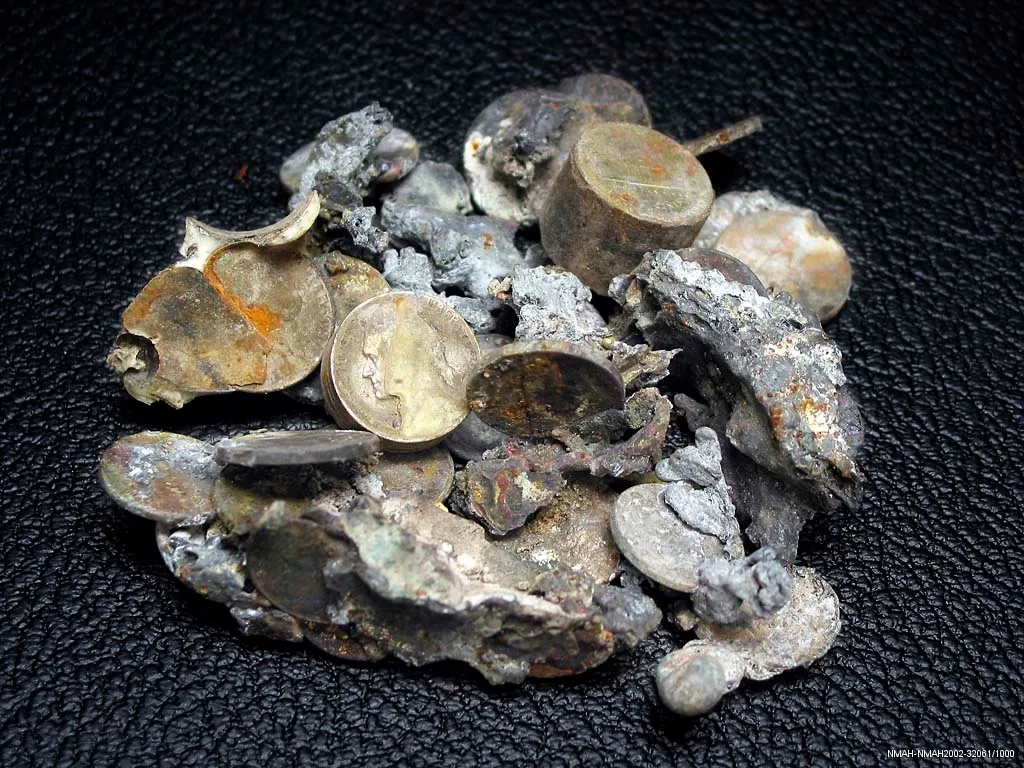
When Flights 11 and 175 struck the World Trade Center’s North and South Towers, respectively, their jet fuel sparked intense, multifloor fires that reached temperatures of up to 1,800 degrees Fahrenheit. “The contents of the building—desks, papers, carpets, ceiling tiles and even paint—fueled the fire,” according to NMAH. “After the collapse, the fires continued to burn for weeks.”
Among the warped, melted objects found in the towers’ debris was this clump of coins. A similarly charred tin filled with melted coins and burned paper bills was recovered from a damaged office at the Pentagon. Fused together by the flames, the pile mirrors the “twisting, wrenching and tortured steel” and aluminum fragments similarly recovered from the wreckage, Shayt said in a curator reflection.
“It took five or six trips to finally find the steel that we now have,” Shayt added. “Steel that is manageable in size and yet robust enough to reflect the size and grandeur of the World Trade Center. Also steel that could be identified by its tower and its floor level.”
Objects from Windows on the World
/https://tf-cmsv2-smithsonianmag-media.s3.amazonaws.com/filer_public/77/2b/772bb4de-e3a1-483e-9c7f-d1b1a4b7aa00/dish.png)
The Windows on the World restaurant complex opened on the North Tower’s 106th and 107th floors in 1976, to much fanfare. By 2001, Windows was the country’s top-grossing restaurant, raking in some $40 million in annual revenue. The venue “was the ultimate destination restaurant,” critic Ruth Reichl wrote in 2011. “You walked from darkness into light, toward floor-to-ceiling windows beckoning from the end of the corridor. When you reached them, it was almost impossible to resist the urge to press yourself against the glass and look down at the microscopic people on the sidewalk below.”
Seventy-three Windows employees reported to work at the World Trade Center on the morning of 9/11. All were trapped when Flight 11 crashed into floors 93 to 99 of the North Tower. None made it out alive. Neither did the 91 guests present in the complex at the time of the attack.
/https://tf-cmsv2-smithsonianmag-media.s3.amazonaws.com/filer_public/5a/d7/5ad78a35-ecbe-483d-a4d4-bece2ea13136/briley.png)
NMAH houses an array of artifacts linked to Windows. Some, like a saucer and a dessert plate decorated in the restaurant’s signature blue-and-yellow color palette, survived because they weren’t in the North Tower on 9/11. Windows’ owner had brought the dishes home for a private event, inadvertently saving them from destruction. Other objects, such as this stained cloth napkin, were recovered from the World Trade Center’s debris.
First responders found the body of Jonathan Eric Briley, a 43-year-old audiovisual technician at the restaurant, on September 12. They recovered several of Briley’s belongings, including his personal beeper, his ID card and his keyring, all of which are now held by NMAH. In the years since 9/11, some have speculated that Briley was the “Falling Man,” an individual immortalized in the most famous photo of the attacks. “Briley might be the Falling Man,” Tom Junod wrote for Esquire in 2003. “But the only certainty we have is the certainty we had at the start: At 15 seconds after 9:41 a.m., on September 11, 2001, a photographer named Richard Drew took a picture of a man falling through the sky—falling through time as well as through space. The picture went all around the world, and then disappeared, as if we willed it away.”
Sweatshirt worn by first responder Ivonne Coppola Sanchez
/https://tf-cmsv2-smithsonianmag-media.s3.amazonaws.com/filer_public/49/70/4970f033-b1af-473f-98e5-c3453b4906e7/ivonne.png)
A more recent addition to the collection, this sweatshirt was worn by Ivonne Coppola Sanchez, a New York Fire Department Emergency Medical Services worker, as she searched for survivors at Ground Zero. Later, when Coppola Sanchez was working at a makeshift morgue, she encountered photographer Joel Meyerowitz, who snapped a portrait of her wearing the sweater.
A few years after 9/11, the nonprofit New York Committee for Occupational Safety and Health featured Meyerowitz’s photo of Coppola Sanchez in a bilingual ad campaign encouraging first responders and volunteers to seek compensation for health issues linked to the attacks. (According to the World Trade Center Health Program, which provides medical monitoring and treatment for survivors and responders, conditions reported by those at Ground Zero range from asthma to cancer to post-traumatic stress disorder.)
The Spanish-language subway ad featured in NMAH’s collections speaks “to one personal story of being a first responder working at Ground Zero,” Yeh said. “To tie it all together, [Coppola Sanchez] later fell ill herself.”
Apron from Nino’s restaurant in New York City
/https://tf-cmsv2-smithsonianmag-media.s3.amazonaws.com/filer/dc/31/dc317320-4c99-4231-b63a-12347dd84ffa/2002-5976.jpg)
Two days after 9/11, Nino’s, a family-run restaurant on Manhattan’s Canal Street, began offering free meals to World Trade Center recovery workers. For the next seven months or so, the restaurant remained open around the clock, serving thousands and acting as a place of refuge for weary first responders. “We’ve made a commitment to keep our doors open until our city is rebuilt, healed and up and running,” owner Antonio Vendome said at the time. “Constant donations of food and the time of volunteer chefs and waiters” ensured that the restaurant could uphold its commitment, Vendome added.
When Shayt visited Nino’s, he noticed three aprons hanging behind the bar, all “loaded like pizzas with patches—from Canada, and England and the U.S.—small towns and large.” Each patch represented a firefighter, police officer, Red Cross worker or other first responder who’d donated a piece of their uniform as a token of thanks.
After getting to know Vendome, Shayt asked if he’d be interested in donating one of the aprons to the museum. Vendome readily agreed.
“The aprons, even one apron, unified that story for us very well,” Shayt later said. “There are 65 patches on that apron, from towns like Dayton, Ohio, and Boston, Los Angeles and Boise, Idaho. Fire, rescue, even civilian work. Patches from Con Ed, from the FBI and the Customs Service, left at Nino’s.”
Lorraine Bay’s Flight 93 logbook and in-flight manual
Curators tasked with collecting objects related to Flight 93, which crashed into a field in Shanksville, Pennsylvania, on the morning of September 11, faced an obvious obstacle: As curator Peter Liebhold later reflected, “There really was not much left, so it was very difficult to collect what did transpire, and the bulk of material was related to the public response to the events.”
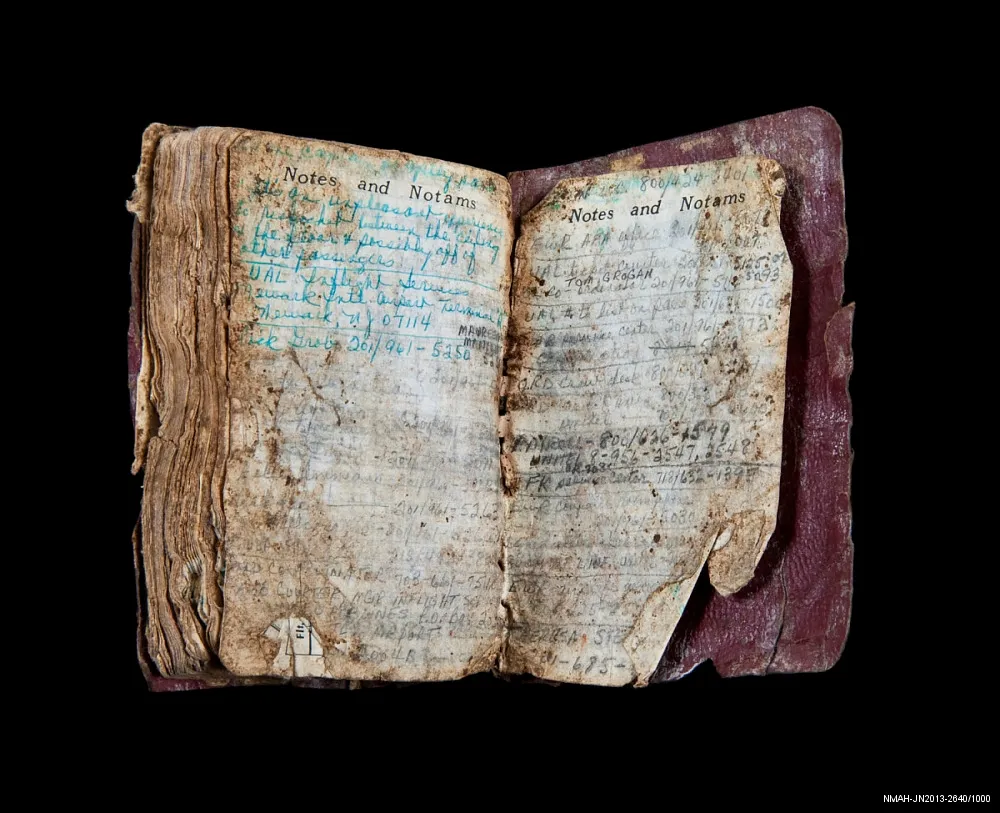
The few surviving tangible traces of the hijacked flight include a crew log and an in-flight manual owned by Lorraine Bay, a 58-year-old flight attendant with 37 years of experience. In the logbook, Bay recorded the details of each trip she flew, penciling in flight numbers, dates and other information in blue ink. The Philadelphia native took similar care with her in-flight manual, covering the guide in personalized notes indicating what to do in case of an emergency. Among the nine pages recovered from the wreckage is a list of instructions for responding to bomb threats—a fitting discovery, as Flight 93’s hijackers had threatened passengers by stating they had a bomb on board.
“Lorraine is here … because we wanted to show the importance of flight attendants in travel, that they are highly experienced, highly trained individuals,” Yeh said. “They’re not just there to help you board or give you drinks. And that’s where the flight manual comes in.” (Outside of these documents, a small number of passengers’ personal effects—a wedding ring, jewelry, photos, wallets and more—survived the crash and were returned to victims’ families.)
Of the four planes hijacked on 9/11, Flight 93 was the only one that failed to reach its intended target. Exactly what happened that morning remains unclear, but cockpit voice recordings and phone calls made by those on board suggest they collectively decided to fight back. None of the flight’s 33 passengers or 7 crew members survived the crash.
Pentagon office supplies
/https://tf-cmsv2-smithsonianmag-media.s3.amazonaws.com/filer_public/cc/af/ccaf0f95-1274-4e36-a44e-2d98e77bec57/pentagon-artifacts.png)
American Airlines Flight 77 struck the Pentagon at 9:37 a.m. on September 11, killing all 64 passengers and another 125 people inside the Department of Defense headquarters. The impact knocked this clock, which hung on a wall at the Pentagon helipad firehouse, to the ground, stopping its hands at 9:32 a.m. (The clock was apparently several minutes behind.) Dennis Young, a firefighter who’d been trapped by debris when the firehouse’s ceiling collapsed, later donated the eerily frozen clock to NMAH.
Other everyday items recovered from the wreckage at the Pentagon include a partially melted pocket calculator, a baseball desk ornament inscribed with the phrase “Sometimes you just have to play hardball,” a pocket New Testament, singed postage stamps and a copy of Soldiers magazine.
“I think objects tend to have the ability to connect people in an emotional and perhaps a visceral way with an event in the past,” curator William Yeingst said after the attacks. “In this case, these objects … from the Pentagon were in a sense witnesses to this larger event in American history.”
Uniform worn by Pentagon rescuer Isaac Ho‘opi‘i
/https://tf-cmsv2-smithsonianmag-media.s3.amazonaws.com/filer_public/ba/e7/bae75724-3ef4-4910-9dbd-0eff2052eed5/collar.png)
Isaac J. Ho‘opi‘i, a K-9 police officer at the Pentagon, was taking his canine companion, Vito, to the vet when he received an unexpected call over the radio: “Emergency. Emergency! This is not a drill. A plane has crashed into the side of the Pentagon.” Blaring his cruiser’s siren, the Hawaii native headed back to Arlington, Virginia, driving so fast that he actually blew out his transmission.
Ho‘opi‘i carried eight people—some dead, others still hanging on—out of the burning building. But flames and “thick black smoke billowing everywhere” soon made it impossible to enter the Pentagon again, according to Yeh.
“People trying to escape the building got turned around and couldn’t find their way out,” the curator said. To guide them, Ho‘opi‘i used his powerful baritone, standing at an exit and shouting for those in hearing distance to follow his voice. “Many people remember hearing that voice in the darkness and following his voice to safety,” Yeh said. Today, the museum houses Ho‘opi‘i’s uniform, as well as Vito’s collar and shield, in its collections.
Flight 77 airplane fragment in patriotic box
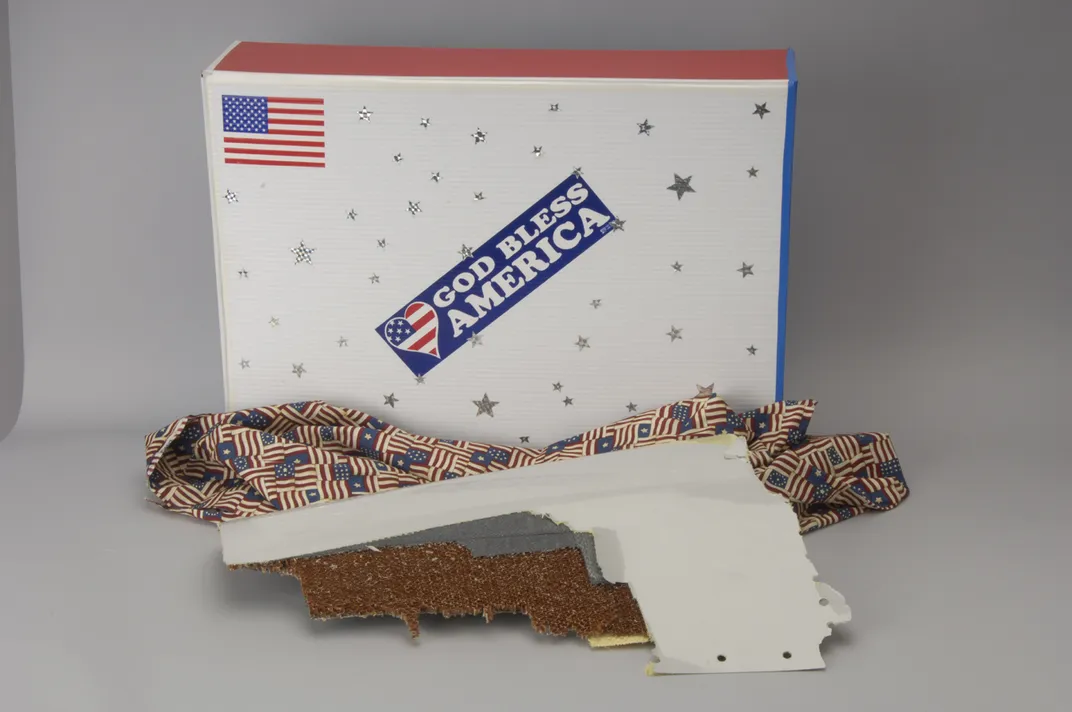
The morning of September 11 found Penny Elgas, then an employee at the Federal Deposit Insurance Corporation, on her way to work. Stuck in traffic on a highway right by the Pentagon, she spotted a plane flying low overhead, “floating as if it were a paper glider.” As Elgas watched in horror, it “gently rocked and slowly glided straight into the Pentagon,” leaving the area “awash in thick black smoke.”
Upon arriving home, Elgas realized that a piece of the plane had landed in her car’s backseat, perhaps dropping in through the sunroof or flying in via an open window. Measuring 22 inches long and 15 inches wide, it was “all plastic and fiberglass” and appeared to be part of the Boeing 757’s tail. A layer of white paint covered its surface.
According to NMAH, Elgas felt it was “her patriotic duty to preserve the fragment as a relic. She crafted a special box and lined it with red, white and blue material.” Elgas later donated the artifact—complete with her specially crafted container—to the Smithsonian.
Note from Daria Gaillard to her husband
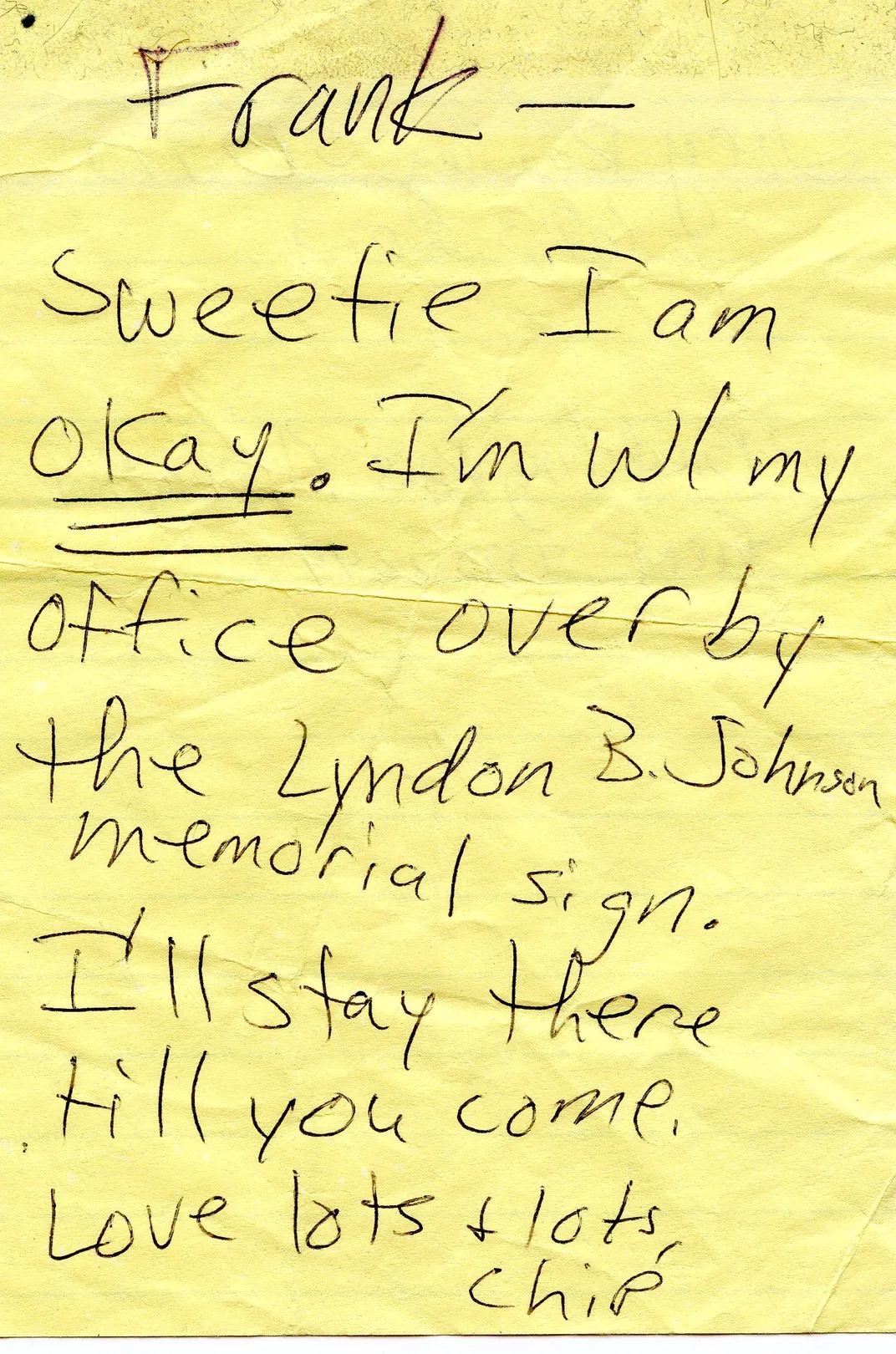
In the event of an emergency, Daria Gaillard and her husband, Franklin Gaillard—both members of the Air Force who worked at the Pentagon—had agreed to meet in the parking lot by their car. On 9/11, Daria (nicknamed “Chip”) reached the couple’s car first; unable to remain in the parking lot due to safety concerns, she left her husband a brief note: “Frank—Sweetie I am okay. I’m w/ my office over by the Lyndon B. Johnson Memorial sign. I’ll stay there till you come. Love lots & lots, Chip.” She underlined “okay” three times.
“It’s a very simple handwritten note,” Yeh said. “It speaks to how we communicate during emergencies and disasters, and what happens if your familiar tools”—like the ubiquitous cellphones of today—“are not available.”
After finding Daria’s note, Franklin successfully reunited with his wife. Per a museum blog post, the couple dedicated the rest of the day to aiding the evacuation of the Pentagon’s daycare center.
Balbir Singh Sodhi’s Sikh turban
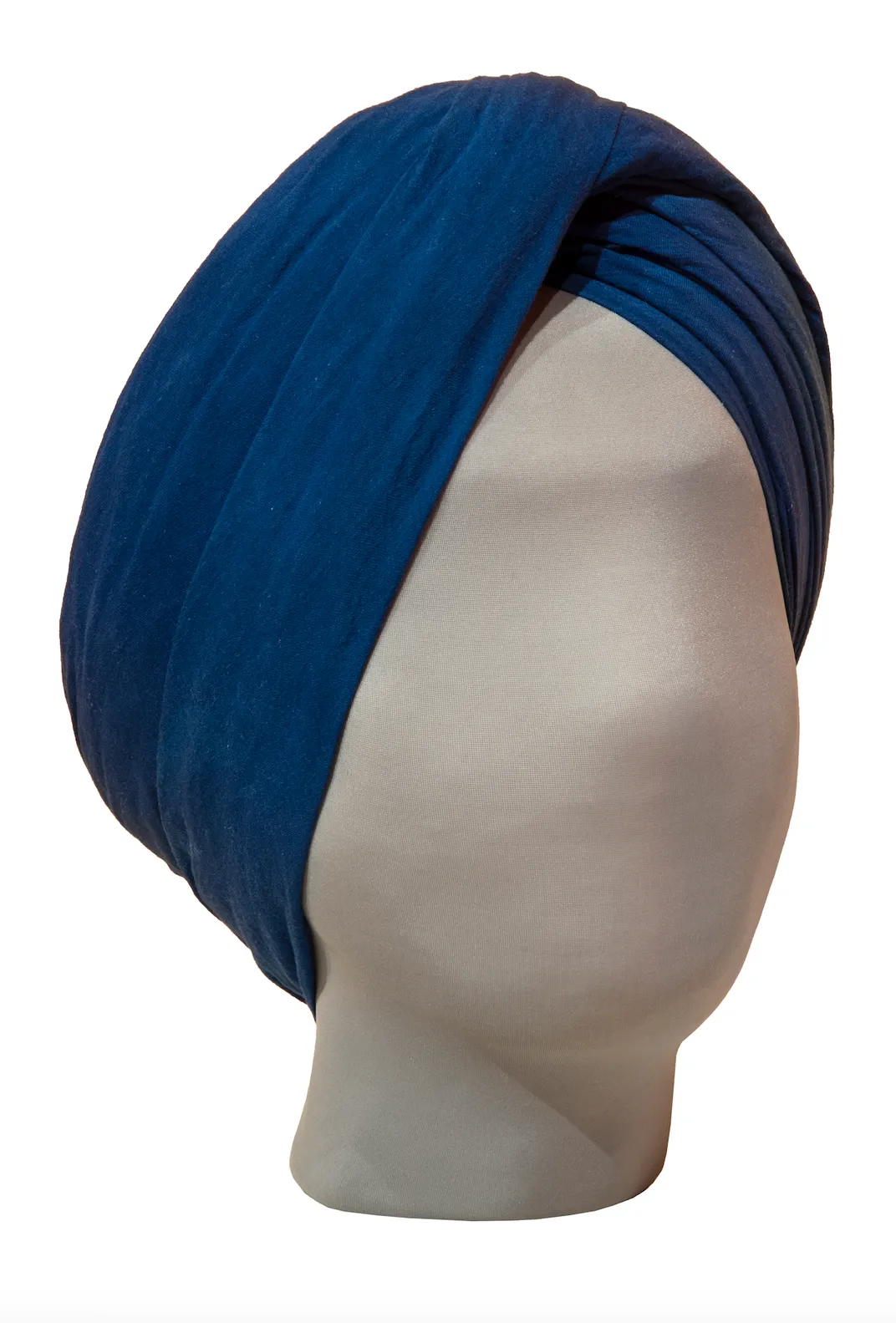
Four days after 9/11, a gunman fatally shot Balbir Singh Sodhi, an Indian immigrant who owned a gas station and convenience store in Mesa, Arizona. Seeing Sodhi’s turban, the killer had assumed his victim was Muslim. In fact, the 52-year-old was a follower of the Sikh faith. Shortly before his death, he’d made a heartbreakingly prescient prediction about people’s inability to differentiate between Sikhs and Muslims, both of whom faced an uptick in hate crimes following the attacks.
“All Sikhs will be in trouble soon,” Sodhi reportedly told his brother. “The man they suspect, the one they show on television, has a similar face to us, and people don’t understand the difference.”
According to the museum, which houses one of Sodhi’s turbans in its “American Enterprise” exhibition, Sodhi immigrated to the U.S. at age 36. He initially settled in California, where he made a living as a taxi driver, but later relocated to Arizona, where he and his brother pooled their money to buy their own business. Sodhi was planting flowers in front of his gas station when the gunman drove by, shooting him in the back five times.
/https://tf-cmsv2-smithsonianmag-media.s3.amazonaws.com/accounts/headshot/meilan_headshot2.png)