
/https://tf-cmsv2-smithsonianmag-media.s3.amazonaws.com/filer_public/89/5c/895c34d8-5f80-4a1b-ae6b-8a28fb4ab7ae/kermit-on-the-muppet-show.jpg)
Kermit the Frog Was Just Trying to Put on a Variety Show. Fifty Years Later, the Muppets Are Some of the Biggest Stars in Television History
The first episode of Jim Henson’s “The Muppet Show” premiered in the United Kingdom on September 5, 1976. Enthusiasm for the eclectic ensemble has endured ever since
/https://tf-cmsv2-smithsonianmag-media.s3.amazonaws.com/accounts/headshot/Ellen_Wexler.png)
:focal(2750x1860:2751x1861)/https://tf-cmsv2-smithsonianmag-media.s3.amazonaws.com/filer_public/89/5c/895c34d8-5f80-4a1b-ae6b-8a28fb4ab7ae/kermit-on-the-muppet-show.jpg)
The curtain opens on a Muppet named Gonzo, framed by a ladder and a ghost light. The scruffy blue creature has decided to leave “The Muppet Show” to become a movie star, and this is his farewell act. As he performs a wistful rendition of “My Way,” his voice begins to falter. He’s sad to leave his friends behind—so sad that the host, Kermit the Frog, cuts the number short.
After the segment aired, viewers told Dave Goelz, the human who performs Gonzo, that they’d been moved to tears. Their reaction surprised the puppeteer, who had been nervous about making an emotional moment land. “I was really uncomfortable doing it,” he says. “It was the kind of thing I joined puppetry to avoid.” He knew he could make audiences laugh, but making them cry? That was new.
Goelz has been bringing Gonzo to life for half a century, and fans frequently tell him that the show’s “resident weird person” gave them permission to be different. He had never tried to project that message. But in retrospect, he can see that he’d been seeking a similar sort of permission. “I was trying to prove that I was okay,” he says. “I was trying to become a proficient performer—and in life in general, I was trying to feel better about myself.”
/https://tf-cmsv2-smithsonianmag-media.s3.amazonaws.com/filer_public/38/aa/38aa561b-6567-4c41-8802-32b615b7b427/100996523-3400x2237_cdf30f6e.jpeg)
As he developed new characters, such as Dr. Bunsen Honeydew, he would start by identifying a flaw within himself. “I would isolate it and amplify it, and then try to make it lovable,” he says. “Because it was the Muppets. We had to be lovable.”
And audiences did love them. The series debuted in September 1976, and less than two years later, the New York Times was calling it “possibly the most popular contemporary television program in the world.” These days, fans gather each year to celebrate show creator Jim Henson’s birthday, performers regularly appear at fan events, and Muppets memorabilia sells for impressive sums at auction. Last year’s commencement speaker at the University of Maryland, Henson’s alma mater, was none other than Kermit.
The Muppet universe is vast, and today’s audiences are familiar with its characters and conventions through decades of film and television. But it all came together on “The Muppet Show,” which turns 50 this year. Unlike in later adventures, the characters weren’t trying to thwart jewel thieves or break out of a Siberian gulag or reunite with their space-alien relatives. Their goal was far more complicated: putting on a successful variety show.
Meet the Muppets
/https://tf-cmsv2-smithsonianmag-media.s3.amazonaws.com/filer_public/cb/b6/cbb69df7-d03e-4730-81ba-937d26b0b84f/gettyimages-181324568.jpg)
In every episode, Kermit, the soft-spoken showrunner, is charged with wrangling the chaotic crew—much like Henson wrangled his creative team.
In the studio, the puppeteer struck a balance between painstaking craftsmanship and unrestrained glee. Everyone worked hard to make him laugh. “I don’t resent the long work time,” he wrote in his journal. “I think much of the world has the wrong idea of working. It’s one of the good things in life.” His peers routinely described his sets as the best creative environment they’d ever experienced.
I heard about this atmosphere from my grandparents, two songwriters who worked on counting segments for “Sesame Street” in the early 1970s. A few years later, my grandfather served as the music coordinator for the first “Muppet Show” pilot. “I have been going through this lovely experience in my mind for days,” he wrote to Henson shortly after filming wrapped in 1973. “I have never enjoyed my work as much as I did on this show.”
Henson’s television career began in 1954, when a station in Washington, D.C. recruited “youngsters 12 to 14 years of age who can manipulate marionettes.” Technically, he fit neither criterion. He was 17, and puppets had never been his primary interest. “Jim wasn’t one of these guys who loved puppets from an early age,” says Brian Jay Jones, Henson’s biographer. “He wanted to be on TV.” After studying puppetry books from the library, he got the gig.
The show ended after a few weeks, but Henson was soon performing on another local station with puppets he’d made himself. He also enrolled in a puppetry class at the University of Maryland, where he was particularly impressed by one of his classmates, an art education major named Jane Nebel. Nearly five years later, they would tie the knot. But long before he asked for her hand in marriage, he asked for her help at work.
Quick fact: What is a Muppet?
- In March 1955, newspapers announced a new variety program showcasing, among other acts, “features by the Muppets, puppeteers.” These listings had incorrectly “applied the term to Jim and Jane rather than to the puppets,” Jones writes in his book.
- “For a long time,” Henson once said, “I would tell people it was a combination of marionettes and puppets, but, basically, it was really just a word that we coined.” He used the term to refer to his characters on many productions, including “The Muppet Show” and “Sesame Street.”
A few months later, the two puppeteers got their own show, “Sam and Friends.” The roughly five-minute segments, which aired twice a day, were “‘The Muppet Show’ in cuneiform, 270 primitive seconds of satire and send-ups, parodies and pratfalls, music and mayhem,” Michael Davis writes in Street Gang: The Complete History of Sesame Street. “The show became a nightly showcase for the eventual dozen or so puppets that populated Henson’s original repertory company.” Sam, a humanoid Muppet, was the lead, while the titular friends were more like “things going on in his head,” Jane once said. “The friends are within him, within Sam.”
One of Sam’s friends was a scrappy puppet made from Henson’s jeans, his mother’s old coat and two halves of a Ping-Pong ball. This character, now held in the Smithsonian’s collections, was the very first Kermit. His head was hollow, filled only by the puppeteer’s hand, allowing for a range of facial expressiveness.
/https://tf-cmsv2-smithsonianmag-media.s3.amazonaws.com/filer_public/ae/fe/aefe5653-97f2-40a1-b715-603162087d80/original_kermit.jpg)
/https://tf-cmsv2-smithsonianmag-media.s3.amazonaws.com/filer_public/72/ac/72ac7cd2-88c2-4f1c-ad21-864731f65421/jn2013-2533.jpg)
Henson scrapped the proscenium that traditionally framed the puppet stage. “He figures out right away, ‘Well, why do you need to film the puppet theater if the TV screen has four sides?’” Jones says. “Makes perfect sense to us nowadays, because we were all raised on Jim Henson’s view of puppets on TV. But at the time, that’s not the way puppets looked on television.”
The first famous Muppet was Rowlf, a piano-playing pooch who had begun his life as a character in Purina dog food commercials. In 1963, he started making regular appearances on “The Jimmy Dean Show.” Around this time, Henson was joined by puppeteer Frank Oznowicz, known today as Frank Oz, who helped bring Rowlf to life. Henson did the voice while controlling the head and left paw; Oz operated the right paw.
“The segment with Rowlf was one of the most popular parts of the show,” Dean wrote in his autobiography, adding that the puppet received 2,000 letters from fans each week. “I treated Rowlf like he was real, but he was real to me.” According to Jones’ book, he was also real to the crew members, who sometimes absent-mindedly held up cue cards before the floppy-eared puppet, expecting him to read them.
Henson’s next big break came in 1969 with the debut of “Sesame Street,” where he designed Muppets such as Bert and Ernie, Big Bird, Cookie Monster and Oscar the Grouch. “While of course ‘Sesame Street’ was a tremendous experience for him, and in many ways made him a household name—or made his characters a household name—he really was less interested in being pegged as a children’s entertainer,” says Karen Falk, archives director at the Jim Henson Company. He was more interested in pitching a new show, which would be populated by puppets but aimed at adults.
Buy this show!
/https://tf-cmsv2-smithsonianmag-media.s3.amazonaws.com/filer_public/6e/27/6e27abfc-dbb3-43e2-a125-bb5688780a89/jim-henson.jpg)
In 1974, “The Muppets Valentine Show” aired on ABC. Henson created the 26-minute special as a backdoor pilot, hoping to sell a regular series. It opens with the host, a Muppet named Wally, struggling with writer’s block. “Now,” he asks, “what can we say about love?” The Muppet ensemble tries to answer him through a series of skits and songs.
“Oh boy, could I tell you about love,” says Kermit.
“Okay,” another Muppet replies, “tell us about it.”
“I don’t want to talk about it,” he says. “I’ll sing about it!”
Cue “Froggy Went A-Courtin’,” a folk song featuring Kermit and Big Mouse competing for the hand of the lovely Miss Mousey. Other sketches include Kermit reporting on alien mating rituals and actress Mia Farrow, the only human to appear on screen, dancing with a towering blue Muppet named Thog. Just like in “Sesame Street,” the Muppet-human interactions are “the most charming bits of the show,” Falk says.
Henson, however, wanted to keep the series separate from “Sesame Street.” Kermit, considered indispensable, is the only Muppet who appears regularly in both shows—though Bert and Ernie make a brief appearance at the end of the Valentine’s Day special. As a line of Muppets files past Farrow to say their goodbyes, Kermit asks, “Bert, what are you doing here?”
A second special, “The Muppet Show: Sex and Violence,” aired on ABC in 1975. The program, which poked fun at handwringing over explicit themes on television, featured no human guest star, and the host was a yellow Muppet named Nigel, who would later appear only in minor roles. Viewers met several characters who would later become regulars, including the Swedish Chef, Dr. Teeth, Sam the Eagle, and Statler and Waldorf.
/https://tf-cmsv2-smithsonianmag-media.s3.amazonaws.com/filer_public/1f/08/1f081ab9-119d-40c0-a780-72fc13b3b41b/momi_jim_henson-0085a_1500.jpg)
“All the people who worked with Jim said that, from the beginning, the pitch for ‘The Muppet Show’ was brilliant, that they could all see it working, and so it was really the sort of establishment of American television that needed the convincing,” says Ryan Lintelman, entertainment curator at the Smithsonian’s National Museum of American History. “They just weren’t sure about this idea of puppets for adults, puppets in prime time, puppets making jokes that could be satirical, that could be absurd.”
When ABC passed, Henson turned his attention to CBS. His pitch reel ends with a speech from a Muppet businessman wearing a suit and tie, who promises that the show will “be loved and adored by every Nielsen home in the country.” Over two minutes, he becomes increasingly frenzied. “The careers of the men who made the decision to put this show on the air will skyrocket!” he says. “Buy this show! Now, we’re not pulling any punches here. I mean, there’s nothing subtle about this pitch!”
CBS didn’t greenlight the Muppets, but the idea eventually piqued the interest of British producer Lew Grade. “It took an impresario like Lord Grade to really understand Jim,” Jones says. The producer asked Henson to bring the show to England.
It’s time to play the music
/https://tf-cmsv2-smithsonianmag-media.s3.amazonaws.com/filer_public/70/cd/70cdf172-5a6b-4f7f-b3ed-083f766dd0d4/gettyimages-583660684.jpg)
When the first episode of “The Muppet Show” aired in the United Kingdom on September 5, 1976, most of the core ingredients were in place: The now-iconic theme music. The Muppet Theatre. The celebrity guest (in this case, Broadway star Joel Grey). The troupe of Muppets putting on a weekly variety show. Kermit, now promoted to host, managing their antics. Something always goes wrong, but the frazzled frog does his best to avert disaster. “These characters, they’re all weirdos,” Goelz says. “Kermit gathers these people together, and together they can make a show. But they probably couldn’t succeed at all on their own.”
The premise mirrored the dynamic behind the scenes, where the soft-spoken Henson supervised a ragtag crew of creatives. Goelz, who was new to puppeteering, recalls how Henson and Oz coached him in front of a mirror. “I thought it was about making contact,” moving in close to the camera, he explains. But the performance actually hinged on controlled movements of the hand.
In most cases, performers slide one hand inside the puppet’s head, opening and closing their thumb and fingers to manipulate the mouth. When I speak with Goelz, he demonstrates this motion, showing how the puppet’s eyes point up toward the ceiling when he opens his hand too wide. “Instead, you do a movement like this”—he performs a more restrained open-shut gesture—“keeping the eyes focused right in camera” or on another character.
The guest star was also central to the show’s winning formula. In the early days, “we had trouble getting guests to appear,” Abe Mandell, president of Grade’s ITC Entertainment, said in 1981. “Nobody knew what it was. Or how it would turn out.” But after a few seasons, celebrities started asking to appear with the Muppets. By the end of its five-year run, the show had hosted the likes of Julie Andrews, Harry Belafonte, Mark Hamill, Bob Hope, Gene Kelly, Loretta Lynn, Steve Martin, Vincent Price and Peter Sellers. After opera singer Beverly Sills appeared in Season 4, she told Newsday about the experience: “You are brought into a meeting room. You are with Henson, Oz and others, including the writers. Then, little by little, you are introduced to the Muppets. They just appear and take part in the natural conversation. That was how I started talking to Kermit.”
/https://tf-cmsv2-smithsonianmag-media.s3.amazonaws.com/filer_public/c6/bd/c6bdef7b-38d9-409b-82c3-641f638b0126/momi_jim_henson-0099a_1500-muppet-show-projection2_1.jpg)
Jerry Juhl, who had co-written the first pilot with Jerry Ross, came on as head writer in Season 2. “That’s when ‘The Muppet Show’ really starts to fire on all its pistons,” Jones says. For example, he scaled back a recurring segment called “At the Dance,” which features pairs of dancing Muppets telling jokes without meaningfully advancing the characters. (In one episode, Miss Piggy asks her dancing partner, another pig, whether he prefers William Shakespeare to Francis Bacon. He replies, “I prefer anything to bacon.”)
Jim and Jane Henson had developed a cast of “puppets that could assume any character depending on what the performer brought to them,” says Barbara Miller, deputy director for curatorial affairs at the Museum of the Moving Image. “By the time ‘The Muppet Show’ was on television, the puppet characters that Henson developed—they had started to form into personalities.”
Take Fozzie Bear, who started out as a failing comedian. When the audience heckled him, he was distraught. “They couldn’t quite figure out what to do with him,” Jones says. Oz eventually reimagined him as “a guy who just wants to tell jokes to be funny and make people happy,” and all the pieces fell into place.
Meanwhile, Gonzo developed in three phases, beginning as an “insecure guy who had kind of a baby talk intonation,” Goelz says. The puppeteer then built a new version of the character capable of eye movement, allowing Gonzo to become more excitable—a phase that “coincided with me having more confidence.” Finally, when Gonzo takes on the role of Charles Dickens in The Muppet Christmas Carol (1992), the character becomes a soulful, generous storyteller.
“The more I developed as a person, the easier it became,” Goelz says. “In between Phase 2 and Phase 3, his excited phase and his soulful phase, I did about five and a half years of therapy, and it was really deep work, and it transformed me. So a lot of my self-esteem issues were resolved, and I was much more comfortable with emotions.” By the time Christmas Carol came along, “I really relished it. I just thought, ‘Oh, deeper work, give it to me.’”
Other characters, like Sam the Eagle, were used to satirize “stodgy establishment values,” Lintelman says. In Season 2, Sam explains his purpose quite candidly: “I feel my job is to make sure this program is morally upright and cultural and wholesome.” When Kermit reveals that an upcoming program will involve “lady wrestlers,” Sam flies into a rage. “I shall continue to speak out knowing someday I will get my just deserts!” he insists. (Moments later, he gets his “just desserts” in the form of a pie in the face.)
The show always went on, and the characters always came together in the end. So did the human cast and crew. “Jim tended to hire unique individuals,” Goelz says. “He hired all these crazy people, just threw them together, and in the end, we just loved each other so much. And that, to me—gosh, that’s what the world needs. We need more interaction with people, not less.”
The Muppets make their mark
/https://tf-cmsv2-smithsonianmag-media.s3.amazonaws.com/filer_public/f8/09/f80972c8-9fbc-478b-9525-cc54cbf8d265/et2018-05415.jpeg)
According to some estimates, “The Muppet Show” reached 235 million viewers in more than 100 countries at its peak. “Children trap their parents in front of the terrible tube and force them to watch the Muppets,” Time wrote in 1978. “The parents become habituated, and thenceforth on Muppet night somewhat sheepishly remind the children to close their calculus textbooks and turn on the set.” When The Muppet Movie debuted in 1979, fans in Cincinnati started a campaign to get Miss Piggy an Oscar.
The final curtain came in 1981, at the end of Season 5. “There was nothing at all wrong with ‘The Muppet Show,’” Jones says. “The writers weren’t burnt out. The performers weren’t tired of it. It was just one of those things.” Henson wanted to move on to other projects. The Muppet Movie was followed by The Great Muppet Caper in 1981 and The Muppets Take Manhattan in 1984.
Henson was known for working long hours and sleeping comparatively few. He powered through, rarely falling ill. When the team traveled to a new location to begin a project, “we’d all start coming down with a local virus, and Jim would say, ‘I’m going to be okay tomorrow,’” Goelz recalls. “The next day, Jim was fine, and we were all sick.” But in 1990, Henson developed an infection serious enough to keep him from a recording session in New York. Goelz remembers hearing the news over the phone: Henson was in the hospital. He wasn’t expected to make it. “That last part, I couldn’t process,” Goelz says. “It was like they were speaking a different language.”
After Henson died that year at the age of 53, the performers gathered with his son, Brian Henson, who had been fielding questions from the press about the Muppets’ future—namely, whether they had one. “He said, ‘How do you guys feel?’” Goelz recalls. “And all of us said, ‘Well, we’ve felt like this was our life’s work for a long time, and yes, if we could go on without Jim, we would sure like to try.’”
In the 1990s, The Muppet Christmas Carol, Muppet Treasure Island and Muppets From Space hit theaters, with other directors and performers taking the lead. Disney purchased the Muppets (apart from the “Sesame Street” characters) in 2004, and two new films, The Muppets and Muppets Most Wanted, debuted in the 2010s.
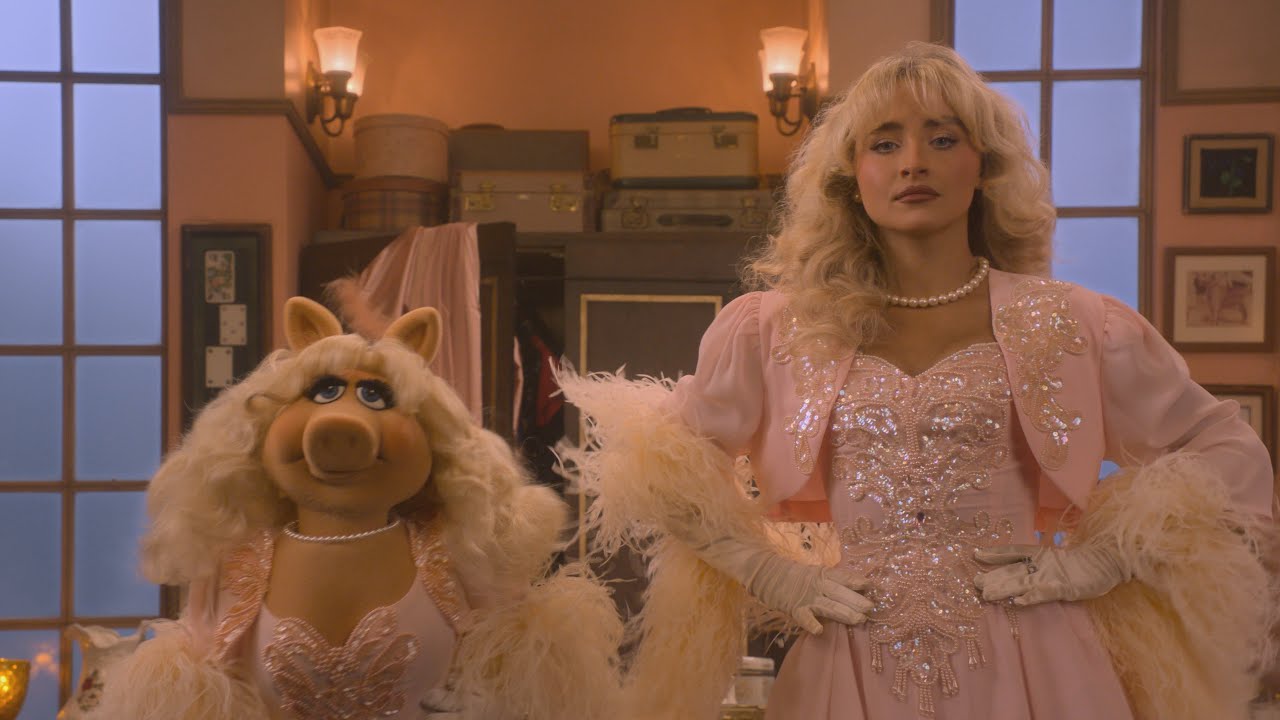
This year, a special called “The Muppet Show” aired on Disney+ and ABC, reaching nearly eight million viewers in its first eight days. The 32-minute revival takes place in the Muppet Theatre and features singer Sabrina Carpenter as its celebrity guest star. “When you try to explain this to somebody, that even 20-somethings are watching a show that’s kind of like an old vaudeville theater with puppets, it seems like a very strange thing to continue to have relevance,” Lintelman says. “But I think it speaks to the innate qualities of the Muppets that people still see themselves in them, in the characters, in these relationships that they have.” The Hollywood Reporter described the special as “a soft test run for a full-fledged series return,” though no additional projects have been announced.

Nostalgia for early versions of the Muppets is evident at the museums that care for them. As soon as visitors enter the “Jim Henson Exhibition” at the Museum of the Moving Image, “Kermit is there greeting everyone,” Miller says. “Being able to be face-to-face with Miss Piggy is a dream.” Meanwhile, visitors can see a rotating display of characters—including Miss Piggy, Kermit, Rowlf and Scooter—at the Smithsonian’s National Museum of American History, where they’re some of the most popular objects on display.
But old age is catching up with the Muppets, making conservation an ongoing struggle. For example, one time-worn Miss Piggy suffers from tearing along the snout line. “The conservator Sunae Park Evans, who’s really our Muppet expert, she had to do a skin graft—basically plastic surgery—to try to repair this tear in Miss Piggy’s nose,” Lintelman says. He thinks the intervention was “very appropriate” for Miss Piggy, who “has a certain image that she has to maintain.”
At history museums, the curator says, visitors sometimes have “an idea of the things that they’re supposed to see,” such as George Washington’s uniform, or Abraham Lincoln’s hat. But entertainment objects, he adds, are “just as powerful,” illuminating how pop culture shapes “the way that Americans interact with each other and see the world.”
It also shapes how Americans see themselves. When I ask my interview subjects which Muppets they feel an affinity for, most of them have a ready answer. “I’m a Kermit, for sure,” Lintelman says. The eldest of three brothers, he has always felt that he’s “trying to maintain some sense of normalcy amongst craziness.” Jones, meanwhile, considers himself “more of an Ernie person.” Miller has owned an egg cup shaped like the Muppet Zoot since she was a teenager. “I will always treasure it,” she says. “I will always love Zoot.” One of my colleagues at Smithsonian magazine independently reported that she owns the very same Zoot egg cup. I don’t know whom my grandfather would have selected, but I might classify him somewhere in the general vicinity of Gonzo—Phase 3.
/https://tf-cmsv2-smithsonianmag-media.s3.amazonaws.com/accounts/headshot/Ellen_Wexler.png)