Where Does Language Originate in the Brain? New Research Challenges Our 150-Year-Old Understanding
Researchers long thought that a region called Wernicke’s area, located just above the left ear, solely played a role in comprehending language. Now, a study suggests that it’s also important for producing speech—a finding that will change diagrams in biology textbooks

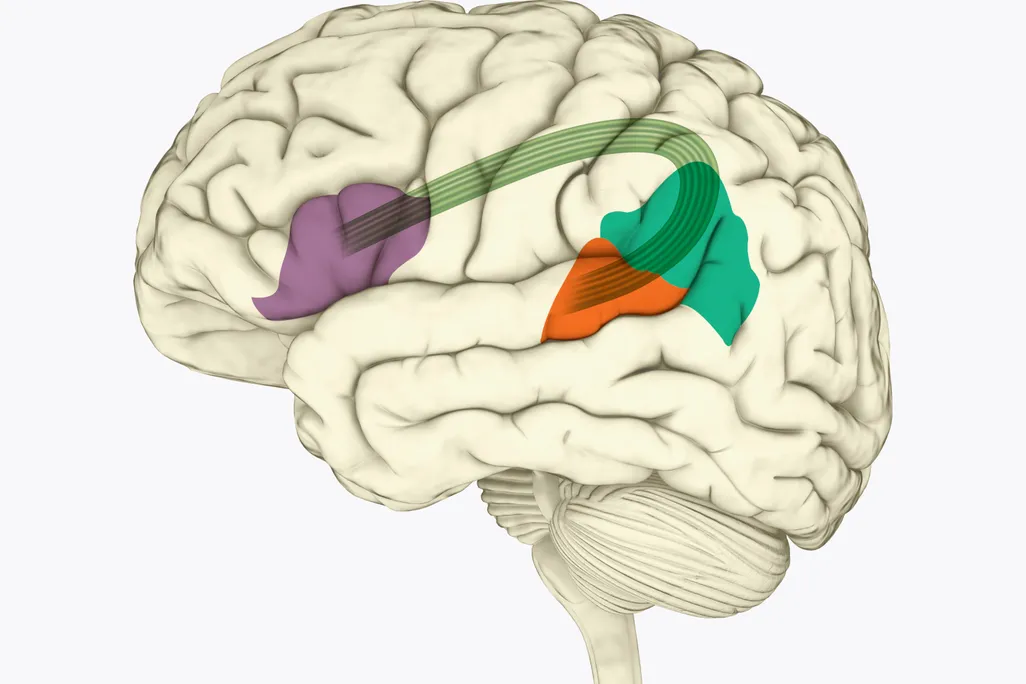
For roughly 150 years, scientists have thought that a brain region called Wernicke’s area, located just above the left ear, was solely responsible for understanding spoken and written language. That’s because in the 1870s, German neurologist Carl Wernicke noticed that people with damage to that area struggled to comprehend words. Speech production, on the other hand, was believed to stem from a separate place called Broca’s area, near the left temple.
However, individuals with damage to Wernicke’s area sometimes also spoke in fluent-sounding gibberish, talking in what’s described as “word salad,” perplexing researchers. Now, one team may have figured out why: Wernicke’s area actually pulls double duty, helping both process speech and produce it. The findings, published in the journal Science on November 19, rewrite our understanding of how the brain constructs language and can help scientists develop technologies that restore speech.
To conduct the study, scientists recruited 28 people undergoing brain surgery for epilepsy. Researchers implanted grids of either 128 or 256 electrodes in their heads to record the activity of nerve cells, or neurons. Then, the participants—who remained awake during the operation—repeated and listened to words and sentences.
“What we saw was not what the textbook predicted,” said study co-author Edward Chang, a neurosurgeon at the University of California, San Francisco (UCSF), at a press briefing, reports Allison Parshall for Scientific American.
Neurons in a nickel-size part of Wernicke’s area fired as the patients listened to speech, and, surprisingly, about one-fourth of a second before they spoke. Activity strength in the subzone, called the left posterior superior temporal gyrus (lpSTG), depended on the complexity and length of the word.
“It’s more active when you’re about to say the word caterpillar than when you’re about to say the word cat,” said study co-author Matthew Leonard, a cognitive neuroscientist at UCSF, during the press briefing, per Laura Sanders at Science News.
Did you know? Bilingual speakers
For a long time, scientists have wondered whether different neural mechanisms govern each language within a bilingual speaker’s brain. A study published this past summer found that people who speak both English and Spanish rely on the same “grammatical engine” for the two tongues.
About half of the surgery participants also received electrical stimulation to their lpSTG, which rendered them unable to understand spoken queries from the researchers. They also lost the ability to start talking or spoke in “word salad,” making errors similar to those of people with Wernicke’s aphasia, a condition where someone struggles with language because of damage to Wernicke’s area. Turning off the electrical stimulation restored the participants’ ability to comprehend and produce speech.
The findings suggest that biology textbooks will need to be rewritten, since Wernicke’s and Broca’s areas’ previously assigned roles are foundational. But that idea doesn’t totally surprise Leigh Hochberg, a neurologist at Mass General Brigham who wasn’t involved in the study. As scientists develop better tools to study the brain, he tells National Geographic’s Helen Thompson, “placing a circle around a part of the brain and assigning it a single function, I suspect, is going to turn out to be a substantial oversimplification.”

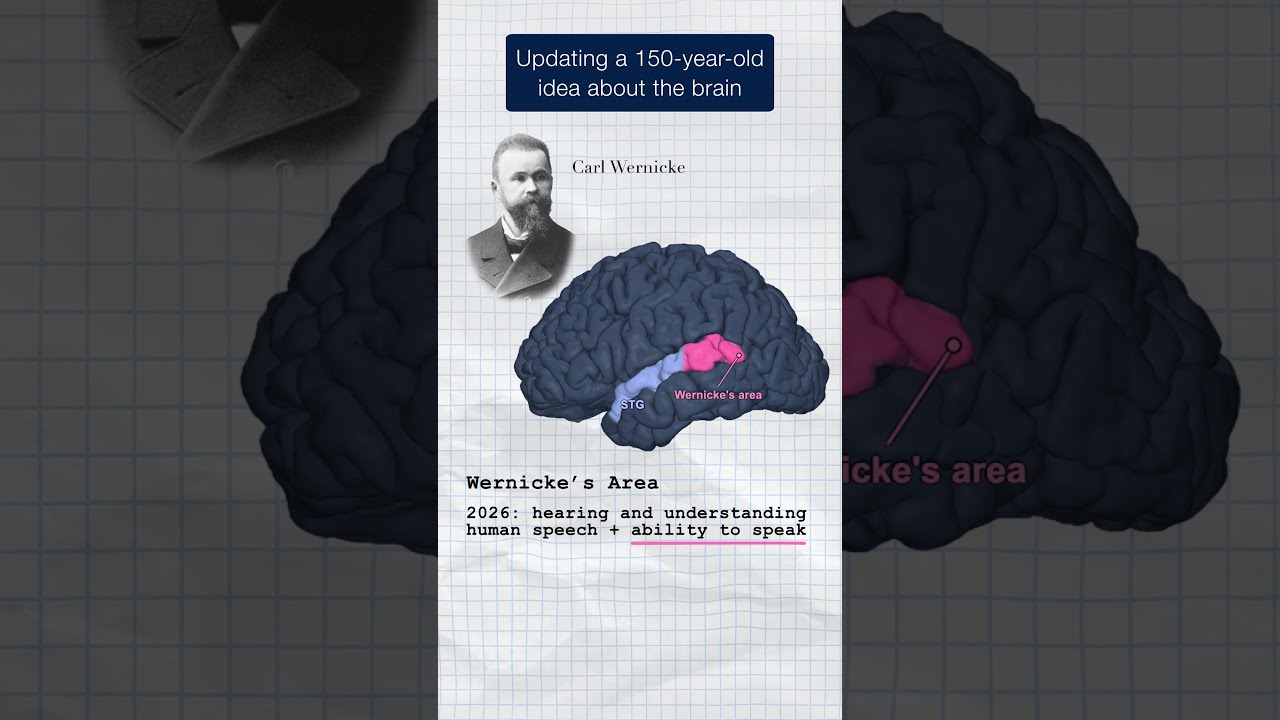
The study’s findings could help researchers develop brain-computer interfaces (BCIs) that can restore speech in certain patients. Most clinical trials focus on people who have lost their ability to talk because of paralysis. But that doesn’t work for people with aphasia, per Scientific American, since the brain signals responsible for their intended speech don’t make it to the brain’s motor regions, which would have sent information to the mouth’s muscles. BCIs for aphasia patients therefore need to decode what the individuals want to communicate from the activation of undamaged parts of the lpSTG.
To start on that, the researchers made experimental brain implants for two participants with paralysis. When tested, the BCIs detected what the individuals heard and what they wanted to say.
The findings also open the door for future research on Wernicke’s area. Other primates don’t have a brain region resembling it, so that could explain why these animals haven’t evolved speech.
“This subzone, which turns the words that we hear into words that we say, may be part of what makes us human,” Chang tells National Geographic.