
This Self-Charging Toothbrush Has Bristles That Generate Electricity to Help Kill Bacteria That Cause Cavities and Gum Disease
In a short clinical trial, participants who used the experimental toothbrush reported less plaque, gum inflammation and bleeding than those who used traditional nylon-bristled brushes. However, more research is required to assess the tool’s safety and efficacy

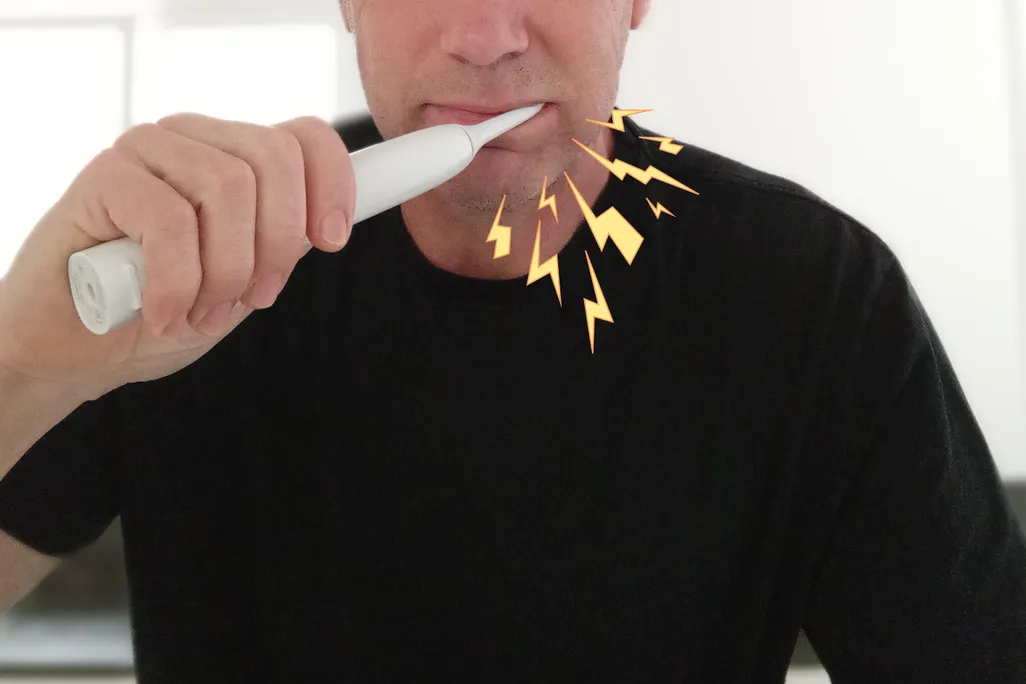

Researchers in China have reinvented a familiar tool: the toothbrush.
Brushing your teeth is an important part of your oral care routine. Both regular and electric toothbrushes rely on physically scrubbing away bacteria that can cause cavities and gum disease. But a new design, described November 4 in the journal Science Advances, features bristles that generate bacteria-killing electricity when they bend, perhaps providing a long-awaited update to the hygiene tool.
“Toothbrushes have undergone no substantive improvements beyond their mechanical function for about 1118 years to date,” the researchers write in the study. “Conventional toothbrushes often fail to establish an antibacterial environment on the tooth surface, allowing bacteria to recover and recolonize. Here, we developed an innovative self-charged toothbrush that integrates daily tooth brushing with piezoelectric functionality.”
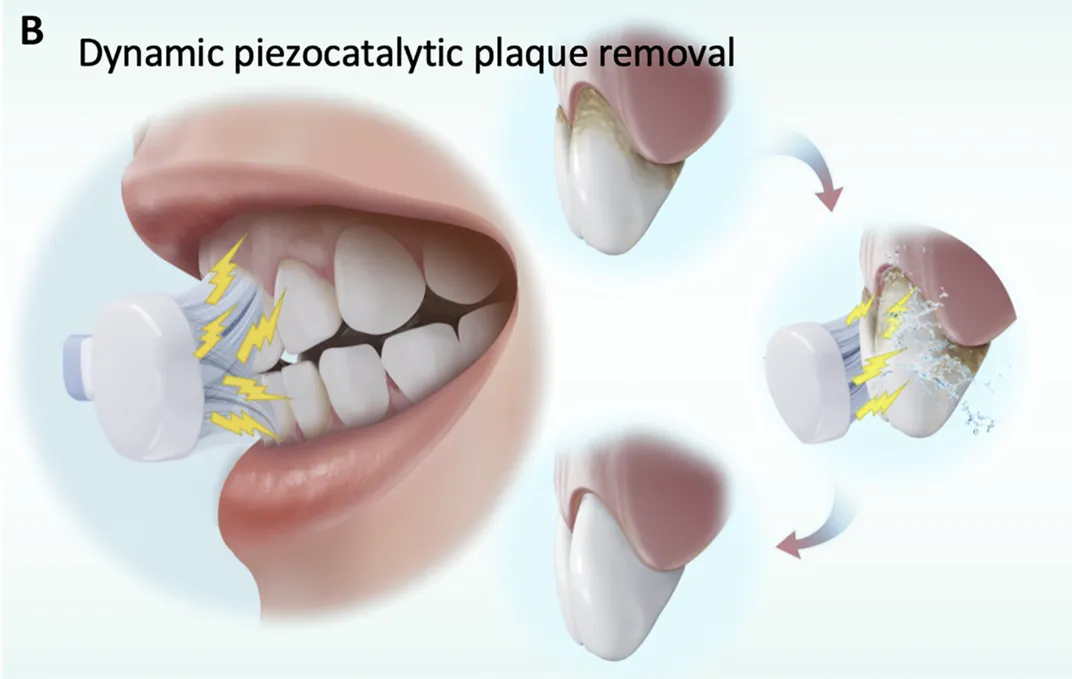
Piezoelectric materials generate electricity when put under mechanical stress, like being squeezed or compressed. In the new study, researchers applied this property to the toothbrush by creating bristles from polyvinylidene fluoride, a material that produces an electrical charge when it bends.
The electricity doesn’t directly zap oral bacteria, however. Instead, the charge creates highly unstable molecules called reactive oxygen species in the saliva. These molecules disrupt the membranes of bacteria in dental plaque—a sticky layer of the harmful organisms, along with food particles and spit.
“The concept is great,” Nicholas Jakubovics, an oral microbiologist at Newcastle University in England who did not participate in the research, tells New Scientist’s Christa Lesté-Lasserre. “Basically, the mechanical forces recharge the surface, so it’s really innovative. Anything that even slightly improves the way dental care works could have a benefit, because oral disease is just so widespread.” Experts estimate that almost 3.7 billion people worldwide have oral diseases, such as gum disease and tooth decay.
The researchers first conducted lab tests of the piezoelectric toothbrush using two key oral pathogens: Streptococcus mutans, which causes cavities, and Porphyromonas gingivalis, which causes gum disease. The charge-producing bristles killed about half of the cavity-causing bacteria and more than half of the gum disease agent present, while traditional nylon bristles eliminated only about 9 percent and 8 percent, respectively.
Then, they moved to a human trial. The team enrolled 115 participants with tooth decay or mild gum disease, called gingivitis. They asked some people to use the electricity-generating toothbrushes and others to use nylon-bristled brushes twice a day for three months.
At the end of the study period, participants who brushed with the experimental tool had less plaque, gum inflammation and bleeding than regular toothbrush users, the team found.
Quick fact: Toothbrush origins
Early forms of toothbrushes, such as a “chew stick” with a frayed end, have existed since 3,000 B.C.E.
“It’s great to have new approaches that actually enhance the effect of mechanical cleaning,” Jakubovics tells Live Science’s Isha Ishtiaq. “The idea that the toothbrush surface itself is actively doing something is really interesting.”
One of the limits of the research, however, is the clinical trial’s short duration, he notes. “We would want to make sure that it is safe on the tissues for long-term use.”
Frank Scannapieco, a periodontist and microbiologist at the University of Buffalo who did not participate in the study, agrees that more research is necessary to prove the toothbrush is safe and effective, per Nature’s Elizabeth Gibney.
This isn’t the first time researchers have taken a swing at upgrading toothbrushes. Previous designs have included bristles with antibacterial chemicals, but researchers aren’t sure if they have a lasting effect. Others produced charged particles to help clean teeth, but these require batteries.
“The toothbrush is humanity’s mightiest soldier in the battle against dental plaque,” according to a statement. The researchers behind the new study “have now upgraded this warrior.”
Still, there’s a long way to go before this upgrade can sit on pharmacies’ oral health shelves.
