
This New App Created in Collaboration With the Rainy Lake Ojibwe Community Aims to Preserve Indigenous Language and Knowledge
Users can browse traditional stories, learn more about notable landmarks and discover family connections
/https://tf-cmsv2-smithsonianmag-media.s3.amazonaws.com/accounts/headshot/IMG_9594-edit.png)
/https://tf-cmsv2-smithsonianmag-media.s3.amazonaws.com/filer_public/f6/0d/f60de763-68e6-435d-85c6-c5bb8cacfd21/ojibwe-7.jpg)
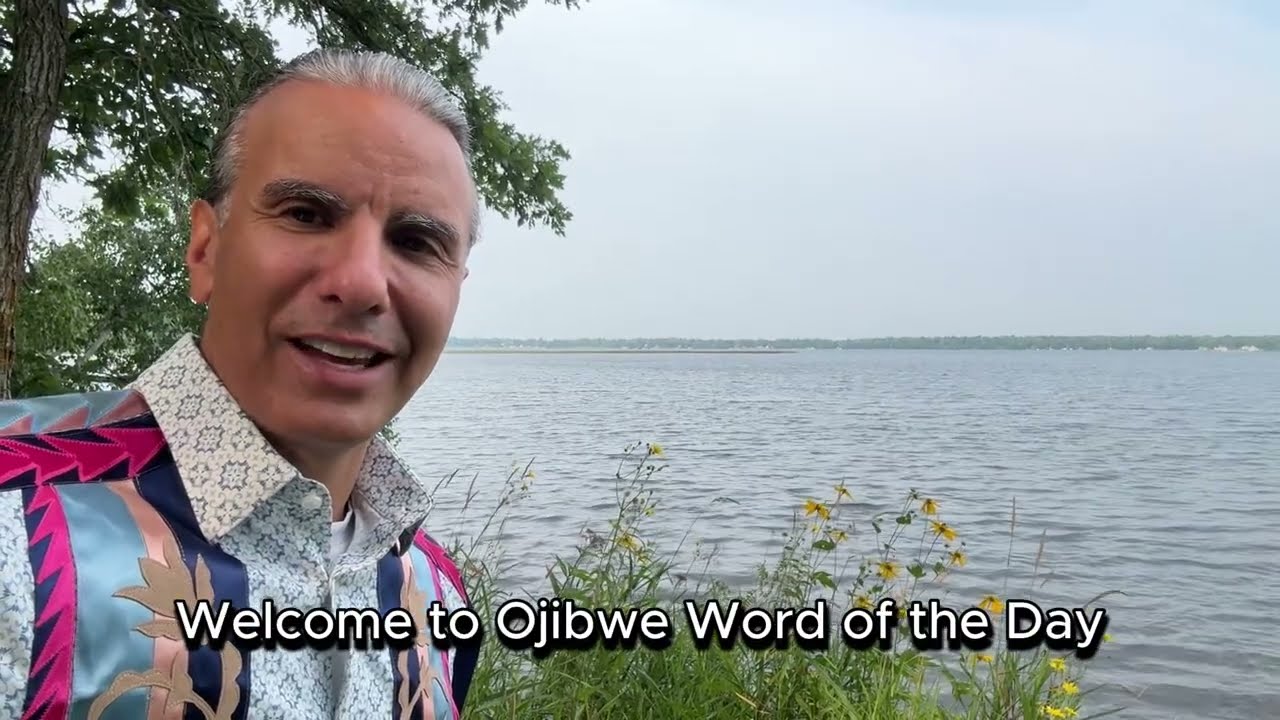
A new free app aims to contribute to the revitalization of the Ojibwe language by making it more accessible to smartphone users. The app, called “Indigenous Collections,” was developed by Motorola and the Lenovo Foundation in collaboration with members of the Rainy Lake Ojibwe community. It is the latest project in the Indigenous Languages Initiative that Motorola launched to correspond with UNESCO’s International Decade of Indigenous Languages.
Anton Treuer, a professor of Ojibwe at Minnesota’s Bemidji State University, and Ojibwe language teacher Jason Jones worked with Rainy Lake community elders to fill the app with stories, traditions and personal accounts that share Ojibwe through the rich culture and history of its speakers. It functions less as a translation dictionary and more like a hub of cultural knowledge that uses Ojibwe vocabulary as its foundation. Users can read through oral histories and translated narratives, explore their own roots using a “family tree” function or browse for information about culturally significant landmarks in their area.
“The app’s focus on preserving and sharing Ojibwe stories is particularly valuable,” Treuer says in a statement, reports Levi Rickert for Native News Online. “Storytelling remains one of the most effective ways to transmit language, cultural knowledge, worldview and community history. The current collection already represents a meaningful archive, and the planned addition of further stories will increase the long-term significance of the project.”
/https://tf-cmsv2-smithsonianmag-media.s3.amazonaws.com/filer_public/00/b5/00b53173-3a8b-47e6-a19a-3636bad88f57/ojibwe_app_screenshot_-_1.png)
About 50,000 people speak the Ojibwe language today, according to Motorola, primarily in Indigenous communities of what is now southern Canada and the northern United States. A majority of these speakers are over the age of 70, according to the Ojibwe People’s Dictionary, one reason the language is listed as “severely endangered” by UNESCO. Ensuring the survival of Ojibwe, and the cultural practices and worldviews archived within it, relies on younger generations taking up the language.
“We cannot wish our languages back to health,” writes Treuer in his book The Language Warrior’s Manifesto. “We cannot teach them if we don’t first learn them. We can’t lead in their revitalization from the sidelines.”
Fun fact: Learn a word
The word for “butterfly” in Ojibwe is memengwaa, according to the Ojibwe People’s Dictionary.Experts have estimated that before European colonization, more than 300 distinct languages were spoken north of what is now Mexico. From the mid-19th century through the mid-20th century, many Indigenous children in the U.S. were sent to government- or church-run boarding schools that aimed to assimilate youth and suppress their native languages and cultures. Today, many remaining Indigenous languages in North America are at risk of dying unless younger generations pick them up.
To help make at-risk tongues accessible and available to everyday technology users, the Indigenous Languages Initiative has introduced some Indigenous languages as options for phone interfaces. In 2022, for example, Motorola collaborated with Cherokee leaders to incorporate the Cherokee language as an option on a new line of smartphones.
/https://tf-cmsv2-smithsonianmag-media.s3.amazonaws.com/filer_public/7d/65/7d6543e0-c4d2-4ea8-ac02-21ef9e91ec56/la__koko_growing_up.jpg)
Benjamin Frey, a language scholar at the University of North Carolina and member of the Eastern Band of Cherokee Indians, was one of the experts Motorola reached out to for the project. By building the new phone interface around the knowledge of community members, they were able to choose a lexicon with genuine cultural relevance.
For instance, the initiation button.
“It could have said ‘let’s get started’ in many different ways,” Frey told the Associated Press’ Matt O’Brien in 2022. “But it said ‘halenagwu’—just start. And that’s very Cherokee. I can kind of see an elder kind of shrugging and saying, ‘Well, I guess let’s do it.’ ... It reminds me very fondly of how the elders talk, which is pretty exciting.”

Frey said that some people in his community remain wary of technology companies profiting off of Indigenous knowledge. But, at a time when Indigenous languages could easily slip out of practice, he’s chosen to lean into these kinds of projects.
“Personally, I decided that the potential benefit was worth the risk, and I’m hoping that that will be borne out,” Frey told the AP.
/https://tf-cmsv2-smithsonianmag-media.s3.amazonaws.com/accounts/headshot/IMG_9594-edit.png)