
These Adorable Hatchlings Are From the U.S. West Coast’s First Known Natural Sea Turtle Nests. Now, They’ve Returned to the Wild
Two nests were spotted in September, and authorities moved the eggs to an aquarium to protect them from an incoming tropical storm. Over the weekend, dozens of hatchlings emerged and have now been released on the same beaches where they were found

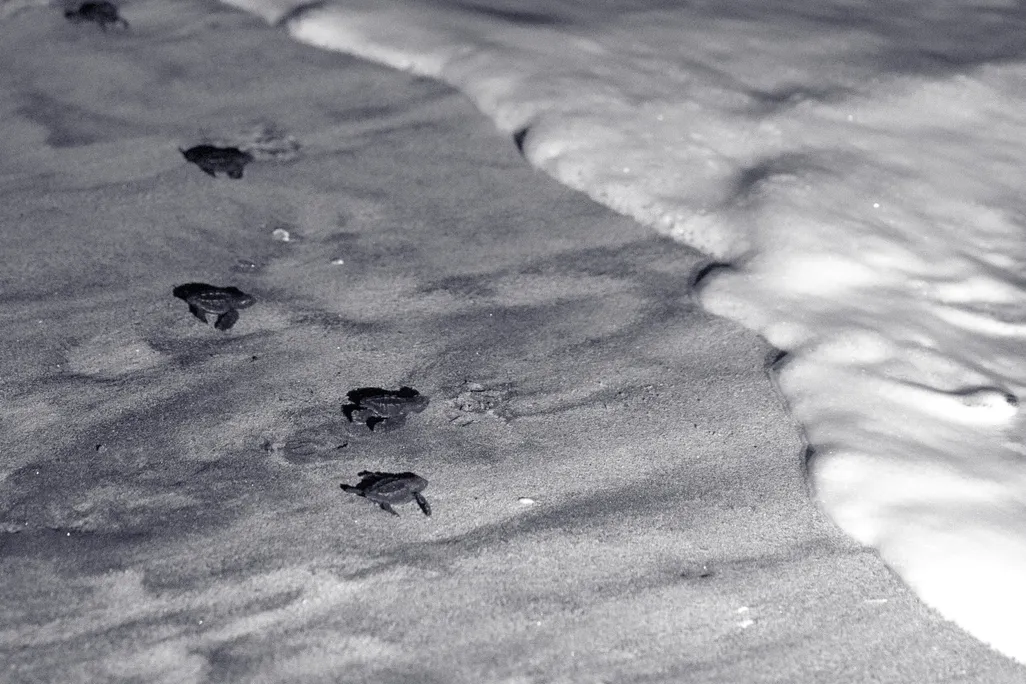
In September, authorities in California were baffled to find two sea turtle nests on their beaches—the first natural ones ever confirmed on the United States’ West Coast. Now, dozens of the eggs have hatched. Experts released the baby olive ridley turtles over the weekend, allowing the tiny creatures to begin their perilous journeys to adulthood.
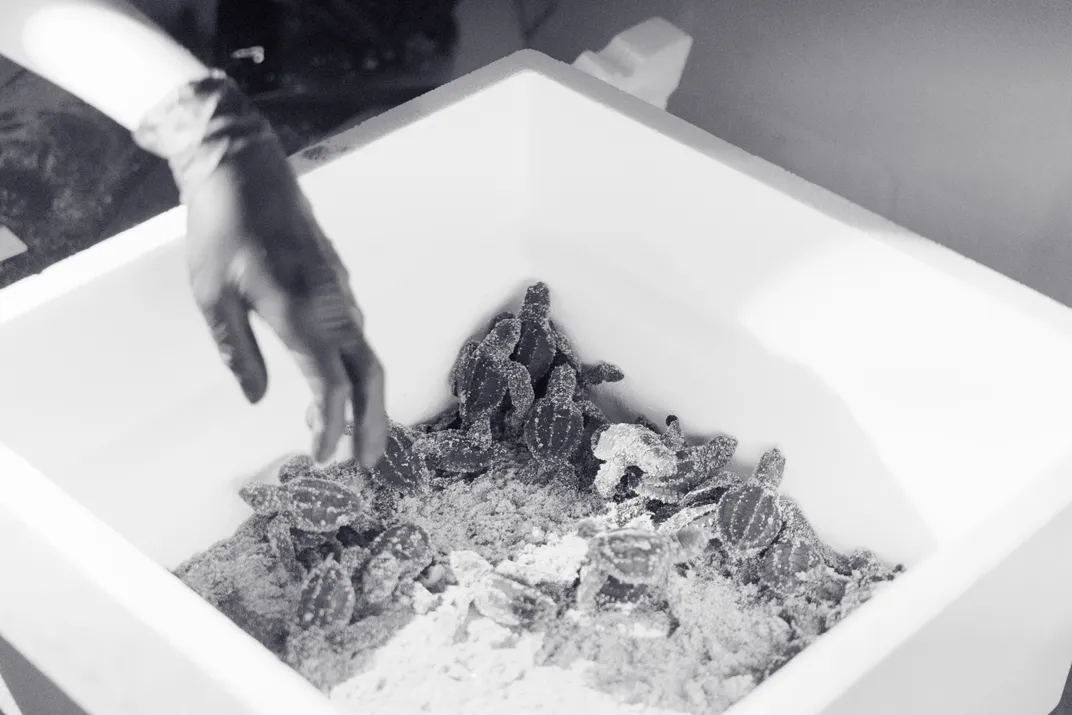
The two nests were identified on Seal Beach and Huntington Beach in Orange County. Because a tropical storm was coming soon after the nests were found, biologists moved the more than 200 eggs to the Aquarium of the Pacific. The Ping-Pong ball-size spheres stayed in closed incubators under sand in a temperature- and humidity-controlled room, simulating their ideal natural conditions.
Aquarium staff first saw signs of hatching activity on November 12, when they noticed changes in the surface of the sand in the incubation container with the Seal Beach eggs, said Lance Adams, the aquarium’s veterinarian, during a press conference on November 14. The team spotted a depression and some cracks in the sand, indicating something was happening beneath it. The first turtle emerged the following day at around 7:15 p.m. Pacific time. Around two hours later, more of the baby turtles from the Seal Beach nest started popping out, resulting in 54 squirming critters.
“It kind of went from looking like very smooth beach sand to looking like an eruption of baby sea turtles,” Adams explained. It “was really exciting and very, very cute.” As of the press conference date, 50 eggs from the nest had not hatched. Experts do not know whether they’re viable, but they will continue monitoring the makeshift home.
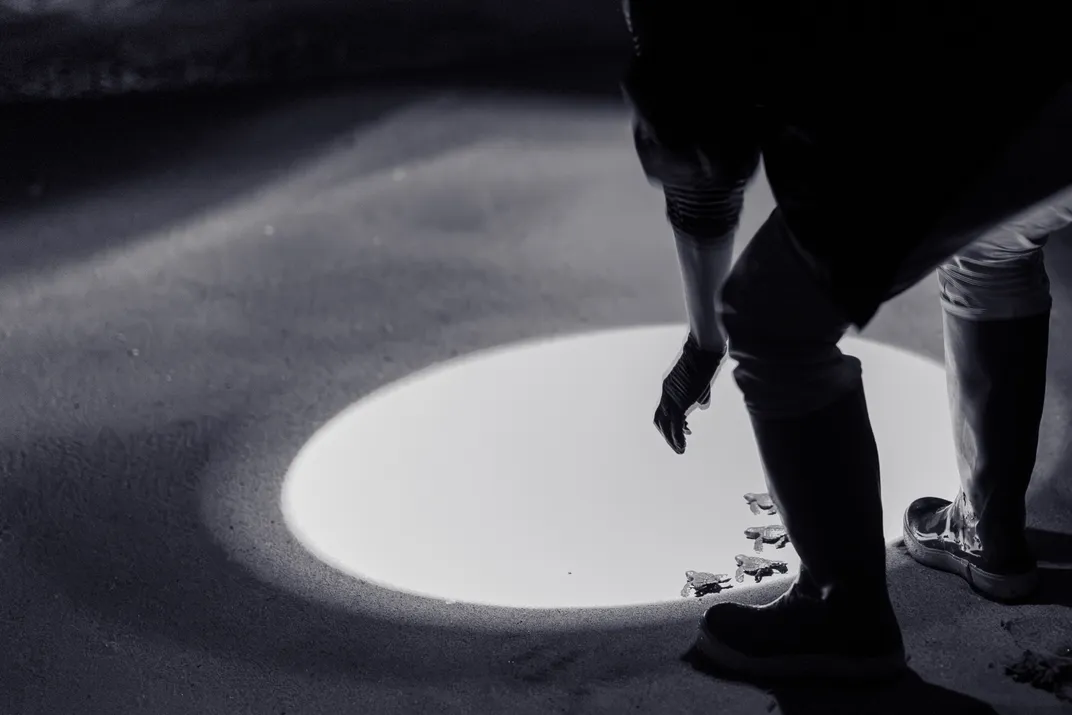
The Seal Beach hatchlings were released in the same location where their nest had been, very early on Saturday morning, before the sun had risen, according to a social media post. That’s because baby turtles use moonlight to navigate toward the ocean. After reaching the water, hatchlings experience a “frenzy period” in which they swim continuously for 24 to 48 hours, according to the post. The energetic outburst is justified; experts estimate that only one in 1,000 olive ridley turtle hatchlings survive to adulthood, according to a statement.
The Huntington Beach eggs weren’t too far behind, with many hatchlings emerging shortly after the Seal Beach eggs. They were returned to Huntington Beach on Sunday, also under the cover of darkness during the wee morning hours. All the released hatchlings made it to the water, according to the statement.
Did you know? Tiny turtle species
Olive ridley turtles are among the smallest sea turtles in the world, growing to approximately two feet long and weighing between 70 to 100 pounds.
Olive ridleys are some of the most abundant and widespread sea turtles in the world. Unfortunately, all their populations are considered threatened or endangered. The species is mostly found in the tropical regions of the Pacific, Indian and Atlantic oceans, and experts still don’t know why or how these nests ended up in the contiguous United States.
“There’s never been a recorded instance of any sea turtle nesting on a California beach,” Jeff Flocken, president and CEO of the Aquarium of the Pacific, told SFGate’s Olivia Harden in September. “Typically, the most north we know of any olive ridley or any sea turtle that nests are in Mexico, so this is quite a bit farther north for them.”
Around that time, Justin Viezbicke, California stranding coordinator for the National Oceanic and Atmospheric Administration, told the Guardian’s Lois Beckett that the mother turtles may have lost their way because of a hurricane. The ongoing “super” El Niño in the Pacific Ocean, which is affecting water temperatures, currents and weather, may also have helped push them to California.
However, biologist Jonathan Snyder, of the U.S. Fish and Wildlife Service, has a more hopeful outlook. “I think the warm waters along the coast are certainly part of the story, but I think there’s another really important part of the story,” he said during the press conference.
Decades of sea turtle conservation efforts have “really moved the needle” for olive ridleys, he noted. “Their populations have increased substantially throughout the portions of the range, and it’s the reason that there are these sea turtles along our coast that could take advantage of these unique environmental conditions.”
In fact, authorities found a third nest farther north in California’s Ventura County on November 1, but it was destroyed by high tides, Snyder tells the Los Angeles Times’ Corinne Purtill. Regardless, experts still aren’t sure whether the recent nests will continue to represent an unusual event or they are the start of a new normal.
