
The Year’s First Bright Supermoon and the Colorful Quadrantid Meteor Shower Coincide This Weekend
The dual celestial events will ring in the new year, although the luminous “wolf” supermoon may hamper skywatchers’ view of the shooting stars
/https://tf-cmsv2-smithsonianmag-media.s3.amazonaws.com/accounts/headshot/Hill_090623_566_thumbnail_1.png)
/https://tf-cmsv2-smithsonianmag-media.s3.amazonaws.com/filer_public/07/69/07692fee-b090-40f4-a264-726bb46e0445/38158237574_2636cfbc11_k.jpg)
The first weekend of 2026 has a double whammy of celestial events in store that will dazzle skywatchers.
We’ll be graced with the “wolf” supermoon—the last supermoon until the end of the year—which will reach maximum brightness on Saturday, January 3 at 5:03 A.M. Eastern Standard Time, per the Old Farmer’s Almanac. It coincides with the fiery Quadrantid meteor shower that will peak that night into the next morning, according to NASA.
Both events will be visible the whole weekend without special equipment, although the overlapping phenomena may hamper viewing conditions. “The biggest enemy of enjoying a meteor shower is the full moon,” Mike Shanahan, planetarium director at Liberty Science Center, tells Adithi Ramakrishnan at the Associated Press.
Heading out early in the evening—before the moon dominates the sky—to an area with low light pollution may be your best bet to see the shooting stars, Jacque Benitez, assistant manager of planetarium programs at the California Academy of Sciences, tells AP. The early dawn hours of Sunday might also provide a decent view. NASA recommends lying flat on your back with your feet in the northeast; after your eyes adjust for about 30 minutes, streaks of light may appear.
The supermoon may interfere with the Quadrantids’ visibility because it can look up to 30 percent brighter and 14 percent bigger than it does during the faintest full moons, although the difference is hard to see with the naked eye, according to NASA. But supermoons do affect Earth, causing higher tides than normal.
These events happen when a full moon coincides with the orb’s closest approach to planet Earth, known as its perigee. (When the moon is the farthest from Earth, it’s called its apogee). This variation in distance from Earth happens because the moon’s oval-shaped orbit.

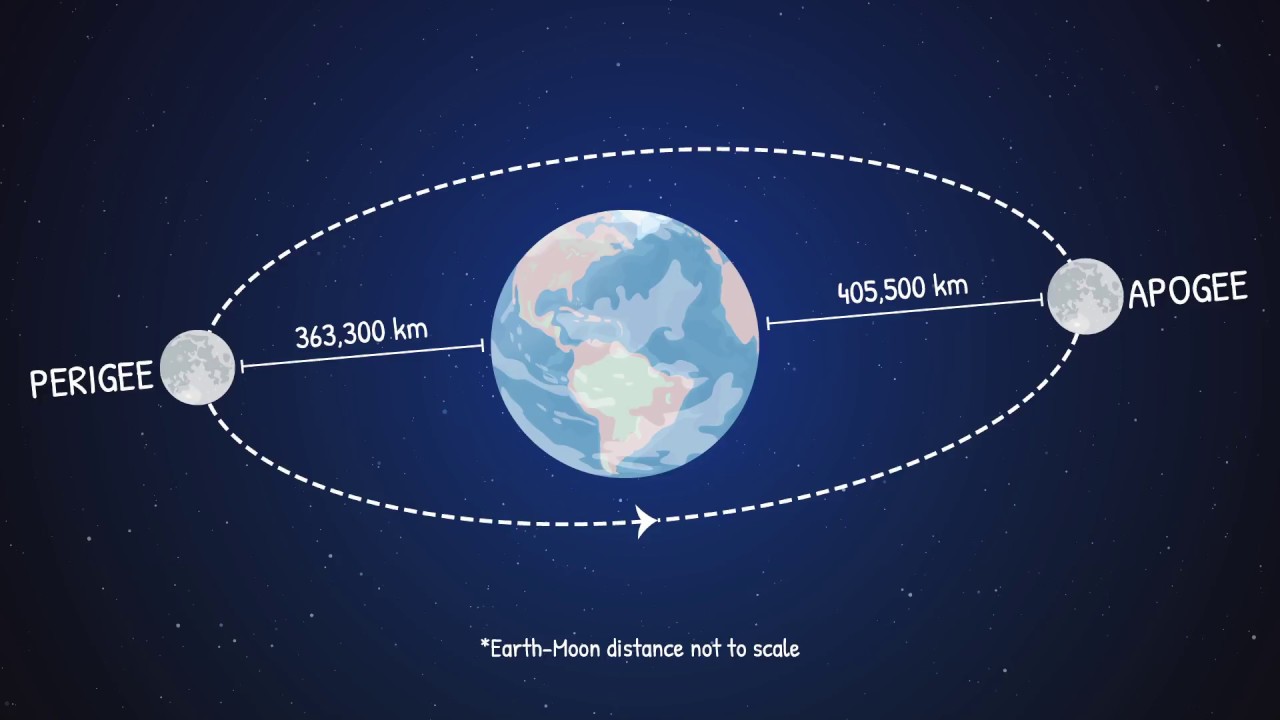
Three or four supermoons typically happen in a row across consecutive months, and this weekend’s phenomenon is the last in a stretch that started in October. The next supermoon won’t take place until November 24.
January’s full moon is often called the wolf moon, probably because people frequently heard howling wolves around this season, according to the Old Farmer’s Almanac. The animals were traditionally thought to be noisier due to wintertime hunger. “We [ascribe] names to full moons based on what is happening around that time,” Noah Petro, a lunar geologist at NASA’s Goddard Space Flight Center, tells CNN’s Lily Hautau.
While the supermoon will be visible everywhere, weather permitting, the best view of the Quadrantid meteor shower will be from the Northern Hemisphere. You can spot the bright streaks—and possibly fireballs, which are larger, longer-lasting bursts of light—by keeping an eye on the end of the Big Dipper’s handle, according to NASA.
Most meteor showers come from comets, but the Quadrantids hail from an asteroid that was discovered in 2003, per the agency. However, the source object might instead be a “dead comet” with melted ice or a new type of body called a “rock comet.”
Quick fact: Similarities with another meteor shower
Like the Quadrantids, the annual Geminid meteor shower, which peaks in December, also originates from what scientists suspect is an asteroid—that might instead be a “dead comet” or “rock comet.”
The light show occurs when space rocks collide with Earth’s atmosphere and burn up, creating colorful tails. The annual peaks in meteor shower activity happen because Earth passes through streams of cosmic debris, AP reports.
With this shower, skywatchers could see up to five Quadrantid meteors per hour, with additional unrelated meteors possibly appearing, too, Robert Lunsford, fireball report coordinator for the American Meteor Society, tells CNN. Quadrantids usually travel at “medium velocity, with the brightest ones showing persistent trails that last for a few seconds after the meteor has disappeared.”
/https://tf-cmsv2-smithsonianmag-media.s3.amazonaws.com/accounts/headshot/Hill_090623_566_thumbnail_1.png)